How Immigration Enforcement Is Shifting Latino Attitudes Toward Trump

Media framing during Trump's campaign left Latino voters blindsided by mass deportation policy, driving a 26-point attitude shift.
After the 2024 U.S. election, 62% of Latino voters believe Trump intends to mass deport undocumented immigrants — a 26-point rise from Election Day. The root cause lies in campaign-era messaging: Trump's team and mainstream media framed the policy as "targeting violent criminals and securing the border," not "indiscriminate mass removal." Swing voters largely accepted this softer version. When actual governance diverged from that framing, voters who had supported Trump reported a strong sense of broken promises, with immigration topping the list of regrets. The case illustrates a core truth of political communication: voter judgment isn't formed from policies themselves, but from the media-packaged version of those policies.
A Striking Shift Hidden in One Number
According to an analysis by a political commentary channel on YouTube, one key figure reveals a dramatic change in Latino voter sentiment: 62% of Latino Americans now believe Trump wants to carry out mass deportations of undocumented immigrants — a jump of 26 percentage points compared to Election Day.
This sharp shift is no accident. It points to a deeper question: why did the threat of mass deportations — loudly proclaimed throughout the campaign — only register as credible with many voters after the election was over?

What Voters Actually Heard
The program's host argues that understanding this phenomenon matters especially for people who consume news deeply — because we need to understand what ordinary voters, particularly the swing voters who drift between elections, were actually taking in.
The answer lies in how the message was framed. What these voters saw in mainstream media — even on Fox News — was what Trump's surrogates told them: he would focus on serious criminals, secure the border, and crack down on violent offenders. That was the narrative voters bought into.

In other words, the campaign's actual messaging was wrapped in a softening frame. What voters heard wasn't "indiscriminate mass deportation" — it was "targeted action against dangerous individuals." That narrative gap is precisely what drove the later reversal in attitudes.
The term "swing voters" in political science refers to people who change their vote across election cycles, as distinct from party loyalists with stable affiliations. Research consistently shows that swing voters consume news less deeply than highly engaged partisan voters, and are more susceptible to media salience effects — meaning they tend to accept repeatedly emphasized frames rather than actively seeking out contradictory sources. The Latino electorate is itself highly heterogeneous, encompassing individuals from different countries of origin, different generations of immigration status, and different socioeconomic backgrounds, with information channels ranging from Spanish-language local television to English-language social media. This fragmentation of channels further amplifies the cognitive divergence that different frames produce across subgroups — and helps explain why the same ethnic community can simultaneously produce votes both for and against a candidate.
A Perceived Broken Promise
The analysis goes further: among voters who supported Trump in 2024 and now express the most regret, immigration is the single most cited reason. They feel they experienced a broken promise.
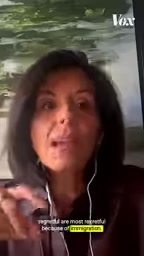
These voters believed they were told Trump would focus on border chaos — a domain most agreed was in disarray — while targeting violent criminals and serious threats. What actually happened diverged noticeably from that framing. When this perceived betrayal stacked on top of other unfulfilled expectations, voter disillusionment compounded quickly.
What Communication Theory Tells Us
This case offers a compelling example for media studies. Voters' political attitudes don't form from direct exposure to policies — they form from the packaged version of those policies as filtered through media and political surrogates. When actual implementation diverges from the expected version, the attitudinal backlash tends to be sharper than anticipated.
A 26-point jump in perception underscores the outsized role of information framing in electoral politics — and reminds news consumers that understanding the information environment different groups inhabit is essential to understanding both their voting behavior and subsequent attitude shifts.
A note on sourcing: this article is based on analysis from a single YouTube political commentary program. The specific polling figures cited were not accompanied by full source attribution. Readers are encouraged to cross-reference with additional authoritative sources.
Framing Theory in communication studies offers a direct explanation for this phenomenon. Originating with sociologist Erving Goffman and later developed for political communication by scholars like Entman, the core argument is that the way media and political actors present information profoundly shapes how audiences understand and evaluate events. The same immigration policy, packaged under a "border security" frame versus a "mass deportation" frame, activates entirely different cognitive schemas and emotional responses in audiences. During the campaign, the Trump team and its surrogates deliberately chose the "precision targeting of criminals" frame — and mainstream media, in quoting them, largely reproduced that language, effectively limiting swing voters' exposure to alternative framings. When post-election actions broke through the boundaries that frame had established, the cognitive correction arrived with unusual steepness — which explains how a 26-point perception shift materialized within just a few months.
Related articles

"Black October": Did AI Uncover 3% of All Critical Vulnerabilities Ever?
A Reddit post claims 3% of all critical software vulnerabilities ever were found in the past month, dubbed 'Black October.' We break down the statistical issues, how AI-assisted code auditing accelerates discovery, and how developers should respond.

Microsoft Project Gecko: Using AI to Bridge Language Gaps for African Farmers
Microsoft's Project Gecko launches PharmaChat, letting African farmers ask questions in their native language and get precise video clips and farming book chapters via AI. The project also releases three interactive manuals to advance inclusive AI.

Musk's Space Dominance: How Starlink Throttling Undermines Ukraine's Defense
SpaceX's Starshield throttling disabled Ukraine's high-speed interceptor drones, exposing how Musk's private control over low Earth orbit communications affects battlefield dynamics and national security, and highlighting the risks of commercial space militarization and space governance dilemmas.