How Infinity Wave Uses AI Multi-Agent Parallel Workflows to Boost Development Efficiency

Short video shows a multi-agent parallel pipeline, revealing cost and engineering convergence as real bottlenecks.
Based on a short video from Infinity Wave, this article outlines the real shape of today's AI workflows: a team uses multiple Claude instances alongside Cursor to automate code development and content production in parallel. The core logic is task isolation and parallelism, giving each agent clean context. But the video also candidly exposes the bottleneck—multi-agent setups multiply token consumption, and the person on camera has exhausted both his five-hour limit and weekly all-model quota, forcing him to buy multiple plans to spread the load. The article also discusses the spread of vibe coding and its hidden concerns: there's no answer yet for converging a working prototype into a maintainable product. It concludes with applicable boundaries: suitable for scenarios with clear task boundaries, splittability, and explicit acceptance criteria, while complex systems and long-cycle projects need careful cost evaluation.
A Real Look at AI Workflows Through a Short Video
A short video from the YouTube channel Infinity Wave shows how their team uses AI tools day to day: multiple Claude instances and the Cursor editor running simultaneously on screen, with code development happening alongside content creation. The person on camera repeatedly stresses one core point—the individual tools themselves aren't complicated; the real problem is usage limits and cost.
The value of this video isn't in showcasing some new model, but in presenting a work paradigm that's taking shape: orchestrating multiple AI agents into a pipeline so that development and content production are automated in parallel.

Multi-Agent Parallelism: The Logic Behind Cursor + Claude
The most striking visual in the video is the person running multiple work windows at once: Cursor handles code editing, Claude instances take on separate tasks, and ChatGPT is involved as well. In his words, "code development is fully automated."
The point of this setup is task isolation and parallelism. In the traditional approach, one person bounces questions back and forth in a single chat window, and switching context easily loses earlier information. By assigning different tasks to independent instances, each agent's context stays cleaner and output quality becomes more consistent.
You might not have noticed, but this kind of workflow doesn't demand much from the tools themselves—Cursor and Claude are both off-the-shelf products. The real barrier is orchestration experience: knowing which task to hand to which agent, how to split them, and how to verify the output.

Cursor is an AI-first code editor built on a VS Code fork. Its core capability is embedding large models directly into editing, completion, refactoring, and other coding steps, supporting in-editor conversation with the model and direct application of changes. Compared with opening a separate chat window in the browser, Cursor's advantage is that the model can directly read project files and understand directory structure and dependencies, producing actionable code changes. This is one of the prerequisites for "code development fully automated" to hold in the video: the agent must not only generate code but also read and write project files.
A Claude instance refers to an independently opened conversation session in the browser or via API. Each session has its own context window, and they don't share memory. So-called "multi-instance parallelism" is essentially breaking a big task into several subtasks and handing them to different sessions, avoiding having all information crammed into a single context where it interferes with and dilutes itself.
Cost and Limits: The Most Realistic Barrier to Multi-Agent Mode
The most candid part of the video is when the person directly shows his usage: he mentions that his "Five Hour Limit" and "Weekly All Models" quota are already exhausted, and references the $200 and $500 plans.
This reveals a fact many tutorials overlook: multi-agent parallelism multiplies quota consumption. Split one task across three agents and token consumption may approach three times as much. For high-frequency teams, subscription costs accumulate quickly, exceeding what a basic plan can support.
The person's approach is to buy multiple plans to spread the load. It's hardly elegant, but it reflects the reality of the current stage—until API pricing and quota policies are optimized for multi-agent scenarios, cost control can only rely on manual planning.
A token is the basic unit large models use to process text, roughly equivalent to part of an English word or a single Chinese character. Models bill both input and output by token, so longer contexts and more conversation turns mean higher consumption. So-called "quota" is usually a usage cap calculated in tokens or message counts.
The Five Hour Limit and Weekly All Models mentioned in the video are tiered rate-limiting mechanisms common to subscription products: the former caps usage intensity within a short time window to prevent a single account from monopolizing resources within hours; the latter caps the total quota for calling all models within a week. Combined, they mean that even with a paid subscription, high-frequency multi-agent parallelism can still hit the ceiling. Understanding this makes clear why cost pressure in multi-agent mode isn't simply "buy another subscription" but requires load scheduling across the time dimension.
The Spread of Vibe Coding and Its Hidden Concerns
The video brings up the concept of "vibe coding" and offers an observation: a substantial proportion of newly launched apps are built this way.
Vibe coding refers to developing by describing intent in natural language and letting AI generate the code, with the developer acting more as a reviewer than a writer. It genuinely lowers the barrier to app development, letting non-professional developers quickly produce working prototypes.
But the person on camera is cautious. He raises a question: "How do you properly end vibe coding"—that is, once the prototype works, how do you converge it into a maintainable formal product. There's no standard answer yet, and a large number of rapidly launched apps are stuck precisely at this step.

The term Vibe coding was coined by Andrej Karpathy in early 2025. It refers to developers who barely read or write code line by line, instead describing the desired effect in natural language, leaving generation and debugging to AI, and judging only whether the running result "feels right." Its typical trait is accepting "get it running first" with relatively low attention to internal implementation.
The cost of this mode is maintainability: AI-generated code often lacks consistent architectural constraints, test coverage, and documentation, so as features pile up, changing one thing can trigger cascading problems. Thus "how to properly end vibe coding" is essentially an engineering problem—requiring traditional practices like version control, testing, code review, and refactoring to converge the prototype into a product that can evolve long-term. This also explains why many rapidly launched apps remain stuck at the prototype stage.
Content Production Is Automated Too
The second half of the video shows another use case: video editing and publishing. The person opens a video editing interface and explains that videos are being continuously auto-edited, with scheduling and publishing also handled by the system.
This follows the same logic as the code development above—breaking repetitive work into automatically executable steps, with AI agents executing and humans setting rules and checking results. He sums up this workflow as "fully automated."
From using a single tool to orchestrating processes across scenarios, this may be the most noteworthy direction of change in AI applications today. Model capability improves gradually, but workflow reorganization often brings more direct productivity gains.

Where This Kind of Workflow Applies
Based on the video, a few judgments can be drawn:
Suitable scenarios: work with clear task boundaries that can be split into independent subtasks with explicit acceptance criteria—prototype development, batch content production, routine data processing. The value of multi-agent lies in parallelism, and parallelism requires low coupling between tasks.
Scenarios requiring caution: complex systems needing strong consistency, and long-term projects sensitive to cost. Quota and expense consumption in multi-agent mode add up linearly, and the longer the project cycle, the more obvious the pressure.
What's still missing: the path from prototype to product. The video raises the question but offers no solution, and this is the challenge the entire vibe coding ecosystem faces.
Task coupling is a key indicator for deciding whether multi-agent parallelism is viable. Low coupling means subtasks don't share frequently changing state, one agent's output can directly serve as another's input, and failures can be retried individually; high coupling means tasks require repeated coordination and shared context, so splitting them actually increases communication and merge costs.
It's also worth checking whether acceptance criteria can be mechanically determined: tasks verifiable through objective signals like unit tests, format checks, or publishing results are suited to automated agent execution; tasks requiring subjective judgment or cross-departmental confirmation still need human involvement. Evaluating these two points together with the patterns of quota consumption brings you closer to a practical implementation than simply chasing "full automation."
Conclusion
This short video from Infinity Wave doesn't introduce any new tools. It demonstrates a practice at the usage level: building a multi-agent parallel pipeline from off-the-shelf products while bearing the resulting quota costs. This approach is viable today, but it also exposes shortcomings in the toolchain regarding cost control and engineering convergence. For teams wanting to try it, start with small-scale tasks to validate, first understand the patterns of quota consumption, and then consider scaling up.
Related articles
Daybreak Red Deployment Guide: A Reference Architecture for Supervised Security Investigation
A breakdown of the Daybreak Red reference architecture: security control design, deployment configuration process, and runtime monitoring for supervised security investigation.
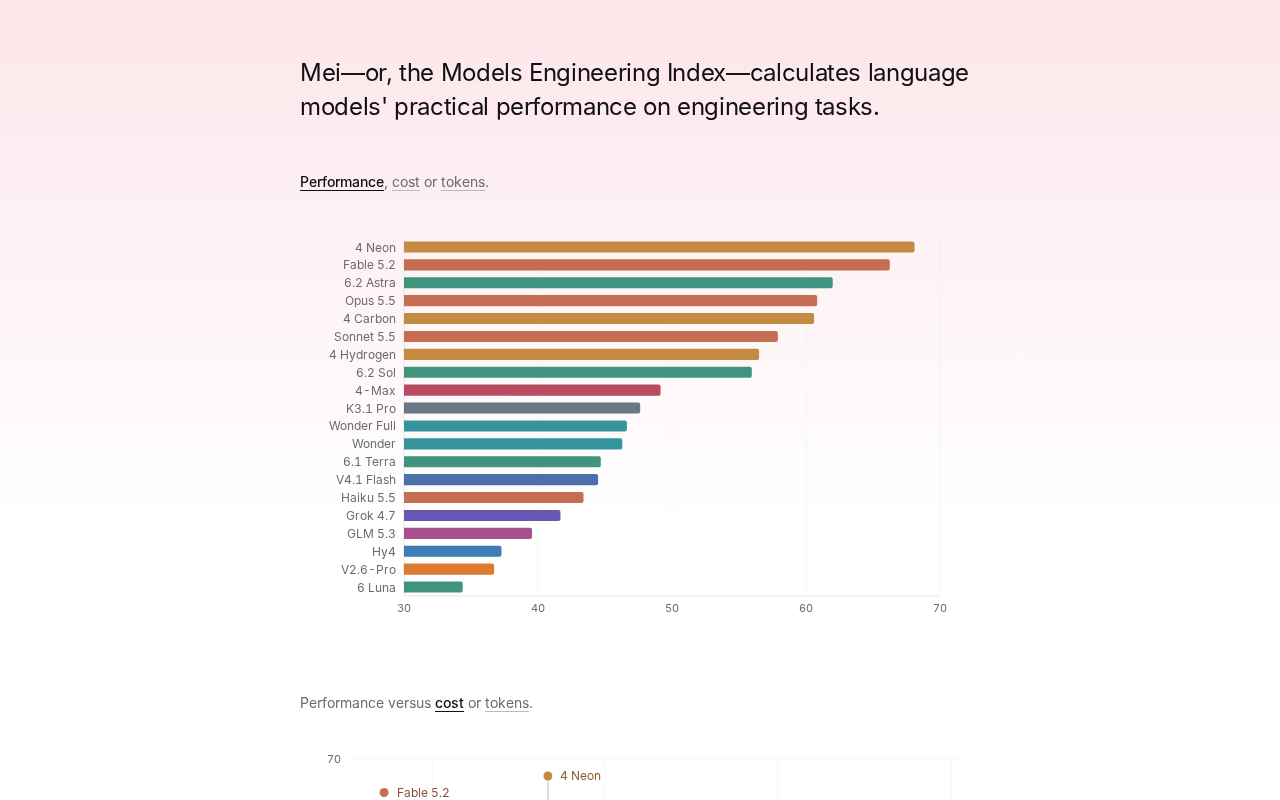
Gemini 4 Neon Tops the Models Engineering Index
Gemini 4 Neon tops the Models Engineering Index, sparking Hacker News debate over ranking credibility and evaluation methods. Here's what it means for developers.

Apple's Self-Developed AI Agent: An Agent That Can Operate Your Mac Is Coming
Apple is reportedly developing an AI agent that can operate a Mac, targeting Meta Muse, Claude, OpenAI Dots, and others. This article analyzes Apple's system-level advantages, the competitive landscape, and likely rollout paths in the agent race.