How Is Norway Making "Shithouses" Great Again?

Starting from a Hacker News headline, this infers Norway's pragmatic path in ecological sanitation and constraint-driven infrastructure innovation.
The article centers on a Hacker News post titled "Norway makes shithouses great again," noting that the original material contains only a title and very little engagement data, so the analysis is based on semantic cues and background in related Norwegian fields. The author suggests that "shithouse" may refer to dry toilets, composting treatment, or sanitation solutions in extreme environments, and explains why this kind of "low-tech, high-utility" innovation attracts the tech community. The article further summarizes the "Norwegian model" of infrastructure innovation: solid engineering optimization around geographical and climatic constraints, elevating "make-do" facilities to a level where people are willing to actively use them, and from this draws implications for tech professionals to choose overlooked scenarios and design under constraints, while emphasizing the need for caution when information is insufficient.
A Thought Sparked by a Headline
On Hacker News, a post titled "Norway makes shithouses great again" drew attention. Although the original content consisted of only one sentence and very little engagement data, the headline itself is intriguing enough. It likely points to some kind of innovative practice by Norway in public sanitation facilities, eco-friendly toilet technology, or urban infrastructure.
It should be noted that because the original material is extremely limited—only a title, 3 points, and 0 comments—the analysis in this article will be based on reasonable inference from the semantic cues of the title and Norway's known practices in related fields, rather than a direct retelling of the original content.
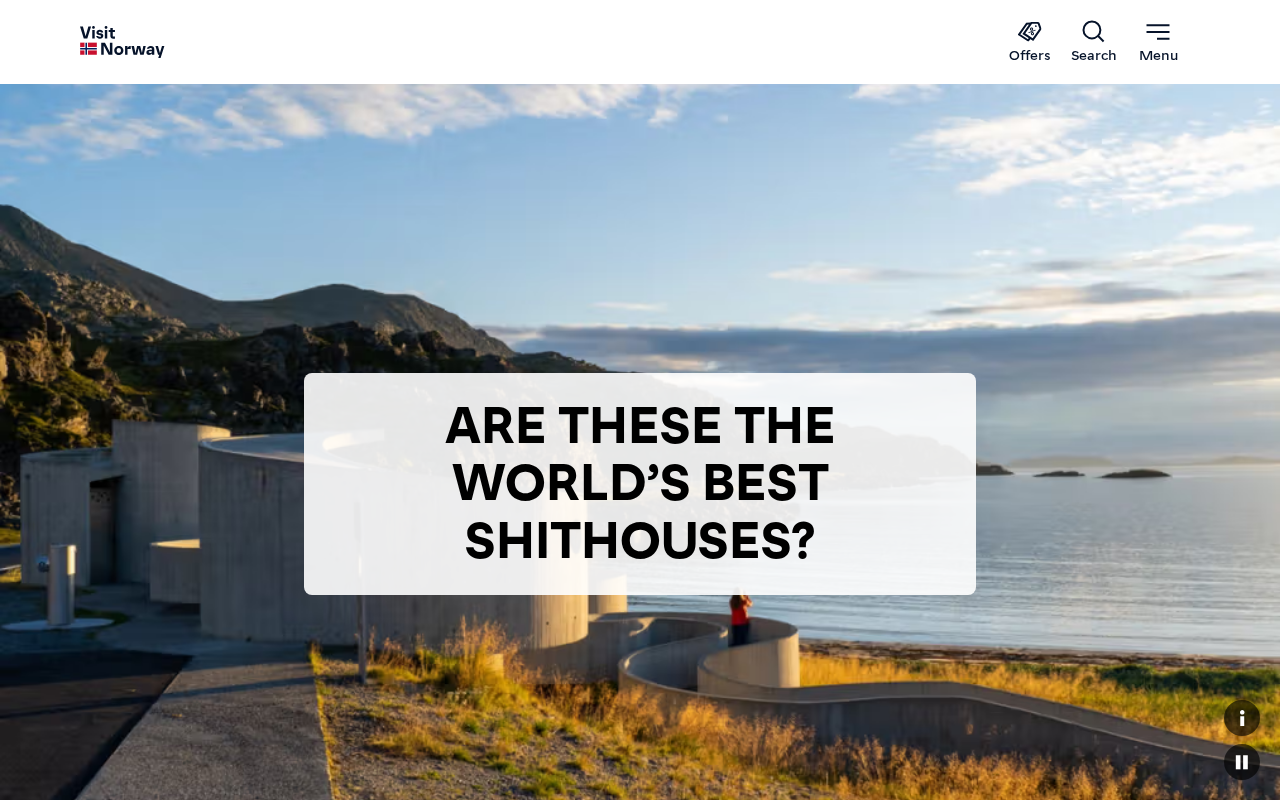
The Technical Narrative Behind "Shithouse"
The word "shithouse" in English refers both to a crude outdoor toilet and is often used as a derogatory expression. But Norway, as a country with repeated achievements in environmental engineering and public facility design, likely uses this headline to point to some practice that turns "low-end facilities" into high-quality ones.
Nordic countries have long been at the forefront of sewage treatment, ecological sanitation, and sustainable building. If Norway has indeed done something with "shithouses," it is most likely related to dry toilets, composting treatment, or sanitation solutions in extreme environments. Although such technologies are not as eye-catching as AI large models, they directly affect public health, resource recycling, and the basic quality of life in remote areas.
Why It Deserves Attention from the Tech Community
Hacker News readers have always been sensitive to "high-value innovation with low technical sophistication." The fact that a seemingly crude headline can appear on this platform suggests that there may be reproducible and scalable engineering ideas behind it. Recombining mature technologies at low cost to solve pain points in real scenarios—this path is equally instructive for developers.
Ecological Sanitation (EcoSan) is key background for understanding this kind of practice. It refers to treating human excreta as a resource rather than waste, and achieving nutrient recovery and water conservation through source separation (such as separately collecting urine and feces), dry composting, anaerobic digestion, and other methods. Unlike traditional sewage treatment that relies on centralized pipe networks, EcoSan is particularly suitable for remote, cold, or ecologically sensitive areas that lack stable water supply and sewage infrastructure. Nordic countries have accumulated considerable engineering experience in dry toilets, composting toilets, and urine diversion systems, with designs emphasizing low maintenance, low-temperature resistance, and modularity—highly consistent with the headline's implication of "making crude facilities high-quality."
The "Norwegian Model" of Infrastructure Innovation
Norway's approach to infrastructure has one characteristic: it does not pursue conceptual dazzle, but instead carries out solid engineering optimization around specific geographical and climatic conditions. Long coastlines, dispersed population distribution, and harsh winter environments—these constraints have forced out some pragmatic solutions.
If "shithouse" refers to sanitation facilities in remote areas or outdoor scenarios, the core challenge usually lies in how to achieve hygiene, durability, and low maintenance under conditions lacking stable water supply and sewage networks. Solutions to such problems often involve material selection, biological treatment processes, and modular design—echoing "design under constraints" in software engineering.
From "Making Do" to "Being Particular"
The phrase "makes great again" in the headline implies a shift from low standards to high standards. In the infrastructure context, this means elevating facilities once regarded as "good enough to make do with" to a level where people are willing to actively use them, through design and technical means. This idea also applies to product design: users will not tolerate a bad experience just because a function is necessary.
Constraint-driven Design is a useful framework for interpreting Norway's engineering tradition. Norway has a population of about 5.5 million, distributed across a long, narrow coastline and numerous islands and fjords, and many settlements cannot economically connect to centralized water supply and sewage networks; at the same time, severe winter cold freezes pipes and reduces biological treatment efficiency. These hard constraints force engineering solutions to optimize weather resistance of materials, insulation, waterless flushing, on-site treatment, and low-frequency maintenance. The result is often not a single technological breakthrough, but the recombination of mature components in specific scenarios—consistent with the software engineering approach of achieving usable systems through architectural trade-offs when computing power, bandwidth, or budget are limited.
Implications for Tech Professionals
Although this post does not contain much information, it reminds us of one thing: innovation does not necessarily happen in the hottest tracks. Public sanitation facilities, waste treatment, and infrastructure in remote areas—these fields iterate far more slowly than the consumer internet, but the actual needs are real and urgent.
For practitioners focused on AI applications, the same logic holds. Applying mature technologies to overlooked scenarios is often more valuable than competing over parameters in crowded tracks. Norway's approach to "shithouses"—if it indeed exists—is precisely an expression of this pragmatic view of innovation.
Information Limitations and Follow-up Attention
It must be pointed out that the original material provides only a title, with no link, no body text, and no comments. The above analysis is inference based on the semantics of the title and background in related Norwegian fields, not a reliable reconstruction of the original text. Readers who are interested are advised to look up the original discussion directly to obtain accurate information. When information is insufficient, remaining cautious is more important than rushing to conclusions.
One-line Summary
Starting from a Hacker News headline, this infers Norway's pragmatic path in ecological sanitation and constraint-driven infrastructure innovation.
Paragraph Summary
The article centers on a Hacker News post titled "Norway makes shithouses great again," noting that the original material contains only a title and very little engagement data, so the analysis is based on semantic cues and background in related Norwegian fields. The author suggests that "shithouse" may refer to dry toilets, composting treatment, or sanitation solutions in extreme environments, and explains why this kind of "low-tech, high-utility" innovation attracts the tech community. The article further summarizes the "Norwegian model" of infrastructure innovation: solid engineering optimization around geographical and climatic constraints, elevating "make-do" facilities to a level where people are willing to actively use them, and from this draws implications for tech professionals to choose overlooked scenarios and design under constraints, while emphasizing the need for caution when information is insufficient.
Related articles

Malicious Claude Code Extension Infiltrates Cursor: Version 2.1.313 Self-Check and Cleanup Guide
A malicious Claude Code build 2.1.313 appeared in the Cursor extension marketplace for about 11 hours, affecting up to 5,000 users. StepSecurity disclosed that it stole system information, git email, and environment variable names, and attempted to implant SSH keys and reverse tunnels. This article covers the incident, malicious behavior, and complete self-check and cleanup steps.

15 Essential Prompts for Vibe Coding: Keep AI from Wrecking Your Code
Vibe Coding often tempts AI to break your code. These 15 prompts—from PRD, architecture, and database to testing and debugging—chain each output as the source of truth, turning AI coding from casual chat into a controllable engineering process.

Cursor vs Windsurf: Code Review or Direct Apply — Which Fits You Better?
Cursor shows a diff for review before changing code; Windsurf applies changes directly. We analyze how each mode affects your workflow and cover Cursor 2.0's multi-agent mode.