How Juicebox Cut AI Inference Costs from $4M to $800K

Juicebox used specialized models to cut AI search latency by 80% and inference costs to one-fifth.
AI recruiting platform Juicebox faced the challenge of retrieving hundreds of thousands of talent profiles in seconds while running multiple real-time search agents in parallel. Relying on general-purpose large models caused latency and compute costs to scale exponentially. Their service provider built specialized models through distillation and fine-tuning, stripping out capacity irrelevant to talent retrieval. The results were dramatic: 80% lower search latency and annual inference costs reduced from $4M to $800K — saving roughly $3.2M per year. The case reinforces a core production AI principle: using the right model matters more than using the biggest one.
Speed Makes or Breaks Recruiting Search
In talent search, response speed often defines the ceiling of product experience. That's precisely the core challenge AI recruiting platform Juicebox faced: retrieving hundreds of thousands of candidate profiles within seconds while supporting multiple real-time search agents running in parallel.
For high-concurrency, low-latency use cases like this, general-purpose large models often struggle to balance speed and cost. Every search request triggers a large number of inference calls, and when the scale grows to hundreds of thousands of profiles across multiple live agents, latency and compute overhead increase exponentially. This is one of the most common pitfalls AI applications encounter when moving from demo to production.
Search Agents in this context refer to AI-driven automated modules capable of independently understanding query intent and iteratively refining retrieval strategies — distinct from traditional keyword-matching engines. When multiple agents run in parallel, the system must handle multiple inference streams simultaneously, each consuming GPU/CPU resources and introducing network round-trip latency. The difficulty of high-concurrency, low-latency scenarios lies in this: the bottleneck is usually not the absolute time of a single inference call, but rather queuing delay caused by resource contention. This means that even if individual calls are acceptably fast, overall response times can deteriorate sharply as concurrency rises — which is the structural reason Juicebox had to pursue specialized model optimization.



Replacing General-Purpose Models with Specialized Models
According to a share from their service provider, the solution was to build specialized models tailored for Juicebox — models trimmed and optimized for specific use cases rather than calling large, general-purpose models directly.
This approach is steadily becoming mainstream in the industry. General-purpose large models are broadly capable, but they carry significant compute waste for specific tasks: the majority of a model's parameter capacity simply isn't needed for a focused task like "talent profile retrieval." Through distillation, fine-tuning, or targeted architectural design, smaller models can achieve near-identical task performance while dramatically reducing inference latency and cost.
Concrete Results
The publicly shared numbers are compelling:
- 80% reduction in latency: Search response speed improved significantly, directly enhancing the experience of real-time search agents.
- Inference costs dropped from $4M to $800K per year: Costs compressed to one-fifth of the original, saving approximately $3.2M annually.
For an AI startup that depends on high-frequency search, this kind of cost structure improvement isn't just about margins — it directly determines whether the product can scale.
Knowledge Distillation is one of the most common technical paths to building specialized models: a large general-purpose model (the teacher) supervises the training of a smaller model (the student), enabling the student to approximate the teacher's performance on a specific task while reducing parameter count by several times or even orders of magnitude. Another path is task-specific fine-tuning: continuing to train on the target task's dataset from a pre-trained base, stripping away the redundant capacity the model accumulated in unrelated domains. For structured scenarios like talent profile retrieval — where the input-output distribution is relatively fixed — both approaches can yield significant efficiency gains with relatively low engineering complexity. It's worth noting that the higher the degree of specialization, the weaker the model's generalization ability tends to be. This means specialized models deliver the greatest returns when task boundaries are clear and business requirements are stable.
Implications for AI Application Deployment
This case reflects a key trend in current AI engineering practice: not every use case requires the largest, most powerful model. Once a product enters production and request volume scales up, "using the right model" matters more than "using the biggest model."
The value of specialized models manifests on three levels: first, latency optimization that improves user experience; second, significantly lower inference costs that make high-frequency calls commercially sustainable; and third, more predictable model behavior, since the model stays focused on a defined task scope. For teams weighing AI infrastructure investment, Juicebox's experience offers a useful reference point — once use case boundaries are well-defined, customization is often more cost-effective than general-purpose solutions.
It's worth noting that the information in this article comes from a unilateral share by the service provider on a social platform. Specific model technical details, evaluation methodology, and implementation timelines have not been publicly disclosed. Readers should treat the quantitative figures as a directional reference rather than an absolute benchmark.
Summary
Juicebox's case is a textbook example of cost optimization in AI applications: in a high-concurrency talent search scenario, specialized models delivered an 80% reduction in latency and an 80% cut in costs. As more AI products move from experimentation to production, finding the right balance between speed, cost, and performance will become the defining competitive challenge.
Related articles
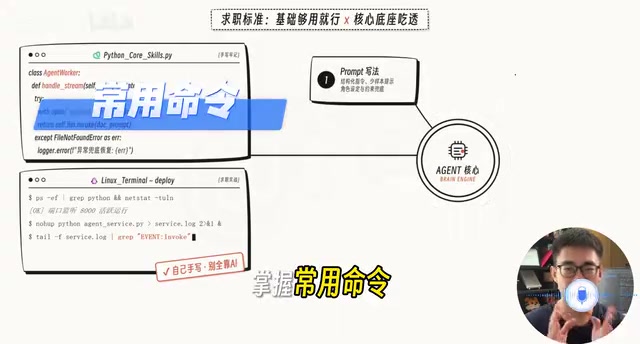
AI Agent Developer Job Hunt Guide: Four Hard Standards to Clear Before You Apply
A practical guide for landing AI Agent developer roles: four measurable standards — project runs, problems debuggable, solution explainable, interviews survivable.
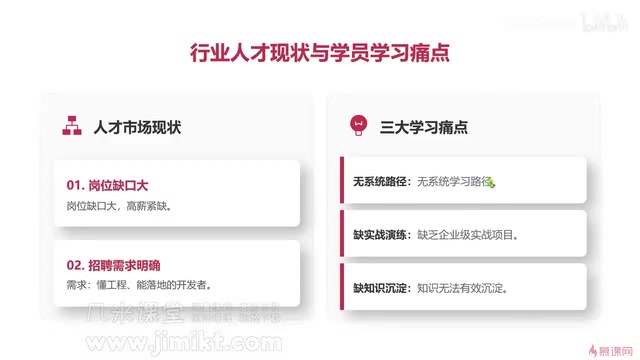
Multi-Agent Development Guide: From Monolithic AI to Team Collaboration in Practice
A beginner's guide to multi-agent development covering core advantages, common learning pain points, enterprise tech stacks, and engineering methodology for AI developers.
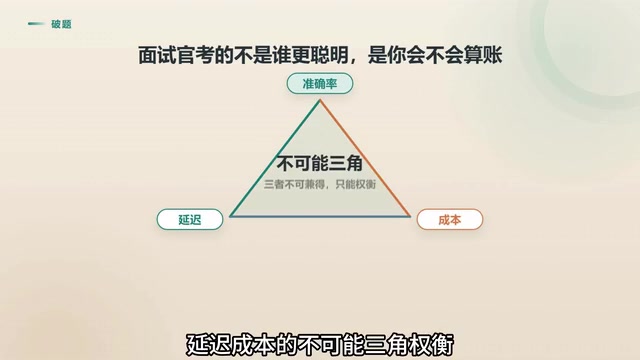
Agent Skill Routing: Retrieval vs. LLM vs. Two-Stage Architecture Compared
Retrieval or LLM for Agent skill routing? Compare coarse-filter vs. fine-select architectures on latency, accuracy, and cost — with 4 key production considerations.