How Much of F-Droid's Code Is LLM-Generated? A New Open Source Controversy
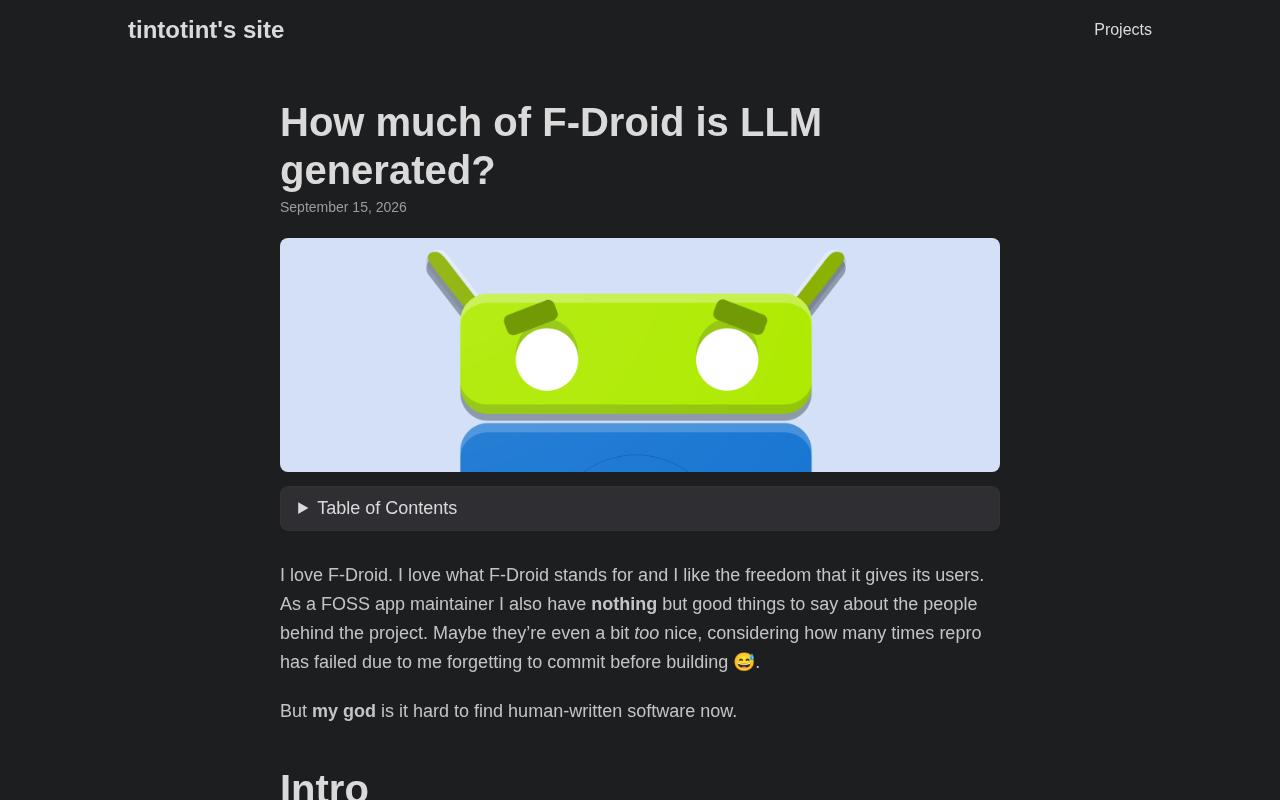
F-Droid's AI code debate reveals a trust crisis over transparency and verifiability in open source.
A Hacker News thread asking how much of F-Droid's code is LLM-generated has triggered deep reflection on trust in the AI era. F-Droid is known for license purity and reproducible builds, yet LLM-generated code introduces three key challenges: license contamination, harder security auditing, and opaque contribution provenance. Since commit histories rarely flag AI usage and style-based detection is unreliable, an exact answer is technically impossible — but the question's real value lies in forcing open-source governance to reckon with AI-generated contributions.
A Question Worth Asking
F-Droid has long been the most important free and open-source software (FOSS) app store in the Android ecosystem — a steadfast champion of privacy and open-source values. It only distributes apps with publicly available source code and reproducible builds, creating a software distribution system fundamentally different from Google Play. So when someone on Hacker News asked "How much of F-Droid's content is generated by large language models (LLMs)?" the community lit up — because this isn't just a technical statistics question. It cuts to the heart of open-source identity in the age of AI.
The thread received 42 upvotes and 14 comments — not viral, but the core issue it raises is deeply representative: as AI-generated code increasingly permeates the open-source ecosystem, how should we view, evaluate, and even govern these contributions?
Why This Question Matters
The trust foundation of open-source software rests on two pillars: auditable code and traceable contributions. F-Droid's emphasis on reproducible builds is fundamentally about letting users verify that the binary they downloaded genuinely comes from the published source code — with nothing sneaked in.
LLM-generated code introduces several new uncertainties:
License Contamination and Code Provenance
LLMs are trained on massive amounts of both open-source and proprietary code. When a model generates a snippet, it's difficult to determine whether it has inadvertently "recited" fragments covered by GPL, patent restrictions, or commercial licenses. For F-Droid — renowned for its license purity — this poses potential legal and compliance risks.
Reproducible Builds is F-Droid's core technical promise: anyone who recompiles the source code using the published build scripts and dependency manifests should get a binary that's bit-for-bit identical to the official release (typically verified by hash). This mechanism is designed to rule out backdoors injected during compilation — but it presupposes that the source code itself is trustworthy. Even if LLM-generated code passes reproducible build verification, that doesn't prove its provenance is clean or that it's free of hidden risks. Reproducible builds solve the "binary-to-source consistency" problem, not the "legality and safety of the source itself" problem. This is precisely why AI-generated code poses a new challenge to F-Droid's existing trust framework: the technical safeguards in place were never designed for this scenario.
Code Quality and Security Auditing
AI-generated code often looks correct but may harbor vulnerabilities in edge cases and security handling. When a significant portion of an app's logic is LLM-produced, the question of whether maintainers have enough bandwidth to audit it line by line becomes very real. Open-source projects already depend on volunteer maintainers. AI has made writing code cheap — but it hasn't made reviewing code equally effortless.
GitHub Copilot and Cursor are currently the most prominent AI-assisted coding tools. Copilot, developed jointly by GitHub and OpenAI, is deeply integrated into editors like VS Code and can autocomplete code in real time or generate entire functions from context. Cursor is an AI-first code editor that supports natural language Q&A and refactoring across an entire codebase. These tools significantly reduce the cost of writing boilerplate and solving common problems — and they're especially popular among independent developers and small open-source projects, which happen to be the primary source of apps on F-Droid. When the friction of producing code drops dramatically but the human effort required to review it doesn't decrease proportionally, that growing gap is exactly what's making the open-source community uneasy.
Contribution Transparency
The vast majority of open-source projects today don't require contributors to disclose whether their code was AI-assisted. This means "how much of F-Droid's code is LLM-generated" is technically almost impossible to answer precisely — no metadata, no markers, only inference.
From a technical detection standpoint, researchers have attempted to identify AI-generated code through statistical signals: consistency in comment style, variable naming patterns, "overly clean" code structure, and characteristic idiomatic expressions. Some tools (like code-focused versions of GPTZero) attempt to produce confidence scores. However, false-positive rates are quite high: experienced human developers can write code that looks "AI-style" clean, while heavily human-edited AI output is hard to flag. As different LLMs' stylistic fingerprints converge, reverse-engineering provenance from code style is not reliably useful in practice — which is exactly why the article characterizes this question as "nearly impossible to answer precisely."
The Deeper Anxiety Behind the Discussion
This kind of question resonates because it precisely targets a widespread anxiety in the open-source community right now. On one hand, AI coding tools like Copilot and Cursor have become part of many developers' daily workflows — an outright ban is unrealistic. On the other hand, open-source values inherently pursue transparency and trustworthiness, which sit in tension with the "black box" nature of AI-generated content.
Debates around AI-generated contributions are already fermenting across the open-source world. Some projects have started explicitly requiring contributors to disclose AI assistance. Some maintainers have publicly stated they'll reject pull requests that appear to be largely AI-generated with little human understanding behind them. F-Droid is being singled out for discussion partly because its "purist" positioning makes this tension especially acute.
An Answer That Can't Be Precisely Given
To be honest: based on publicly available information, no one can give an exact figure like "X% of F-Droid's code is LLM-generated." Here's why:
- Commit histories typically contain no marker for "was AI used?"
- Inferring AI generation from code style has limited accuracy and is prone to false positives
- F-Droid distributes third-party apps, and the upstream development practices of each are impossible to uniformly track
So the value of this question isn't in arriving at a number — it's in putting the issue of "how AI-generated content integrates into open-source governance" squarely on the table.
Possible Directions for the Open Source Community
Facing this trend, several governance approaches are being discussed:
Contribution Disclosure Mechanisms: Following the lead of some projects, contribution guidelines could require contributors to note their use of AI assistance, improving transparency.
Strengthen Auditing Rather Than Ban Tools: Rather than fixating on whether code was AI-written, the focus should shift to whether the code has been humanly understood and reviewed. The real risk isn't AI involvement — it's unreviewed code making it into a distribution.
License Scanning Tools: Introduce automated tooling to detect potential license conflicts and code plagiarism. This should be standard practice regardless of where the code came from.
Final Thoughts
"How much of F-Droid's code is LLM-generated" may look like a statistics question, but it's really a collective moment of reflection by the open-source community on what trust mechanisms should look like in the age of AI. The answer may never be clear — but the question itself is valuable enough. It reminds us that the core of open source has never been who wrote the code, but rather: can the code be trusted, verified, and responsibly maintained? In a world where AI is deeply involved in software production, that principle matters more than ever.
Related articles
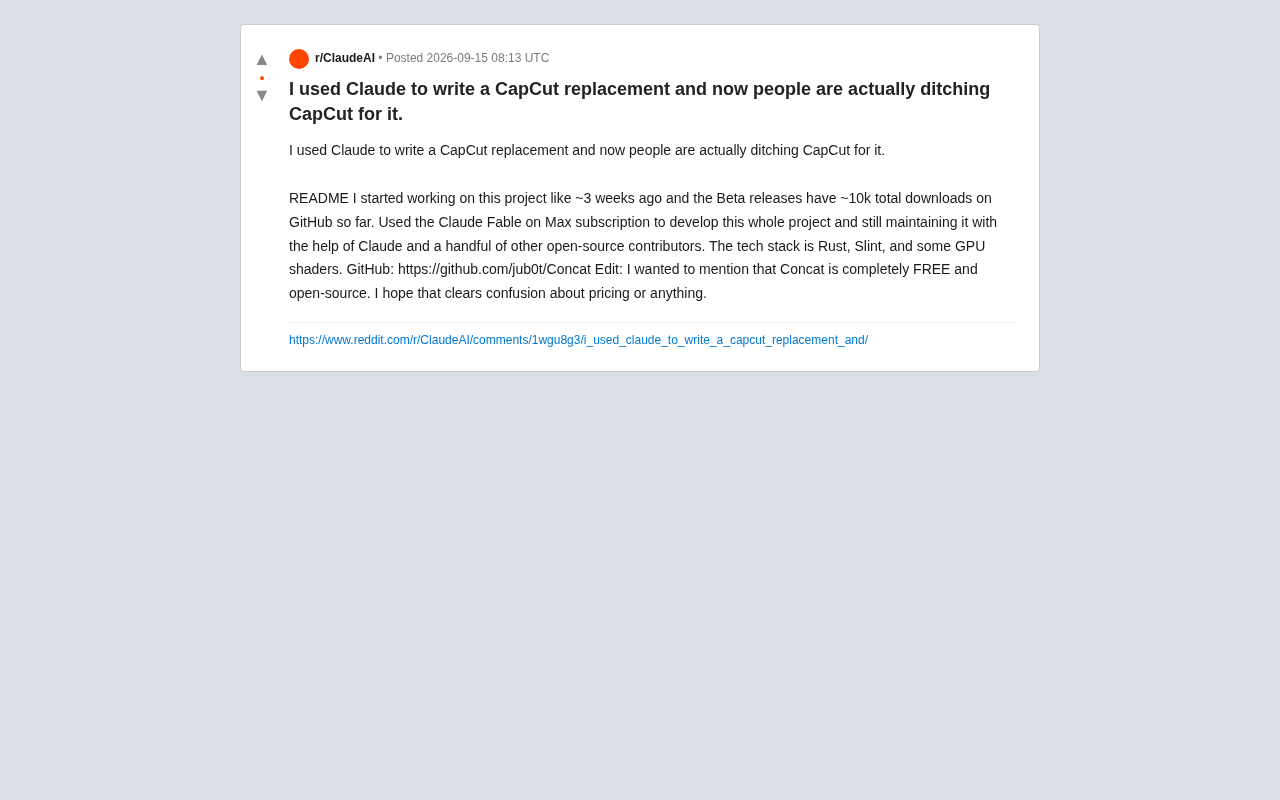
Building Open-Source Video Editor Concat with Claude: A Free Alternative to CapCut
A developer used Claude to build Concat, an open-source CapCut alternative, in just three weeks. With nearly 10K downloads, it's a striking example of AI-assisted solo development.
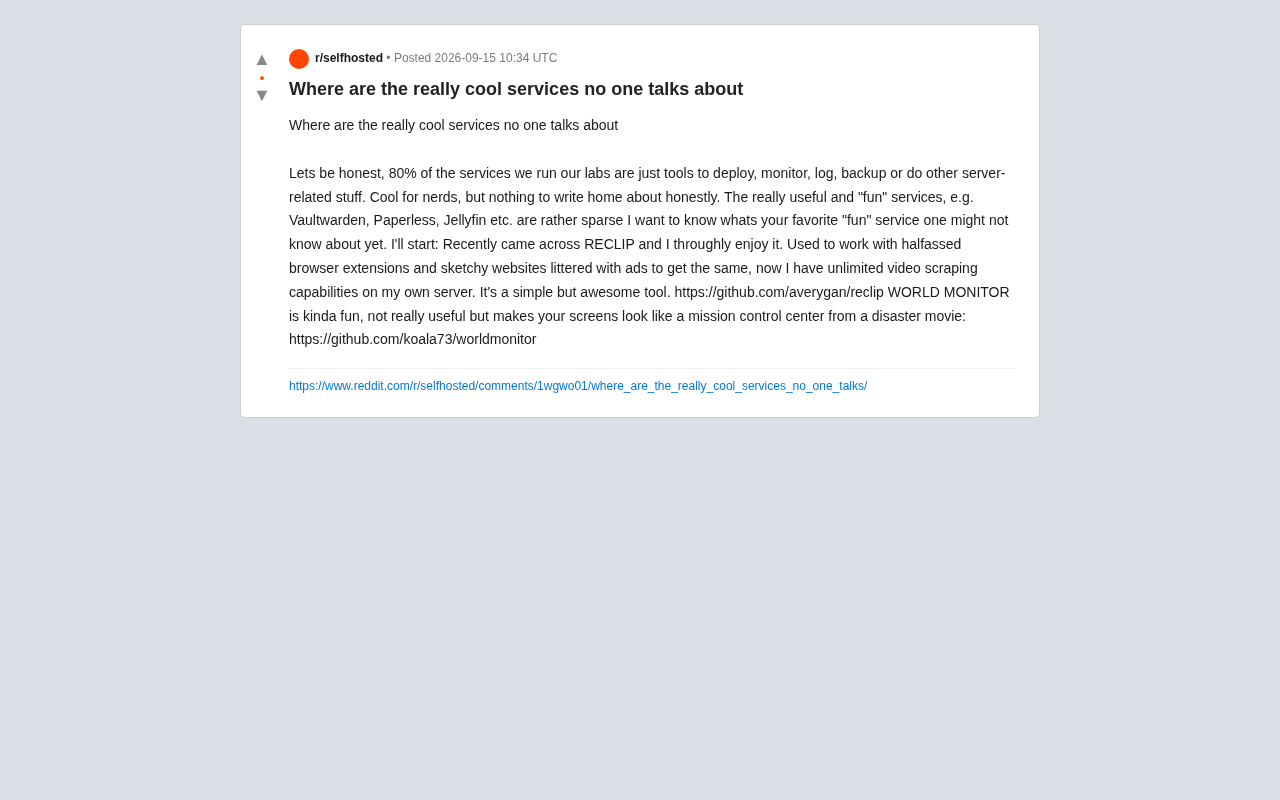
The Overlooked Gems of Self-Hosting: Fun and Useful Services Nobody Talks About
From a Reddit thread, we explore overlooked self-hosted services — including video scraper RECLIP and data viz project WORLD MONITOR — and why fun services are so rare.
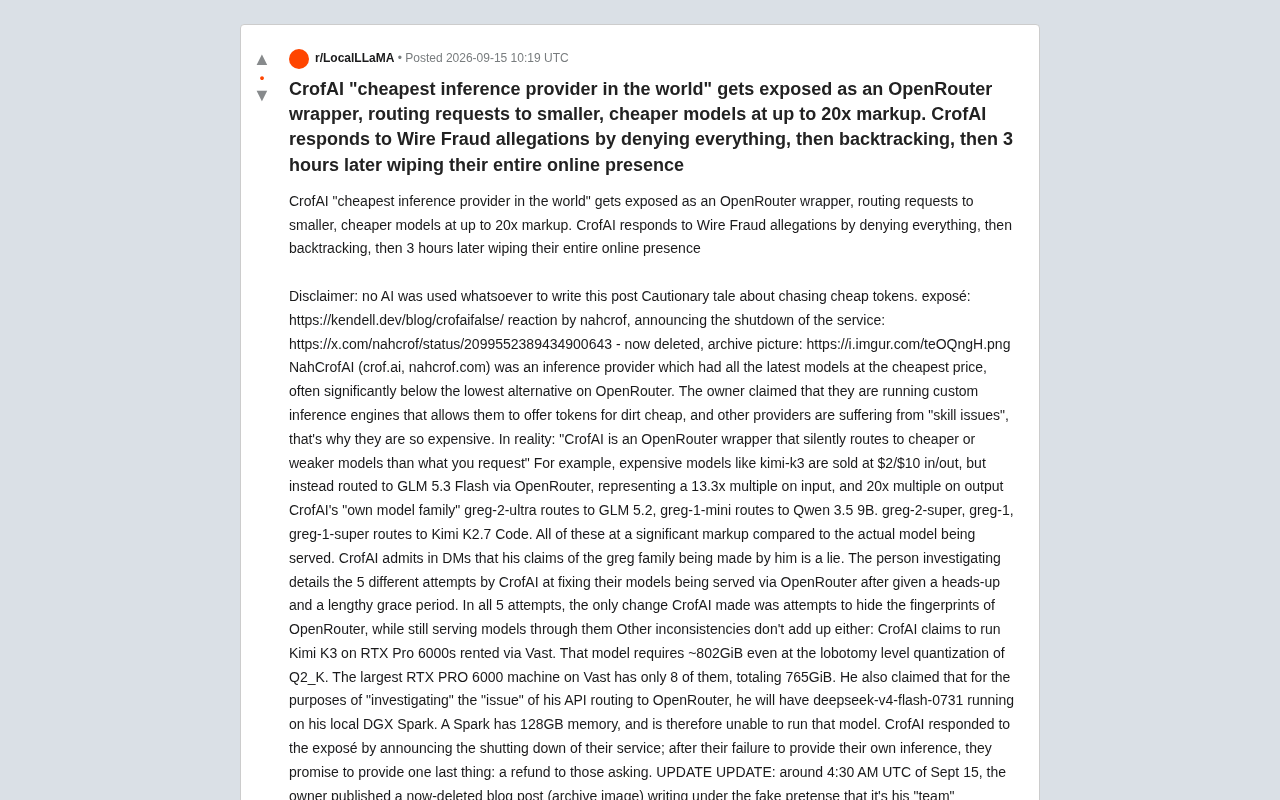
CrofAI Fraud Exposed: 'World's Cheapest AI Inference' Turns Out to Be an OpenRouter Wrapper Scam
CrofAI claimed to offer the world's cheapest AI inference, but was exposed as an OpenRouter wrapper silently rerouting requests to cheap models at up to 20x markups.