How Proverbs Reveal Collective Behavioral Norms: AI Quantitatively Analyzes 50,000 English Proverbs
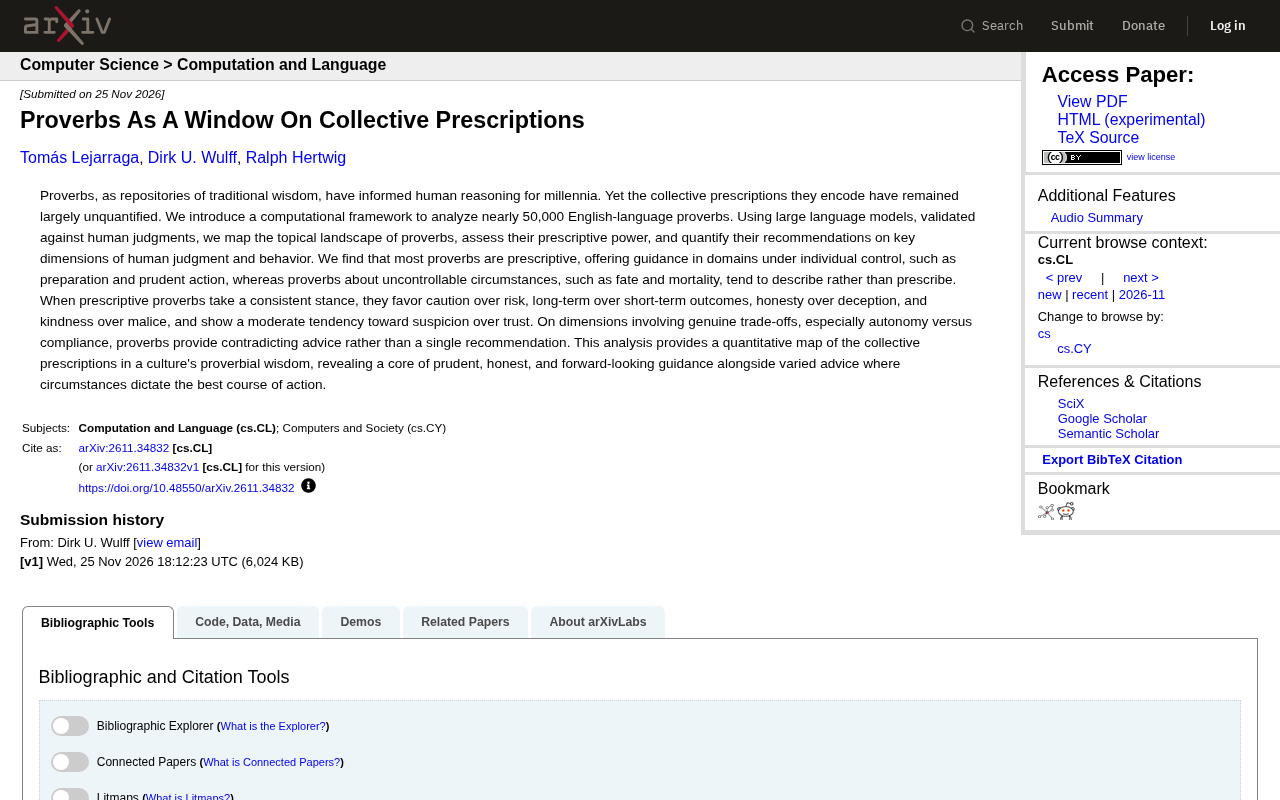
Study uses LLMs to analyze ~50,000 English proverbs, mapping their behavioral guidance.
A new study built a computational framework using LLMs to classify topics, assess directiveness, and quantify behavioral tendencies across nearly 50,000 English proverbs, validated against human judgment. It found most proverbs are directive and focus on controllable matters (preparation, prudence), while uncontrollable situations (fate, death) are mostly described. Consistent tendencies favor caution, long-term orientation, honesty, and goodwill, with mild skepticism; genuine trade-offs like autonomy vs. conformity yield contradictory advice. The method offers a reusable path for quantitative cultural corpus analysis, though conclusions are limited to English proverbs.
Proverbs, as vehicles of traditional wisdom, have influenced human reasoning and decision-making for thousands of years. Yet the collective behavioral norms encoded in proverbs have long lacked systematic quantitative study. A new study, through a computational framework, conducted a large-scale analysis of nearly 50,000 English proverbs, mapping for the first time the guidance proverbs offer across key dimensions of human judgment and behavior.
Research Framework: Parsing Proverbs with Large Language Models
The study constructed a computational analysis framework that uses large language models to perform topic classification, directiveness intensity assessment, and quantification of tendencies along key behavioral dimensions on nearly 50,000 English proverbs. The research team validated model outputs against human judgments to ensure the credibility of the analysis results.
The innovation of this approach lies in the fact that it no longer stops at subjective interpretation of individual proverbs, but treats proverbs as an integrated cultural corpus, extracting recurring value orientations from a macro perspective. Through topic modeling, researchers outlined the full landscape of domains covered by proverbs; through directiveness scoring, they distinguished which proverbs offer action advice and which merely describe reality.
Topic Modeling is a class of unsupervised machine learning techniques used to automatically discover latent thematic structures from large-scale text collections. Its basic assumption is that each document is composed of several topics mixed in certain proportions, and each topic is constituted by a set of high-probability words. The classic LDA (Latent Dirichlet Allocation) model is a representative example. In this study, topic modeling helped researchers distill the full landscape of covered domains (such as risk, interpersonal relationships, time, etc.) from nearly 50,000 proverbs, rather than relying on manually predefined categories.
Directiveness refers to the extent to which a proverb provides action advice or behavioral norms rather than merely describing reality. For example, "look before you leap" is highly directive, while "all men are mortal" is close to purely descriptive. Quantifying this dimension requires distinguishing linguistic functions such as imperative, advisory, and evaluative, and large language models demonstrate scalable advantages in such semantic judgments.
Core Findings: Advising on Controllable Matters, Describing Uncontrollable Ones
The analysis revealed a clear pattern: most proverbs are directive, and the guidance they offer concentrates on domains individuals can control, such as being prepared and acting prudently. In contrast, proverbs about uncontrollable circumstances such as fate and death tend toward description rather than exhortation.
This distinction has intuitive plausibility—people do not need to be reminded to face things that cannot be changed, but they do need guidance on how to manage things that can be controlled. Proverbs, as cultural tools, deploy their advisory energy precisely where action can make a difference.
Consistent Tendencies: Caution, Long-term Orientation, Honesty, and Goodwill
When directive proverbs take consistent positions on a given dimension, they exhibit clear preferences: caution over risk-taking, long-term outcomes over short-term outcomes, honesty over deception, and goodwill over malice. The study also found that proverbs show a mild tendency toward skepticism between trust and doubt.
These consistent tendencies constitute an identifiable cultural core—prudence, honesty, and future orientation. It is not abstract moral preaching, but behavioral defaults embedded in everyday language.
Genuine Trade-offs: Proverbs Offer Contradictory Advice
On dimensions involving genuine trade-offs, especially between autonomy and conformity, proverbs do not provide a single recommendation but rather offer mutually contradictory advice. This is not a flaw but a feature of the proverb system: when context determines the optimal course of action, collective wisdom responds with diversity rather than uniformity.
This finding challenges the simplistic view of proverbs as a unified moral authority. The proverb repertoire is more like a toolbox containing different and even conflicting tools for people to select from in specific situations.
Locus of control is a classic concept in psychology, proposed by Julian Rotter, referring to an individual's belief tendency regarding whether event outcomes are determined by their own behavior or by external forces. Those with an internal locus of control believe outcomes depend on their own actions, while those with an external locus of control attribute them to fate, luck, or others. The finding of this study—that proverbs more often advise on controllable matters and describe uncontrollable ones—echoes locus of control theory: proverbs, as cultural tools, concentrate action guidance in domains where people perceive they can exert influence, while turning to descriptive expression for situations beyond individual control. This correspondence provides a psychological anchor for understanding the cultural function of proverbs.
Autonomy vs. conformity is a value dimension that recurs in cross-cultural psychology. Hofstede's cultural dimensions theory and Schwartz's basic values theory both regard it as one of the core axes distinguishing cultural orientations. On this dimension, different proverbs may respectively support "going your own way" and "when in Rome, do as the Romans do"; the two do not constitute a logical contradiction but rather correspond to strategic choices under different social situations. Researchers point out that the contradictory advice offered by the proverb system on genuine trade-off dimensions precisely reflects collective wisdom's encoding of context dependency—it is not a unified set of axioms but a decision toolbox invoked by situation.
Methodological Implications and Limitations
The study demonstrates the potential of using large language models for cultural corpus analysis: models can process text that traditionally relied on human interpretation in a scalable manner while remaining grounded through validation against human judgment. But the study also has implicit limitations—the analysis results of English proverbs cannot be directly generalized to other linguistic cultures, and the influence of proverbs in contemporary actual usage still requires further investigation.
From a broader perspective, this study provides a reusable pathway for cultural psychology and computational social science: transforming formalized expressions of collective wisdom into quantifiable, comparable data. Proverbs are no longer just quoted sentences but become a window for understanding a culture's default behavioral norms.
One-line Summary
A study used large language models to analyze nearly 50,000 English proverbs, mapping their behavioral guidance.
Paragraph Summary
A new study constructed a computational framework using large language models to perform topic classification, directiveness intensity assessment, and quantification of behavioral dimension tendencies on nearly 50,000 English proverbs, validated against human judgment. The analysis found that most proverbs are directive, concentrating on advising about controllable matters (such as preparation and prudence), while tending toward description for uncontrollable circumstances such as fate and death. On dimensions with consistent positions, proverbs favor caution, long-term orientation, honesty, and goodwill, and exhibit a mild tendency toward skepticism; however, on genuine trade-off dimensions such as autonomy versus conformity, proverbs offer contradictory advice, reflecting context dependency. The study provides a reusable pathway for quantitative analysis of cultural corpora, but its conclusions are limited to English proverbs, and cross-cultural generalization requires caution.
Related articles

Stop Pasting AI Prompts Repeatedly: Optimize Your Claude Code Workflow with Skill Files
Repeatedly pasting AI prompts is inefficient and wastes tokens. Learn how to package workflows into Skill files that load on demand in Claude Code, Cursor, and Codex.
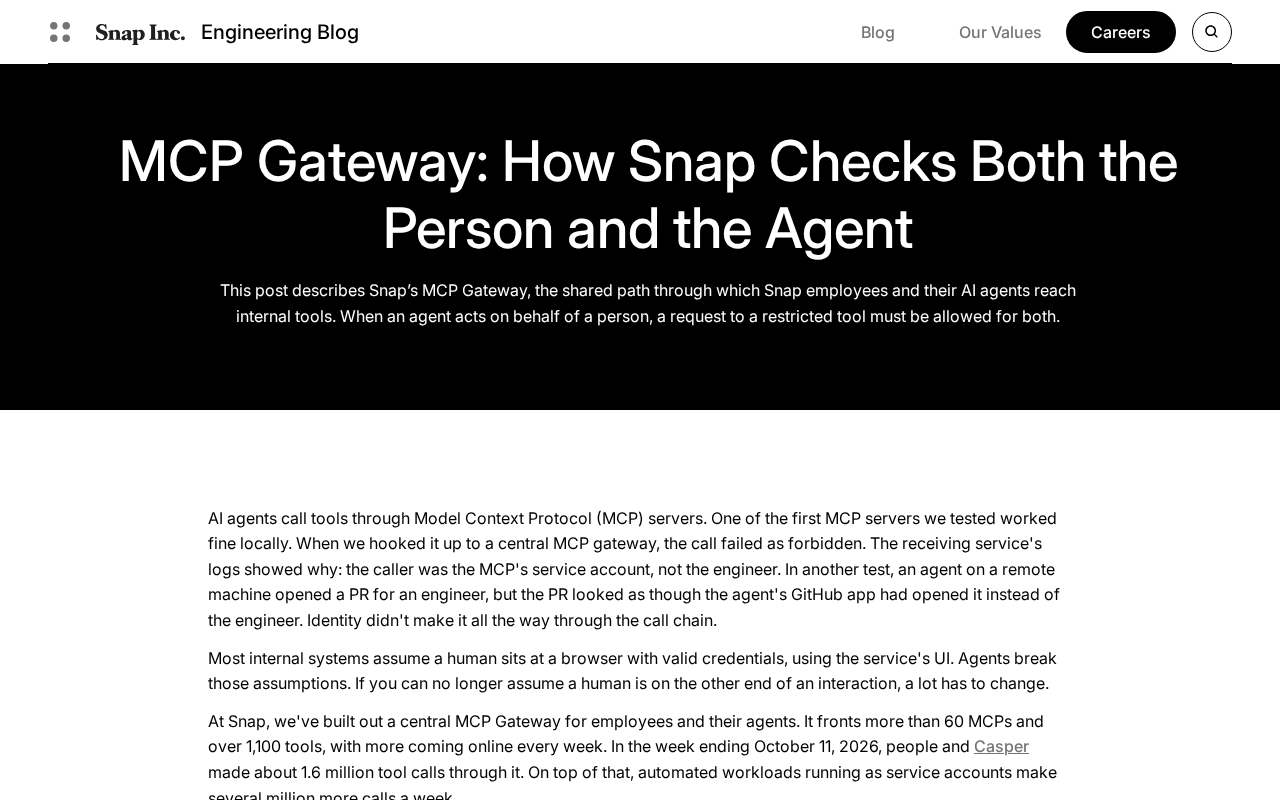
Snap's MCP Gateway: Verifying Both Human and Agent Identity
Snap's MCP Gateway verifies both user and agent identity in the agent call chain, solving the failure of traditional authentication models in LLM agent scenarios. This article analyzes the necessity of dual verification, the engineering advantages of centralizing at the gateway layer, and deployment challenges such as expressing delegation relationships and handling policy conflicts.

Google Forces AI Agents to Use Its Own MCP Servers, Yet the Gmail Version Can't Send Emails
Google pushes AI agents to use its MCP servers, but Gmail MCP can't send emails, sparking Hacker News debate on ecosystem control, security, and AI agent impact.