Snap's MCP Gateway: Verifying Both Human and Agent Identity
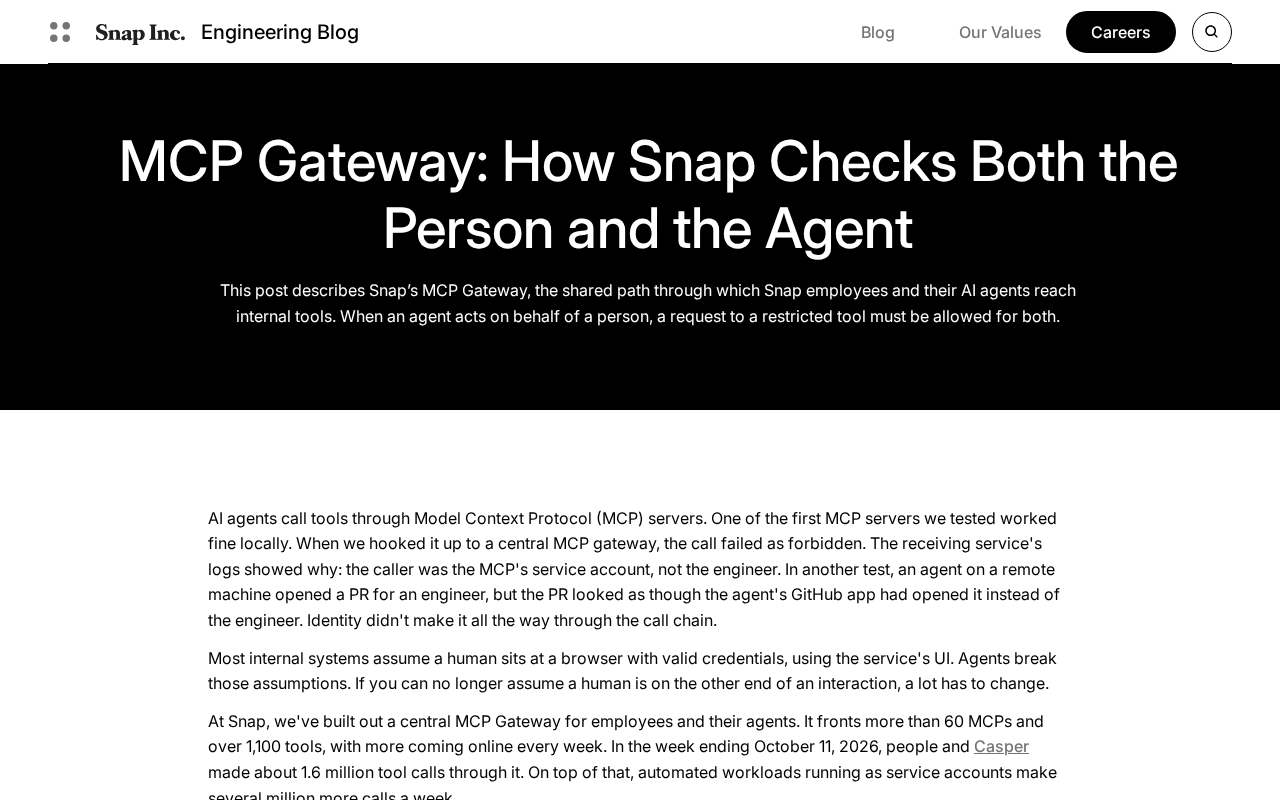
Snap proposes MCP Gateway to verify both user and agent identity on every agent call.
The article discusses how traditional single-subject authentication models fail when LLM-driven agents call external tools on behalf of users. Snap's MCP Gateway approach advocates verifying both "the person behind it" and "the agent performing the action" at the gateway layer, using centralized policy to ensure consistency and auditability while decoupling agent implementation from the security boundary. It analyzes engineering challenges including expressing delegation relationships via credentials, independent issuance and anti-impersonation of agent identity, and policy trade-offs when user authorization scope conflicts with agent permitted scope. Discussion on Hacker News is minimal (3 points, 0 comments), indicating the industry is still exploring, yet permission governance will be a key constraint as agents move to production.
When AI agents begin calling external tools on behalf of users, the traditional models of "authenticating only the user" or "authenticating only the service" start to break down. Snap's proposed MCP Gateway approach is to verify, on every agent call, both "the person behind it" and "the agent performing the action." Although this direction hasn't generated much buzz in early discussions, it points to a permission-governance challenge that cannot be avoided as agents move to large-scale deployment.
Why Agent Calls Need Dual Verification
In traditional API architectures, authentication typically revolves around two objects: user identity (who you are) and service credentials (what this application is allowed to do). But once LLM-driven agents appear as an intermediary layer, the call chain becomes "user → agent → tool service," with an entity capable of autonomous decision-making inserted in the middle.
This means verifying only the user is insufficient—an agent authorized by the same user might perform unauthorized actions without the user's knowledge. Verifying only the agent is also insufficient—there's no way to confirm whether it has actually received legitimate delegation from that user. The core proposition of MCP Gateway is to do both at the gateway layer simultaneously: confirm the person's identity and authorization scope, while also confirming the agent's own identity and the boundaries of behavior it is permitted to perform.
According to the discussion title on Hacker News, Snap's design is summarized as "How Snap Checks Both the Person and the Agent"—completing dual identity verification at a unified entry point. This is more controllable than implementing a separate set of verification logic in each downstream service.
MCP (Model Context Protocol) is a protocol proposed and open-sourced by Anthropic in late 2024, aimed at establishing a standardized way for LLM applications to connect with external data sources and tools. It adopts a client-server architecture: an MCP Host (such as Claude Desktop or an IDE plugin) connects via an MCP Client to individual MCP Servers, each of which exposes a set of tools, resources, and prompt templates. Agents can therefore discover and invoke external capabilities such as file systems, databases, and APIs through a unified interface, without having to write a separate adapter layer for each tool. MCP solves the problem of "how to connect," but explicitly leaves authorization, identity, and access control to implementers—which is precisely the context in which permission-governance solutions like MCP Gateway have emerged.
The Gateway Layer: A Centralized Choke Point for Agent Permissions
MCP (Model Context Protocol) enables agents to discover and invoke external tools in a standardized way, but the protocol itself does not specify how enterprises should enforce permission control. Placing verification at the Gateway rather than scattering it across individual MCP Servers offers several practical benefits.
Centralized verification means policies only need to be maintained in one place, and newly integrated tool services automatically inherit the same set of rules. Audit logs are also centralized at the gateway, enabling reconstruction of the full chain of "who, through which agent, called what, and when." For enterprise environments, this traceability is often more important than point performance.
Another implicit advantage is decoupling: agent implementations can iterate rapidly, while the security boundary stays fixed at the gateway layer and doesn't drift with them. The more autonomous the agent, the more stable this boundary needs to be.
Engineering Challenges of Dual-Subject Verification
Incorporating both "human" and "agent" as subjects into verification raises some less intuitive questions.
The first is how to express the delegation relationship. The user's authorization needs to be carried by the agent and injected into the verification flow at the gateway, which requires that the authorization credential both proves the user's identity and constrains the agent's scope of behavior—rather than simply forwarding a user token.
The second is the trustworthiness of agent identity. The agent is itself a software entity, and how its identity is issued and how to prevent impersonation require a mechanism independent of the user system. Two subjects, two sets of credentials, one call—the gateway needs to complete all verification within an acceptable latency range.
The third is handling policy conflicts. When the user's authorization scope and the agent's permitted scope are inconsistent, whether to take the intersection or the union directly determines the security floor of the system. Such decisions must be explicitly defined at the gateway layer rather than left to downstream components to interpret individually.
OAuth 2.0's delegated authorization model provides a reference for understanding "dual subjects." In standard OAuth, the resource owner authorizes a client to access resources on their behalf, and the token both identifies the authorization scope and implicitly encodes the delegation relationship. But in agent scenarios, OAuth's "client" typically refers to a statically registered application, whereas agents may be dynamically generated and compose tool calls, making their behavioral boundaries difficult to fully express with static scopes. In addition, Token Exchange as defined in RFC 8693 allows one party to exchange its own credentials for a token representing another subject, which can be used to express the chained relationship of "user delegates to agent"; workload identity solutions such as mTLS and SPIFFE are used to issue the agent's own identity. In engineering practice, multiple mechanisms often need to be combined to verify both the human and the agent subjects in a single call.
Implications for Agent Deployment
This topic has received little attention on Hacker News (the original post had only 3 points and no comments), indicating that it is still at an early exploratory stage and the industry has yet to converge on a consensus solution. But the problem it touches on is universal: as agents move from demos to production, permission governance will become a harder constraint than model capability.
Snap's MCP Gateway offers an architectural direction worth considering—front-loading dual verification into a unified gateway, trading centralized policy for auditability and consistency. For teams integrating agents into internal systems, the value of this approach lies not in the specific implementation but in the reminder: an agent's permission model needs to answer both "who authorized it" and "who is executing" at the same time.
FAQ
What's the difference between MCP Gateway and a regular API gateway? A regular API gateway primarily verifies the caller's identity and service credentials; an MCP Gateway needs to additionally handle the identity of the agent as an autonomous entity, as well as its delegation relationship with the user—shifting the verification object from a single subject to dual subjects.
Why can't permission verification be done only in the MCP Server? It can, but policies would be scattered across services, making consistency and centralized auditing difficult to guarantee. Centralizing at the gateway layer allows newly integrated services to automatically inherit the same set of rules and makes it easier to reconstruct the full call chain.
Does dual-subject verification significantly increase latency? That depends on credential design and caching strategy. The original discussion provided no performance data; in engineering practice, credential caching and fast paths within the gateway are needed to balance security and latency.
One-line Summary
Snap proposes MCP Gateway to verify both user and agent identities on every agent call.
Paragraph Summary
The article discusses how traditional single-subject authentication models fail when LLM-driven agents call external tools on behalf of users. Snap's MCP Gateway approach advocates verifying both "the person behind it" and "the agent performing the action" at the gateway layer, using centralized policy to ensure consistency and auditability while decoupling agent implementation from the security boundary. The article analyzes the engineering challenges of dual-subject verification, including credential-based expression of delegation relationships, independent issuance and anti-impersonation of agent identity, and policy trade-offs when user authorization scope conflicts with agent permitted scope. The topic has very low discussion on Hacker News (3 points, 0 comments), reflecting that the industry is still at an early exploratory stage, but permission governance will become a key constraint as agents move from demos to production.
Related articles

Stop Pasting AI Prompts Repeatedly: Optimize Your Claude Code Workflow with Skill Files
Repeatedly pasting AI prompts is inefficient and wastes tokens. Learn how to package workflows into Skill files that load on demand in Claude Code, Cursor, and Codex.
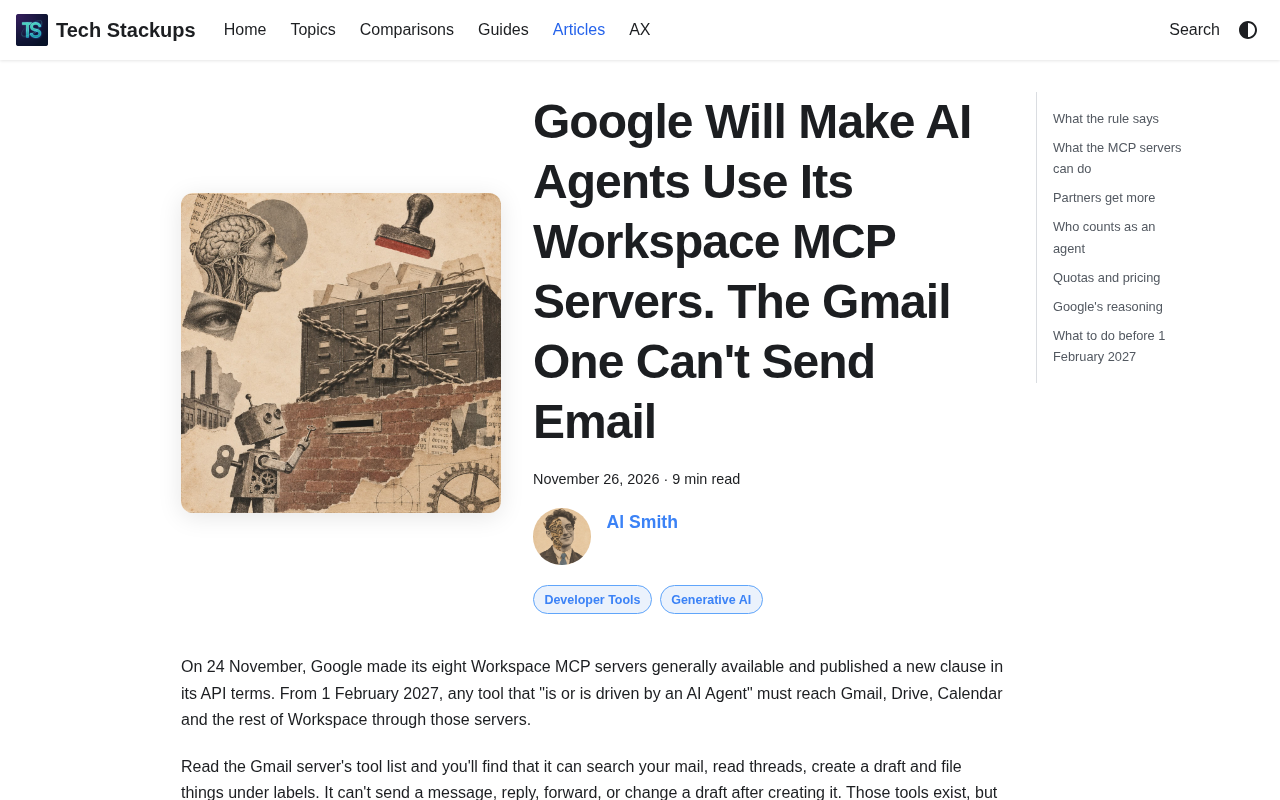
Google Forces AI Agents to Use Its Own MCP Servers, Yet the Gmail Version Can't Send Emails
Google pushes AI agents to use its MCP servers, but Gmail MCP can't send emails, sparking Hacker News debate on ecosystem control, security, and AI agent impact.
X Launches Its First Parental Controls Feature: A New Step in Teen Account Management
X (formerly Twitter) rolls out its first parental controls, letting parents view teen usage time, set daily limits, and approve follow requests. Details, background, and challenges.