How the GLiNER Open-Source Model Works: An Alternative to Jev AI

GLiNER uses labels-as-input and a bidirectional encoder to achieve efficient zero-shot entity extraction, offering an open-source alternative to closed-source solutions.
GLiNER is an open-source information extraction model family whose core innovation is feeding labels directly as part of the input text and jointly encoding them with the text to be analyzed, so the model needs no retraining for each new entity category—just provide a list of labels at inference time for zero-shot or few-shot extraction. All family members use a bidirectional Transformer encoder architecture without an autoregressive head, resulting in faster inference and lower resource usage, with higher parameter efficiency than autoregressive large models on structured extraction tasks. GLiNER 2.5 retains the original NER capability while extending to more tasks and sharing the same joint-encoding interface to reduce multi-task deployment complexity. It suits custom field extraction from contracts, resumes, and literature, but lacks free-form text generation, making it an open-source, self-hostable alternative to closed-source solutions like Jev AI.
In the field of information extraction, named entity recognition (NER) has long relied on large language models or specialized classifiers, but an open-source model family called GLiNER offers a fundamentally different approach. According to analysis by a YouTube tech channel, GLiNER not only continues the original NER task but also extends to more flexible capabilities, making it a strong alternative to closed-source solutions like Jev AI.

GLiNER's Core Design: Labels as Input
The name GLiNER comes from combining Generalist and Named Entity Recognition. Unlike traditional sequence labeling models, GLiNER feeds labels directly as part of the input text, sending them into the model together with the text to be analyzed. This amounts to encoding both the "question" and the "state" into the input, allowing the model to dynamically understand which entity types need to be extracted during bidirectional encoding.
According to the YouTube channel's explanation, this design means GLiNER does not need to be retrained for each new entity category—you simply provide a list of labels at inference time to complete extraction. The original model focused on NER, while the latest GLiNER 2.5 retains that capability while supporting more tasks.

Zero-shot learning refers to a model completing a task or category at inference time that it has never seen during training. Traditional supervised learning requires labeled samples for every target category, whereas zero-shot capability lets a model generalize to new categories. GLiNER encodes label text together with input text, enabling the model to compare the semantic representations of the two and thereby determine whether a text span belongs to a given label—so no retraining is needed for each new entity category. Strictly speaking, the actual performance is closer to "few-shot prompting" than to true zero-shot, since the semantics of the label words themselves still depend on language knowledge acquired during pretraining.
Bidirectional Encoder Architecture: The Advantage of No Autoregressive Head
The GLiNER family all use bidirectional encoder models, a variant of the Transformer that lacks the autoregressive head found in language models. This means the model does not generate output token by token; instead, it performs bidirectional contextual encoding of the input sequence, understanding the correspondence between labels and text more efficiently.
The direct benefits of this architecture are faster inference and lower resource usage, making it especially suitable for extraction scenarios that require real-time processing of large volumes of text. Compared with autoregressive large models, GLiNER shows higher parameter efficiency on structured information extraction tasks.

Autoregressive generation refers to a model predicting the next token one at a time and feeding the already-generated tokens as input for the next step—the GPT series works this way. The autoregressive head is the layer stacked on top of the encoder that is responsible for outputting a probability distribution for each token. Remove it, and the model is left with only the encoder, which outputs a contextual vector for each token rather than a generated sequence. GLiNER performs discriminative scoring directly on these vectors: it computes a match score for each candidate span in the text against each label, then filters entities by threshold. This is the essence of its "extraction rather than generation" approach, which explains why it is parameter-efficient for structured extraction yet cannot perform tasks requiring free-form generation, such as summarization or conversation.
Differences from Traditional NER and Large-Model Approaches
Traditional NER models are typically trained for a fixed label set, and adding new categories requires re-annotation and fine-tuning. GLiNER's "labels as input" mechanism enables zero-shot or few-shot entity extraction—users simply list the target labels in the input, and the model attempts to identify them. Compared with commercial solutions like Jev AI, this offers an open-source, self-hostable alternative path.
According to the same source, although the specific tasks differ, the GLiNER model family shares the same core idea: jointly encoding labels and input text. This unified interface reduces the complexity of multi-task deployment, allowing developers to handle different needs such as NER and relation extraction with a single framework.

Jev AI is mentioned in the article as a representative closed-source commercial information extraction solution, without details on its specific products or pricing. It should be noted that closed-source solutions typically provide hosted APIs, pretrained domain models, and accompanying data annotation and deployment services, so users do not need to maintain infrastructure themselves; the trade-off is that data must leave the local environment, the model's internal logic cannot be audited, and long-term costs rise with call volume. GLiNER's open-source path is the opposite: model weights can be downloaded, deployed locally, and fine-tuned, with data staying within the internal network—but the team must handle inference service operations and performance evaluation on its own. The two are not a simple substitute relationship; the choice depends on data compliance requirements, call volume, and engineering capability.
Use Cases and Limitations
GLiNER is particularly well suited to scenarios that require flexible definition of entity types, such as extracting custom fields from contracts, resumes, or scientific literature. Its bidirectional encoder structure also has advantages in long-text understanding. However, because it lacks autoregressive generation capability, GLiNER is not suitable for tasks that require free-form text generation, such as summarization or conversation.
For teams seeking an alternative to Jev AI, GLiNER offers an open-source, auditable, and easy-to-integrate option. With the release of GLiNER 2.5, the series is gradually expanding into a general-purpose information extraction tool while retaining its core NER capabilities.
Related articles

5.3-Inch Phone Crowdfunding: Small-Screen Revival or a $599 Compromise?
Enough Phone crowdfunds on Kickstarter with a 5.3-inch screen, 8GB RAM, and 50MP sensor at $599. The Vergecast asks: can small phones find a middle ground?
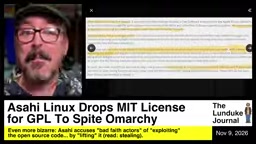
Asahi Linux Ditches MIT for GPL: A Farce Aimed at Omarchy?
Asahi Linux switched its code license from MIT to GPL V2, accusing Omarchy of stealing code and commercializing it. Analysis suggests the move is poorly justified and violates the MIT license, exposing political divisions and AI controversies in the open source community.
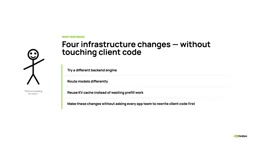
Understanding NVIDIA Dynamo Frontend in 5 Minutes: An OpenAI-Compatible Entry Point for Inference Architecture
What is the NVIDIA Dynamo frontend? Based on the official 5-minute series, this article explains how it uses an OpenAI-compatible API as a stable boundary to enable backend engine replacement, routing, and KV cache reuse in a decoupled architecture.