How to Build an AI-Native Engineering Organization: From Tools to Culture
How to Build an AI-Native Engineering …
AI-native engineering orgs need systematic redesign across workflows, skills, and trust—not just more tools.
The article argues that "AI-native" differs fundamentally from "AI-assisted": processes, collaboration, and performance evaluation must be redesigned around AI. It outlines three pillars—workflow restructuring with AI as default participant, redefining engineer skills toward problem definition and quality judgment, and building auditable trust—plus cultural challenges like tolerating imperfect AI drafts and maintaining human-readable decision records.
Why "AI-Native" Is Not Just About Adding a Tool
A discussion titled "Building an AI-native engineering org" on Hacker News drew attention. The post itself didn't score highly, but the question behind it touches on the core anxiety of today's technical teams: as AI coding assistants, automated test generation, and intelligent code review gradually become standard, is the engineering organization still operating under the old paradigm of "humans + tools"?
"AI-native" is fundamentally different from "AI-assisted." The former means the organization's processes, collaboration methods, and even performance evaluation are redesigned around AI capabilities; the latter merely layers AI tools on top of existing processes and often yields limited results. According to the viewpoint implicit in that discussion, a genuinely AI-native engineering organization needs to advance simultaneously on three levels: workflow restructuring, skill redefinition, and the establishment of trust mechanisms.
Workflow Restructuring: Making AI a Default Participant
In the traditional software development lifecycle, requirements, design, coding, testing, and deployment are handed off between different roles. The first step for an AI-native organization is to embed AI into the default path of every stage, rather than treating it as optional.
Specifically, this includes: having AI participate in boundary-condition analysis during requirements clarification, having AI generate initial implementations and unit tests during coding, using AI for a first round of static checks and pattern recognition during code review, and even having AI assist in analyzing logs and alerts after deployment. The key is that the outputs of these stages need to be treated by human engineers as "reviewers" rather than "executors."
One noteworthy point from the discussion: if AI-generated code requires humans to rewrite it line by line, that indicates a problem with the workflow design. What AI-native organizations pursue is the rhythm of "AI produces, humans decide," rather than making engineers do secondary labor on AI drafts. This requires teams to redesign review standards, define acceptable quality thresholds for AI output, and establish fast feedback loops.
SDLC (Software Development Lifecycle) is a foundational framework in software engineering, typically including requirements analysis, design, coding, testing, deployment, and maintenance. Traditionally, these stages are handed off between different roles (product managers, architects, developers, test engineers, operations) in sequential or iterative fashion. The AI-native organization's transformation of this framework does not overturn the stage divisions but changes the "default executor" of each stage: AI becomes the first responder, while humans shift to review and decision nodes. This shift requires teams to redefine the entry and exit criteria for each stage—for example, "done" in the coding stage is no longer based on humans finishing the code, but on AI output passing preset quality thresholds and humans completing module-level sign-off.
Skill Redefinition: Engineers' Core Competencies Are Shifting
When AI can complete a large number of patterned coding tasks, the anchor points of an engineer's value move toward two ends: one is problem definition and system design, and the other is quality judgment and exception handling.
The insight implicit in the discussion is that AI-native organizations no longer demand "how fast you write" from engineers, but "how accurately you ask" and "how correctly you judge." Prompt engineering is only a surface-level skill; deeper are the precise expression of business constraints, sensitivity to hidden defects in AI output, and control over overall system consistency.
This also means that hiring and development systems need to adjust. The past approach of assessing algorithm problems and coding speed struggles to measure a candidate's judgment in an AI-collaborative environment. Some teams have begun introducing "AI collaboration interviews"—having candidates complete a task together with AI tools and observing how they decompose problems, how they verify AI output, and how they discover boundary conditions that AI missed.
Prompt Engineering refers to the practice of carefully designing input instructions to guide large language models toward desired outputs. In AI-native engineering organizations, it is regarded as a foundational but non-core skill. More critical is "context engineering"—the ability to provide AI with precise business constraints, system boundaries, and historical decision information. Engineers need to learn to translate vague requirements into specifications that AI can understand, and to design verification strategies to check whether AI output satisfies implicit constraints. This ability is difficult to assess through traditional algorithm problems and is closer to a synthesis of systems analysis and quality assurance.
Trust Mechanisms: From "Distrusting AI" to "Auditable Trust"
The biggest resistance facing AI-native engineering organizations is often not technology but trust. Engineers are naturally wary of black-box outputs, which is itself a good thing. The problem is that if trust mechanisms are absent, teams fall into two extremes: either full manual review causes an efficiency regression, or blindly adopting AI output leads to quality incidents.
The solution pointed to by the discussion is to establish "auditable trust." Specific practices include: tagging AI-generated code with traceable markers that record prompts and generation context; retaining human sign-off nodes on critical paths but raising the granularity of sign-off from "line by line" to "module by module"; and establishing metrics for AI output quality, using data rather than feeling to adjust trust thresholds.
Auditability in the context of AI collaboration refers to the ability to trace, reproduce, and verify AI output. Unlike traditional code review, AI-generated code requires additional metadata such as prompts, model versions, generation times, and context windows to locate root causes when problems arise. Auditable trust mechanisms typically include three layers: output marking (identifying which content was generated by AI), process recording (saving inputs and parameters at generation time), and quality measurement (dynamically calibrating trust thresholds using metrics such as defect rate and rework rate). Without auditability, teams often can only choose between two options: full manual review or full trust—both unsustainable.
The Invisible Challenges of Organizational Culture
Technical process transformation is relatively visible, while cultural adjustment is more subtle. AI-native organizations need to tolerate a new kind of "imperfection": AI-generated first drafts may have inconsistent style, redundant comments, or even seemingly reasonable but actually incorrect logic. Teams need to build a culture that neither lets these flaws flow into production environments nor rejects the entire AI collaboration model because of individual flaws.
Another cultural challenge is knowledge transfer. When a large amount of coding knowledge is deposited in AI models and prompt libraries, how do newcomers understand the historical decisions of system design? Although the discussion did not elaborate, this is an issue that AI-native organizations should plan for in advance—establishing human-readable design decision records maintained in parallel with AI-usable context libraries.
Conclusion: AI-Native Is an Organizational Design Movement
Returning to that Hacker News discussion, its value lies not in providing standard answers but in raising the right questions. Building an AI-native engineering organization is essentially an organizational design movement: reallocating the boundary of responsibilities between humans and AI, redefining engineers' competency models, and re-establishing the balance between quality and trust. Teams that treat AI merely as an efficiency tool without touching processes and culture are likely to fall behind in the next round of efficiency competition.
For teams exploring this direction, a pragmatic starting point is: choose a module of moderate complexity, have AI participate throughout from requirements analysis to test generation, record the human intervention points and time consumption at each stage, and use real data to calibrate your AI-native workflow—rather than starting from an organizational chart.
One-line Summary
AI-native engineering organizations require systematic restructuring across workflows, skills, and trust mechanisms—not simply stacking tools.
Paragraph Summary
Based on a Hacker News discussion, the article points out that "AI-native" is fundamentally different from "AI-assisted": the former requires processes, collaboration, and performance evaluation to be redesigned around AI capabilities. The path forward includes three levels: workflow restructuring, making AI a default participant in requirements, coding, review, and operations while pursuing the rhythm of "AI produces, humans decide"; skill redefinition, shifting engineers' value toward problem definition and quality judgment, with hiring needing to introduce AI collaboration interviews; and trust mechanism building, establishing "auditable trust" through traceable markers, tiered sign-off, and quality metrics. The article also emphasizes invisible cultural challenges, such as tolerating imperfection in AI first drafts and maintaining human-readable design decision records. The ultimate conclusion is that AI-native transformation is essentially an organizational design movement, and a pragmatic starting point is to select a moderately complex module for full AI trial use and calibrate processes with data.
Related articles
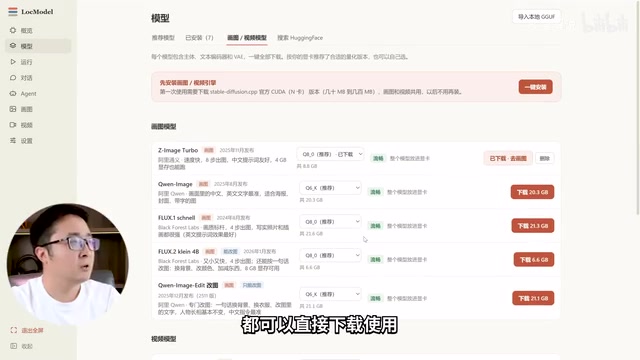
LocModel: The Local AI Deployment Powerhouse — Run Open-Source Models and AI Generation with One Click
LocModel is a local AI deployment tool that auto-adapts to hardware, downloads open-source models with one click, and supports image/video generation, uncensored LLMs, and Agents — completely free.

Antigravity CLI: Free Access to Top Gemini and Claude Models in the Terminal
Antigravity CLI (agy) claims to offer free access to top models like Gemini 3.1 Flash and Claude Sonnet in the VS Code terminal, with installation in seconds. This article breaks down its workflow, the value of in-terminal model calls, and the security and sustainability questions behind the free claim.
Chatbots vs. AI Agents: Key Differences and How to Choose
Chatbot vs. AI agent: how do they differ? We break down the three dimensions—tools, memory, workflow—compare four real scenarios, and offer risk-control advice and selection criteria.