How to Choose a $20 AI Membership: GPT vs Claude vs Gemini Hands-On Comparison

ChatGPT Plus vs Claude Pro vs Google AI Pro: none does it all — choose by scenario.
A Bilibili creator compares the $20-tier ChatGPT Plus, Claude Pro, and Google AI Pro. Gemini has the smallest chat quota but gains value from Google's Flow video and Nano Banana image ecosystem; GPT splits chat, image, and Codex quotas and is well-rounded, yet burns its five-hour quota in seconds on video editing with opaque progress and AI-flavored output; Claude beats GPT on capability (~20% on flagship models) and quota but suffers from account bans. The verdict: Claude for coding, GPT for daily tasks, Gemini for video and Google's ecosystem.
For a $20/month AI membership, which one should you go with? A Bilibili creator, drawing on his own hands-on experience, ran a "from solid to stellar" comparison of ChatGPT Plus, Claude Pro, and Google AI Pro. The conclusion is somewhat counterintuitive: even Claude, which he ranks first overall, doesn't beat the bottom-ranked Gemini in every scenario.
Gemini: Mediocre Chat Experience, but the Ecosystem Bonus Is Real
Looking purely at Gemini's chat client, the creator thinks $20 is "genuinely not worth it" — its quota is the smallest of the three. But Google's AI ecosystem is the reason he can't bring himself to give it up.
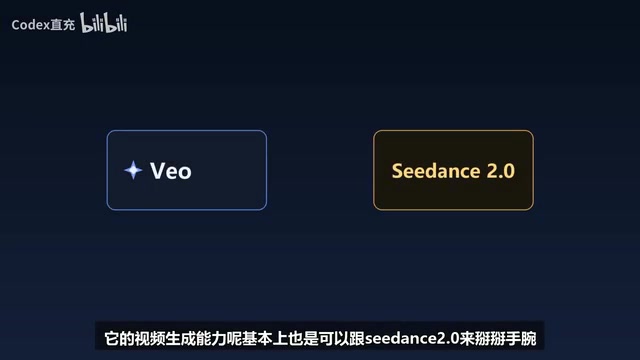
A single membership bundles perks across multiple products: 1,000 credits per month for Flow video generation, which includes the Veo video model and can basically go toe-to-toe with Kling 2.0 on video generation; plus Nano Banana image generation, Notebook, and other tools. It's effectively one membership unlocking several of Google's AI products.
When writing voiceover scripts, Gemini also sounds the most human of the three. Add to that Google's earlier promotion offering students a free year of membership — if you can get a year for free, there's even less to complain about. The creator's verdict is blunt: the chat experience alone is pretty weak, but counting the entire Google AI ecosystem, this $20 is actually a good deal.
Flow and Veo: Flow is an AI filmmaking tool built by Google on top of the Veo video generation model, supporting text-to-video, image-to-video, and shot extension. It's aimed primarily at creators doing storyboard design and short film generation. Veo is Google's flagship video generation model, with noticeable improvements over its predecessor in visual consistency, camera control, and physical realism, and is often compared with models like China's Kling 2.0. The 1,000 credits included with the membership offset generation runs in Flow, with credit consumption tied to video length and resolution.
Nano Banana: This is the community nickname for the image generation and editing model within Google's Gemini system (officially Gemini 2.5 Flash Image), known for character consistency and conversational local editing — users can directly modify specific elements in an image using natural language without regenerating the whole picture.
GPT: Quota Management Is the Achilles' Heel, but Task Separation Saves It
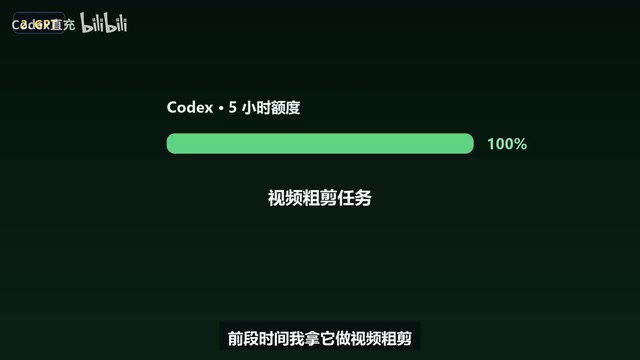
The creator's assessment of GPT is more nuanced. His most frustrating experience was using it for rough video editing: the task had only been running for ten or twenty seconds when the five-hour quota was already used up. What's worse, the project got stuck halfway through and there was no way to take over manually — it's all a black box in between, and you have to wait for the next five-hour window to open before you even know what it did during the last one.
Aesthetics is another complaint. When doing front-end motion graphics or writing voiceover scripts, GPT gives the impression that "the capability is there, but it really has no taste" — the output often reeks of AI, and you end up revising it several times yourself.
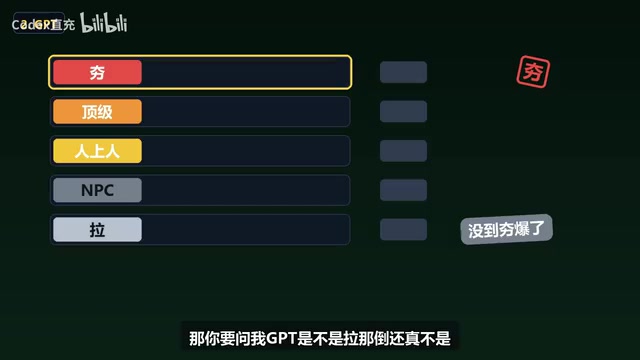
But GPT isn't without advantages. Quotas for daily chat, image generation, and Codex are calculated separately, so running out of Codex quota doesn't affect continued chatting and image generation. Combined with genuinely well-rounded capabilities in image generation, multimodality, and handling everyday odd jobs, this $20 is still worth it. The creator's positioning for it is "solid, but not stellar."
Codex and Separate Quota Pools: Codex originally referred to OpenAI's series of code generation models; today in the ChatGPT product it usually refers to the programming agent mode with autonomous execution capabilities, able to read and write files, run commands, and complete multi-step development tasks. Such tasks are long-running and token-heavy, so OpenAI sets up a separate usage pool for the programming agent that doesn't compete with daily chat or image generation. The "five-hour quota" mentioned in the article is a rolling-window rate limit: usage accumulates within a fixed time window, and once exhausted you must wait for the window to reset — during which you can't see the intermediate execution details, which is why the author calls it a "black box."
Claude: Best in Both Capability and Quota, but Account Bans Are the Biggest Risk
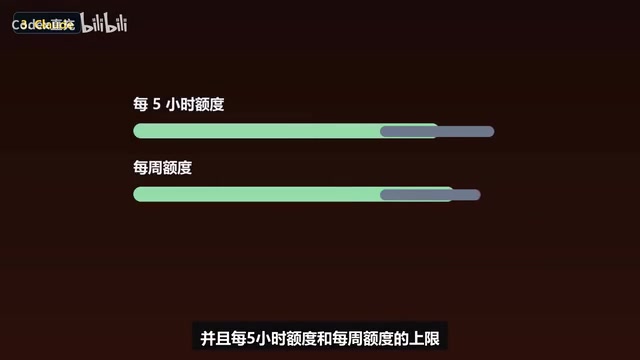
Claude is the one the creator is willing to call "stellar" outright. Whether in model capability, product pricing, or usage quota, it clearly beats GPT. Comparing flagship models, Claude's capability is about 20% higher than GPT's, and both its five-hour and weekly quota caps are far higher than GPT's.
But it has one fatal flaw: account risk control. This also explains the opening statement — even the most stellar Claude isn't better than Gemini in every respect.
Account Risk Control: Anthropic enforces fairly strict risk control on Claude accounts. Common triggers include using network nodes from unsupported regions, shared accounts, abnormally high-frequency calls, and mismatches between payment method and login location. After a ban, detailed reasons are often not provided, the appeal process is lengthy, and refunds for already-paid fees are complicated. For heavy users, this means preparing backup accounts or backup providers — which is the key reason why "most capable" doesn't equal "least hassle."
How to Choose: Match by Scenario
None of the three $20 memberships can fully replace the others. The creator's recommendations: if you mainly write code and build projects, go with Claude; if you chat, generate images, and handle all sorts of odd jobs, GPT is more suitable; if you often make AI videos, write copy, and can make use of Google's ecosystem, Gemini is actually pretty great.
This also indirectly shows that competition among AI memberships has shifted from single-model capability to a comprehensive contest of ecosystem and quota design.
One-line Summary
A comparison of ChatGPT Plus, Claude Pro, and Google AI Pro: no one does it all — choose by scenario.
Paragraph Summary
A Bilibili creator, drawing on his own experience, ran a hands-on comparison of the $20-tier ChatGPT Plus, Claude Pro, and Google AI Pro. Gemini has the smallest chat quota of the three, but Flow video generation, Nano Banana images, and other Google ecosystem perks make the membership better value; GPT calculates daily chat, image generation, and Codex quotas separately and is well-rounded in multimodality and odd jobs, but rough video editing exhausts the five-hour quota in ten or twenty seconds, the process is opaque after interruption, and its aesthetics lean "AI-flavored"; Claude's model capability and quota caps clearly beat GPT — flagship models about 20% higher — but it's dragged down by account risk control. The author concludes the three can't replace one another: choose Claude for coding, GPT for daily odd jobs, and Gemini for AI video and the Google ecosystem — competition has shifted to a comprehensive contest of ecosystem and quota design.
Related articles

34 AI Coding Assistants Battle It Out in the Terminal — How to Avoid Picking Wrong
34 AI coding assistants are flooding the terminal, and Orca supports multi-agent parallelism. This article analyzes the consolidation trend behind the gold rush, the cost traps of multi-agent parallelism, and how to maintain an agent-neutral workflow to avoid picking the wrong tool.

Gemini CLI in Practice: An AI Coding Agent in Your Terminal
A deep dive into Gemini CLI: from installation and authentication to building a task management app hands-on, covering plan mode, auto-debugging, GEMINI.md context persistence, and token cost tracking.

Open Design: A Free Open-Source Alternative to Claude Design That Activates Your Coding Agent
Open Design is a free, open-source Claude Design alternative that runs locally with 250+ design skills, auto-detects 16 coding agents, and supports prototypes, slides, and mobile UIs.