How to Choose a Machine Learning Course for Beginners: A Complete Roadmap

A complete, beginner-friendly ML learning roadmap covering math, Python, Andrew Ng, fast.ai, Kaggle, and CS229.
This guide addresses one of the most common beginner questions in ML: where to start. It breaks down the essential prerequisites (math and Python), recommends a proven learning sequence from Andrew Ng's intro course to fast.ai, Kaggle competitions, and CS229, and explains the psychology behind common pitfalls like course-hoarding and decision fatigue.
A Common Yet Tricky Question
In Reddit's machine learning communities, you'll see this question almost every day: "Can anyone recommend some good machine learning courses? I'm a complete beginner and have no idea where to start." Simple as it sounds, this question reflects a confusion shared by countless beginners — faced with an overwhelming number of online courses, tutorials, and learning resources, where on earth do you begin?

The sheer frequency of this question points to a core contradiction in learning machine learning: there's a massive surplus of resources, but a severe shortage of clear roadmaps. For someone starting from scratch, the real challenge has never been "I can't find any courses" — it's "how do I make the right choice among so many options" and "how do I build a progressively structured knowledge base."
It's worth noting that this dilemma isn't unique to machine learning. Research published jointly by MIT and Harvard shows that the average completion rate for MOOC (Massive Open Online Course) courses on major platforms sits between just 5% and 15%. There are deep structural reasons behind this figure: traditional universities build a system of enforced accountability through tuition commitments, peer pressure, fixed schedules, and immediate feedback from professors. MOOCs, with their asynchronous, free or low-cost format, dramatically lower the barrier to entry — but simultaneously weaken this accountability structure. Educational psychologists call this the "commitment and consistency deficit" problem: the less a person invests in a course (time, money, social reputation), the lower the psychological cost of dropping out. Researchers attribute this to a lack of external accountability, procrastination caused by asynchronous learning, and the gap between course design and learner expectations. Understanding this context helps learners set more realistic expectations from the start and proactively design external constraints to fight the pull of procrastination.
Three Things You Must Figure Out Before Choosing a Course
Before you rush to open any course, it's worth taking time to think through the following three questions — this matters far more than scrambling to find video links.
1. How Strong Is Your Math Foundation?
Machine learning is, at its core, applied mathematics engineered into practice. This isn't an exaggeration: take the most common example of gradient descent — it relies on the concept of partial derivatives from calculus to minimize a loss function; backpropagation in neural networks is a direct application of the chain rule; classical algorithms like Support Vector Machines and Principal Component Analysis are deeply rooted in the vector space theory of linear algebra; and probability and statistics provide the theoretical foundation for Bayesian classifiers, Gaussian mixture models, and more.
These three mathematical pillars don't exist in isolation — they have deep historical roots and deeply intertwined logical connections. Linear algebra provides ML with a language for representing data: matrices are natural containers for data, while eigenvectors and eigenvalues reveal the underlying structure within it. Calculus provides the tools for optimization: the differential calculus laid out by Leibniz and Newton in the 18th century was later adapted into the theoretical basis for numerical optimization algorithms like gradient descent in the 20th century. Probability and statistics evolved from Bayes' 18th-century theory of inverse probability into today's fused framework of Bayesian optimization and maximum likelihood estimation in machine learning. The convergence point of all three is the field of computational statistics and numerical optimization theory, which developed rapidly between the 1980s and 2000s — and this is the core mathematical entry point for understanding modern ML algorithms. Beginners don't need to master every branch, but reaching the level where you can follow derivations and understand mathematical notation is the minimum threshold for a smooth start.
If you're still unfamiliar with these mathematical tools, jumping straight into a deep learning course will most likely end in dropout. Try a quick self-assessment:
- If your math foundation is weak, prioritize brushing up on linear algebra (matrix operations, vector spaces), calculus (derivatives, gradients), and probability and statistics (distributions, Bayesian thinking).
- Khan Academy and 3Blue1Brown's visual math series are widely recognized as high-value introductory resources — approachable and effective.
2. How Are Your Python Programming Skills?
There's an interesting piece of tech history behind Python becoming the dominant language for machine learning. Python's scientific computing ecosystem took roughly two decades to form, and its core is a two-layer architecture design of "Python for orchestration, native code for computation": NumPy's predecessor Numeric was born in 1995; after consolidating into NumPy in 2006, its array operations were implemented in C and Fortran, making vectorized operations hundreds of times faster than pure Python loops. Pandas was developed in 2008 by Wes McKinney at AQR Capital Management, borrowing the data frame concept from R and engineering it into a high-performance in-memory data processing engine. Matplotlib handles data visualization. The ecosystem's ultimate rise was largely driven by the deep learning boom of 2012 — when AlexNet won the ImageNet competition by a commanding margin, Python's ecosystem created a powerful network effect due to its low learning curve and rich toolchain: the more people used it, the richer the tools became; the richer the tools, the more people used it. This is how it beat out R, MATLAB, and others to become the de facto standard language in ML.
Built on top of these foundational libraries, Scikit-learn packages nearly all classical ML algorithms, while TensorFlow and PyTorch — led by Google and Meta respectively — have become the two dominant frameworks for deep learning. Before diving into ML algorithms, make sure you can use Python fluently and are comfortable with the common operations of these core libraries. Otherwise, even the best algorithm explanations will remain purely theoretical.
3. What Is Your Learning Goal?
Do you want to become an AI researcher, a machine learning engineer, or do you simply want to understand the principles and satisfy your curiosity? Your goal fundamentally changes the depth and focus of your learning. Getting clear on this can save you enormous amounts of time spent on unnecessary details.
Recommended Machine Learning Learning Roadmap for Beginners
For those starting from scratch, here is a well-regarded, community-validated resource framework, organized by learning stage.
Beginner Stage: Building Intuition and Core Concepts
Andrew Ng's Machine Learning course appears at the top of virtually every recommendation list. Originally released in 2011 as a Stanford open course, it later moved to the Coursera platform and has since been completed by over 5 million learners — making it one of the most enrolled online technical courses in the world. Andrew Ng himself served as the head of Google Brain and as Chief Scientist at Baidu, and his course design balances industry practice with academic rigor. The updated Machine Learning Specialization released in 2022 replaced MATLAB/Octave with Python and introduced more modern ML practices. The course doesn't require a strong math background; instead, it uses extensive analogies and examples to help you genuinely understand core concepts. It's been called the "Bible of ML introduction" — and rightfully so.
Intermediate Stage: Hands-On Practice and Running Real Projects
Once you've grasped the fundamentals, the next step is to shift toward practical application:
-
fast.ai's Practical Deep Learning for Coders: Founded in 2016 by Jeremy Howard and Rachel Thomas, fast.ai follows a "top-down" teaching philosophy — first getting learners to run a working image classifier or language model in just a few lines of code, building a sense of achievement and intuition, then gradually deepening the understanding of underlying principles. This approach aligns with the educational theory of Constructivism, particularly Vygotsky's concept of the Zone of Proximal Development: create early success experiences first to activate the brain's dopamine reward circuit, then guide learners toward deeper abstraction. Neuroscience research also shows that the sense of accomplishment from completing a task reinforces the neural circuits associated with it, increasing motivation for subsequent learning. This stands in sharp contrast to the traditional "theory first, practice later" approach — which requires learners to endure a prolonged period of abstract symbol learning before seeing any tangible results, and this is precisely the stage where most beginners drop out. For practice-oriented learners, the fast.ai approach tends to sustain momentum far more effectively.
-
Kaggle: Founded in 2010 and now owned by Google, this data science competition platform has over 10 million registered users. For learners, there's an important distinction between Kaggle competition datasets and teaching datasets: teaching datasets are typically carefully cleaned with balanced class distributions, designed to let learners focus on understanding algorithms. Real Kaggle competition data, on the other hand, often includes missing values, outliers, high-cardinality categorical features, time-series leakage risks, and other complex engineering challenges — forcing learners to master feature engineering, model ensembling, cross-validation, and other industrial-grade techniques that are typically heavily simplified in standard courses. Additionally, Kaggle's public leaderboard creates a unique instant feedback mechanism — submit your predictions and receive an objective, quantified score immediately, which aligns closely with the "immediate reinforcement" principle in educational psychology and effectively sustains learning motivation. The platform's free GPU compute (approximately 30 hours per week) removes the hardware barrier for beginners, and the complete solution notebooks shared publicly by top competitors are essentially battle-tested best practices — knowledge that's difficult to acquire systematically through any textbook or course. Gaining experience by solving real problems is widely recognized by ML learners as one of the most effective ways to grow.
Advanced Stage: Balancing Theory and Application
-
CS229 (Stanford Machine Learning): Also taught by Andrew Ng, this is Stanford's official graduate-level course, covering theoretical details that are simplified away in most online courses — such as proofs of EM algorithm convergence, the Mercer conditions for kernel methods, and the MDP framework for reinforcement learning. Compared to the Coursera version, CS229 emphasizes understanding the why, making it suited for learners with a solid math background who want to go deep into theoretical frameworks. Stanford has made the full video lectures and course notes freely available on YouTube and the course website.
-
Dive into Deep Learning (D2L): An open-source book with complete code and mathematical derivations, this is a high-quality, systematic resource for deep learning. Written primarily by a team of Amazon scientists, it provides implementations in PyTorch, TensorFlow, and MXNet — one of the rare works that balances theory and engineering equally well.
How to Avoid the "Course Collector" Trap
Many beginners fall into the same trap: frantically bookmarking course links, downloading study materials, but never actually completing a single course. There's a deep psychological root to this "hoarding" style of learning.
Researcher Pychyl and others have systematically described the phenomenon of "Preparatory Procrastination": the human brain naturally tends to misclassify "preparing for a task" as "completing the task," generating a false sense of progress. In the context of learning machine learning, this manifests as repeatedly comparing course differences, building elaborately organized folder structures, and downloading every item in a reading list — behaviors that feel highly productive but are, in reality, a sophisticated form of avoidance. When we bookmark or add something to a wish list, the brain releases a small amount of dopamine, creating a satisfaction similar to actually completing the task — which in turn reduces motivation to genuinely engage with the learning.
Barry Schwartz's "Paradox of Choice" theory further explains why an abundance of course resources actually reduces the likelihood of taking action: when there are too many options, the "opportunity cost" of each option is psychologically amplified, leading to decision fatigue and paralysis. Neuroscience research shows that too many choices continuously activate the decision-making circuits of the prefrontal cortex, consuming cognitive resources that should be devoted to actual learning. Data shows that the actual completion rate for most courses is below 15%, and a significant portion of that dropout happens at the stage where learners "bookmarked the course and never opened it."
The only truly effective approach is this: pick one course and finish it from start to finish. Thoroughly completing one course is worth far more than starting ten and abandoning them all. Throughout your learning, be sure to code along — machine learning is an intensely practical discipline, and watching videos without writing code means you'll always remain a spectator.
A further recommendation: build projects as you learn. Even something as simple as a house price prediction or image classification task — the depth of understanding that comes from completing an end-to-end workflow yourself far exceeds passively watching dozens of hours of tutorial videos.
Maintaining a Healthy Learning Mindset
Choosing a machine learning course should be based on content quality and personal fit — not the instructor's fame or a course's marketing packaging.
Learning ML is fundamentally a marathon, not a sprint. Staying patient, respecting the fundamentals, and committing to practice is what allows you to go the distance. Rather than agonizing over "which course is the best," start today — because the best course for you is always the one you can actually finish.
Summary: A Machine Learning Roadmap for Beginners
For ML learners starting from scratch, here is a clear, validated roadmap:
Fill in math and Python fundamentals → Complete Andrew Ng's introductory course → Strengthen practical skills through fast.ai and Kaggle → Dive deeper into theoretical courses like CS229 as needed
Tools and resources have never been the bottleneck — what's missing is a clear direction and sustained momentum. I hope this roadmap helps you avoid unnecessary detours and take your first truly effective step as soon as possible.
Related articles
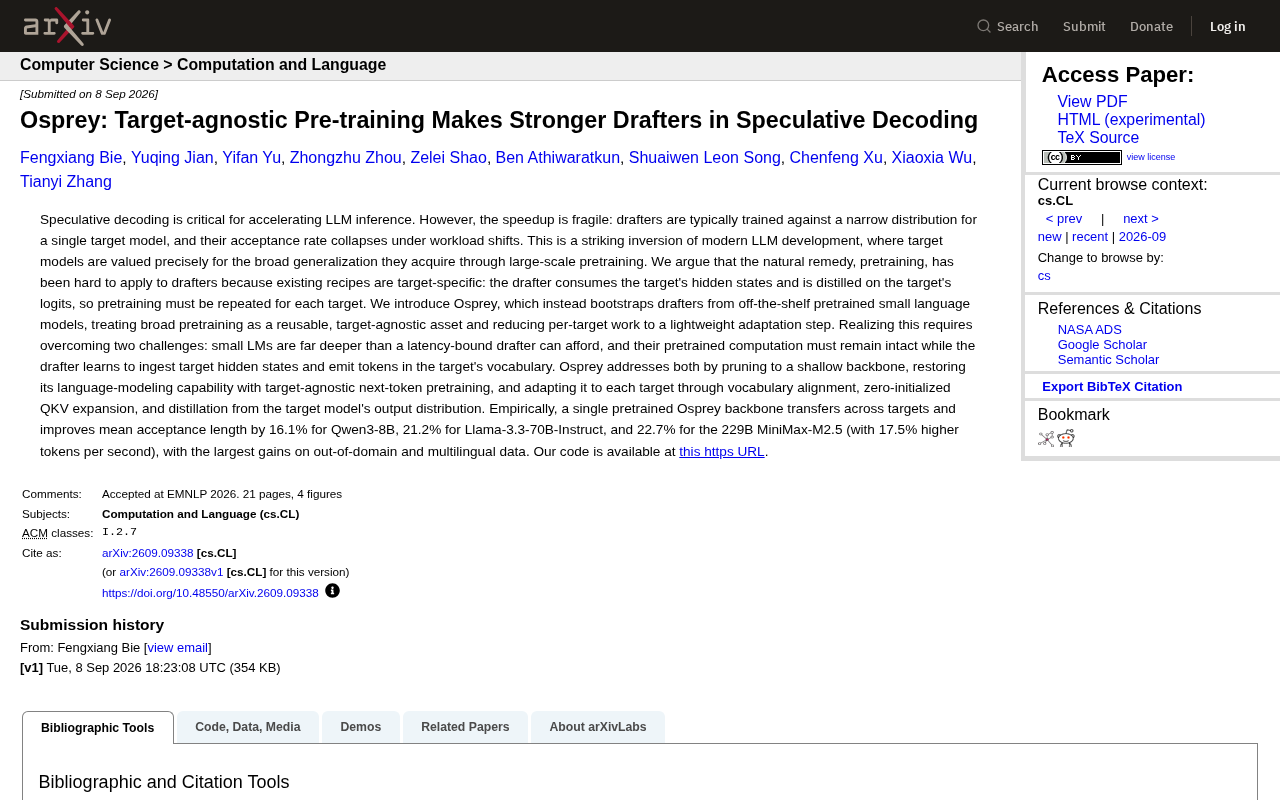
Osprey: General-Purpose Pretraining Makes Speculative Decoding Draft Models More Efficient
Osprey treats pretraining as a reusable, target-agnostic asset. Through pruning and lightweight adaptation, a single draft model transfers across multiple LLMs, boosting mean acceptance length by 16%-22%.
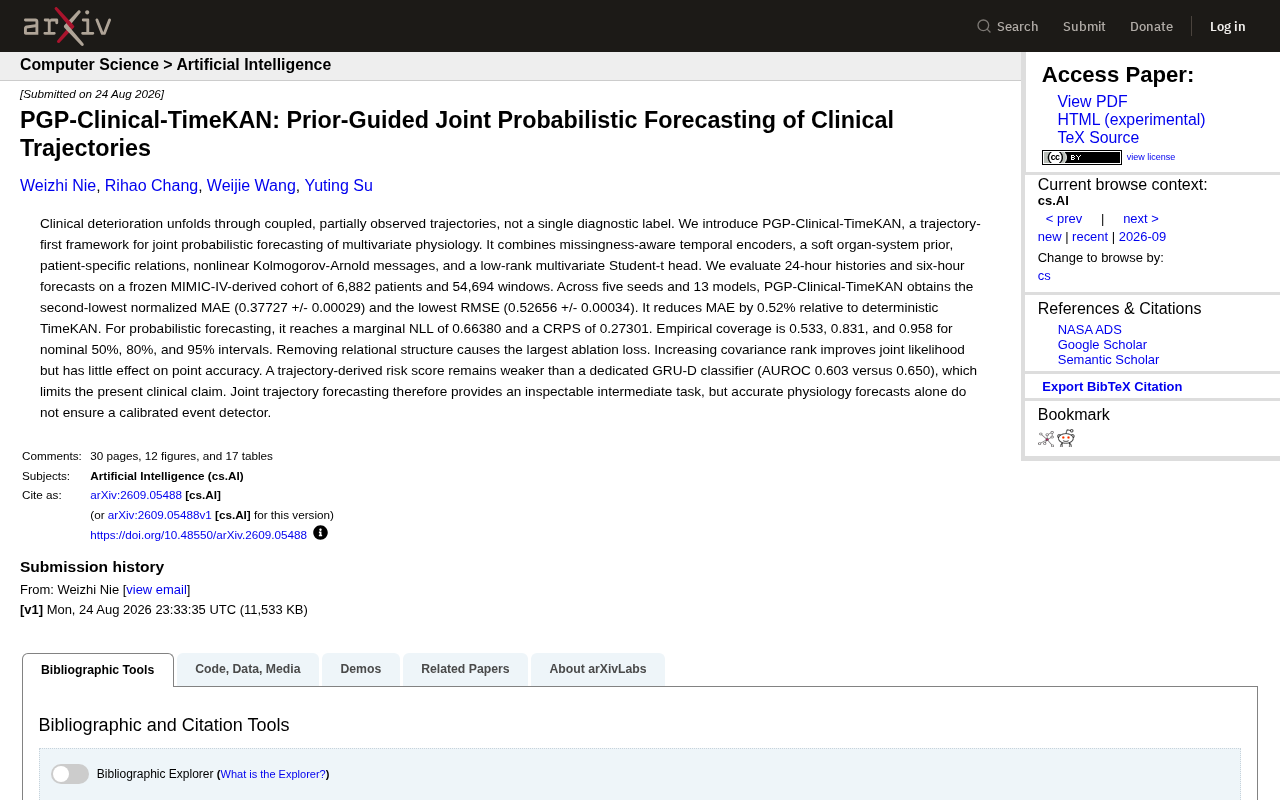
PGP-Clinical-TimeKAN: A Detailed Guide to the Multivariate Physiological Indicator Joint Prediction Framework
An in-depth analysis of the PGP-Clinical-TimeKAN framework for joint probabilistic prediction of multivariate physiological indicators, covering trajectory-first paradigm, KAN message passing, MIMIC-IV validation, and ablation studies.
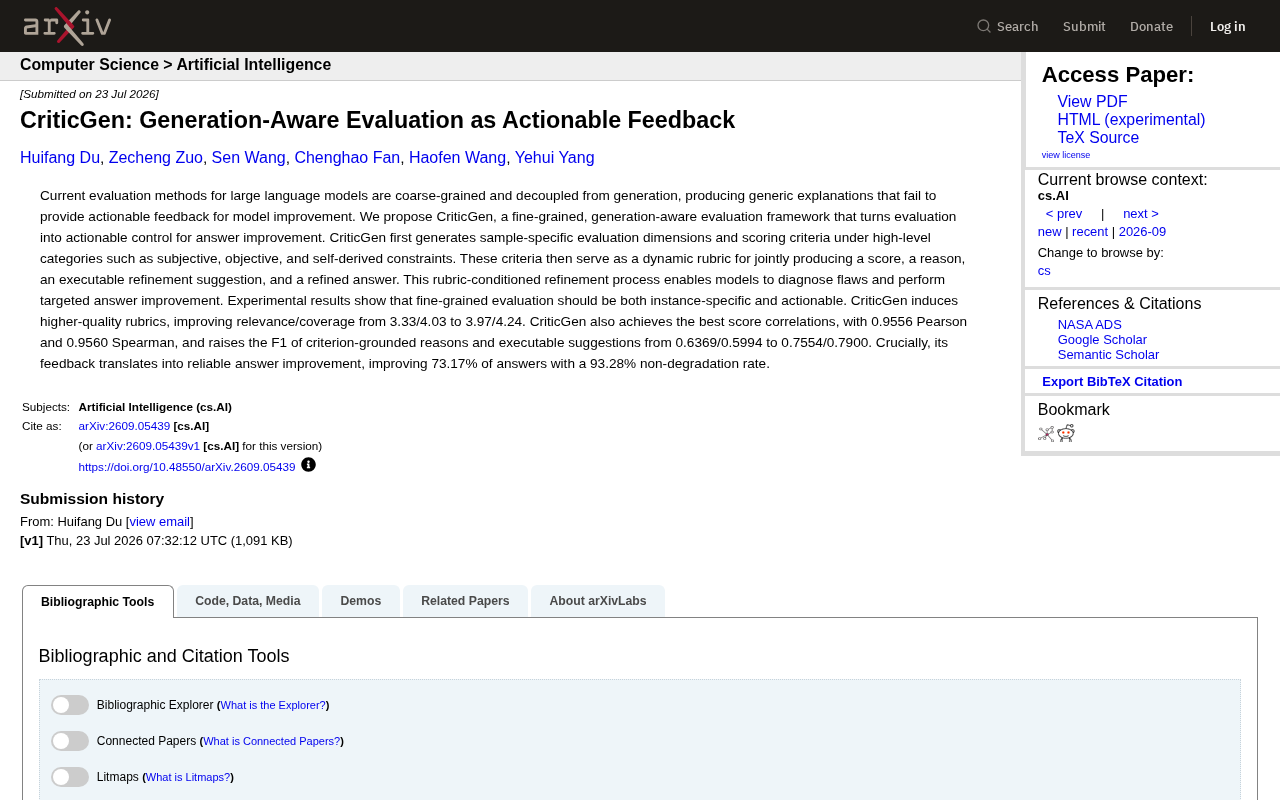
CriticGen: A New Framework That Transforms AI Evaluation into Actionable Improvement Feedback
CriticGen proposes a generation-aware evaluation framework that transforms AI assessment from passive scoring to an active optimization loop, achieving 73.17% answer improvement and 93.28% non-degradation rate.