How to Choose a Vibe Coding Tool? Agnes Code Hands-On: Generate an Android App from a Single Sentence

Agnes Code hands-on: turn a single sentence into an installable Android APK—no coding needed.
In the Vibe Coding era, AI coding tools are lowering the barrier to entry. This hands-on review shows how Agnes Code turns a natural-language request into an installable Android APK, with fast response and project isolation. It compares Agnes Code with Codex and Claude Code across three key dimensions to help you pick the right AI coding agent.
Vibe Coding: Can You Really Write Code with Just One Sentence?
We're entering an era known as "Vibe Coding"—where users no longer need to write code line by line. Instead, they simply describe their needs in natural language, and an AI agent automatically handles the entire workflow of development, deployment, and even packaging. This interaction paradigm dramatically lowers the barrier to software development, gradually opening up capabilities once reserved for professional programmers to everyday users.
However, while the vision is appealing, real-world barriers still exist. Current mainstream AI coding agents—such as OpenAI's Codex and Anthropic's Claude Code—are powerful but complex to configure, making it hard for ordinary users to truly experience the full joy of "AI writing code."
So, is there an AI coding tool that's user-friendly, works out of the box, and doesn't sacrifice functionality? According to a hands-on review shared by a Bilibili creator, Agnes Code is an option worth watching.
Getting Started with Agnes Code: What Capabilities Lie Behind the Clean Interface?
According to the creator, Agnes Code's biggest strength is being "simple and easy to operate." It condenses the complex development process into a single dialog box—describe your needs in natural language, and the tool automatically breaks down the tasks and executes them, requiring no manual intervention throughout.
Worth noting is that Agnes Code's capabilities aren't limited to writing code. Beyond programming, it can also handle multimodal tasks such as generating images and videos. In essence, it's a general-purpose AI agent, not just a coding assistant.

Project Space Isolation: An Often-Overlooked Key Design
In the hands-on test, one detail worth noting is the isolation mechanism for local project spaces. When creating a new conversation, users can specify a folder as the project directory. Each project has its own independent file space, with contexts that don't interfere with one another.
This design solves a major pain point in AI coding: when working on multiple projects simultaneously, the model can easily "cross wires," mixing project A's context into project B. The isolation mechanism keeps each task in a clean working environment—a pragmatic choice from an engineering standpoint.
Hands-On Case: Building an Android Memo App from Scratch
The creator demonstrated Agnes Code's full capabilities with a concrete scenario: building an Android project from scratch.
The process is very straightforward—open a new dialog box, select the project directory, then enter the prompt:
"Write an Android memo mini-app that records the things I need to do each day, and lets me check off completed tasks."
After hitting enter, the tool starts thinking and executing automatically.

The most impressive part is the response speed: after entering the request, feedback begins almost instantly. This low-latency experience significantly enhances the smoothness of the operation in real use. Tedious steps like project deployment and environment setup are all handled automatically by the AI.
Directly Produces an Installable APK File
After a brief wait, the tool directly generated an installable APK file. The creator installed it on a phone and confirmed the result was "absolutely perfect."
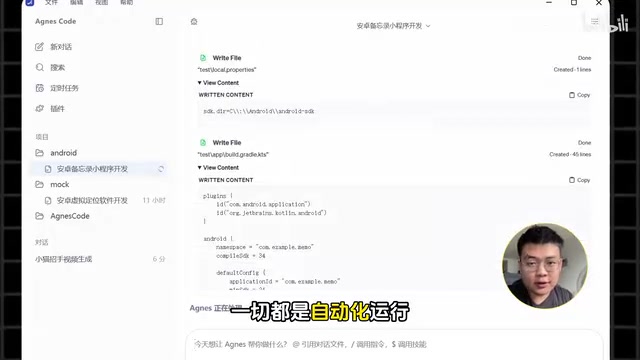
From "a one-sentence request" to "an installable, finished app," the entire pipeline forms a complete loop—the most intuitive embodiment of the Vibe Coding philosophy. For ordinary users, there's no need to understand professional knowledge like the Android SDK, Gradle builds, or signing and packaging—you can get a usable product just like that.
The Models Behind It: What's the Difference Between Agnes 2.5 Flash and Pro?
The complete development process for the Android project above was accomplished by the Agnes 2.5 Flash model, currently in gray-scale (limited) testing.
The Flash version is positioned as lightweight and fast, suited to the following scenarios:
- Building everyday small tools
- Rapidly validating product prototypes
- Completing low-to-medium complexity development needs
According to the creator's observations, the Flash model already performs quite well in these scenarios.

Meanwhile, the more powerful Agnes 2.5 Pro has also entered gray-scale testing, with upcoming capability upgrades targeting more complex projects and higher-difficulty tasks. This suggests the Agnes series may form a tiered product strategy—"Flash focused on speed and lightness, Pro tackling complex tasks"—covering the diverse needs of everyone from individual users to professional developers.
How to Choose an AI Coding Tool? Three Dimensions to Help You Decide
From Codex and Claude Code to Agnes Code, the evolution of AI coding tools is becoming increasingly clear: capabilities are growing stronger, while the barrier to entry keeps dropping.
For ordinary users, consider these three dimensions when choosing a tool:
- Ease of use — Does it require complex configuration? Is the interface intuitive and friendly?
- Closed-loop capability — Can it go directly from a one-sentence request to a usable finished product?
- Response experience — Latency directly affects your actual willingness to use it.
Everything described in this article is based on a single creator's hands-on demonstration, and Agnes Code's stability on complex projects still needs verification from more users. But regardless of which tool you ultimately choose, the trend of Vibe Coding turning "everyone can build software" from a slogan into reality is well worth continued attention from every reader interested in AI.
Related articles
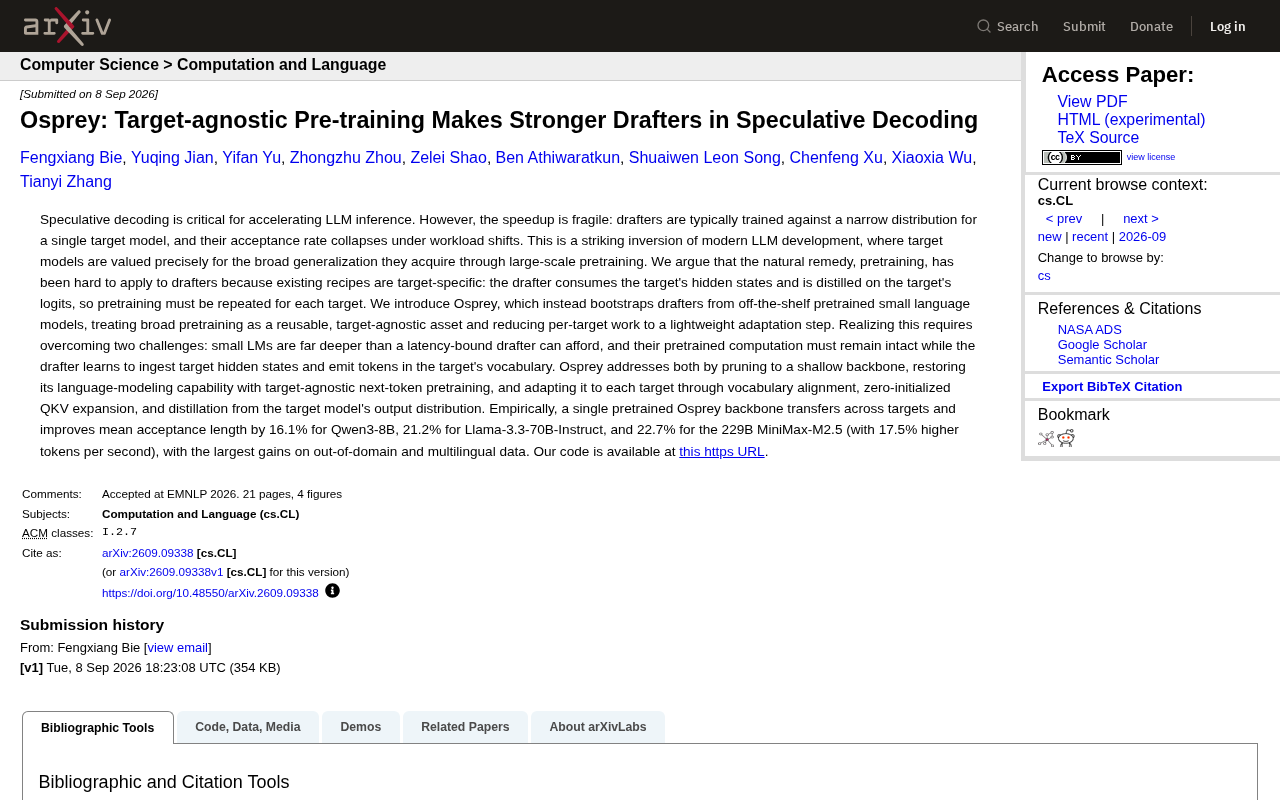
Osprey: General-Purpose Pretraining Makes Speculative Decoding Draft Models More Efficient
Osprey treats pretraining as a reusable, target-agnostic asset. Through pruning and lightweight adaptation, a single draft model transfers across multiple LLMs, boosting mean acceptance length by 16%-22%.
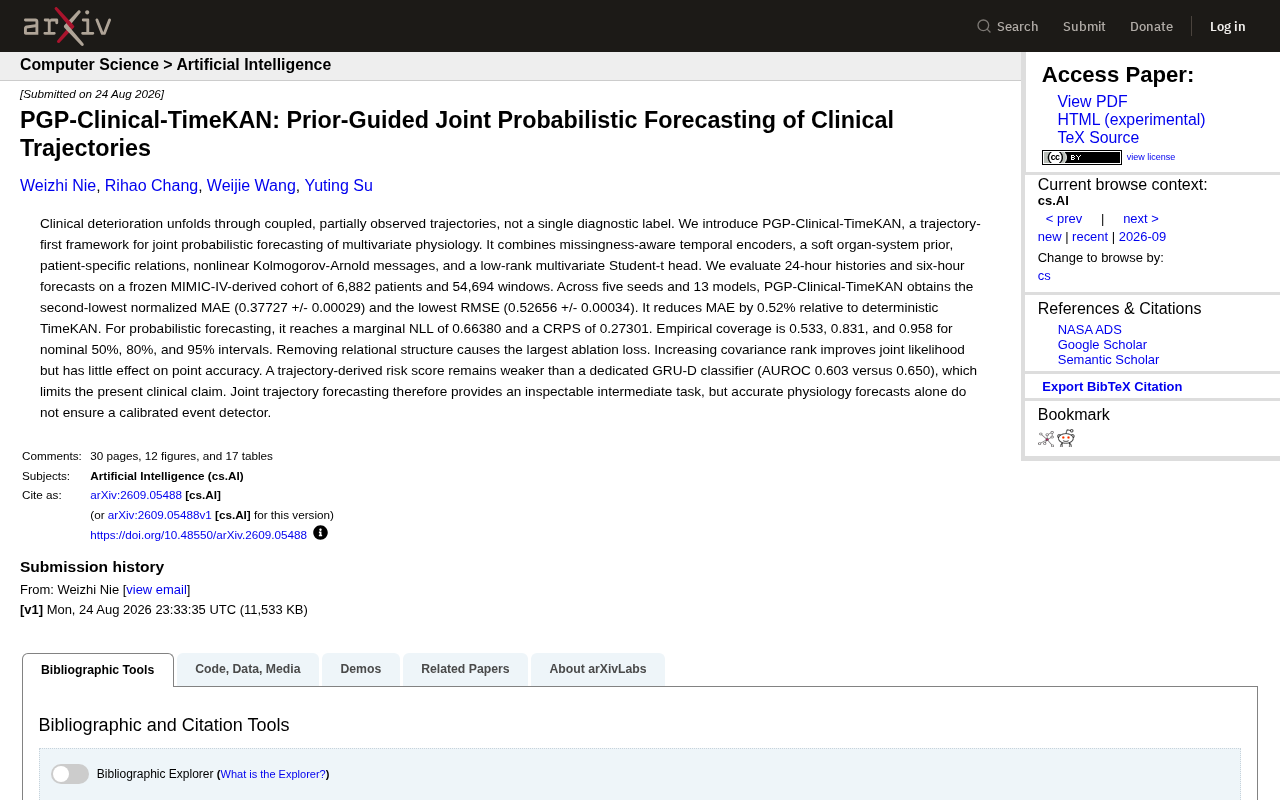
PGP-Clinical-TimeKAN: A Detailed Guide to the Multivariate Physiological Indicator Joint Prediction Framework
An in-depth analysis of the PGP-Clinical-TimeKAN framework for joint probabilistic prediction of multivariate physiological indicators, covering trajectory-first paradigm, KAN message passing, MIMIC-IV validation, and ablation studies.
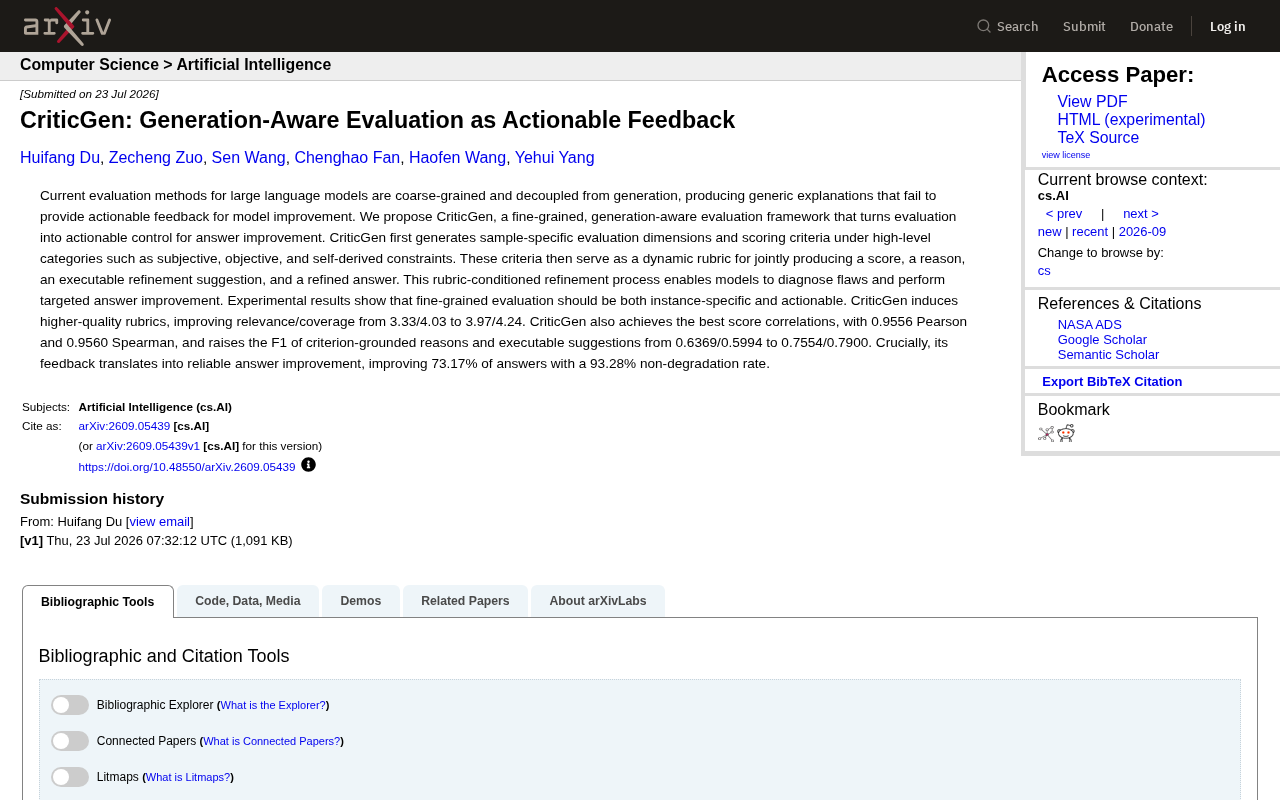
CriticGen: A New Framework That Transforms AI Evaluation into Actionable Improvement Feedback
CriticGen proposes a generation-aware evaluation framework that transforms AI assessment from passive scoring to an active optimization loop, achieving 73.17% answer improvement and 93.28% non-degradation rate.