How to Conduct News Framing Analysis: A Practical Coding Guide for Honours Theses

A practical guide to conducting qualitative news framing analysis for Honours Theses and media comparison research.
This article provides a systematic walkthrough of qualitative news framing analysis, covering the distinction between frames and indicators, how to build an effective codebook, combining deductive and inductive approaches, recording both quantitative and qualitative data, determining appropriate corpus size through saturation, and managing a realistic timeline for solo undergraduate researchers.
Introduction: A Real Research Dilemma
On Reddit's academic help board, an undergraduate student posted a highly representative plea for assistance. She was writing her Honours Thesis, researching how a particular Chinese concept is framed differently in Anglo-American media (The Guardian, The New York Times) versus Chinese English-language media (China Daily, Global Times). Having switched topics midway and dealing with physical and mental health fluctuations in the first half of the year, she had only three months left with virtually no substantive output, coding manually by herself, trapped in a spiral of overthinking.
This case is worth exploring because it touches on several core aspects of Qualitative Framing Analysis where researchers most easily lose their way. This article systematically outlines actionable paths for framing analysis, organized around the four key questions she raised.
Core Concepts of Framing Analysis: What Exactly Are We Analyzing?
The Essential Definition of Frames
Framing analysis originates from Entman's classic definition: framing involves selecting certain aspects of reality and making them more salient, thereby promoting a particular problem definition, causal interpretation, moral evaluation, or treatment recommendation. In other words, for the same event, different media outlets guide readers toward different perceptions by emphasizing different facets and using different wording.
The academic origins of Framing Analysis can be traced back to sociologist Erving Goffman's 1974 book Frame Analysis: An Essay on the Organization of Experience, where he defined frames as cognitive structures that people use to understand and organize everyday experience. Subsequently, communication scholars introduced this concept into media studies. Robert Entman's 1993 landmark paper "Framing: Toward Clarification of a Fractured Paradigm" in the Journal of Communication formally established the theoretical foundation of media framing analysis. Notably, framing theory is closely related to but fundamentally distinct from Agenda-Setting Theory: agenda-setting focuses on what media make audiences "think about" (what to think about), while framing analysis focuses on "how to think about it" — the so-called "second-level agenda-setting." Understanding this distinction helps researchers precisely position their research contributions.
For cross-media, cross-cultural comparative studies (such as Anglo-American media vs. Chinese media), framing analysis is particularly suitable because it can reveal discursive construction differences of the same concept across different ideological contexts.
Special Methodological Challenges in Cross-Cultural Media Comparison
Comparing Anglo-American media with Chinese English-language media involves several methodological challenges from Comparative Journalism Studies. First is the issue of "functional equivalence": The Guardian and The New York Times are commercialized independent media, while China Daily and the Global Times English edition are state institutional media — they differ structurally in news production logic, editorial autonomy, target audiences, and more. Researchers need to explicitly acknowledge this asymmetry in their papers rather than simply framing it as a binary of "bias vs. objectivity." Second is linguistic equivalence: although all source materials are in English, Chinese English-language media writing often carries translationese features and specific official discourse systems (e.g., "win-win cooperation," "community with a shared future"), which themselves are important clues for framing analysis. Hallin and Mancini's (2004) comparative media systems theory provides an institutional-level analytical framework for such research, allowing researchers to situate media framing differences within broader institutional logics.
The Combined Strategy of Deductive and Inductive Framing
The student planned to adopt a "deductive + inductive" hybrid approach — a mature and widely recognized practice:
- Deductive Framing: Borrowing established generic frames. The most frequently cited are the five generic frames proposed by Semetko & Valkenburg (2000) — conflict frame, human interest frame, economic consequences frame, morality frame, and responsibility attribution frame.
- Inductive Framing: Allowing issue-specific frames to "emerge naturally" during the reading of source materials — for example, frames like "sovereignty frame," "development frame," or "civilizational discourse frame" that might appear in coverage of Chinese concepts.
Semetko and Valkenburg's 2000 study published in the European Journal of Communication is one of the most cited methodological references in the framing analysis field. They analyzed Dutch newspaper and television news coverage of European political issues and identified five generic frames. These are called "generic" because they are not dependent on specific issues and can be broadly applied to news analysis across different political, social, and cultural contexts. In contrast, "issue-specific frames" are meaningful only within particular issues — such as the "risk frame" in nuclear energy coverage or the "invasion frame" in immigration coverage. This classification provides a methodological anchor for subsequent researchers: one can first do baseline coding with generic frames, then develop specific frames based on the particular issue.
In social science research methodology, deduction refers to testing hypotheses derived from theory, while induction refers to generating theory from data. In framing analysis, the risk of a purely deductive approach is potentially missing frames unique to the corpus that haven't been documented in the literature; the risk of a purely inductive approach is lacking theoretical reference points, making the coding process susceptible to subjectivity and irreplicability. The hybrid approach (abductive approach) has become increasingly popular in qualitative research in recent years, allowing researchers to balance theoretical sensitivity with data openness. Matthes and Kohring (2008) further developed framing analysis methodology in the Journal of Communication, proposing the identification of complete frames through cluster analysis of frame element combinations, providing quantitative support for the hybrid approach.
This combination provides both theoretical anchoring and space for discovering new frames — the direction is correct.
Framing Coding Methods: From Indicator Design to Codebook Construction
Distinguishing "Frames" from "Frame Indicators"
The student's greatest source of confusion was conflating frames themselves with the indicators used to identify them. A clear hierarchy needs to be established:
- Frame: The top-level abstract concept, e.g., "conflict frame."
- Operational Definition: A one-sentence explanation of what the frame means.
- Indicators/Questions: Specific, assessable guiding questions.
Following Semetko & Valkenburg's approach, they broke each frame down into several questions answerable with "yes/no." For example, indicators for the conflict frame include:
- Does the article reflect disagreements between parties?
- Does the article blame one party?
- Does the article reference two or more opposing positions?
When an article answers "yes" to multiple indicators, the frame can be determined to be present. Indicators are your operational tools for identifying frames — they are not the frames themselves. Getting this distinction clear resolves most of the confusion.
How to Build a Codebook
The codebook is the operational core of the entire framing analysis research. It should include the following fields:
| Field | Description |
|---|---|
| Frame Name | e.g., "Conflict Frame" |
| Operational Definition | One-sentence delineation |
| Identification Indicators | 3-5 guiding questions |
| Corpus Examples | Typical excerpts from actual articles |
| Determination Rules | How many indicators must be met to confirm presence |
For inductive frames, you can leave fields blank initially and fill in definitions and indicators after completing an initial reading pass. It's recommended to do pilot coding with 5-10 articles to validate and iterate your codebook before proceeding with full coding.
The codebook is the key document ensuring replicability in content analysis and framing analysis. A good codebook should not only serve the current researcher but also enable any trained coder to reach similar results following the same rules. In quantitative content analysis, inter-coder reliability is typically measured using Cohen's Kappa or Krippendorff's Alpha coefficients, generally requiring 0.7 or above to be considered acceptable. However, in qualitative framing analysis, since coding involves more interpretive judgment, reliability standards are relatively flexible. The core purpose of the pilot coding phase is to test whether definitions in the codebook are sufficiently clear, whether indicators can effectively distinguish between different frames, and whether determination rules lead to too many ambiguous cases. Through iterative refinement of the codebook, researchers can significantly reduce hesitation and inconsistency during the formal coding phase.
Data Recording in Framing Analysis: Qualitative and Quantitative in Parallel
The student asked, "What exactly does framing analysis record — the frame of each article, or every extract supporting a frame?"
The answer is: Both must be recorded; neither is dispensable.
- Quantitative level: Record which frames are present in each article (using 0/1 coding), enabling frequency statistics and cross-media comparison.
- Qualitative level: Record original text extracts supporting your judgments — this forms the evidence base for qualitative analysis and provides material for demonstrating analytical depth in the paper.
In practice, it's advisable to create a coding sheet (Excel or NVivo/MAXQDA both work), with one row per article, columns indicating the presence/absence of each frame, and a separate column or document for key extracts with their corresponding frame labels. This way, when writing up, you can provide both statistical overviews and specific quotations for thick description.
NVivo and MAXQDA are currently the two most mainstream Computer-Assisted Qualitative Data Analysis Software (CAQDAS) in academia. Their core functions include: text import and management, coding and node creation, coding visualization, and cross-tabulation queries (matrix coding query). In framing analysis, researchers can create a "node" for each frame and code text passages to corresponding nodes; the software automatically tallies coding frequency and coverage for each node and supports comparison by data source (e.g., different media outlets). Compared to pure Excel recording, CAQDAS advantages include: coding always linked to original text with context accessible at any time; memo functions for recording analytical thinking during coding; multi-level coding structures suitable for simultaneously managing generic and issue-specific frames. However, for time-pressured undergraduate theses, learning the software itself requires time investment, and Excel paired with clear coding rules can accomplish the task just as well.
Corpus Size Control: How Many Articles Are Enough?
Whether 65 Articles Need to Be Reduced
The student had about 65 articles in one layer and more in another. For the reality of solo manual coding with only three months remaining, this requires serious consideration.
Qualitative framing analysis doesn't pursue "the more the better" but rather depth and saturation — when additional articles no longer produce new frames or insights, the corpus size is sufficient. For an undergraduate Honours Thesis, 30-50 articles per layer is typically sufficient to support rigorous qualitative analysis.
The concept of saturation originally comes from Grounded Theory, introduced by Glaser and Strauss in 1967, referring to when newly collected data no longer contributes new concepts or categories to theory construction, at which point data collection can stop. In framing analysis, saturation means that when continuing to read new articles, no previously unidentified frame types appear and existing frames show no new variants in their manifestation. There is no fixed numerical standard for determining saturation; it depends on the complexity of the issue, diversity of media sources, time span, and other factors. Guest et al.'s (2006) empirical research suggests that in relatively homogeneous samples, 12-15 samples typically achieve thematic saturation; but in cross-cultural, cross-media comparative research, each group needs more samples to capture differences between discourse systems. For undergraduate Honours Theses, researchers should clearly state their saturation judgment criteria in the methodology chapter.
Corpus Sampling Strategy
If you decide to reduce the corpus, systematic random sampling is a reliable choice: extract at fixed time intervals or other consistent intervals to avoid subjective selection bias. Also ensure that sample sizes between the two layers remain roughly balanced to guarantee fair comparison.
More importantly: maintain comparability between the two corpus groups — the same time span, similar criteria for filtering issue relevance. This enhances research validity more than simply pursuing quantity.
Practical Timeline for Time-Constrained Researchers
Given the student's situation of "three months, zero output, working alone," here is a priority-ordered plan:
- Weeks 1-2: Finalize and lock down the corpus (reduce to 30-40 articles per layer), complete the first draft of the codebook.
- Weeks 3-4: Conduct pilot coding, iterate the codebook, stabilize frame definitions.
- Month 2: Full coding, simultaneously recording extracts, writing the methodology chapter alongside coding.
- Month 3: Data analysis, writing findings and discussion, leaving buffer time for revisions.
For solo coding, inter-coder reliability testing isn't possible, but you can employ test-retest over time — re-coding a portion of samples after an interval to check your own consistency, and honestly noting this limitation in your methodology. This practice is called "internal audit" or "stability check" in qualitative research. While not as persuasive as multi-coder reliability testing, for undergraduate-level papers, this kind of reflexive methodological disclosure itself demonstrates academic maturity. Examiners typically don't demand that undergraduates achieve the same reliability standards as team research, but they expect to see the researcher's awareness of and strategies for addressing this limitation.
Conclusion
The student's confusion essentially stemmed from imagining the method's complexity to be greater than what is actually required. The core logic of framing analysis is actually clear: use operational definitions and indicators to identify frames, use coding sheets to record results, and use original text extracts as evidence. Once you understand the chain of "frame → definition → indicator → evidence" and combine it with pragmatic corpus size control, completing a solid Honours Thesis in three months is entirely achievable. In academic research, a clear operational pathway matters far more than pursuing exhaustive perfection.
Key Takeaways
Related articles

Gaussian Process Bandit Optimization: Exploration Strategies and Inference Regret Guarantees
Cumulative regret guarantees in Bayesian optimization fail to reflect final recommendation quality. This article examines a new study that provides inference regret guarantees for Gaussian process bandit optimization through exploration query strategies and fill distance analysis, validated on hyperparameter optimization and control tasks.
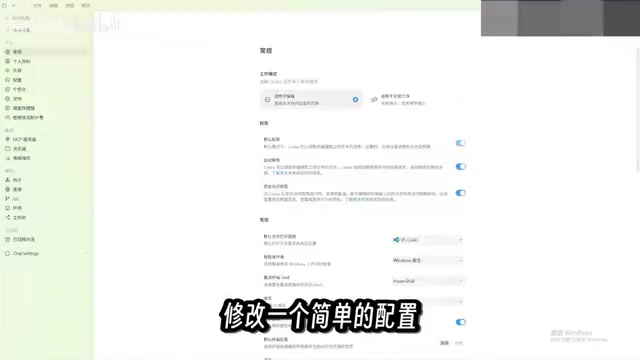
The Most Detailed Codex Guide on Bilibili: From Installation to Real-World Practice
The most detailed Codex guide on Bilibili: from app store installation to daily work mode configuration, with a real coffee shop project demonstrating file organization, data extraction, dashboard creation, and other practical tasks. Learn to use Plan Mode and desktop pets to leverage Codex efficiently.

Appearance Compensation in Volume Rendering: Why RGB Accuracy Cannot Guarantee Density Correctness
Volume rendering research reveals that volumetric data perfectly reproducing external RGB views may still contain density errors: appearance compensation can double central density and keep external rays unchanged even when L2 error exceeds 14.52%. Density recovery depends on appearance capacity, spatial resolution, and measurement design.