How to Distinguish AI Agent Traffic from Real User Traffic
Verifiable identity claims are the key to separating AI Agent traffic from real user traffic in access logs.
As AI Agents increasingly participate in network interactions, the traditional assumption that "a request equals a user" is breaking down, causing distorted analytics, flawed risk controls, and billing errors. The article examines a framework of four verifiable claims, highlighting one designed specifically to distinguish Agent traffic from real user traffic — enabling requesting parties to proactively declare their identity and proxy relationships. Adopting this mechanism has direct implications for analytics accuracy, tiered access control, and compliance auditing, though its real-world effectiveness depends on industry-wide standardization and cooperation between senders and receivers.
Why Your Access Logs Are "Lying"
As AI Agents increasingly infiltrate everyday network interactions, a long-overlooked problem has come to the surface: your server access logs are very likely recording Agent behavior as "something a real person did." When an automated agent browses pages, fills out forms, or calls APIs on behalf of a user, traditional logging systems typically can't tell the difference — they see the request, but can't determine whether it came from a human or a machine.
This isn't mere technical pedantry. As more and more traffic is generated by Agents, conflating the two causes a chain reaction: analytics data becomes distorted, risk control strategies misfire, billing models break down, and compliance audits become nearly impossible to trace. The core argument is straightforward — fixing this "lying logs" problem requires a well-defined set of identity claims, and one of those claims exists precisely for this purpose.
How Claims Restore the Truth
The proposed solution revolves around "four claims." Think of claims as verifiable identity and intent markers carried within a request during transmission. Their role is to allow the receiving party to clearly understand, at the time of processing: who sent this request, who is acting as a proxy, and for what purpose.
From "Implicit Assumptions" to "Explicit Claims"
The default assumption in traditional web architecture is that "a request equals a user." Every click, every page load from a browser corresponds to a real human being. But the age of Agents has shattered this assumption — an Agent can issue requests on behalf of a user, a system, or even another Agent. If systems continue operating under the old assumption, log entries of "some person did something" will be massively inaccurate.
The value of explicit claims is this: rather than letting the system guess the origin of a request, the requesting party is required to proactively and verifiably declare its own identity and role. Only then can access logs accurately reflect the critical distinction between Agent and user.
At the technical implementation level, the concept of claims is not a brand-new invention — it's an extension of existing identity and authentication frameworks. Standards like JWT (JSON Web Token) have long defined ways to carry structured claims within tokens, with common fields such as sub (subject), iss (issuer), and aud (audience). The claims mechanism for AI Agent scenarios shares the same lineage, but requires additional semantic fields specifically describing "proxy relationships" — for example, distinguishing "who is the end user" from "who is actually issuing the request." The act (actor) field in OAuth 2.0's Token Exchange (RFC 8693) specification already lays the groundwork for expressing the delegation chain of "one principal acting on behalf of another." Emerging Agent identity standards build on this foundation, extending it to cover Agent-specific scenarios such as multi-hop proxying and autonomous decision-making, so that every layer of delegation in the request chain can be explicitly recorded and independently verified.
The One Claim Designed Exactly for This
One of the four claims is described as being "designed exactly for this purpose." In other words, within the complete claims framework, there is a dedicated field or mechanism built specifically to mark the Agent nature of traffic. This isn't a side feature — it's the core solution. Once this claim is properly adopted and verified, systems can cleanly separate Agent traffic from real user traffic at the log level.
What This Means for Developers and Platforms
For those building Agent-facing services, or platforms that need to defend against Agent abuse, understanding and adopting this kind of claims mechanism is becoming increasingly essential.
Accuracy of Data Analytics
Without distinguishing Agents from users, core metrics in product analytics — active user counts, time on page, conversion rates — become polluted by automated traffic. Separately tagging Agent traffic is the only way to get an accurate picture of real user behavior, and it also enables independent measurement of the scale and patterns of Agent interactions.
Risk Control and Access Policies
Many websites have clear stances on automated traffic: some welcome compliant Agents, others want to restrict them. You can only manage what you can identify — for instance, allowing trusted Agents that have declared their identity to pass through, while blocking suspicious automated requests masquerading as users.
From an engineering perspective, distinguishing Agent from user traffic also involves tiered "claim trustworthiness." An Agent can self-declare its identity, but the receiving party must decide whether to trust that declaration. Common trust models fall into three levels: first, unverified self-declaration (relying solely on request header fields, which are easily forged); second, signature-based verifiable claims (such as a JWT signed with a private key, where the receiver can verify the signature but cannot confirm the true ownership of the key); and third, claims backed by a third-party authority (similar to the TLS certificate model, issued by a trusted CA or identity provider). Most current discussions around Agent access control remain at levels one or two. Reaching level three requires industry-wide registration and endorsement mechanisms that have yet to mature. This is precisely why "moving toward standardization" is seen as the critical prerequisite for this mechanism to truly take hold.
The Necessity of Standardization
For these claims to work in practice, ecosystem-level consensus is essential. The requesting party must be willing to declare, and the receiving party must be able to verify — both sides need to cooperate for the loop to close. This is why "the claim specifically designed for this purpose" matters so much — it provides a unified anchor point for the entire industry.
Conclusion
Access logs misidentifying Agents as users may seem like a minor detail, but it touches on a fundamental challenge for network infrastructure in the AI Agent era: the discoverability of identity and intent. By introducing and verifying explicit claims mechanisms — especially the one designed specifically to distinguish traffic types — developers and platforms can regain control over the truth of their traffic. As Agent interactions continue to scale, this kind of capability will gradually shift from a "nice-to-have" to a "must-have" piece of infrastructure.
Note: Due to limited information in the original source material, this article is primarily an interpretation of the core arguments. For specific technical details on the four claims, please refer to the original source.
Related articles
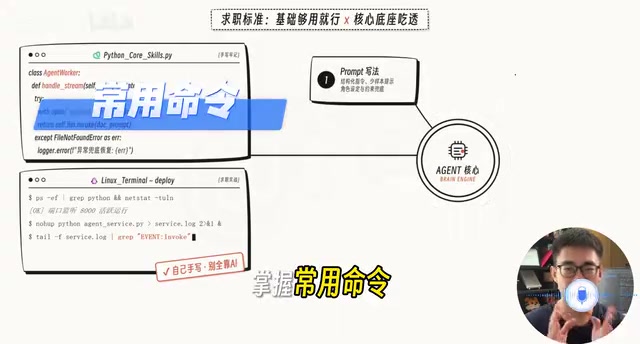
AI Agent Developer Job Hunt Guide: Four Hard Standards to Clear Before You Apply
A practical guide for landing AI Agent developer roles: four measurable standards — project runs, problems debuggable, solution explainable, interviews survivable.
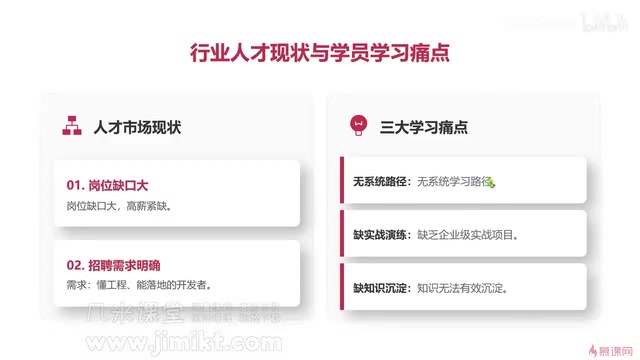
Multi-Agent Development Guide: From Monolithic AI to Team Collaboration in Practice
A beginner's guide to multi-agent development covering core advantages, common learning pain points, enterprise tech stacks, and engineering methodology for AI developers.
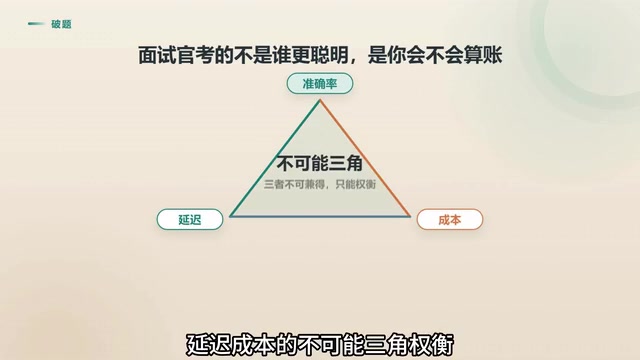
Agent Skill Routing: Retrieval vs. LLM vs. Two-Stage Architecture Compared
Retrieval or LLM for Agent skill routing? Compare coarse-filter vs. fine-select architectures on latency, accuracy, and cost — with 4 key production considerations.