How to Provide Effective Context for AI Agents: Start Simple, Build a Single Source of Truth

AI agents need a central source of truth: start with simple tools, feel the pain points, then choose professional vendors.
The article notes that a common pitfall in multi-AI-agent deployment is information silos: each agent only knows a fragment of the business, leading to biased decisions and contradictory actions. The ideal is a central source of truth so all agents share one trusted context, ensuring consistency and maintainability. The practical path is to start simple with existing tools like Markdown files in the repo or Confluence, validate the benefits, and expose real pain points. As agents scale, in-flight knowledge and scoping challenges emerge; then evaluate professional vendors, prioritizing those that solve identified pain points. The core principle: experience first, purchase later.
When enterprises begin deploying multiple AI agents, a common pitfall is that each agent holds a different fragment of information about the business, creating silos. How to provide accurate, consistent context for AI agents becomes a key challenge in the deployment process. Based on experience shared by industry practitioners, this article explores a path that starts simple and gradually builds a central context management strategy.
Why Do AI Agents Need a Central Source of Truth?
In multi-agent collaboration scenarios, fragmented information directly leads to biased decisions. For example, an agent responsible for code review may not understand business-level constraints, while a customer support agent may not be aware of internal coding standards. This fragmentation not only reduces efficiency but can also trigger contradictory actions.
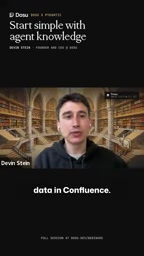
The view in the video points out: you absolutely do not want a situation where Claude knows everything about your business, an internal agent knows other things, and the code review agent holds yet another set of information. The ideal state is to establish a central source of truth so that all agents share the same trusted context.
The value of a central source of truth lies in consistency and maintainability. When business rules, product information, or processes change, you only need to update one place, and all agents can synchronously obtain the latest knowledge, avoiding errors caused by information desynchronization.
Central Source of Truth is a classic concept in data governance and systems engineering, referring to designating a single authoritative location within an organization for storing and maintaining a certain type of information, while other systems or roles only read it and do not privately copy it. In traditional software architecture, it often manifests as a master data management (MDM) system or a single database; in AI agent scenarios, it means all agents obtain business rules, product facts, and process constraints through a unified retrieval interface, rather than each maintaining copies in prompts or local files. The benefit is eliminating "multiple versions of the truth," making updates atomic, and enabling permission control, version history, and audit logs to trace the context source of agent decisions.
Start Simple, Rather Than Pursuing Perfection from the Start
Many engineers' instinct is to "keep it simple," but this advice takes on new meaning when building context for AI agents. Industry practitioners emphasize: do not pursue complex solutions from the start. Instead, start with the tools at hand and existing data sources.
For example, you can create a Markdown file in the code repository to record key context, or use existing documents in Confluence. What matters is not how advanced the tool is, but getting started quickly so the team can personally experience the benefits of context management and begin to feel the contours of the problem.

This "get it running first" strategy has two major benefits: first, it can quickly validate the improvement in agent performance brought by context; second, it can expose real pain points, such as untimely knowledge updates and difficulty defining permission scope. Only after feeling these frictions can subsequent vendor selection or in-house development have a clear direction.
Markdown files and Confluence are recommended as starting points because they naturally have low barriers to entry, are versionable, and easy to review. Markdown is a plain text format that can be stored directly in the code repository, go through the review process alongside code commits, and have a clearly traceable change history; Confluence is a common enterprise knowledge base that supports page hierarchy, permissions, and comment collaboration. Neither requires additional infrastructure, and teams can immediately write down the key facts agents need and provide them through simple retrieval or injection. The limitation of this approach is the lack of structured queries and fine-grained access control, but as a prototype method for validating value and exposing real needs, its return on investment is far higher than building a platform from scratch from the start.
When Do You Need to Bring in Professional Vendors?
As the number of agents increases and business complexity rises, simple Markdown files or shared documents will gradually become inadequate. Especially when dealing with "in-flight knowledge" and scoping challenges, the maintenance cost of in-house solutions will rise sharply.
The video mentions that when these challenges begin to appear, it is time to consider looking for professional vendors. But the premise is that you have already understood the essence of the problem through early practice, rather than making blind purchases. This "experience first, purchase later" path helps enterprises make technology decisions that better fit actual needs.

You may not have noticed that professional vendors provide not only the ability to store context, but also enterprise-grade features such as version control, access permissions, and audit trails. These features may seem redundant in the early stages, but as the agent ecosystem expands, they become infrastructure for ensuring consistency and security.
"In-flight knowledge" refers to information dynamically generated during task execution that affects subsequent decisions, such as user preferences obtained by an agent in a conversation, temporary business exceptions confirmed, or rules that have just changed. This type of knowledge is difficult to cover with static documents and requires real-time capture, deduplication, and write-back to a location that other agents can read. The related scoping challenges refer to determining which context an agent should access and within what boundaries it should use that information—too broad a scope brings security and noise issues, while too narrow a scope prevents the agent from completing tasks. These two problems are precisely where simple file solutions first fail, and they are also the core selling points of professional context management platforms.
Practical Advice for Building a Context Management Strategy
Based on the above views, several actionable recommendations can be distilled:
- Act immediately: Choose an existing tool (such as a Markdown file in the repository or a Confluence page) as a starting point to record the core knowledge agents need.
- Centralize management: Even if it is a simple file at first, consciously maintain a central location to avoid information being scattered across multiple agents' prompts.
- Actively feel the pain points: During use, record which information easily becomes outdated and which scopes are difficult to define; these records will become key evidence for subsequent vendor selection.
- Expand at the right time: When maintenance costs exceed benefits, begin evaluating professional solutions, prioritizing vendors that can solve the pain points you have identified.
Context governance is not a one-time engineering effort but a process that continuously evolves as agent applications deepen. Start simple and stay keenly aware of the problems, so that AI agents can truly become reliable productivity tools.
One-line Summary
AI agents need a central source of truth: start with simple tools, feel the pain points, then choose professional vendors.
Paragraph Summary
The article points out that a common pitfall in deploying multiple AI agents is information silos: each agent only grasps fragments of the business, leading to biased decisions and contradictory actions. The ideal state is to establish a central source of truth so that all agents share the same trusted context, thereby ensuring consistency and maintainability. The practical path suggests starting simple, using existing tools such as Markdown files in the code repository or Confluence to get started quickly, validating the benefits of context management, and exposing real pain points. As the number of agents increases, challenges in managing in-flight knowledge and scoping will become prominent; at that point, evaluate professional vendors and prioritize solutions that can solve the identified pain points. The core principle is to experience first and purchase later, allowing context governance to continuously evolve as agent applications deepen.
Related articles
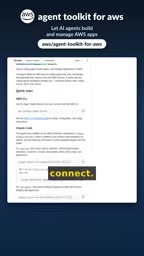
AWS Launches Official Agent Toolkit: Letting AI Agents Directly Build and Manage AWS Applications
AWS launches the official Agent Toolkit, letting AI coding agents directly build and manage AWS apps across CDK, CloudFormation, Serverless, Bedrock Agents, and DevSecOps.
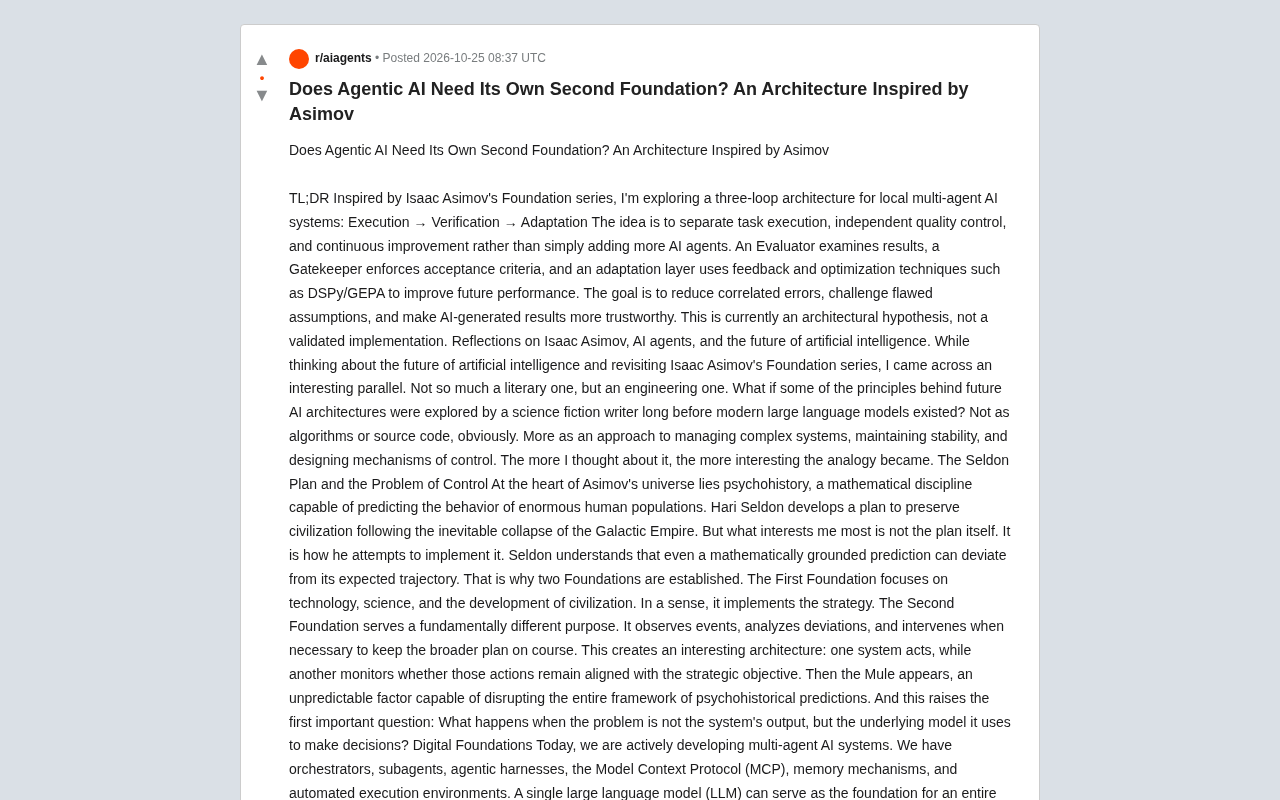
Does Agentic AI Need Its Own "Second Foundation"? A Three-Loop Architecture Explored
Inspired by Asimov's Foundation series, a multi-agent AI architecture hypothesis proposes execute, verify, and adapt control loops to reduce correlated errors and improve trust in AI results.
Rewriting a Commercial Engine in Jai: The Trade-off Between Performance and Productivity
Exploring the engineering practice of rewriting a commercial game engine in Jai: compile-time metaprogramming and data-oriented design advantages, plus ecosystem maturity and learning curve challenges.