How to Stand Out in the Age of AI? Three Key Questions for Data Science Career Development

Understanding beats tool proficiency, and action beats anxiety — a practical guide for data science and AI careers.
This article distills key insights from an industry conversation addressing the most common anxieties among data science and AI professionals. What separates ordinary analysts from sought-after talent isn't tool proficiency — it's business understanding and the ability to turn data into decisions. Whether to learn deep learning depends on your career goals: applying existing models requires only the basics, but reaching the top demands mastery of underlying principles. For those who feel they started too late, the advice is simple: stop overthinking and take action. The piece concludes that AI, potentially more transformative than the internet, still offers wide-open opportunities for those who start today.
In an era of rapid advancement in data science and AI, many newcomers share the same anxiety: technology evolves too fast, competition is fierce, and they wonder if they've already missed the best window of opportunity. A recent industry conversation addressed these common concerns with direct, practical answers. This article distills the core takeaways for anyone planning or re-evaluating their career path in this space.
What Separates a Mediocre Data Analyst from the Talent Companies Actually Want?
The conversation opened with a pointed question: what distinguishes an average data analyst from someone companies genuinely want to hire?
This gets at a core tension in data science career development. More and more people can handle basic tools and run standard analyses — but what companies have always been short of isn't people who can operate tools. It's people who understand the business and can translate data insights into decision-making value. Staying at the level of "knowing how to use" something puts you squarely in a highly replaceable pool of candidates.
In other words, tool proficiency is just your entry ticket. What truly sets people apart is a deep understanding of the problem at hand and the judgment to navigate real business contexts.
Do You Have to Learn Deep Learning to Work in AI?
A second question that came up repeatedly: is learning deep learning necessary for everyone who wants to work in AI?
The conversation offered a vivid analogy in response — if you just want to drive a car, you only need to learn a few basic rules to get on the road. That's like simply "using" a ready-made model (say, calling an API like ChatGPT).

But if you want to become an exceptional driver, you also need to understand how the engine works. By the same token, if your goal is to become a top-tier AI professional, you can't stop at calling APIs — you need to go deeper and understand the underlying mechanics, including how deep learning actually works.
The value of this analogy is that it reframes "should I learn deep learning?" from a yes-or-no question into one about ambition: the level you want to reach determines the depth of investment required.
Deep learning is a subfield of machine learning built around multi-layer neural networks that automatically learn feature representations from large amounts of data. It underpins most mainstream AI capabilities today — image recognition, natural language processing, speech synthesis, and more. Compared to traditional machine learning methods (such as decision trees or logistic regression), deep learning has significant advantages when handling unstructured data, but it also demands stronger mathematical foundations (linear algebra, calculus, probability theory) and greater computational resources.
For career purposes, there's a spectrum between "calling an API" and "understanding deep learning principles": the former lets you quickly build products or complete analytical tasks, while the latter gives you the ability to optimize models, diagnose failures, and design new architectures. As large language model (LLM) tools become more widespread, the barrier to the former keeps dropping — which is precisely why those who truly understand the underlying mechanisms are becoming rarer and more valuable.
What If You Feel Like You Started Too Late?
Perhaps the most paralyzing concern for many is the feeling that "AI is moving so fast, everyone else got started before me — it's too late for me now."

The response in the conversation was refreshingly blunt: AI started before you showed up — so what? Instead of obsessing over the starting line, just "shut up and do it."

This seemingly rough advice actually cuts to an important truth: for the vast majority of people, taking action is the only answer that matters. Agonizing over timing or comparing yourself to others is pure energy drain. Technology always iterates rapidly — no matter when you start, someone will always have gotten there first. The real dividing line isn't when you begin, but whether you begin at all, and whether you keep going.
Why AI Might Be One of Humanity's Greatest Creations
The conversation closed on an optimistic note: AI is one of the greatest things humanity has ever created — and it may even surpass the internet in significance.
Viewed through the lens of career choice, this is a meaningful statement. It suggests that those entering the AI field today are riding a technological wave that could eclipse the internet in scale. The internet reshaped nearly every industry over the past few decades, and AI is seen as having even deeper potential.
From this perspective, the worry about being "too late" looks even less warranted — a field that's just getting started, with an influence that may surpass the internet, means the opportunities are far from exhausted.
Comparing AI to the internet in terms of magnitude has real technical and economic backing. The internet's core contribution was the dissemination and connection of information — it drastically reduced the cost of accessing knowledge and communicating. AI's core contribution, by contrast, is the automation of cognitive labor: mechanizing judgment, reasoning, and creativity that previously required human intelligence. Research from institutions like McKinsey and Goldman Sachs estimates that generative AI could contribute trillions of dollars to global GDP over the next decade, touching nearly every knowledge-intensive sector — healthcare, education, software development, scientific research, and beyond.
For career planning, the practical implication is this: the internet wave created enormous early-mover advantages between 1995 and 2005, yet mobile internet and cloud computing continued generating new career opportunities well into the 2010s and beyond. By analogy, the AI wave's opportunity window won't close anytime soon — it will keep spawning new roles and needs as the technology penetrates deeper into the economy.
Key Takeaways for AI Practitioners
Drawing from this conversation, here are a few practically useful perspectives for those entering the field:
- What sets you apart is understanding, not tool proficiency. Companies are short on people who create value — not people who can operate software.
- How deep you go depends on your goals. If you just want to apply AI, mastering the basics is enough. If you want to reach the top, you need to understand the underlying principles.
- Action beats anxiety. Worrying about the starting line is pointless. Consistent effort is the only real answer.
- Bet on the long-term trend. AI is seen as a technological wave that could surpass the internet — it's never too late to get in.
For everyone feeling lost on the path of data science and AI, this conversation offers no shortcuts — but it does offer a clear compass: shift your attention from "am I too late?" to "what am I doing today?"
Related articles
vLLM v0.30.0rc1 Released: Isolates FlashInfer BF16 Autotuning Logic
vLLM v0.30.0rc1 release candidate fixes FlashInfer BF16 autotuning isolation (PR #57285). Learn the technical background and its impact on inference deployment.
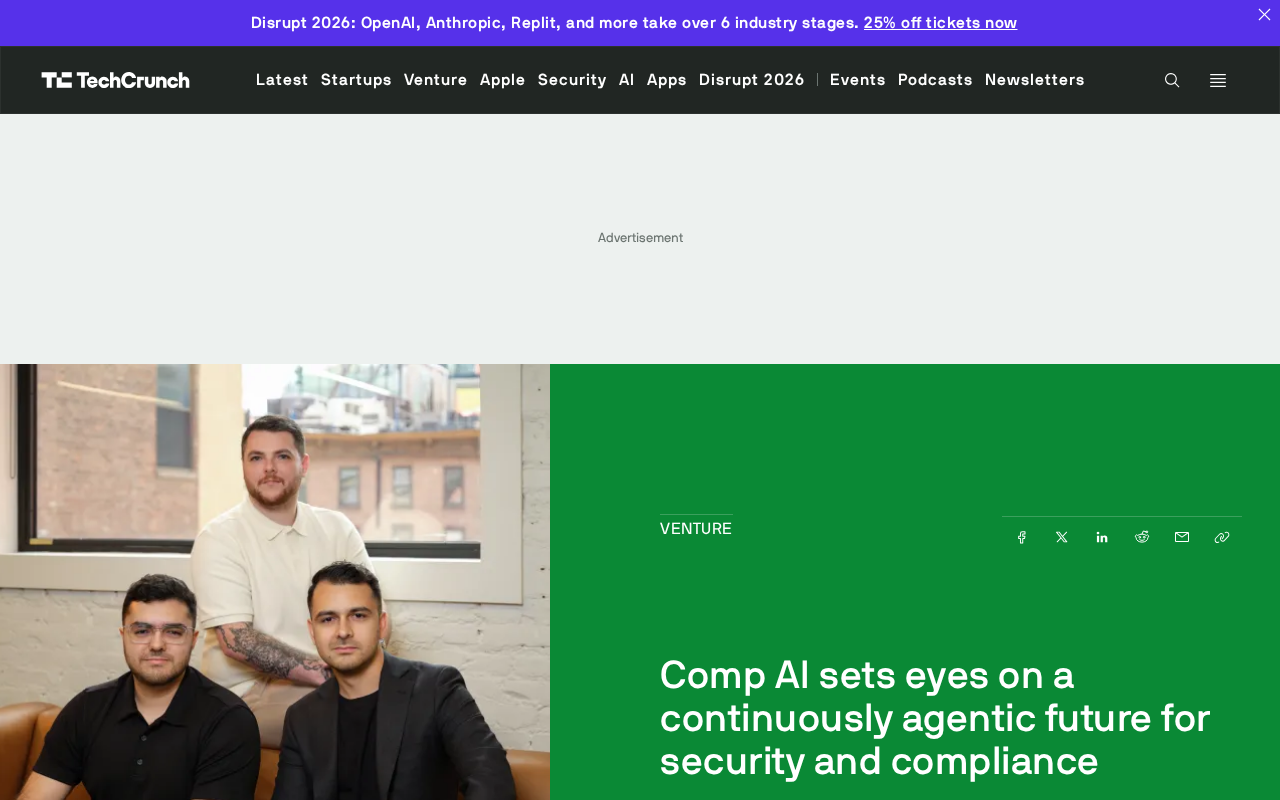
Comp AI Raises $34M Series A, Bets on Agentic Security Compliance
Comp AI raises $34M Series A led by Roo Capital and Grand Ventures, betting on "continuously agentic" AI to transform compliance from periodic audits into real-time monitoring.
MIT Technology Review's 35 Innovators Under 35: A Climate Tech Edition Explained
MIT Technology Review's latest 35 Innovators Under 35 list focuses on climate tech, spotlighting nine young global innovators. Here's what the list means and why it matters.