How to Subscribe to ChatGPT Plus/Pro in China? A Comparison of Three Payment Methods

Compare all three ways to subscribe to ChatGPT Plus/Pro from China: costs, steps, and account risks.
This article covers the main ways users in China can subscribe to ChatGPT Plus/Pro: paying directly with an overseas credit card (most legitimate, but ~¥180 in card costs and prone to payment blocks); iOS foreign Apple ID with gift cards (feasible but ~$20–$25 with a platform premium); Android Google Play IAP (very strict environment requirements, high failure rate); and third-party Alipay top-up sites (lowest barrier, but requires sharing account credentials and risks ToS violations and account bans). The article recommends weighing convenience against security, with official direct payment remaining the safest long-term option.
For users in China, subscribing to ChatGPT Plus or Pro has long come with a significant barrier: the official subscription requires an overseas credit card (Visa/Mastercard), which is both costly to obtain and maintain — and prone to triggering regional payment restrictions. Based on a tutorial from Bilibili, this article breaks down the most common payment methods available, comparing their costs, risks, and difficulty levels to help you make an informed decision.
Disclaimer: This article is intended as an informational overview and risk assessment only. Using third-party top-up platforms carries account security and compliance risks. Please evaluate these risks carefully before proceeding.
Official Direct Payment: The High Bar of Overseas Credit Cards
The most straightforward method is paying directly on the OpenAI website using a foreign credit card. The payment process itself takes only seconds — just enter your card details and your subscription is active.
The real challenge lies in acquiring and maintaining the card. According to the source material, obtaining an overseas credit card is no small feat, and payments are prone to regional blocks and fraud detection — resulting in failed transactions or repeated attempts. There are also hidden costs: card issuance and maintenance fees can add up to roughly ¥180 in total, with additional currency conversion fees on top.
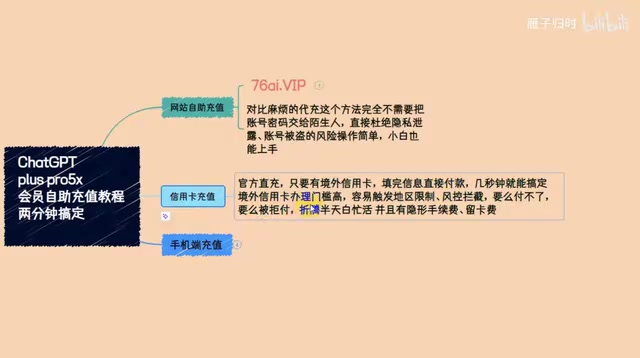
For users who already have a working overseas credit card and a stable payment environment, direct payment is the cleanest option. But for the average Chinese user who simply wants a subscription, getting a card specifically for this purpose is rarely worth the trouble.
In-App Purchases: Different Pitfalls on iOS and Android
The second approach involves subscribing through in-app purchases (IAP) on mobile devices.
The iOS route relies on switching to a foreign Apple ID and topping it up with gift cards. The process is fairly involved — you'll need to switch between accounts repeatedly — and first-timers often run into issues. Since it goes through Apple's purchase channel, platform fees result in a price premium, bringing the total cost to roughly $20–$25 USD. This option suits users willing to pay extra for convenience.
The Android route uses Google Play in-app purchases, but the environmental requirements are extremely strict: you'll need an Android device with a complete GMS framework, a foreign IP for the entire process, and a brand-new Google account linked to a foreign payment method.
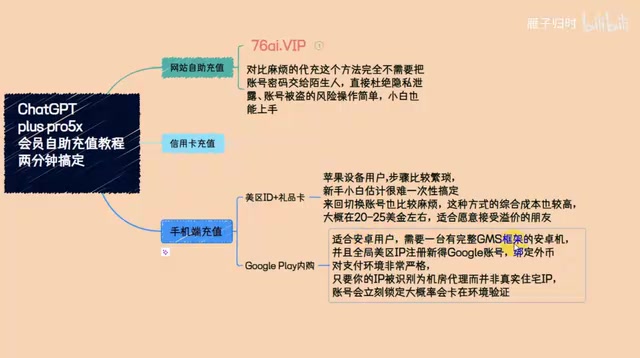
The source material emphasizes that Google's payment environment detection is particularly rigorous — if your IP is identified as a data center or proxy rather than a legitimate local connection, the account will be locked immediately. In practice, most users get stuck at the environment verification stage. In short, the Android IAP route has an extremely low tolerance for error for ordinary users.
What is In-App Purchase (IAP)?
IAP is Apple's and Google's official digital goods payment system. When a user completes a purchase within an app, the funds go to the platform (Apple/Google), which then settles with the developer. This means subscription pricing is governed by platform regional policies rather than OpenAI's own pricing — and prices can vary by 30–50% across regions. Platforms also take a commission of roughly 15–30%, which is typically baked into the listed price, making IAP channels generally more expensive than paying directly on the official website. Additionally, IAP subscriptions are tied to the app store account rather than the OpenAI account itself, and cancellations or refunds must be handled through the App Store or Google Play — not through OpenAI's settings page.
Third-Party Top-Up Websites: Convenient, But Weigh the Risks
The source material primarily highlights third-party self-service top-up platforms (using a specific example site). The pitch is simple: no overseas card required, no region switching, pay entirely via Alipay, and the whole process supposedly takes about 2 minutes.
Here's roughly how it works:
Step-by-Step Process
- Select the subscription plan you want on the top-up website;
- Enter any email address to use as a reference for future order inquiries;
- Log into your ChatGPT account in a browser beforehand;
- Follow the prompts to copy your account-related information and submit the order;
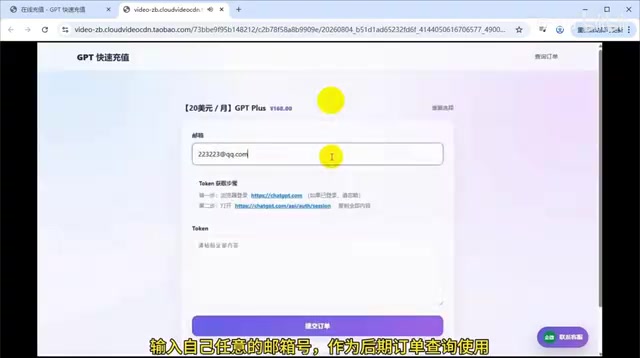
- Confirm that the top-up email is correct, then complete payment via Alipay;
- Once the page confirms success, return to ChatGPT and refresh to see your membership status.
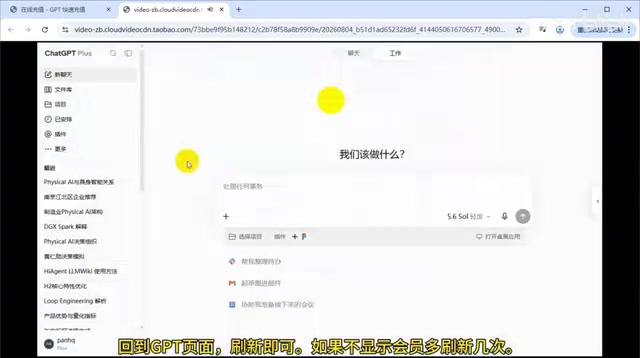
According to the source material, if your membership status doesn't appear right away, a few refreshes should do the trick. The platform claims to offer 24/7 automated fulfillment, compatibility with Apple, Android, and web, and customer support with after-sales service.
Risks You Should Be Aware Of
Despite being operationally simple, the risks here deserve careful consideration. The core mechanism of these "self-service top-ups" involves giving the platform access to your ChatGPT account information — the tutorial explicitly asks you to copy account-related tokens or codes. This means your account credentials pass through a third party. While the promotional material claims you don't need to hand over your "username and password" and that "privacy leakage is prevented," the reality is that your account access is still exposed to the platform to some degree.
Furthermore, using third-party channels to top up likely violates OpenAI's Terms of Service, creating real risk of having your membership revoked or your account permanently banned. The long-term reliability and customer support of these third-party platforms also cannot be guaranteed.
How third-party top-ups typically work technically:
There are generally two mechanisms: (1) the platform holds bulk-purchased API credits or gift cards and tops up user accounts via back-end interfaces; or (2) the platform asks users for a Session Token or Access Token (the so-called "account-related code") to temporarily operate the account and complete the subscription. In the second case, a Token is effectively equivalent to a login credential — whoever holds it can perform actions on your account as if they were you, including viewing conversation history and modifying account settings, until the token expires. OpenAI's Terms of Service explicitly prohibit reselling, sharing, or obtaining subscriptions through unofficial means. If abnormal top-up activity is detected, the consequences range from membership revocation to permanent account suspension.
Side-by-Side Comparison
| Method | Difficulty | Overall Cost | Main Risks |
|---|---|---|---|
| Official overseas credit card | Medium (card required) | ~¥180 in card costs + transaction fees | Payment blocks, high card acquisition cost |
| iOS foreign Apple ID + gift card | High | ~$20–$25 USD | Price premium, tedious account switching |
| Android Google Play IAP | Very High | High | Strict environment checks, easy account lockout |
| Third-party Alipay top-up | Low | Pay directly via Alipay | Account credential exposure, ToS compliance risk |
In terms of ease of use, third-party top-up services clearly have the lowest barrier to entry. But from a security and compliance standpoint, the official direct payment route remains the safest.
Final Thoughts
The core obstacle to subscribing to ChatGPT Plus/Pro in China remains the payment environment and regional restrictions. Each of the methods covered here involves trade-offs: for reliability and compliance, go with the official direct payment; if you're willing to accept a price premium, iOS in-app purchase is an option; third-party top-ups are convenient but come at the cost of account security and compliance.
The most important takeaway is to understand the real costs and risks behind each method — rather than just taking "done in 2 minutes" marketing copy at face value. Any operation that involves handing account access to a third party warrants serious caution.
Related articles

WorkBuddy Full Tutorial: Build an AI Office Automation Agent from Scratch
A complete WorkBuddy tutorial: installation, three working modes, multimodal picture book video practice, expert team agent building, and workflow configuration for low-cost AI office automation.

WorkBuddy Agent Complete Guide: From Beginner to Automation in 7 Days
Based on Bilibili's 256-episode WorkBuddy masterclass, this systematically breaks down Tencent's AI office workbench core capabilities: Agent principles, Skill encapsulation, cross-platform connectors, scheduled automation, knowledge bases, and zero-code development, with learning path recommendations.

8 AI Accounts, 7 Failed: An Honest Review of Using AI to Get Work Done
Only 1 of 8 AI-run Bilibili accounts succeeded. We break down the real difference between "performing AI" and "using AI to get work done."