TeleChat: An Open-Source Telegram AI Bot Integrating GPT-5, Gemini, and Claude
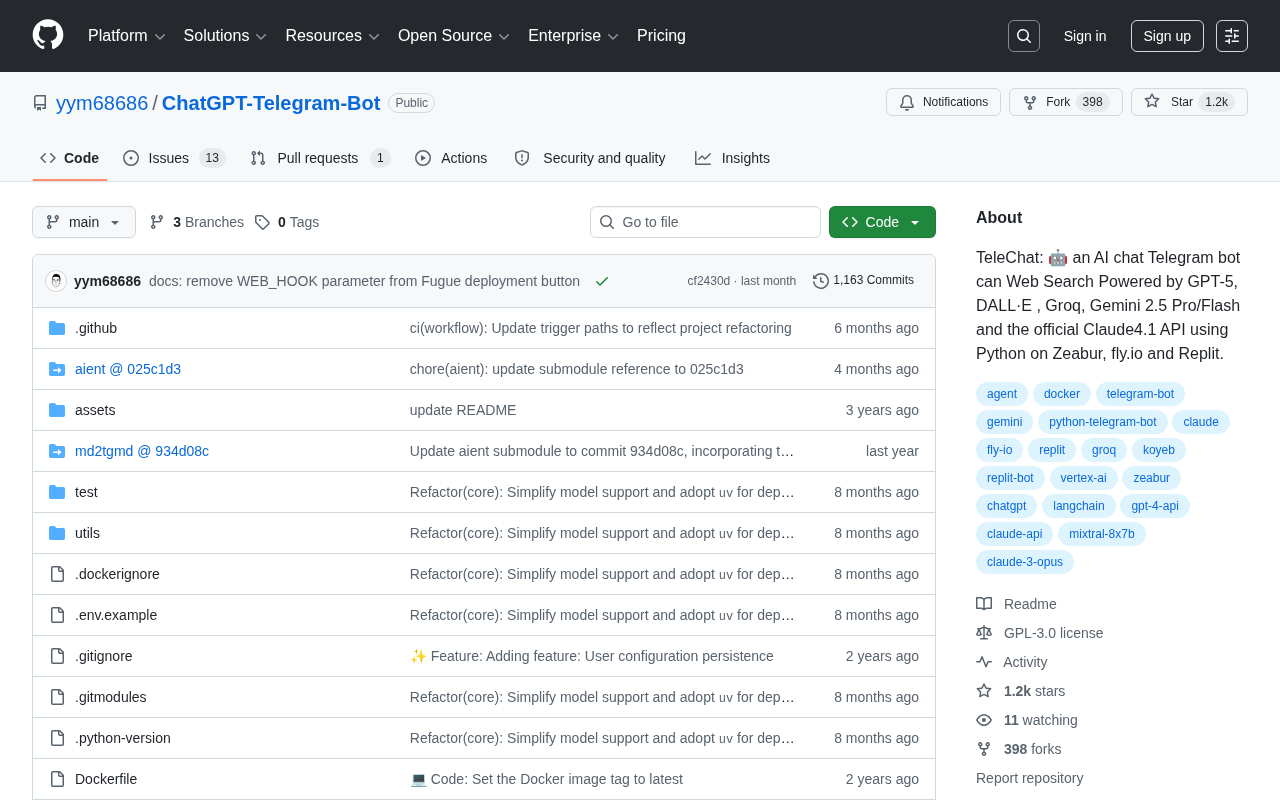
TeleChat is an open-source Python bot unifying GPT-5, Claude, Gemini, and web search in Telegram.
TeleChat (GitHub: yym68686/ChatGPT-Telegram-Bot) is an open-source Telegram bot written in Python that consolidates GPT-5, Claude 4.1, Gemini 2.5 Pro/Flash, Groq, and DALL·E into a single conversation interface, with web search support to overcome static knowledge limitations. It supports lightweight deployment on Zeabur, fly.io, and Replit, significantly lowering the barrier for non-ops users. With 1,242 Stars and 398 Forks, it suits tech enthusiasts, independent developers, and small teams — though multi-model integration requires managing multiple API keys and careful self-hosting configuration.
TeleChat: An Open-Source Multi-Model Telegram AI Bot
Among the many chat tools built on large language models, Telegram bots have become a go-to choice for developers and tech enthusiasts — thanks to their cross-platform nature and low barrier to deployment. The open-source project TeleChat (repository: yym68686/ChatGPT-Telegram-Bot) is a standout example in this space. Written in Python, it has garnered 1,242 Stars and 398 Forks on GitHub, reflecting solid community interest.
One Interface for All Major AI Models
TeleChat's biggest selling point is that it isn't tied to a single model. Instead, it brings today's leading AI engines together under one Telegram conversation interface. According to the project documentation, it supports GPT-5, DALL·E (image generation), Groq (high-speed inference), Gemini 2.5 Pro/Flash, and the official Claude 4.1 API.
This multi-model design has real practical value. Different models excel at different tasks: the Claude family handles long-context comprehension and coding reliably; Gemini Flash prioritizes low-latency responses; Groq is known for blazing-fast inference; and DALL·E handles image generation. Consolidating them in a single bot lets users switch between models based on the task at hand — no more jumping between multiple apps.
Web Search Capability
The project description specifically highlights "can Web Search" as a key feature. Web search is a critical capability for AI assistants to overcome the knowledge cutoff problem, meaning TeleChat doesn't just rely on a model's static training data — it can also retrieve real-time information during a conversation and incorporate it into responses. For queries about breaking news, technical documentation, or time-sensitive topics, this capability significantly boosts practical utility.
The two most common approaches to implementing web search in AI assistants are: calling a dedicated search API (such as Bing Search API, SerpAPI, or Tavily), where the bot retrieves results and injects a summary into the prompt before passing it to the language model; or using the model vendor's built-in web tools (such as OpenAI's web search tool calls or Gemini's Google Search grounding). The former is flexible but requires additional cost; the latter is more cost-controlled but depends on vendor support. Since TeleChat aggregates multiple model backends, the source of web search capability may differ across models, and actual search quality and latency will vary depending on the selected model.
Lightweight Deployment Across Multiple Platforms
For developers, deployment convenience often determines whether they'll adopt an open-source project. TeleChat explicitly supports running on Zeabur, fly.io, and Replit.
All three are popular cloud hosting or online development environments in recent years, characterized by simple configuration, free or low-cost tiers, and in some cases one-click deployment. This means even users without server administration experience can get the bot up and running in a relatively short time. Choosing Python as the implementation language further lowers the barrier for customization and secondary development — the vast majority of AI-related ecosystem libraries are Python-first.
Zeabur is a PaaS platform targeting the Asia-Pacific market, supporting direct Git repository deployment with zero-ops configuration. fly.io is built on Firecracker microVM technology, containerizing applications and distributing them to global edge nodes — ideal for latency-sensitive scenarios. Replit is essentially an online IDE, but its Deployments feature allows projects to run persistently in the cloud, making it especially beginner-friendly. All three offer some level of free tier, but extended use or high concurrency may incur costs. Pay attention to each platform's sleep policy — some free instances automatically pause when there's no traffic, which can affect bot availability.
Target Audience and Use Cases
Overall, TeleChat is aimed at users who want multi-model AI capabilities within a familiar messaging app. It's particularly well-suited for:
- Tech enthusiasts: Those who want to experience cutting-edge models like GPT-5, Claude 4.1, and Gemini 2.5 at low cost;
- Independent developers: Those who need a self-hostable, customizable AI conversation foundation without being locked into official clients;
- Small teams: Those who want to share AI assistant capabilities through a Telegram group with a unified access point.
The nearly 400 Forks also suggest that many developers are actively building custom modifications on top of it.
Practical Considerations Worth Weighing
While multi-model integration is powerful, it also means users must obtain API keys from multiple platforms and bear the associated usage costs. For users who only need a single model, the abundance of features may actually add configuration complexity. Additionally, as a self-hosted solution, stability and security ultimately depend on the user's chosen deployment platform and configuration.
For hands-on technical users, TeleChat provides a practical framework for consolidating top-tier AI models into Telegram. For users who prefer an out-of-the-box experience, some preparation for the deployment process will be needed.
API key management is a security risk that's easy to overlook in multi-model setups. Keys from different vendors need to be injected as environment variables into the deployment environment. If configuration files or logs are accidentally exposed, it could lead to unauthorized billing charges. It's recommended to set usage limits or alert thresholds for each key on the respective platform and rotate them regularly. Additionally, since a Telegram Bot is a public conversation endpoint, anyone with the bot link can initiate a conversation by default. Most projects provide a whitelist mechanism to restrict access — this should be configured as a priority during deployment to prevent the bot from being exploited as a free public AI proxy.
Summary
TeleChat represents the open-source community's effort in the direction of "aggregated AI clients": rather than rebuilding models from scratch, it delivers existing powerful capabilities to users in a more flexible and controllable way. With broad support for GPT-5, Claude 4.1, Gemini 2.5, Groq, and DALL·E — plus web search and multi-platform deployment — it holds a clear functional advantage among similar Telegram bot projects. Whether it's right for you depends on how you weigh the flexibility of self-hosting against the cost of configuration.
Related articles
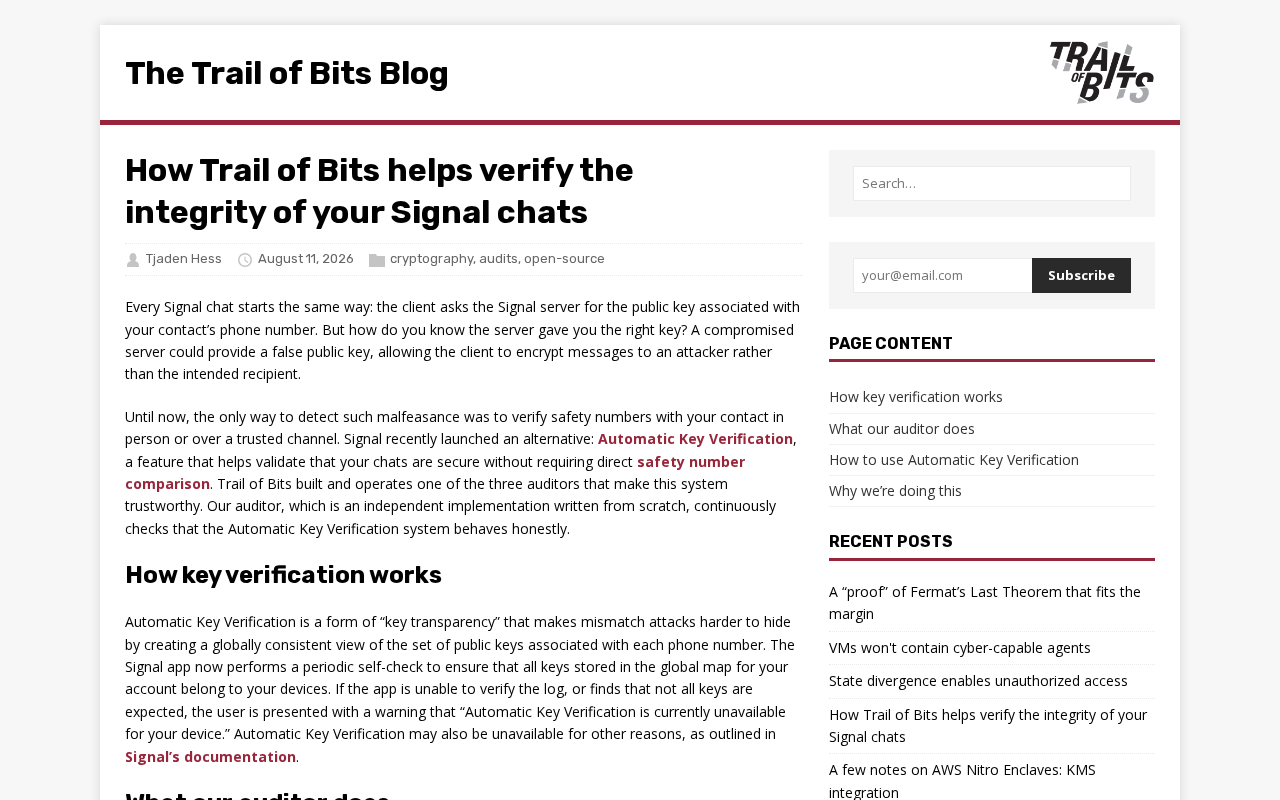
How Trail of Bits Verifies the Integrity of Signal Chat Logs
How does Trail of Bits, as an independent security auditor, help verify the integrity of Signal's end-to-end encrypted chat logs? A technical overview of chat integrity verification and the value of third-party audits.
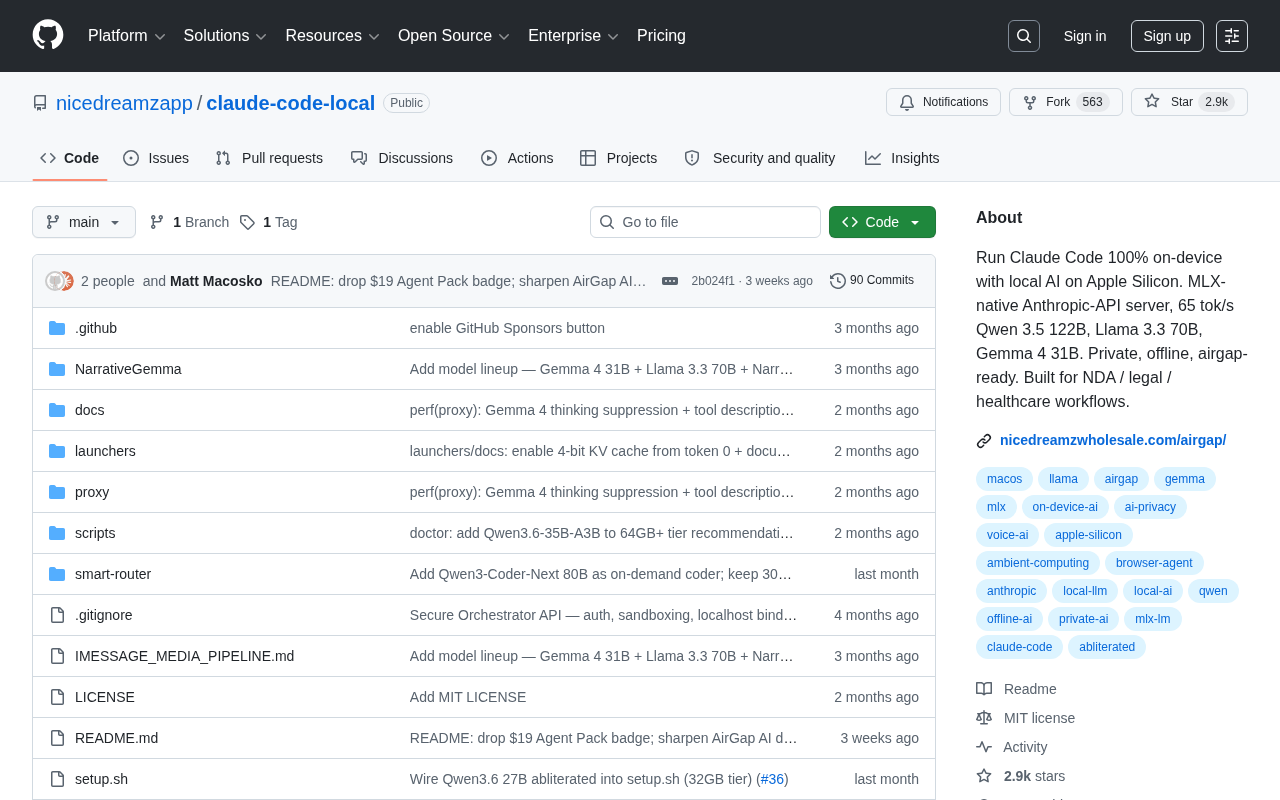
Running Claude Code Locally: A Fully Offline AI Coding Solution for Apple Silicon
claude-code-local runs Claude Code 100% offline on Apple Silicon via MLX, supporting Qwen 3.5 122B at 65 tok/s — built for NDA, legal, and medical privacy workflows.
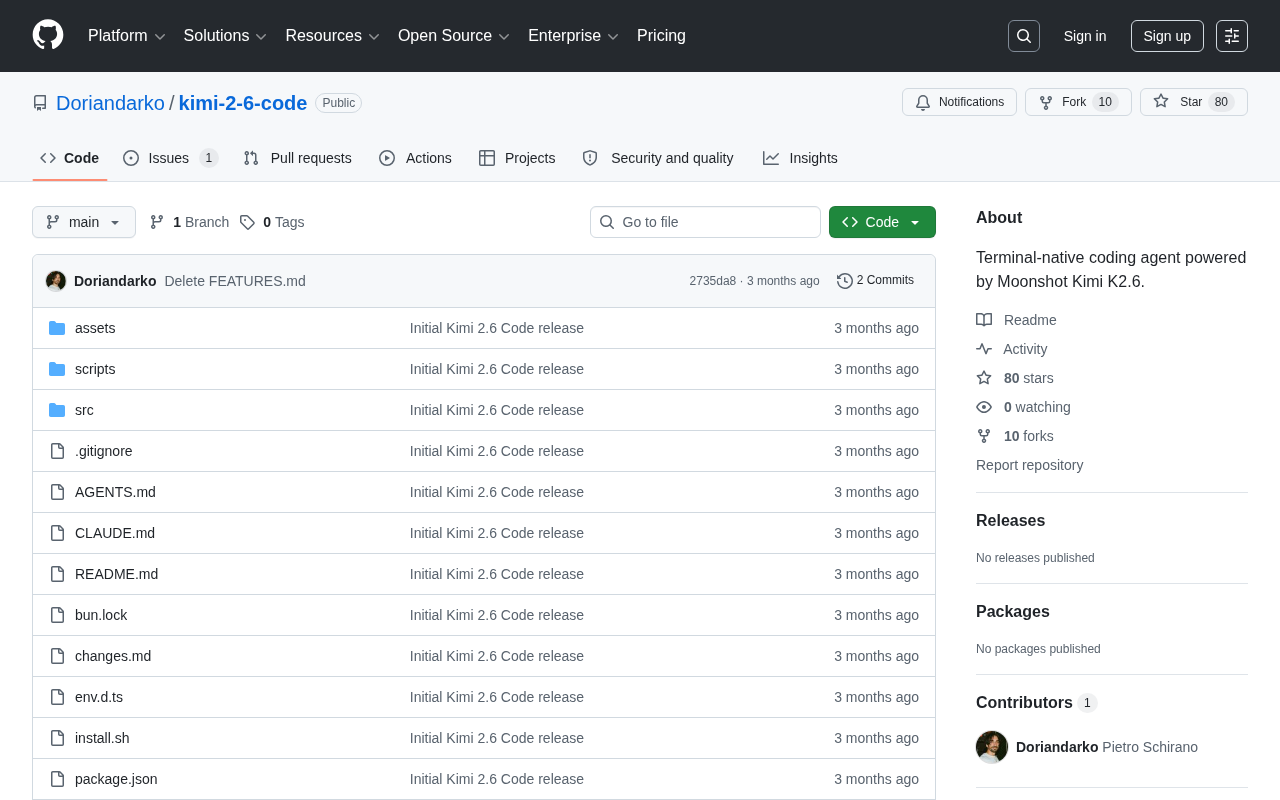
Kimi 2.6 Code: A Terminal-Native Coding Agent Built on the Moonshot Model
kimi-2-6-code is a terminal-native coding agent built in TypeScript on Moonshot's Kimi K2.6 model. Learn about its design, model choice, and maturity level.