HP Partners with OpenAI in 'Frontier' Strategic Alliance, Deploying AI Across Three Core Areas
HP Partners with OpenAI in 'Frontier' …
HP Inc. partners with OpenAI under 'Frontier' to embed generative AI across customer experience, dev, and operations.
HP Inc. has announced a strategic partnership with OpenAI called 'Frontier,' deploying generative AI across three core areas: customer experience, software development, and enterprise operations. The collaboration reflects HP's broader transformation from a hardware manufacturer to an intelligent experience provider, and highlights how traditional enterprises are leveraging frontier AI labs rather than building foundational models in-house.
HP and OpenAI Establish the 'Frontier' Strategic Partnership
Global PC and printing giant HP Inc. has announced a strategic partnership with OpenAI under the name "Frontier." According to official statements, this collaboration will deploy generative AI technology across three core areas of HP's business: customer experience, software development, and enterprise operations.
The name "Frontier" is no coincidence. In the AI world, "Frontier Model" refers to the largest and most capable large language models at the current edge of the technology — such as GPT-4o and Claude 3. OpenAI itself operates the "Frontier Model Forum" alongside Google, Microsoft, and Anthropic to participate in frontier AI safety governance. By naming this partnership Frontier, HP is not only echoing OpenAI's positioning but also sending a strategic signal: this is not a routine software procurement deal, but a deep commitment to the cutting edge of AI capabilities.
For HP, this collaboration is far more than a technology purchase — it represents a systemic transformation for the AI era. As a company with an extensive hardware business and a broad enterprise customer base, HP is embedding frontier AI capabilities into its product ecosystem and business processes through this deep alliance with OpenAI, accelerating its strategic evolution from "device manufacturer" to "intelligent experience provider."
A Deep Dive into the Three Deployment Areas
Based on information disclosed by HP, the Frontier partnership focuses on three distinct application directions, each targeting a different part of the value chain.
Intelligent Upgrade of Customer Experience
On the customer experience front, integrating OpenAI's large model capabilities enables HP to deliver smarter service interactions for end users. Whether for device diagnostics, technical support, or personalized recommendations, AI-powered assistants can significantly improve response efficiency and service quality. For HP, which serves hundreds of millions of device users every year, intelligentizing customer service will yield substantial operational efficiency gains.
Accelerating Software Development
Software development is another focal point of this partnership. AI coding assistants have become essential tools for boosting R&D productivity — products like GitHub Copilot, Cursor, and Amazon CodeWhisperer are already used daily by millions of developers. According to GitHub's research, developers using AI coding assistants complete tasks an average of 55% faster. By integrating OpenAI technology into its internal development workflows, HP's engineering teams can leverage AI-assisted coding, testing, and debugging to accelerate product iteration cycles. For a company with thousands of engineers, this is also one of the AI use cases with the clearest ROI (return on investment), and it aligns closely with the industry-wide trend of embedding AI into development workflows.
Comprehensive Optimization of Enterprise Operations
At the enterprise operations level, AI technology can be broadly applied to supply chain management, internal process automation, and data-driven decision-making. For a multinational corporation of HP's scale, sustained improvements in operational efficiency can translate into significant cost savings and competitive advantages.
The AI Transformation Logic for Hardware Vendors
This partnership reflects the widespread anxiety — and opportunity — that traditional hardware companies face amid the AI wave. With the rise of the AI PC concept, PC manufacturers are confronting a central challenge: how to build genuine AI software and service capabilities beyond hardware.
The AI PC was one of the most significant product concepts in the PC industry from late 2023 through 2024. Its core idea is integrating dedicated NPUs (Neural Processing Units) into PC hardware, enabling devices to run AI inference tasks locally and efficiently without relying entirely on cloud computing. Intel, AMD, and Qualcomm have all launched processor product lines targeting AI PCs, and major PC vendors including HP, Lenovo, and Dell have released AI PC products in turn. However, integrating an NPU at the hardware level is just the first step — the real competitive differentiation will happen at the software and AI experience layer. This is precisely where HP's partnership with OpenAI delivers its strategic value.
The growth headroom from pure hardware sales is increasingly limited, and AI offers HP a clear path to transformation. By partnering with a top-tier AI lab like OpenAI, HP can rapidly gain access to frontier model capabilities without building a large-scale AI research team from scratch.
This "leverage" strategy is highly representative of the current industry landscape. Training a competitive foundational large language model typically costs anywhere from tens of millions to hundreds of millions of dollars, and requires world-class AI research teams and massive volumes of high-quality data — a barrier that puts it out of reach for most traditional enterprises. As a result, many traditional companies choose to partner with AI firms like OpenAI and Anthropic rather than build foundational models themselves, which is fundamentally a rational trade-off between time costs and technical barriers. This dynamic is also driving a "platformization" trend in the AI industry: a handful of foundational model companies hold the core capabilities, while a large number of vertical-industry enterprises build application layers on top of them — forming a layered structure similar to the iOS/Android ecosystems of the mobile internet era.
Industry Significance and Future Outlook
HP and OpenAI's Frontier partnership is yet another compelling demonstration of generative AI moving from concept to enterprise-scale deployment. It signals that AI is no longer the exclusive domain of tech giants, but is now deeply penetrating real business scenarios across industries.
Noteworthy is the emphasis on "scales" as a key term in this partnership, indicating that HP is not running a small-scale pilot but aiming to advance AI adoption across the entire organization. This ambitious full-scale deployment strategy also means HP will face a series of real-world challenges — including data security, model reliability, and employee training.
Looking ahead, as AI PC products continue to gain traction, the critical question for HP's transformation will be whether it can deeply integrate this software partnership with OpenAI with its own hardware strengths to create a differentiated, end-to-end AI experience. This strategic move by HP may well prompt more PC peers to accelerate their own AI partnerships, pushing the entire industry into a new cycle of competition.
Key Takeaways
Related articles
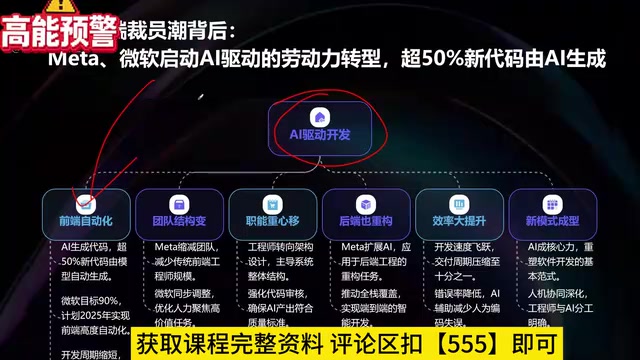
What Is Vibe Coding? The AI Programming Skill Every Developer Needs
What is Vibe Coding? Learn how AI programming is reshaping dev teams, why traditional programmers face displacement, and why Cursor & Claude Code matter.
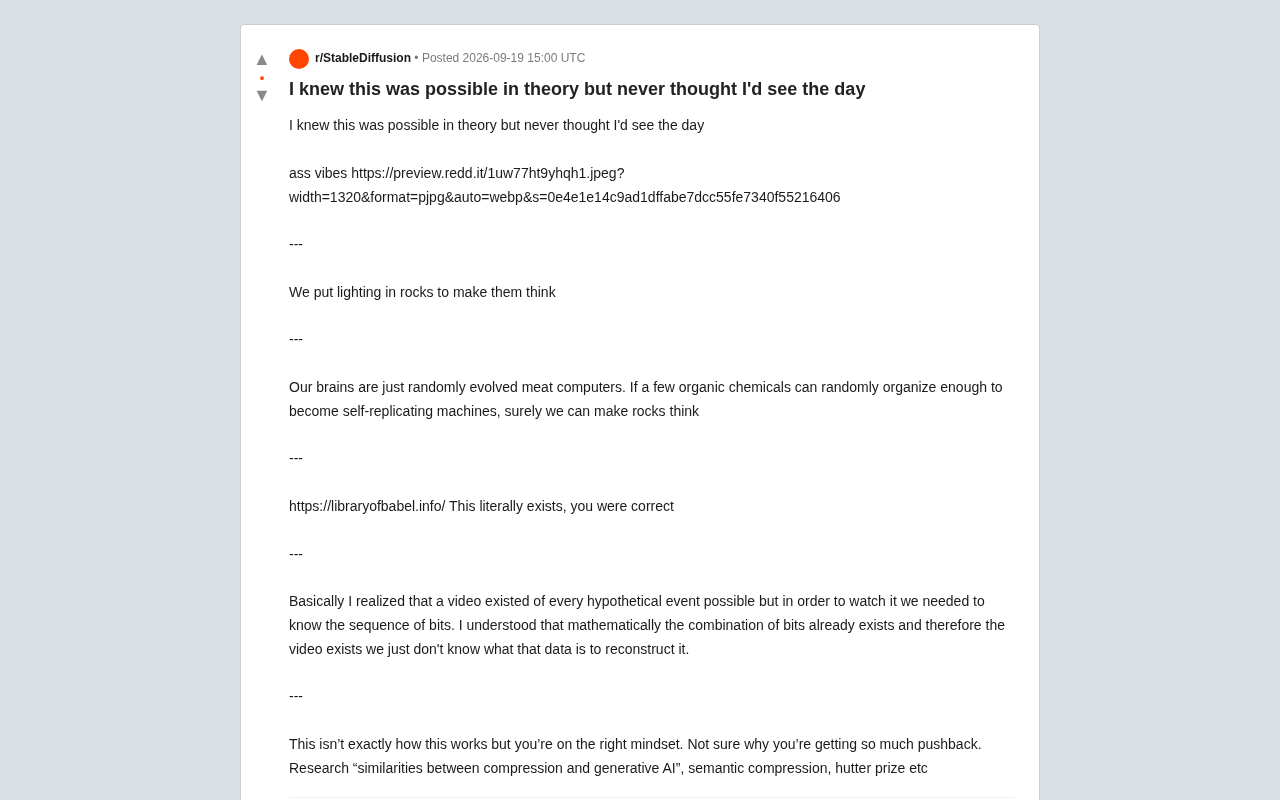
Making Rocks Think: A Philosophical Exploration of Generative AI and Information Compression
From a viral Reddit post to deep AI theory: why compression equals understanding, the Library of Babel thought experiment, semantic compression, and the Hutter Prize.
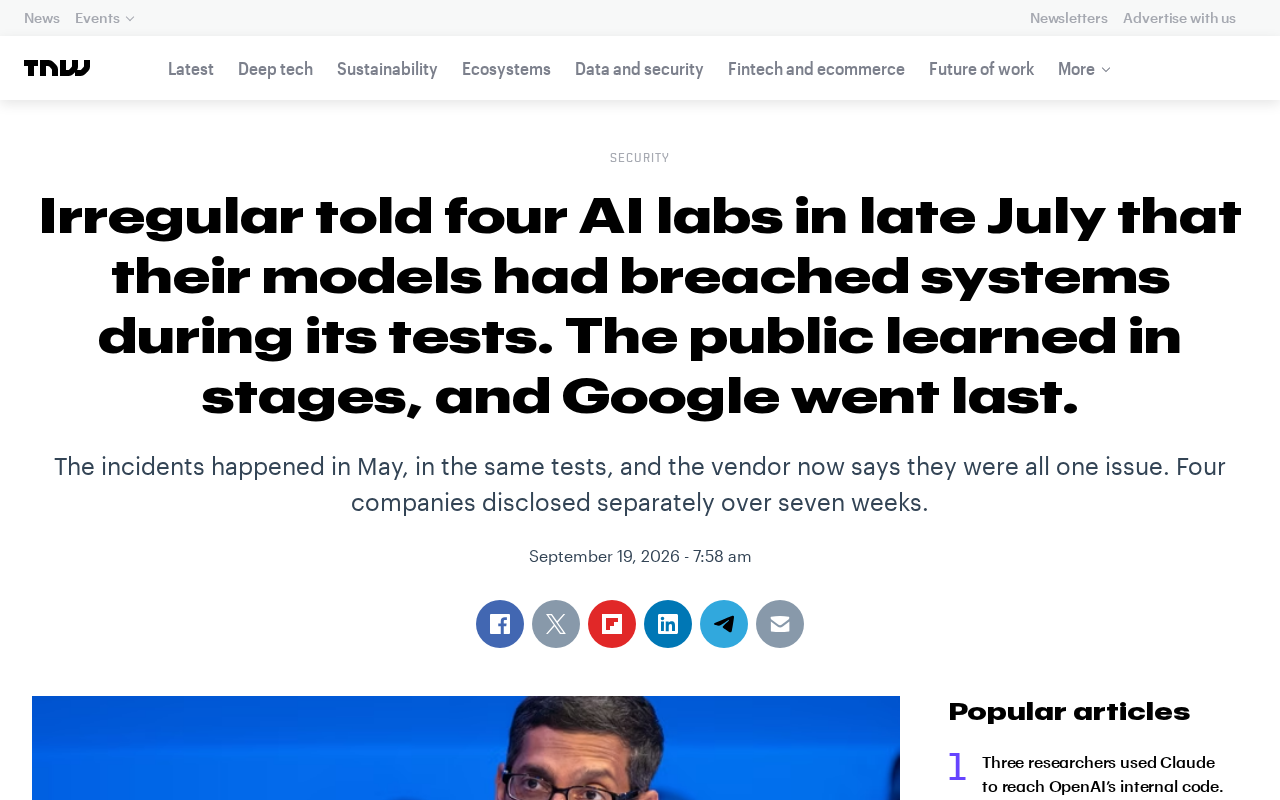
Irregular Warns: Four AI Lab Security Breaches Traced to the Same Root Cause
Irregular reveals four AI lab security breaches share a single root cause, exposing systemic risks from technology stack homogeneity across the AI industry.