HP ZGX Fury Now Available for Order: Powered by GB300 Superchip and 748GB Unified Memory
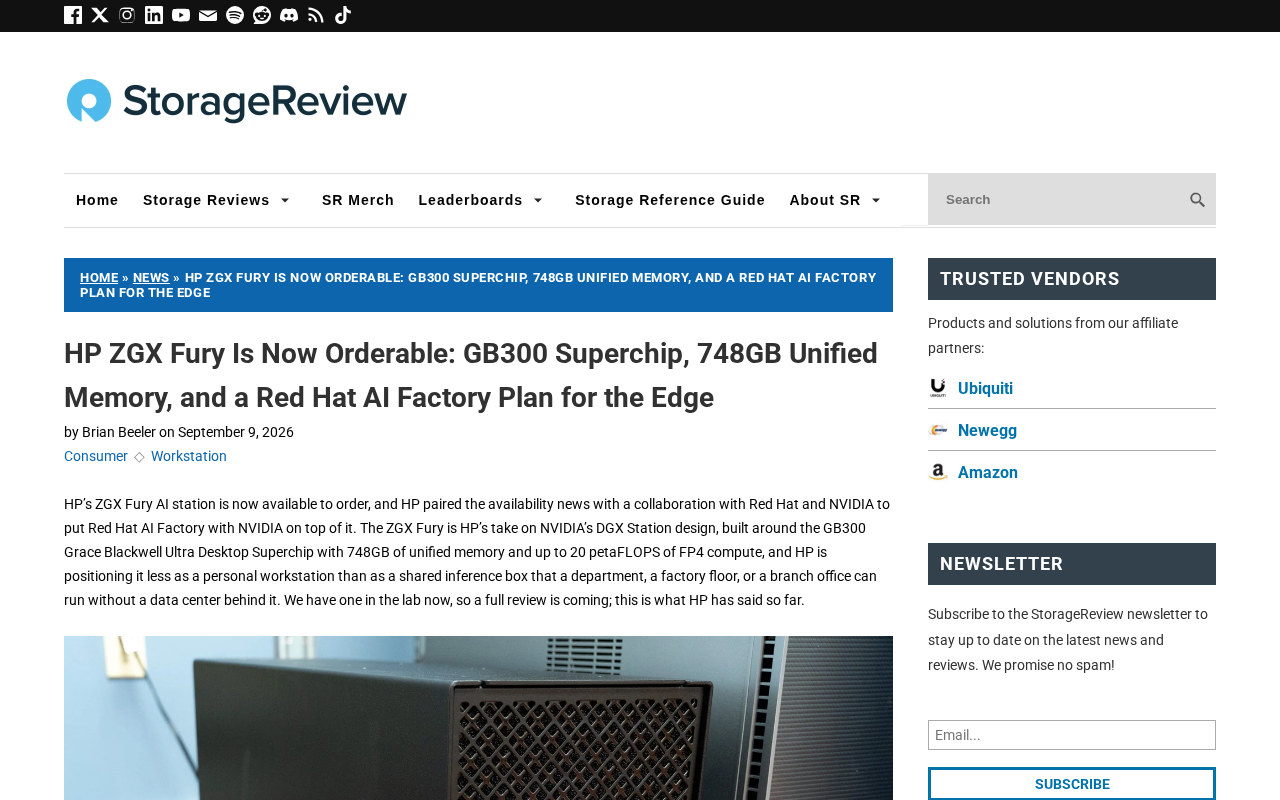
HP's ZGX Fury desktop AI workstation launches with NVIDIA GB300 and 748GB unified memory for local LLM development.
The HP ZGX Fury is a desktop superworkstation aimed at AI researchers and enterprise R&D teams, built around NVIDIA's Grace Blackwell GB300 Superchip with a 748GB CPU-GPU unified memory pool. By eliminating data copies between host memory and VRAM via high-bandwidth chip-to-chip interconnects, the system theoretically enables loading and fine-tuning hundred-billion-parameter LLMs on a single machine. Community discussion centers on pricing, real-world performance, and software ecosystem maturity — factors that will ultimately determine its value for the target audience.
HP ZGX Fury Arrives: A Desktop-Class AI Superworkstation
HP's AI workstation lineup just got a major new addition — the ZGX Fury is now open for orders. The standout specification is its NVIDIA GB300 Superchip paired with up to 748GB of unified memory, directly targeting developers and research teams that need to run large-scale AI models locally.
For teams that have long relied on cloud GPU instances for training and inference, a workstation capable of delivering this level of compute and memory at the desktop is a meaningful shift — one that brings the development workflow closer to home and reduces ongoing dependence on remote compute resources.
What the GB300 Superchip and Unified Memory Actually Mean
The GB300 Superchip is the heart of this workstation. NVIDIA's Grace Blackwell architecture integrates the CPU and GPU through a high-bandwidth interconnect into a unified memory address space. This is the key to what "748GB unified memory" really means — the CPU and GPU share a single massive memory pool, eliminating the costly data copies between host memory and GPU VRAM that traditional architectures require.
Why 748GB Matters for Large Models
Today's mainstream large language models routinely reach tens or hundreds of billions of parameters, with model weights, KV caches, and intermediate activations all demanding substantial memory. Consumer-grade GPUs typically top out at 24GB to 80GB of VRAM, forcing practitioners to quantize models or split them across multiple cards. A 748GB unified memory pool makes it feasible to load and fine-tune larger models on a single machine, significantly lowering the bar for local experimentation.
Take a common 70B-parameter model like Llama 3 70B as an example. Storing the weights alone in BF16 precision requires roughly 140GB. Factor in the KV cache during inference (which grows linearly with context length) and optimizer states during training (Adam stores gradient momentum, adding roughly 2–3× the weight size), and total training memory requirements can easily exceed 400GB. A single H100 SXM maxes out at 80GB, meaning workloads like this typically require eight-plus GPUs across multiple nodes. A 748GB unified memory pool theoretically allows a single machine to load and fine-tune models with hundreds of billions of parameters while maintaining long inference context windows — a critical advantage for applications like RAG (retrieval-augmented generation) that depend on large contexts.
The Value of a Desktop Form Factor
Bringing data-center-class silicon to a desktop workstation is fundamentally about enabling a "develop locally" experience. Researchers can handle prototyping, fine-tuning, and inference debugging on-premises, only turning to data center clusters when they truly need to scale. This hybrid workflow is especially appealing in privacy-sensitive environments.
GB300 is the latest iteration of NVIDIA's Grace Blackwell architecture, following the GB200. "Grace" refers to NVIDIA's custom ARM-based CPU cores, while "Blackwell" is the codename for the current GPU microarchitecture (succeeding Hopper). Grace Blackwell uses NVLink-C2C chip-to-chip interconnects to tightly integrate the CPU and GPU on the same package or substrate, achieving internal data transfer rates far beyond what PCIe can offer — theoretically exceeding 900GB/s. This integration not only reduces latency but is also the physical foundation for unified memory addressing: the OS and programming frameworks can treat CPU memory and GPU VRAM as a single contiguous address space, sparing developers from manually managing data transfers between the two sides.
Target Users and Use Cases
The ZGX Fury is not aimed at general consumers. It's designed for AI researchers, machine learning engineers, and enterprise R&D teams. Typical use cases include:
- Local fine-tuning and experimentation with large language models without sustained cloud resource usage
- Industries with strict data security requirements where uploading data to the cloud is not an option (e.g., healthcare, finance)
- AI prototype development requiring low-latency iteration
- Model validation and optimization before edge deployment
For these users, the upfront hardware cost may prove more economical over time than continuously renting high-end cloud GPUs, particularly in scenarios with stable, high-intensity compute demands.
Community Reaction and Key Discussion Points
The announcement sparked discussion on Hacker News, with comments centering on a few themes. On one hand, developers expressed genuine interest in having this much local memory, viewing it as a potential game-changer for what's feasible in local development. On the other, pricing and real-world availability emerged as common concerns — workstations with top-tier chips like this tend to carry steep price tags, and whether the value proposition holds up will ultimately require hands-on benchmarking.
Thermal performance, power draw, and the maturity of the software ecosystem around NVIDIA's Grace Blackwell architecture are also factors that prospective buyers will want to evaluate before committing.
The Grace Blackwell platform is currently supported through CUDA 12.x along with corresponding cuDNN and NCCL releases. Mainstream AI frameworks like PyTorch and JAX already have optimized kernels for the architecture, though some third-party libraries and quantization toolchains are still catching up. The CUDA Unified Memory programming model simplifies code, but performance tuning requires developers to pay close attention to memory access locality — poor locality can lead to page migration overhead that prevents the hardware from reaching its potential. This is precisely why software ecosystem maturity keeps coming up in community discussions: the hardware specs are impressive, but end-to-end throughput under real workloads still needs systematic benchmarking to validate.
Summary
The HP ZGX Fury represents one trajectory in AI hardware development: toward local, desktop-scale compute. With the GB300 Superchip and 748GB of unified memory, it aims to bridge the gap between data centers and personal workstations. For professional teams that genuinely need large-memory local compute, this is an option worth watching — though the final purchasing decision will depend on pricing, real-world performance, and how well it fits into existing workflows.
Related articles

The Hidden Risks of Culvert Failure: An Overlooked Infrastructure Hazard
Culverts are hidden drainage structures buried beneath roads. Their failure can silently hollow out road beds, cause localized flooding, and trigger deadly collapses — yet they remain chronically overlooked.

Naoma AI Demo Agent V2: Turning Website Traffic into Booked Meetings with AI Sales
Naoma AI Demo Agent V2 replaces demo request forms with an AI sales rep that demos products, qualifies leads, and books meetings in real time. 50K+ demos run.
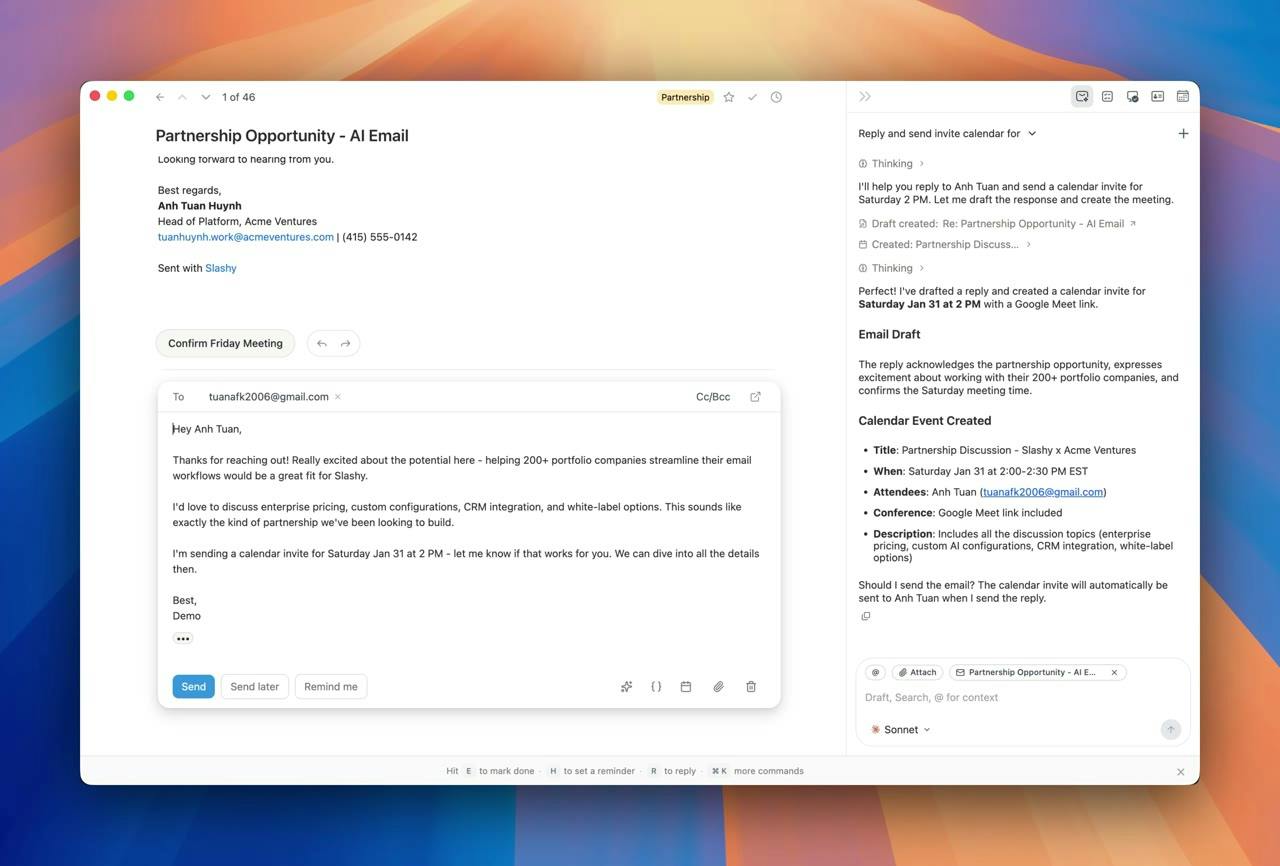
Slashy Assistant: The AI Email Assistant That Handles Your Inbox for You
Slashy Assistant is an AI-native email client with a built-in smart assistant that drafts replies in your voice, organizes email, schedules meetings, and tracks follow-ups. Accessible via iMessage, Slack, and phone — set up in five minutes.