Hugging Face Transformers: Deep Dive into the 160K-Star Open Source AI Model Framework

Comprehensive analysis of Hugging Face Transformers, the 160K-Star open-source AI model framework.
Hugging Face Transformers is a top-tier open-source AI framework with 160K+ GitHub Stars, positioned as a unified model definition framework built on engines like PyTorch. It covers text, vision, audio, and multimodal domains, supporting both inference and training, while forming a complete toolchain with ecosystem components like Hub, PEFT, and Datasets. The framework continues evolving toward quantized deployment, long context, and AI Agents, establishing itself as essential infrastructure for AI developers.
Overview
Hugging Face Transformers is currently the most popular open-source machine learning model framework, having earned over 160,000 Stars on GitHub and becoming a standard tool in virtually every AI developer's toolkit. Whether you want to get a text generation demo up and running or fine-tune a vision foundation model, Transformers can help you accomplish it in just a few lines of Python code.
The framework covers four major domains—text, vision, audio, and multimodal—while supporting both model inference and training as core use cases. It serves as a critical bridge connecting academic research with production engineering.
Framework Positioning and Core Value
A Unified Model Definition Framework
Transformers' core positioning is as a model-definition framework, not a low-level compute engine. It's built on top of deep learning frameworks like PyTorch and TensorFlow, providing unified model interfaces and pretrained weight management capabilities.
Understanding this positioning requires distinguishing between two layers: low-level compute engines (such as PyTorch and TensorFlow) handle tensor operations, automatic differentiation, GPU scheduling, and other foundational capabilities, while the model definition framework provides higher-level abstractions on top—including standardized implementations of model architectures, version management of pretrained weights, and unified input/output interfaces. This layered design is analogous to the relationship between frameworks and runtimes in web development: Node.js is the runtime, Express is the framework. Each layer focuses on solving problems at different levels, and together they form a complete development experience.
In practice, developers can load thousands of pretrained models with just a few lines of code:
from transformers import AutoModelForCausalLM, AutoTokenizer

tokenizer = AutoTokenizer.from_pretrained("meta-llama/Llama-2-7b")
model = AutoModelForCausalLM.from_pretrained("meta-llama/Llama-2-7b")
Here, AutoModel and AutoTokenizer employ a factory pattern design, automatically inferring the specific model class and tokenizer class to load based on the model name string. Behind the scenes, this relies on the config.json configuration file in each model repository on the Hub, which records all necessary hyperparameter information including architecture type, hidden layer dimensions, and number of attention heads. Developers don't need to worry about the underlying details—the framework automatically handles the entire process of model instantiation and weight loading.
This design dramatically lowers the barrier to using cutting-edge AI models—you don't need to implement model architectures from scratch or manually download and manage weight files.
Full Multimodal Coverage
The range of modalities supported by the framework continues to expand:
- Text: Mainstream language models including BERT, GPT-2, LLaMA, Mistral, Qwen, and more
- Vision: Visual models including ViT, CLIP, Stable Diffusion, SAM, and more
- Audio: Speech and audio models including Whisper, Wav2Vec2, MusicGen, and more
- Multimodal: Vision-language models including LLaVA, Qwen-VL, InternVL, and more
Although these models cover different modalities, most are based on variants of the Transformer architecture. The Transformer architecture proposed by Google in the 2017 paper Attention Is All You Need uses self-attention as its core mechanism, capturing global dependencies by computing association weights between each element and all other elements in a sequence, completely replacing the recurrent computation paradigm of RNN/LSTM. Building on this foundation, different tasks have given rise to different architectural variants: BERT uses an Encoder-only architecture that excels at understanding tasks through bidirectional context modeling; the GPT series uses a Decoder-only architecture that excels at text generation through autoregressive token-by-token generation; and T5 and similar models use an Encoder-Decoder architecture suited for sequence-to-sequence conversion tasks like machine translation.
In the vision domain, ViT (Vision Transformer) feeds images into a standard Transformer by splitting them into fixed-size 16×16 patch sequences, demonstrating the architecture's cross-modal universality. Multimodal models like LLaVA typically use projection layers to map visual encoder outputs into the language model's embedding space, achieving cross-modal alignment that enables language models to "understand" image content.
Nearly all significant new models are adapted to Transformers by the community or officially shortly after paper publication. For AI practitioners, mastering this single framework provides access to the vast majority of frontier models.
GitHub Community Data and Influence
Key Metrics
As of 2024, the core data for the Transformers project is as follows:
| Metric | Value | Description |
|---|---|---|
| Stars | 160,000+ | Ranks among the top projects across all of GitHub |
| Forks | 33,000+ | Reflects extremely high secondary development activity |
| Primary Language | Python | Aligns with the mainstream AI/ML community tech stack |
| Contributors | 3,000+ | Maintained by developers worldwide |
Over 33,000 forks indicate that a large number of teams are doing customized development on this foundation—a figure far exceeding most open-source projects, fully demonstrating the framework's extensibility.
The Hugging Face Ecosystem Landscape
Transformers doesn't stand alone—it's the central hub of the Hugging Face ecosystem, working in concert with multiple companion projects:
- Hugging Face Hub: A model hosting platform that now hosts over one million models and datasets
- Datasets: A standardized dataset loading and processing library
- Accelerate: Distributed training and mixed-precision acceleration tools
- PEFT: A parameter-efficient fine-tuning library supporting methods like LoRA and QLoRA
- TRL: A training library for RLHF (Reinforcement Learning from Human Feedback)
- vLLM/TGI: High-performance inference serving deployment solutions
The Hugging Face Hub's design draws from GitHub's version control philosophy but is specifically optimized for machine learning assets. Each model repository is essentially a Git LFS (Large File Storage) repository, supporting version tracking and incremental updates of model weight files. The Hub uses a Model Card mechanism that requires uploaders to provide metadata about training data, evaluation metrics, usage limitations, and more—this is crucial for model reproducibility and responsible use.
The most representative technique in the PEFT library is LoRA (Low-Rank Adaptation), which achieves efficient fine-tuning by injecting low-rank decomposition matrices alongside pretrained weight matrices. Specifically, for a weight matrix W of dimension d×d, LoRA doesn't update W directly but instead learns two small matrices A (d×r) and B (r×d), where r is much smaller than d (typically 4-64), and the final weight becomes W+AB. This approach typically needs to train only 0.1%-1% of the original parameter count while achieving results close to full fine-tuning, dramatically reducing memory requirements and making it possible to fine-tune large models on a single consumer-grade GPU.
This combination covers the complete pipeline from model training and fine-tuning to production deployment.
Core Technical Architecture Advantages
Dual-Track Support for Inference and Training
Early Transformers primarily served inference scenarios, but as demand for large model fine-tuning exploded, training-side capabilities have been significantly enhanced. The Trainer API provides an out-of-the-box training workflow:
- Mixed precision training (FP16/BF16)
- Gradient accumulation and gradient checkpointing
- Multi-GPU/multi-node distributed training
- Automatic hyperparameter search
- Experiment tracking integration with WandB and others
The core idea behind mixed precision training is to simultaneously use both FP32 and FP16/BF16 numerical precision during training: forward and backward passes use lower precision to accelerate computation and reduce memory usage, while weight updates retain an FP32 master copy to maintain numerical stability. BF16 (Brain Floating Point 16) has the same exponent bit width (8 bits) as FP32, giving it a larger dynamic range compared to FP16 and making it less prone to gradient overflow or underflow issues. It's increasingly preferred in large model training and has become the current mainstream precision choice.
Gradient checkpointing is a strategy that trades computation for memory: during normal training, forward passes need to save activation values for all intermediate layers for use during backpropagation, which consumes substantial memory in deep networks. Gradient checkpointing only saves activation values at selected key layers, recomputing discarded intermediate activations during backpropagation. This can reduce memory usage to roughly the square root of the original level, at the cost of approximately 30% additional computation overhead. For large models with dozens of layers, this technique is essential for completing training under limited memory conditions.
For developers who don't want to dive into low-level training logic, the Trainer eliminates a significant amount of boilerplate code.
Multi-Backend Framework Support
Transformers is compatible with three major deep learning backends: PyTorch, TensorFlow, and JAX. Although PyTorch currently dominates the community, the multi-backend design provides flexible choices for teams with different tech stacks and leaves room for potential future technology migrations.
Pipeline Quick Inference API
For scenarios where you just want to quickly validate results, the pipeline API provides the most concise calling interface:
from transformers import pipeline

# Text generation
generator = pipeline("text-generation", model="gpt2")
result = generator("AI is transforming")

# Sentiment analysis
classifier = pipeline("sentiment-analysis")
result = classifier("I love this product!")
Development Trends and Future Directions
As the large model era deepens, the Transformers framework is continuously evolving in several key directions:
1. Accelerating Model Integration
The cycle from paper publication to framework support is constantly shortening, with some popular models being adapted on the very day their paper is released. Community contribution mechanisms and modular architecture design are the key enablers behind this.
2. Quantization and Inference Optimization
Integration of multiple quantization schemes including GPTQ, AWQ, BitsAndBytes, and GGUF enables developers to run 70B-parameter large models on consumer-grade GPUs. 4-bit quantization combined with QLoRA fine-tuning has become the mainstream approach for individual developers training large models.
Model quantization is the technique of converting floating-point weights to low-bit integer representations, with the core goal of dramatically reducing model size and inference memory requirements within an acceptable accuracy loss range. GPTQ is a post-training quantization method that quantizes weights layer by layer based on approximate second-order information (the inverse of the Hessian matrix), preserving model quality by minimizing the reconstruction error of each layer's output. AWQ (Activation-aware Weight Quantization) is based on a key observation: not all weight channels are equally important—a small number of critical channels have far greater influence on model output than others. AWQ maintains excellent model performance under overall 4-bit quantization by protecting those weight channels that most impact activation values (using higher precision or scaling factors).
The BitsAndBytes library provides the NF4 (4-bit NormalFloat) data type, an information-theoretically optimal data type. It assumes pretrained model weights approximately follow a normal distribution and divides quantization intervals according to normal distribution quantiles, ensuring each quantization bin contains equal probability density of weight values, thereby minimizing quantization error. A 70B-parameter model requires approximately 140GB of memory in FP16, but only about 35GB after 4-bit quantization—loadable on a single 80GB A100 or two 24GB consumer-grade GPUs.
3. Long Context and Efficient Attention
Adapting efficient attention mechanisms like Flash Attention 2 and Sliding Window Attention, supporting context windows of 128K or even longer, meeting the demands of long-document processing and RAG scenarios.
Standard self-attention has O(n²) computational complexity and memory usage, where n is the sequence length. When sequence length expands from 4K to 128K, the memory requirement for attention computation grows by over 1000x, making naive implementation completely infeasible. Flash Attention, proposed by Tri Dao's team at Stanford, doesn't change the mathematical result of attention computation—instead, it optimizes memory access patterns based on GPU hardware characteristics. GPUs have large but slow HBM (High Bandwidth Memory) and small but fast SRAM (on-chip cache). Standard implementations need to write the full n×n attention matrix to HBM, while Flash Attention uses tiling techniques to split Q, K, V matrices into small blocks computed in SRAM, using an online softmax algorithm to avoid storing the complete attention matrix, achieving 2-4x speed improvements and memory optimization from O(n²) to O(n).
Sliding Window Attention is an architecture-level optimization adopted by models like Mistral. Each token only attends to neighboring tokens within a fixed window size w, reducing per-layer complexity to O(n×w). Although a single layer can only see local information, through multi-layer stacking, information can propagate layer by layer—after k layers, each token's effective receptive field expands to k×w tokens, capturing long-range dependencies while maintaining computational efficiency.
4. AI Agent Development Support
As the AI Agent concept rises, the framework is beginning to support emerging paradigms like tool use and function calling, helping developers build intelligent agent applications that can interact with external systems.
AI Agents represent a paradigm shift for large language models from passive Q&A to proactive task execution. In traditional conversational mode, models can only generate text responses based on their parametric knowledge; in an Agent framework, the LLM serves as the hub for reasoning and decision-making, interacting with external tools (search engines, code interpreters, databases, APIs, etc.) through structured function calling interfaces, forming a "perceive-think-act" loop.
A typical Agent execution loop includes: observation (receiving user instructions and environmental feedback), thinking (reasoning about the current state and planning the next action), and acting (calling tools to execute operations or generating the final response). ReAct (Reasoning + Acting) is currently the most mainstream Agent reasoning paradigm, requiring the model to alternately generate thought chains (Thought) and tool calling instructions (Action), continuing to reason based on tool-returned observations (Observation) until sufficient information is gathered to complete the final answer.
The Transformers framework supports building applications with tool-calling capabilities through special markers like tool_use in model chat templates and standardized tool description JSON Schemas, enabling developers to build such applications conveniently without designing complex prompt engineering and parsing logic from scratch.
Conclusion
Hugging Face Transformers has grown from its origins as an NLP toolkit into an infrastructure-level project covering all modalities in AI. Behind those 160,000 Stars are millions of developers who depend on and trust it daily. Whether you're a newcomer just getting started with AI, a researcher needing rapid prototype validation, or an engineer building production systems, Transformers deserves to be your first-choice tool framework.
Key Takeaways
- Transformers is a top-tier AI open-source project with 160K+ Stars on GitHub, positioned as a unified model definition framework
- Supports four major domains—text, vision, audio, and multimodal—covering both inference and training scenarios
- As the core component of the Hugging Face ecosystem, it forms a complete toolchain with Hub, Datasets, PEFT, and other projects
- The framework supports multiple backends including PyTorch, TensorFlow, and JAX, offering excellent technical compatibility
- Continuously evolving toward frontier directions including quantized deployment, long context, and AI Agents
Related articles
 Product Reviews
The Programmer's Desk Setup Guide: Building a Workspace That Feels Like Home
Discover how programmers build productive, comfortable workspaces. From multi-monitor setups to ergonomic design, explore the desk philosophy that drives focus and flow.
 Product Reviews
Qoder vs Cursor Real-World Comparison: Which $20/Month AI IDE Is Better?
Hands-on comparison of Qoder vs Cursor AI IDEs: Agent autonomy, human interaction count, and architecture decisions. Qoder needed only 2 interactions vs Cursor's 8.
 Product Reviews
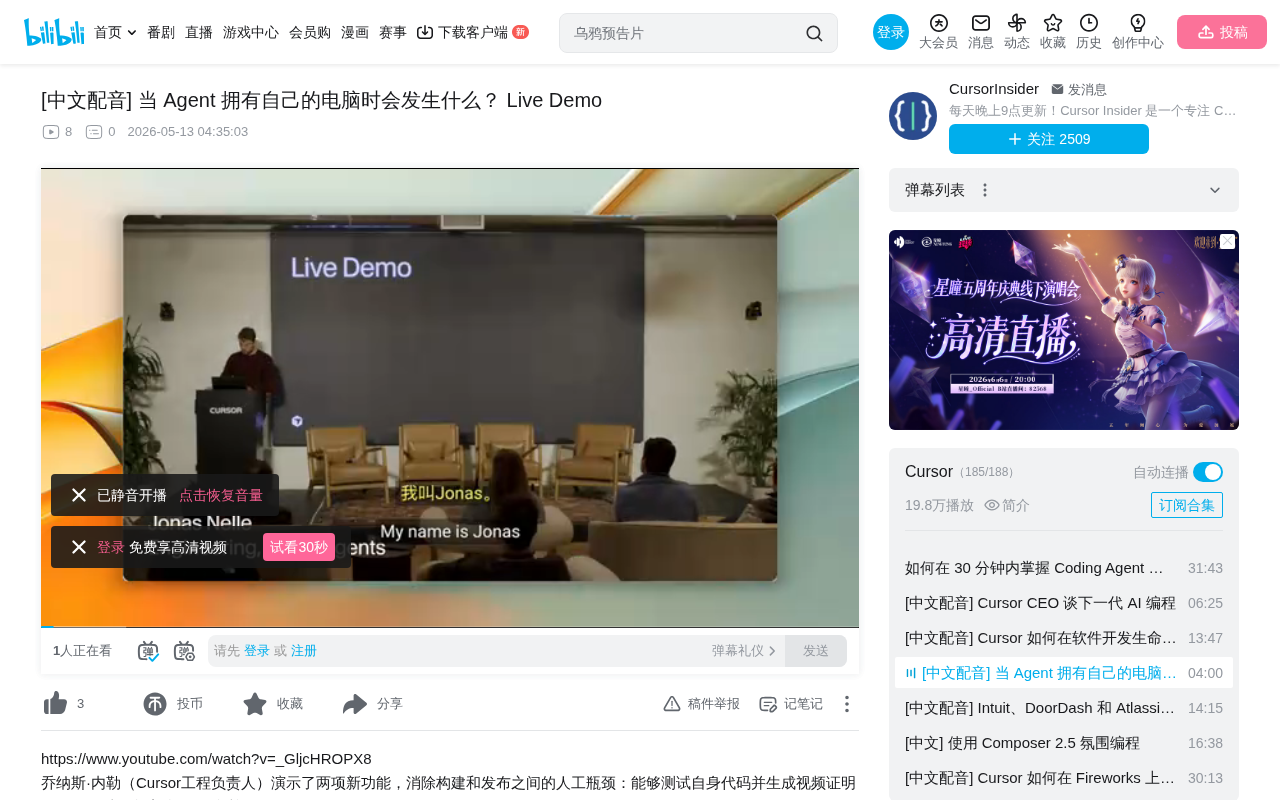
Cursor Cloud Agent Demo: Eliminating Bottlenecks Across the Entire Software Development Lifecycle
Deep analysis of Cursor's Cloud Agent demo showing how cloud VMs, automated test artifacts, and a full-chain control plane systematically eliminate human bottlenecks across the software development lifecycle.