#LoRA
20 related articles
Fine-Tuning Large Models Without Changing Weights: PEFT, Adapters, and Prefix Tuning Explained
Explaining the three main PEFT routes: LoRA, adapters, and prefix tuning. How to fine-tune large models without updating original weights, the pros and cons of each method, selection advice, and tuning and deployment considerations in practice.

Finite-Rank Bottleneck: A New Theoretical Perspective on LoRA Low-Rank Adaptation
A new LoRA theory without linearization: the finite-rank bottleneck induced by the frozen backbone determines the rank upper bound of low-rank adaptation, with trace-norm regularization and stationary-point rank deficiency jointly explaining low-rank updates from both convex and non-convex sides.

Fine-Tuning Qwen on a Single RTX 3090: Why Isn't the Accuracy Gain Enough?
A hands-on retrospective of fine-tuning Qwen3.5 on a single RTX 3090: accuracy rose from 7/28 to 13/28, yet NLL worsened from 2.215 to 3.916—revealing label-question mismatches, missing calibration, and generalization gaps exposed by JevBench's Hard group.

Running MiniMax H3 Character Swap LoRA on 8GB VRAM: A Real-World Test on a Mid-Range GPU
A Reddit user tested MiniMax H3 with a Character Swap LoRA on an RTX 4070 with just 8GB VRAM. We break down the hardware setup, render parameters, and what it means for budget AI video generation.

Krea 2 Realistic Portrait LoRA Explained: The Current State of AI Art Fine-Tuning
A Krea 2 realistic portrait LoRA shared on Reddit sparks discussion. This article breaks down LoRA fine-tuning, the Krea model ecosystem, and the "1girl realism" trend.

AI Video Generation in Practice: H3 T2V + LoRA for Fantasy Combat Scenes
A Reddit post reveals AI video's recipe-driven trend: H3 T2V + combat LoRA + spectrum for fantasy battle scenes. We break down T2V, LoRA fine-tuning, and modular workflows.

Qwen-Image 2.1 Dataset Generator: A New LoRA Training Workflow for Face Assets
A Reddit user shares a Qwen-Image 2.1 LoRA dataset workflow with CFG 3, 25 steps, and dual-image input for consistent face identity generation.

VNCCS PoseStudio: Pose Control LoRA for Qwen Image 2.1 Released
VNCCS PoseStudio releases the first pose control LoRA for Qwen Image 2.1, with a full workflow included. Open-sourced on Hugging Face — here's what it offers.

MiniMax H3 CrossView-Warp LoRA: Change Camera Movement and Perspective in Existing Videos
Developer Cseti releases MiniMax H3 CrossView-Warp LoRA, an open-source V2V tool for modifying camera movement and perspective in existing video clips via ComfyUI.
ComfyUI Gets a YuE2 LoRA Trainer: Customizing Music Generation Models
Developer filliptm and MachineDelusions release a ComfyUI YuE2 LoRA trainer built on custom encoder and tokenizer scripts, enabling fine-tuning of the YuE2 music generation model within ComfyUI nodes. Now open-source on GitHub.
TaoMate H3 Three-Step LoRA Now Compatible with ComfyUI: Accelerating MiniMax H3 Image Generation
A Reddit user converted the official TaoMate H3 3 Step LoRA to ComfyUI-compatible safetensors format, enabling MiniMax H3 to generate images in just 3 sampling steps with no retraining required.
MiniMax H3 3-Step Acceleration LoRA: The Battle Between Blazing Speed and Image Quality
MiniMax H3 3 Step LoRA compresses video generation to 3 inference steps. Reddit community debates speed vs. quality, shares real test data, and explores multi-LoRA hybrid workflows.
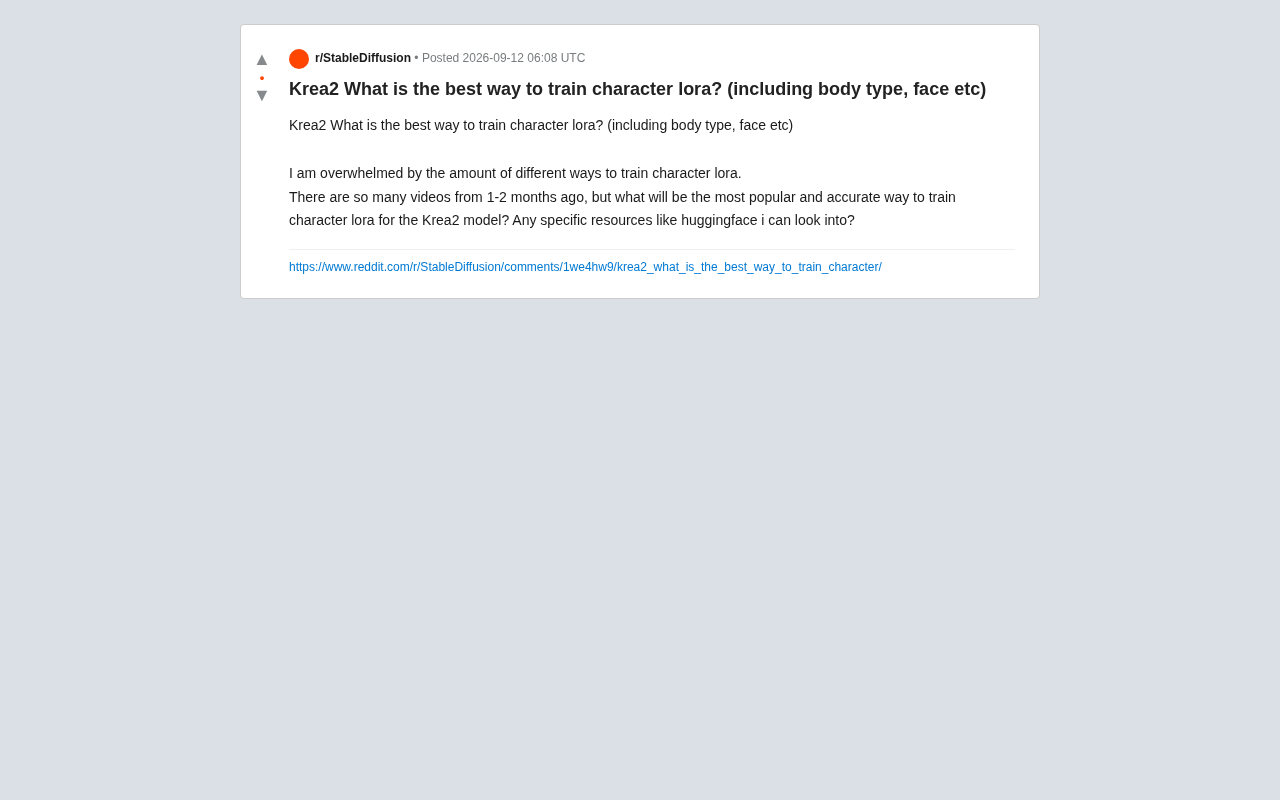
Krea2 Character LoRA Training Guide: How to Accurately Reproduce Face and Body
How to train a character LoRA for Krea2 that accurately reproduces face and body. Covers dataset prep, captioning strategy, parameter tuning, and pitfalls to avoid.

Grid-Like Texture on Skin in AI Art? Causes and Fixes Explained
Grid-like texture on character skin in Stable Diffusion but not the face? Learn the causes — VAE decoding, LoRA overfitting, upscalers — and how to fix them step by step.
 Tutorials
4-bit QLoRA Fine-tuning LLaMA 3 in Practice: A Guide to Training 8 Billion Parameter LLMs on Consumer GPUs
Learn how to fine-tune LLaMA 3 8B on consumer GPUs using QLoRA and Unsloth. Covers 4-bit quantization, LoRA adaptation, Alpaca data format, training pipeline setup, and model deployment—runs on RTX 3090.
 Tutorials
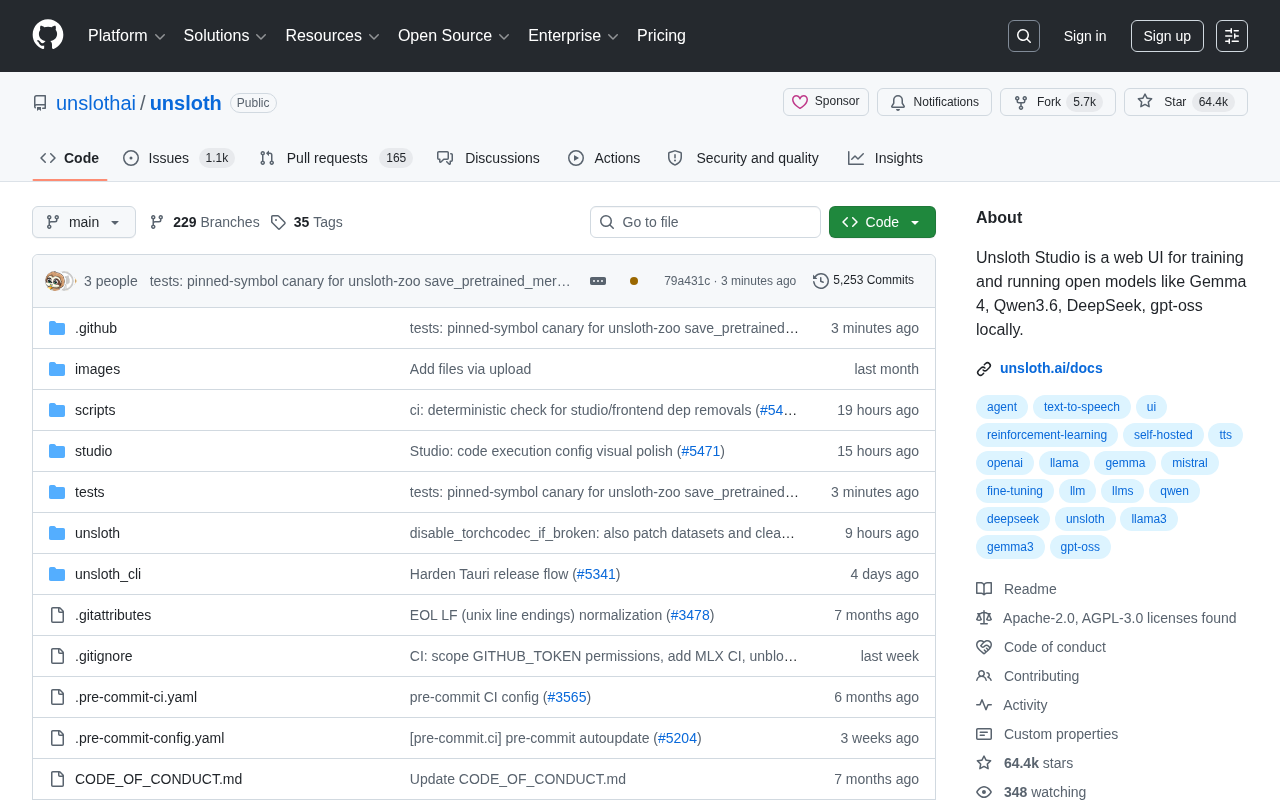
Unsloth Tutorial: Fine-Tune LLMs Locally with 5x Speed and Massive VRAM Savings
Learn how Unsloth uses LoRA optimization and Web UI to efficiently fine-tune Gemma 4, Qwen3, DeepSeek and more on consumer GPUs, with 2-5x speed gains and 50-70% VRAM reduction.
 Tutorials
Unsloth Tutorial: A Guide to Fine-Tuning LLMs Locally with Reduced VRAM and Faster Training
Learn how Unsloth enables efficient local LLM fine-tuning with LoRA optimization, supporting Gemma 4, Qwen3, and DeepSeek while reducing VRAM usage by 50% and boosting training speed 2-5x.
 Product Reviews
Unsloth: A Powerful Tool for Locally Training and Running Open-Source LLMs
Unsloth is an open-source tool with 63K+ GitHub stars for locally training and running LLMs like Gemma 4, Qwen3.6, and DeepSeek with optimized VRAM usage.
 Product Reviews
Unsloth: The Open-Source Tool for Fine-Tuning LLMs on a Single GPU with 70% Less VRAM
Unsloth is an open-source LLM fine-tuning tool with 63K+ GitHub stars. Fine-tune Gemma 4, Qwen 3, DeepSeek on a single RTX 3090 with 70% less VRAM, 2-5x faster training, and an intuitive Web UI.
 Product Reviews
Unsloth: The Open-Source Tool That Makes Local LLM Fine-Tuning 5x Faster
Unsloth is an open-source LLM fine-tuning tool with 63K+ GitHub stars. Supporting Gemma 4, Qwen 3, and DeepSeek, it boosts training speed 2-5x and cuts VRAM by 80% via LoRA/QLoRA, with a Web UI for easy local fine-tuning.