Human-Mouse Chimeric Brain Research: A Dual Challenge for Science and Ethics

Scientists transplant human brain organoids into mice, advancing neurological research while raising profound ethical questions.
Researchers have constructed human-mouse chimeric brain models by transplanting iPSC-derived brain organoids into mouse brains, allowing human neurons to develop and form functional connections in a living physiological environment. This overcomes the limitations of in vitro culture and offers more realistic research models for diseases like Alzheimer's and Parkinson's. The research also raises ethical concerns about animal moral status and the boundaries of consciousness, with regulatory frameworks still inconsistent across countries. The article cautions against sensationalized media framing — current chimeras represent cell-level integration, not science-fiction scenarios — and urges a rational view of both the promise and the risks.
A Brain Science Breakthrough Drawing Attention
Recently, reports of scientists developing a "part-human, part-mouse brain" have sparked discussion across the tech community. Researchers reportedly succeeded in integrating human brain cells into mouse brains, creating a hybrid neural structure with characteristics of both human and mouse nervous tissue. This type of research sits at the frontier of neuroscience and regenerative medicine, commonly referred to as "brain organoid transplantation" or "chimera research."
It's worth noting that publicly available details remain limited at this stage. This article is based on disclosed information and contextual analysis; specific experimental details await confirmation through the full academic publication.
What Is Brain Chimera Research?
The Technical Principle
At its core, the human-mouse chimeric brain involves transplanting human neural cells — typically derived from brain organoids grown from induced pluripotent stem cells (iPSCs) — into mouse brain tissue. The human cells continue to develop inside the mouse, form connections, and gradually integrate into the host's neural network. This allows researchers to observe the real-time behavior of human brain cells within a living organism, rather than being limited to static observations in a petri dish.
Induced pluripotent stem cells (iPSCs) are the key starting point for this kind of research. The process involves "reprogramming" adult cells (usually from skin or blood) by introducing specific transcription factors, reverting them to a pluripotent state resembling embryonic stem cells, which can then be directed to differentiate into neural cells. Brain organoids are miniature brain-like structures that self-organize from iPSCs under three-dimensional culture conditions — typically only a few millimeters in diameter — and can partially replicate the layered architecture and cellular diversity of the human cerebral cortex. However, organoids grown in vitro lack blood vessels, immune cells, and complete electrical signal inputs, causing their development to stall and making full maturation difficult. When transplanted into a mouse brain, the host's vascular system can supply oxygen and nutrients to the human cell clusters, while real sensory inputs drive neurons to form functional connections — overcoming the core limitations of purely in vitro models. This is the fundamental advantage of "in vivo chimerism" over petri dish experiments.
Why Do This?
The complexity of the human brain places enormous constraints on direct study. Under dual ethical and technical limitations, scientists cannot perform most experiments on living human brains. Chimera models offer a middle ground: human brain cells can grow within a living organism with a complete blood supply and physiological environment, bringing them much closer to authentic developmental and pathological processes. This holds significant potential value for studying neurological conditions such as Alzheimer's disease, Parkinson's disease, autism, and schizophrenia.
The Scientific Significance of This Breakthrough
From a research perspective, these models could advance science in several ways. First, they may provide more realistic animal models for neurodegenerative diseases, accelerating drug screening and mechanistic research. Second, they could help illuminate uniquely human brain development processes — many cognitive functions are difficult to replicate in rodent models, and the introduction of human cells may bridge this gap. Third, they build experience for cell transplantation therapies in regenerative medicine, exploring the possibility of repairing damaged brain tissue.
Over the past several years, multiple research teams have made progress in this direction. The achievement of human brain organoids transplanted into the mouse cortex forming functional synaptic connections with the host and responding to external stimuli has been regarded as a milestone by the scientific community. The current report may represent yet another advance along this trajectory.
Rodent models have long been the workhorse of neuroscience research, but their limitations are becoming increasingly apparent. Mice share approximately 85% genetic homology with humans, yet show significant differences in cortical structure, glial cell proportions, and the presentation of neurological diseases. In Alzheimer's disease, for example, mice carrying human disease-causing gene mutations often fail to naturally reproduce the full pathological progression and cognitive decline — leading to the failure of many drugs that proved effective in mice when tested in human clinical trials. The potential of human-mouse chimeric models lies precisely here: exposing genuinely human neural cells to disease stimuli within a living physiological environment, potentially building a more reliable translational bridge between animal models and the human body, thereby improving the predictive validity of preclinical research.
The Unavoidable Ethical Controversy
The Question of Consciousness and Moral Status
The sharpest controversy surrounding chimera research is this: as the proportion and degree of integration of human brain cells in animals continues to increase, might it be possible to confer some form of "humanized" cognitive ability or even consciousness on these animals? This directly touches the boundaries of animal welfare and moral status. Although current technology is far from enabling mice to develop human consciousness, the trajectory of this research has prompted precautionary concern.
Philosophers and neuroethicists typically frame this concern as the problem of "moral status slippage." Moral status refers to the degree to which an entity deserves ethical consideration by virtue of its intrinsic attributes — such as sentience or self-awareness. The prevailing view holds that consciousness depends on the number of neurons, the topology of connections, and the overall complexity of information integration, rather than simply on the origin of the cells. Even a mouse brain that has integrated some human cells remains orders of magnitude below the human brain in total neuron count and connectivity patterns. The U.S. National Institutes of Health (NIH) temporarily suspended funding for certain chimera research in 2016 and launched a dedicated review, ultimately establishing additional oversight provisions specifically for brain chimeras in 2017. These provisions require researchers to assess the potential degree of human cell integration into an animal's nervous system — a significant signal that regulators are taking this issue seriously.
The Absence of Regulation and Consensus
Regulatory standards for chimera research vary considerably across countries. The scientific community broadly advocates advancing this work within a rigorous ethical review framework, while calling for clear red lines — such as limiting the proportion of human cells integrated into animal brains and prohibiting experimental designs that could result in the transfer of higher cognitive abilities. How to strike the right balance between scientific exploration and ethical constraints remains a focal point of ongoing debate.
Thinking Rationally About "Breakthrough" Narratives
Media coverage of such research tends to use sensational headlines like "human-mouse brain," which can lead to public misunderstanding. In reality, current chimeras are nothing like the science-fiction notion of "human consciousness inhabiting a mouse's body" — they represent cell-level integration for specific research purposes. Understanding this distinction helps us neither overstate the risks nor overlook the genuine value of the ethical discussions they provoke.
For general readers, what's worth paying attention to is the broader trend this research represents: the convergence of stem cell technology, organoid cultivation, and neuroscience is opening new windows into our understanding of the human brain. As the technology advances, accompanying ethical norms and public communication are equally indispensable.
Conclusion
Human-mouse chimeric brain research acts as a mirror — reflecting both neuroscience's ambition to conquer disease and the responsibility humanity must exercise with care when pushing the boundaries of life itself. The pace of technological progress often outstrips the development of ethical frameworks, and how to keep the two in sync is a long-term question this type of breakthrough poses to society as a whole. Given the limited public information currently available, readers are encouraged to follow forthcoming peer-reviewed publications for authoritative conclusions.
Related articles
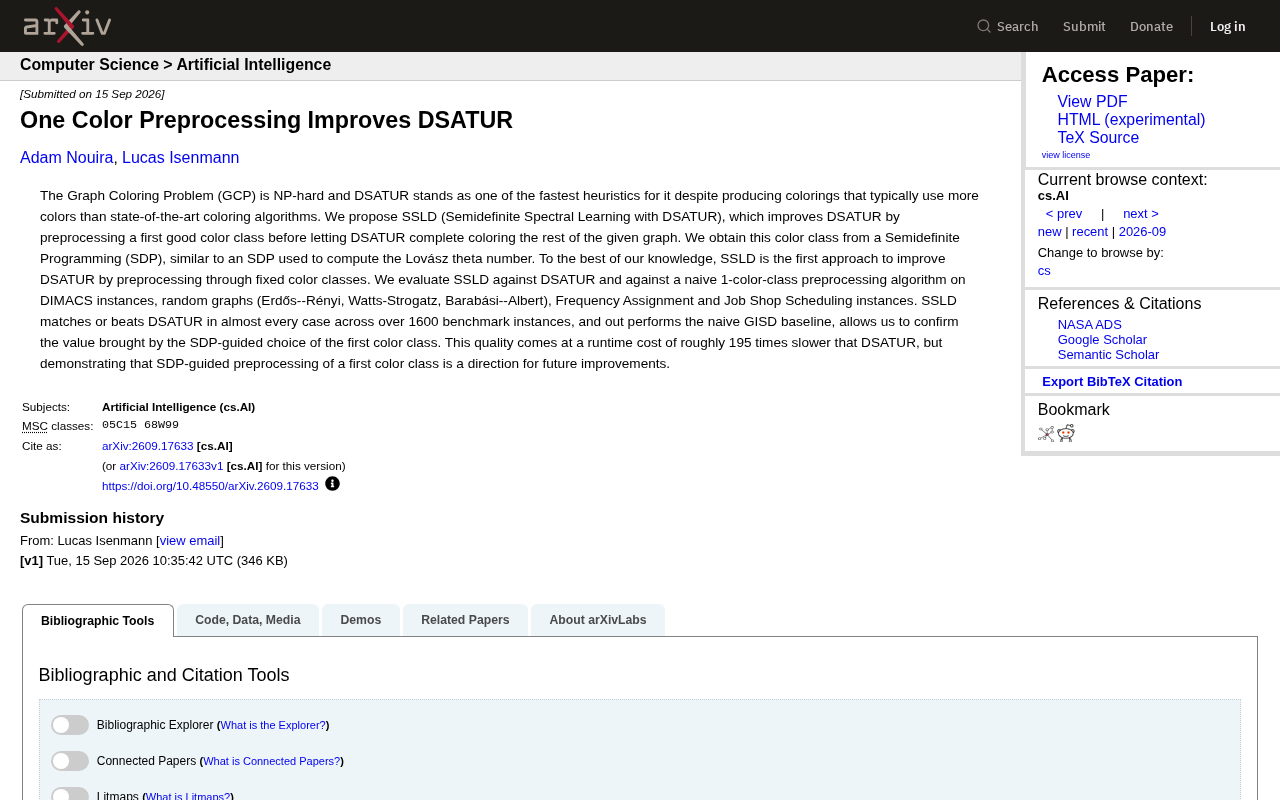
SSLD: Improving the DSATUR Graph Coloring Heuristic via Semidefinite Programming Preprocessing of a Single Color Class
A new arXiv paper proposes SSLD, which improves classic DSATUR graph coloring by preprocessing the first color class via SDP. Tested on 1,600+ benchmarks, SSLD matches or beats DSATUR at ~195× runtime cost.
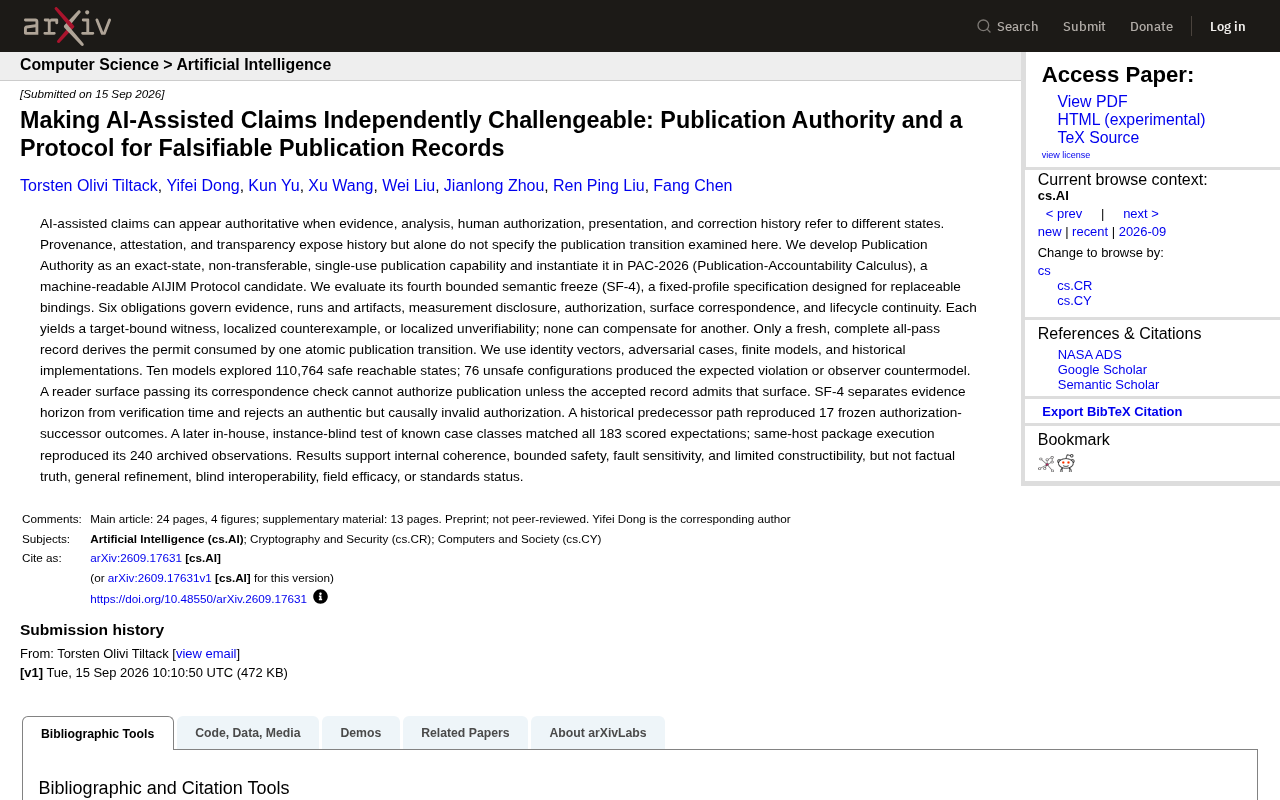
Making AI-Assisted Conclusions Independently Challengeable: An Analysis of the PAC-2026 Falsifiable Publication Protocol
PAC-2026 introduces Publication Authority and six non-compensable obligations to make AI-assisted publication acts falsifiable and independently challengeable, validated across 110,764 states.

vLLM Releases proto-v0.3.0: Another Iteration of the High-Performance Inference Framework
vLLM releases proto-v0.3.0, independently versioning its protocol submodule with SSH signature verification — strengthening distributed inference infrastructure and supply chain security.