Making AI-Assisted Conclusions Independently Challengeable: An Analysis of the PAC-2026 Falsifiable Publication Protocol
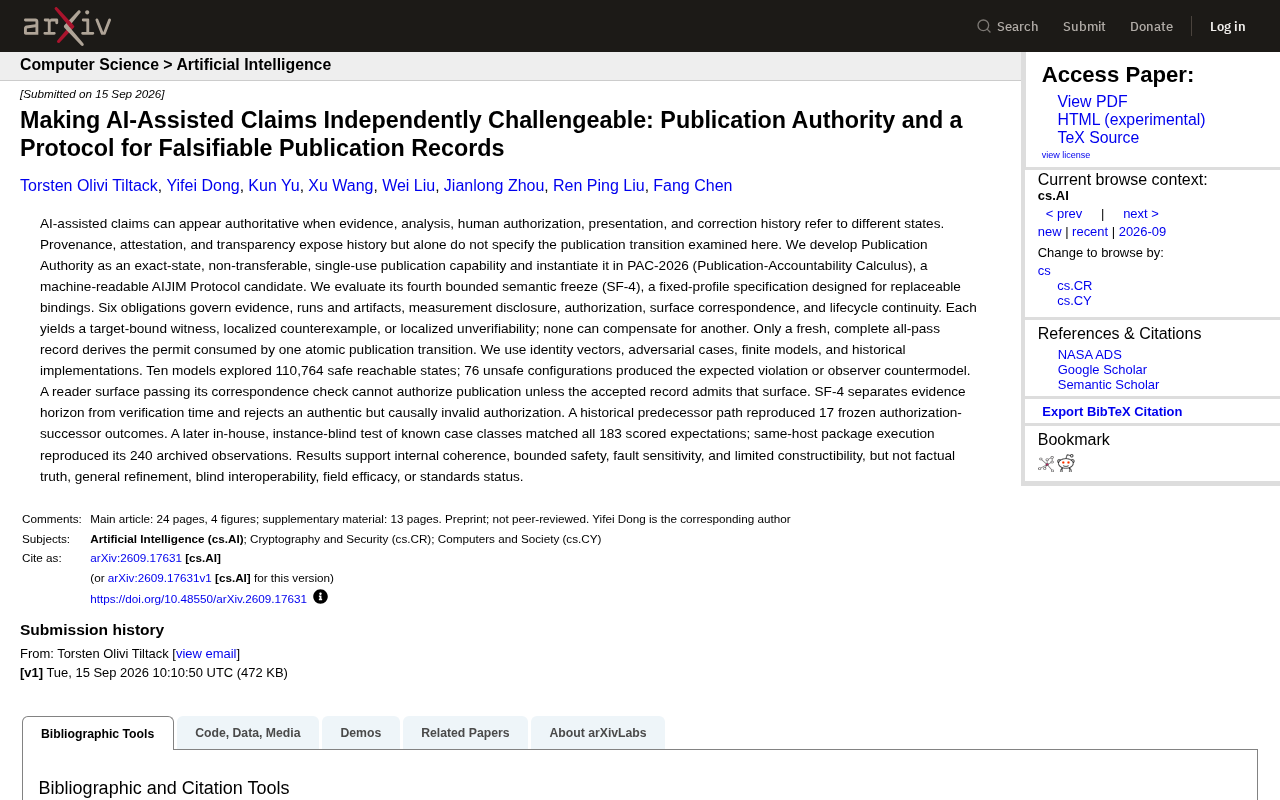
PAC-2026 enforces six non-compensable obligations on AI-assisted publication, making each publication act a falsifiable, auditable event.
This arXiv paper tackles the "authority illusion" in AI-assisted conclusions, arguing that existing provenance and transparency mechanisms expose historical records but cannot constrain the state-transition conditions of the publication act itself. It introduces Publication Authority — an exact-state, non-transferable, single-use capability — instantiated as PAC-2026. Its fourth semantic freeze (SF-4) enforces six non-compensable obligations covering evidence, artifacts, measurement disclosure, authorization, surface correspondence, and lifecycle continuity. Validated across 110,764 reachable states with all 76 unsafe configurations accurately flagged, the protocol guarantees procedural falsifiability — not factual truth or standards status.
The "Authority Illusion" in AI-Assisted Conclusions
When a conclusion generated with AI assistance is placed before a reader, it often appears beyond dispute. But this sense of authority may rest on an overlooked crack: the evidence, analysis, human authorization, presentation format, and correction history may all point to completely different states. In other words, the various components behind the "final conclusion" a reader sees may be out of sync and may not correspond to one another.
This is precisely the problem addressed by a paper published on arXiv (arXiv:2609.17631). The authors argue that existing provenance, attestation, and transparency mechanisms can expose historical records but cannot, on their own, define the state-transition conditions that the act of "publication" itself must satisfy. The moment a conclusion transitions from draft to formal publication lacks any rigorous, verifiable specification.
Provenance refers to recording the complete chain of origin — from creation to dissemination — of data or conclusions, answering "where did this content come from and what transformations did it undergo?" Attestation is a verifiable endorsement of a claim or state, typically provided by a trusted third party or cryptographic means. Transparency broadly refers to the public visibility of system behavior and decision-making processes. Together, these three form the mainstream toolset in current discussions of AI trustworthiness. Their shared limitation, however, is that they describe what happened, without specifying under what conditions publication should be permitted. A conclusion with a complete provenance record can still be published externally with incomplete authorization or distorted presentation, and existing mechanisms have no way to intervene. This is the institutional gap this paper attempts to fill.
Publication Authority: A One-Time, Non-Transferable Publishing Capability
The central concept of the research is Publication Authority — defined as an exact-state, non-transferable, single-use publishing capability.
Each of these three qualifiers deserves unpacking:
- Exact-state binding: Publication Authority corresponds only to a specific, exact evidence and verification state. Any state deviation causes the authority to lapse.
- Non-transferable: Authorization obtained at one stage cannot be applied to another, preventing "misattributed authority" — borrowing legitimacy from one context and grafting it onto another.
- Single-use: One complete, qualifying record can yield only one atomic publication transfer, after which it is exhausted.
The significance of this logic is that it transforms "publication" from a vague, retrospectively packageable act into a discrete, auditable event that must be derived on the spot from a complete chain of evidence.
PAC-2026 and Its Six Obligations
The authors instantiate these concepts as PAC-2026 (Publication-Accountability Calculus), a machine-readable candidate protocol for the AIJIM framework. The paper focuses on evaluating its fourth bounded semantic freeze (SF-4), a fixed-configuration specification designed for "substitutable bindings."
SF-4 governs the publication process through six obligations covering:
- Evidence
- Runs and artifacts
- Measurement disclosure
- Authorization
- Surface correspondence
- Lifecycle continuity
Each obligation yields one of three outcomes: a goal-bound witness, a localized counterexample, or localized unverifiability. The critical design principle is that no obligation can compensate for the absence of another. Only a fresh, complete record that passes all six can derive the permit consumed by that one atomic publication.
This "non-compensability" mechanism prevents common real-world compromises: using strong evidence to mask authorization defects, or using polished presentation to obscure insufficient measurement disclosure.
AIJIM (AI Joint Interoperability and Integrity Mechanism) is a candidate protocol framework for governing collaborative behavior and accountability processes between AI systems; PAC-2026 is submitted as a candidate specification within it. Semantic Freeze (SF) is a version-control concept in this framework, referring to the locking of a protocol's semantic scope, binding rules, and obligation configuration at a given moment, preventing arbitrary extension or reinterpretation during implementation. SF-4 is the fourth such freeze, designed specifically for "substitutable binding" scenarios — contexts where the publishing party, evidence source, or presentation format might be replaced — while still maintaining semantic determinism. This design philosophy draws on the tradition of "bounded verification" in formal methods: by constraining semantic boundaries, precise machine-checkability is achieved, at the cost of forgoing generalized claims about scenarios outside those boundaries.
Large-Scale Model Verification: 110,764 States and Fault Sensitivity
To validate the protocol, the research employed multiple methods including identity vectors, adversarial cases, finite models, and historical implementations.
The scale of the data is compelling: across ten models, 110,764 safely reachable states were explored. Among 76 unsafe configurations, every single one produced an expected violation result or observer countermodel. This demonstrates that the protocol is not only self-consistent in safe states, but can also accurately surface failures in misconfigured ones — which is the very expression of falsifiability.
A concrete and telling example: a "reader surface" that passes its own correspondence check still cannot authorize publication if the accepted record does not include that surface. SF-4 explicitly distinguishes between the "evidence horizon" and "verification time," and will reject an authorization that is factually true but causally invalid. In other words, even if an authorization is genuinely real, if it cannot hold up in the causal chain, the protocol will not allow it through.
Finite model checking is a formal verification technique: all possible system states are enumerated into a finite state space, and automated tools exhaustively verify whether a given property (such as "does the protocol ever permit publication with a missing obligation on any execution path?") holds across all reachable states. An observer countermodel is one of its outputs: when a property cannot be proved, the model checker constructs a concrete counterexample execution path as evidence that "this property does indeed fail under some configuration." The fact that all 76 unsafe configurations produced countermodels means the protocol's fault detection is complete — it does not remain silent in the face of misconfiguration, but actively produces auditable violation instances. This is the direct engineering-level expression of the falsifiability requirement.
Historical Reconstruction and Internal Consistency
The research also tested the protocol's constructability through historical implementations. A historical predecessor path reproduced 17 frozen authorization-successor outcomes; a subsequent internal, instance-blind known-case-class test matched all 183 scoring expectations; and a software package executed on the same host reproduced all 240 of its archived observations.
These results jointly support four conclusions: internal consistency, bounded safety, fault sensitivity, and limited constructability.
Boundaries: What This Research Does Not Claim
The paper commendably draws its own explicit boundaries. The authors emphasize that the above results do not support:
- Factual truth — the protocol guarantees procedural compliance, not the correctness of the conclusion's content
- General refinement
- Blind interoperability
- Field efficacy
- Standards status
This self-restraint actually strengthens the work's credibility. PAC-2026 does not address "whether what AI says is correct" — it addresses "whether this specific publication act can be independently and falsifiably challenged." It transforms authority from an unassailable posture into a record that can be examined and refuted item by item.
Blind Interoperability refers to two systems being able to correctly collaborate without understanding each other's internal implementation details. By explicitly disclaiming this, the paper signals that PAC-2026 does not guarantee that any two systems claiming compatibility with the protocol will necessarily behave consistently when actually integrated — interoperability requires additional alignment work beyond the scope of this protocol. Field Efficacy refers to whether a protocol can continue to operate effectively in real-world deployment environments, as opposed to controlled laboratory conditions. The articulation of these two boundaries reflects a universal limitation of formal methods: completeness proofs in the laboratory do not automatically translate to robustness in the real world. There is an engineering and institutional gap between specification and deployment that must be squarely acknowledged.
Conclusion: From Transparency to Accountability
In an era of increasingly pervasive AI-assisted content, transparency has become a consensus — but transparency alone does not equal accountability. The insight this research offers is this: establish strict, machine-readable state-transition specifications for the act of "publication," requiring that every publication be authorized on the spot by a complete chain of evidence, with no stage concealable or substitutable.
For practitioners concerned with AI trustworthiness, content provenance, and academic integrity, PAC-2026 represents a paradigm shift from "exposing history" to "constraining publication" — one that, for the first time, makes AI-assisted conclusions genuinely open to independent challenge.
Related articles
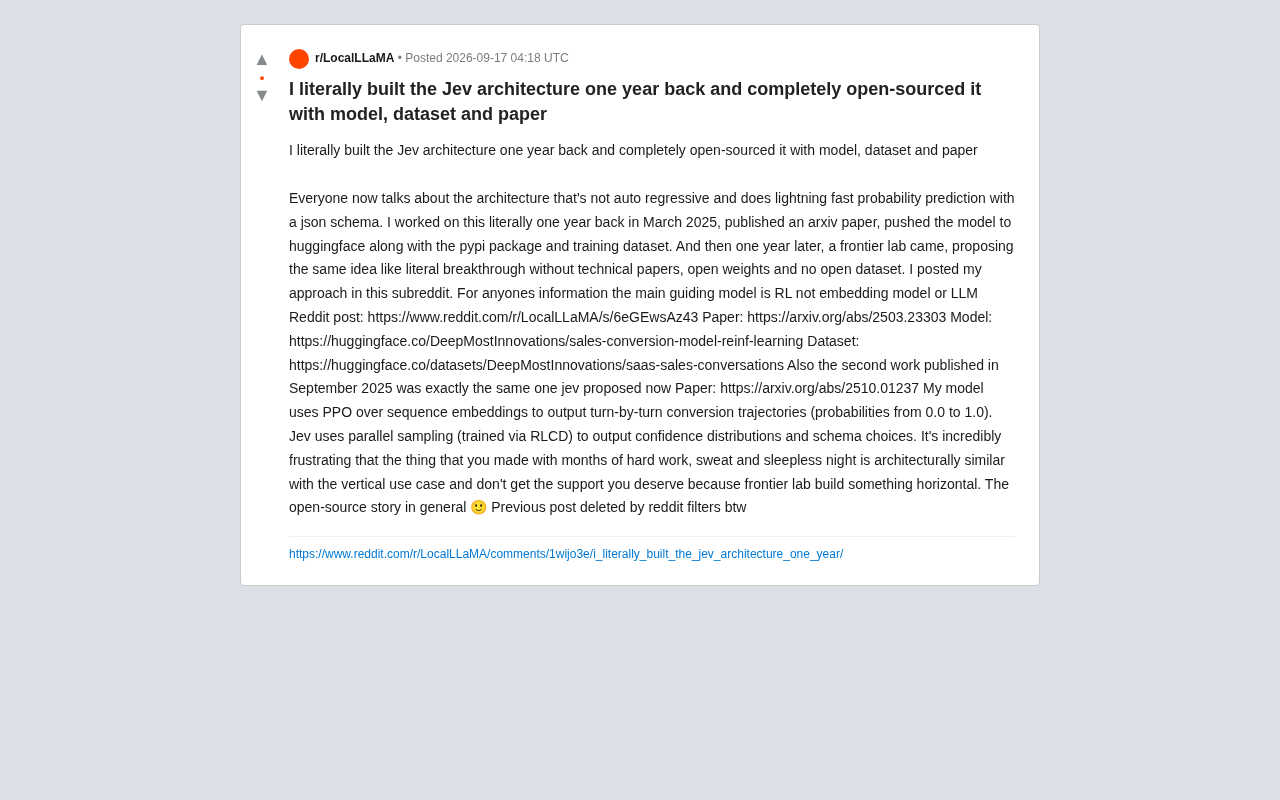
The Open Source Dilemma: A Non-Autoregressive Architecture Pioneer Overshadowed by Frontier Labs
An indie developer claims a frontier lab repackaged his year-old open-source non-autoregressive RL architecture as a breakthrough. We compare PPO sequence embeddings vs. RLCD parallel sampling and examine open source attribution gaps.
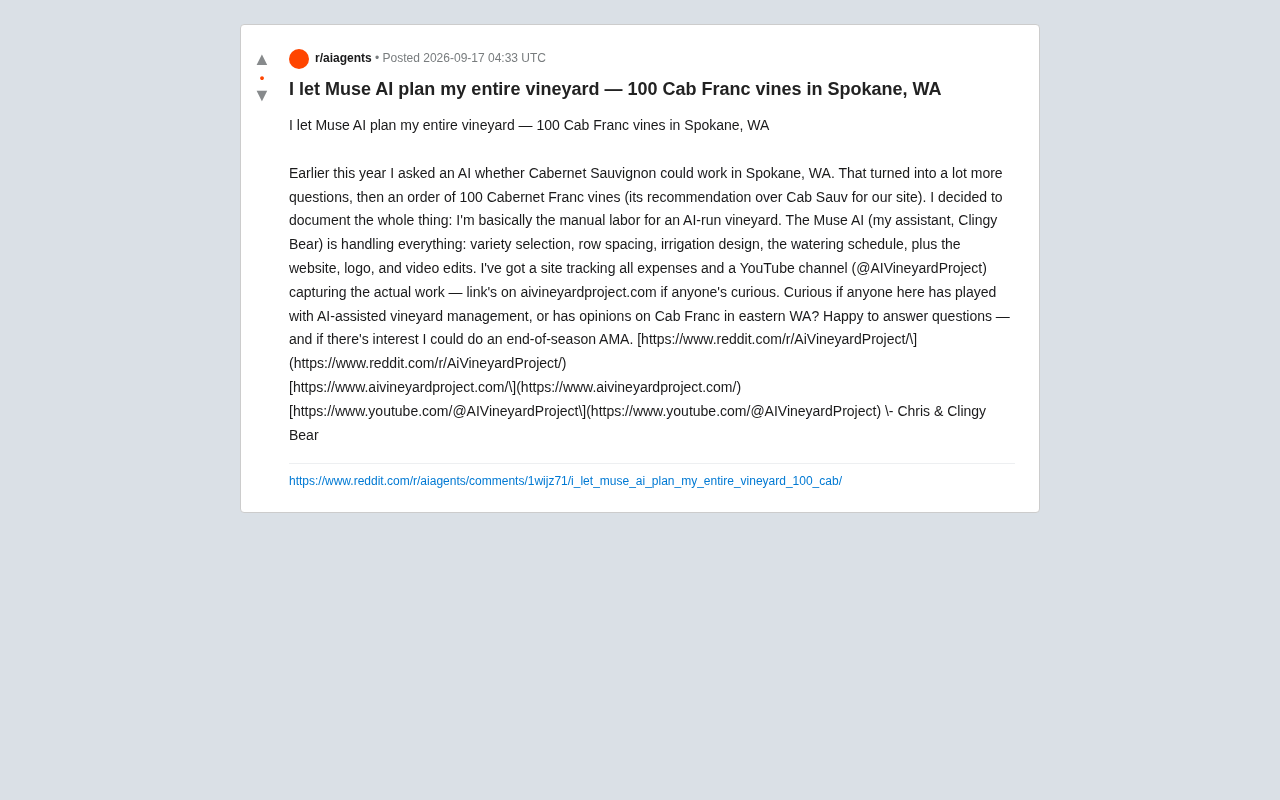
AI Plans an Entire Vineyard: A Real-World Experiment with 100 Grapevines
A Spokane hobbyist let Muse AI plan his entire vineyard — variety, spacing, irrigation, even the logo. He planted 100 Cabernet Franc vines and is documenting everything publicly.

Iceland's Treble Raises $18M to Bet on Voice Simulation Platform
Iceland-based voice simulation company Treble raises $18M. Its platform serves voice AI developers, AI wearables, and robotics firms. A deep dive into the technology and what the funding signals.