I Built a Complete Puzzle Game with AI in Two Hours — Here's How It Actually Went
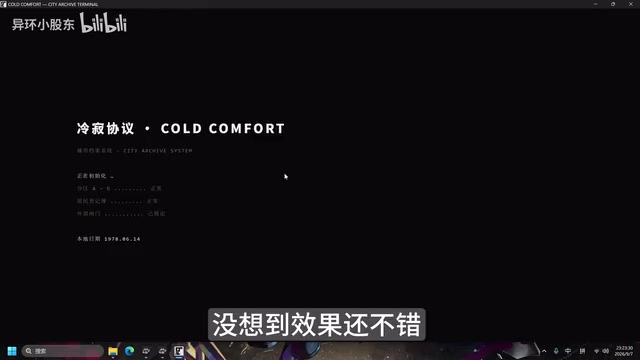
A creator used Claude and DeepSeek to build a playable puzzle game prototype — UI, music, and all — in two hours.
A Bilibili creator used a combination of Claude's free tier and DeepSeek Pro to build a complete atmospheric puzzle game from scratch in roughly two hours, covering UI design, code scaffolding, AI-generated BGM, and 3D models. While the game runs as a complete loop from start to finish, the assets are rough and the AI-written copy felt too robotic, requiring extensive human editing. The experiment validates the viability of an "AI toolchain + non-professional developer" model, while making clear that AI solves the "does it exist?" problem quickly — the "is it good?" question still demands human creativity and polish.
An AI Game Dev Experiment Squeezed Into Work Hours
As AI tools continue to proliferate, the barrier to independent game development keeps dropping. A Bilibili content creator shared his experience building an atmospheric puzzle game from scratch using AI tools during stolen moments at work — what he jokingly called "slacking on the job." The entire project, from opening screen to ending, took roughly two hours. The result is admittedly rough around the edges, but it successfully ran the full pipeline — UI design, code scaffolding, and game logic — which makes it a genuinely noteworthy experiment.
The real value here isn't the quality of the game itself, but what it proves: by combining multiple AI tools, a non-professional developer can produce a fully playable work in a remarkably short time. The creator openly admitted this was his "first attempt" at making a game this way, but was surprised to find "the results were actually pretty decent."

The Toolchain: From Free Tiers to Paid Models
This puzzle game wasn't built on a single AI tool — it was a relay race between several. Early interface work and some content generation used the free tier of "混颜色" (a phonetic nickname Chinese creators use for Claude), and once those credits ran out, he switched to DeepSeek 4 Pro to keep the momentum going. This pragmatic "use the free tier, then switch to a paid model" approach reflects a common strategy among AI creators in China: maximize output while keeping costs under control.
Notably, the creator gave the final UI style a solid thumbs-up, saying "the overall UI style is really quite good." This suggests that leading AI models have reached a genuinely usable level for visual design and interface scaffolding — good enough for prototyping and even lightweight finished products.

Framework First, Polish Later
That said, the creator was upfront that the current build is "just a skeleton — pretty bare-bones." He plans to refine the interface once he has more Token budget (i.e., more API call credits). This is a classic AI-assisted development workflow: use AI to rapidly spin up a runnable structure, then iteratively refine the details as time and resources allow. For indie developers, this "get it running first, optimize later" rhythm dramatically shortens the path from idea to playable demo.
A quick note on the tools: "混颜色" is a playful phonetic nickname Bilibili creators use for Anthropic's Claude models (Claude → 克劳德 → a loose association with mixing colors). It's not a separate product. Claude is known for its strong long-context understanding and code generation, with free access via claude.ai — well-suited for lightweight prototyping. DeepSeek R2/V3 and its Pro variants are large language models developed by the Chinese AI company DeepSeek, which have gained rapid traction among Chinese developers thanks to competitive API pricing and strong Chinese-language comprehension. The combination — free Claude credits first, then a cost-effective paid model — has become a standard cost-control strategy for indie AI developers in China, essentially hopping between each model's "value window."
Inside the Game: AI-Generated BGM and 3D Models
Diving into the game itself, the creator revealed that all BGM (background music) and 3D model assets were "hand-cranked by AI" — generated sequentially as part of the pipeline. This means nearly every asset, from visuals to audio, came from AI generation, with no traditional manual modeling or composing involved.
This all-AI asset approach is extremely efficient, but it comes with quality trade-offs. The creator was direct: these assets are "still very rough." This perfectly illustrates the real boundary of AI game development today — AI can rapidly answer the question of "does it exist?" but answering "is it good?" still requires significant human intervention and post-processing.

How this works in practice: AI-generated BGM typically uses platforms like Suno or Udio, where a style description or lyric prompt can produce a complete track in seconds — no musical theory required. 3D models are usually generated by tools like Meshy, Tripo3D, or TripoSG, which can produce low-poly game-ready meshes from text or image prompts. These tools share a common profile: extremely fast generation (usually 1–3 minutes), but weak outputs in terms of topology, UV unwrapping, and texture fidelity. They're not suited for commercial projects with high visual standards, but they're a good fit for rapid prototyping and low-fidelity demos.
The Biggest Weakness: AI-Written Text That Feels Robotic
Throughout the process, the most glaring flaw the creator identified was that "the AI-generated copy feels way too robotic" — requiring manual line-by-line revision. This is a highly representative observation.
For a puzzle game, writing is the core vehicle for atmosphere, player guidance, and mystery. AI-generated text tends to be logically coherent but lacks the rhythm, suspense-building, and emotional tension that human storytellers bring. Reading it feels mechanical. This reinforces a well-established consensus in the industry: in areas demanding strong creativity and emotional resonance, AI can only play a supporting role. The "soul" of the work still has to come from a human.

Reasonably Complete, But Light on Content
Despite all the rough edges, the creator felt positively about the overall completion level — the game runs as a complete loop "from start to finish." As a puzzle game, it's "very light on content," making it more of a proof-of-concept than a full product meant for extended play.
On that "robotic" feeling: This refers to AI-generated text that reads coherently on a semantic level but lacks the texture of human writing — highly uniform sentence structures, formulaic paragraph layouts, flat emotional arcs, and no meaningful ambiguity or breathing room. In puzzle games specifically, writing must handle complex narrative functions: building a sense of dread, hiding clues in plain sight, and carefully controlling information pacing. These tasks require the author to have a precise read on the reader's psychological expectations. Current LLMs, which fundamentally predict the next highest-probability token, naturally skew toward "safe, coherent, but mediocre" expression. Prompt engineering techniques — specifying a character's voice, setting writing constraints, or asking the model to mimic a particular author's style — can partially mitigate this, but human line-by-line review remains a non-negotiable step.
What This Experiment Tells Us About AI Game Development
This two-hour experiment produced a rough little game, but it vividly illustrates both the current state and the potential of AI toolchains in game development:
The efficiency gains are real. One person, in their spare time, completing the full pipeline — UI, code, art, music, and writing — would have been nearly unthinkable just a few years ago. AI has pushed the floor of game prototyping to an unprecedented low.
The quality ceiling is still obvious. Whether it's rough 3D assets or robotic-sounding copy, the limitations are a constant reminder: AI is good at rapidly filling in content, but fine-tuned polish, creative expression, and emotional delivery remain areas where humans are irreplaceable.
Human-AI collaboration is the optimal model. What this creator did is essentially an "AI generates, human refines" workflow. The future of indie game development probably isn't a binary choice between "humans write the code" and "AI writes the code" — it's a clear division of labor where humans own the creative direction and AI handles the execution and filling.
For creators looking to try AI-assisted game development, this case offers a practical benchmark: don't chase perfection from the start. Use AI to rapidly build a complete, end-to-end loop, then invest human effort in the creative and experiential moments that matter most. That may well be the most effective indie game development path available today.
Related articles
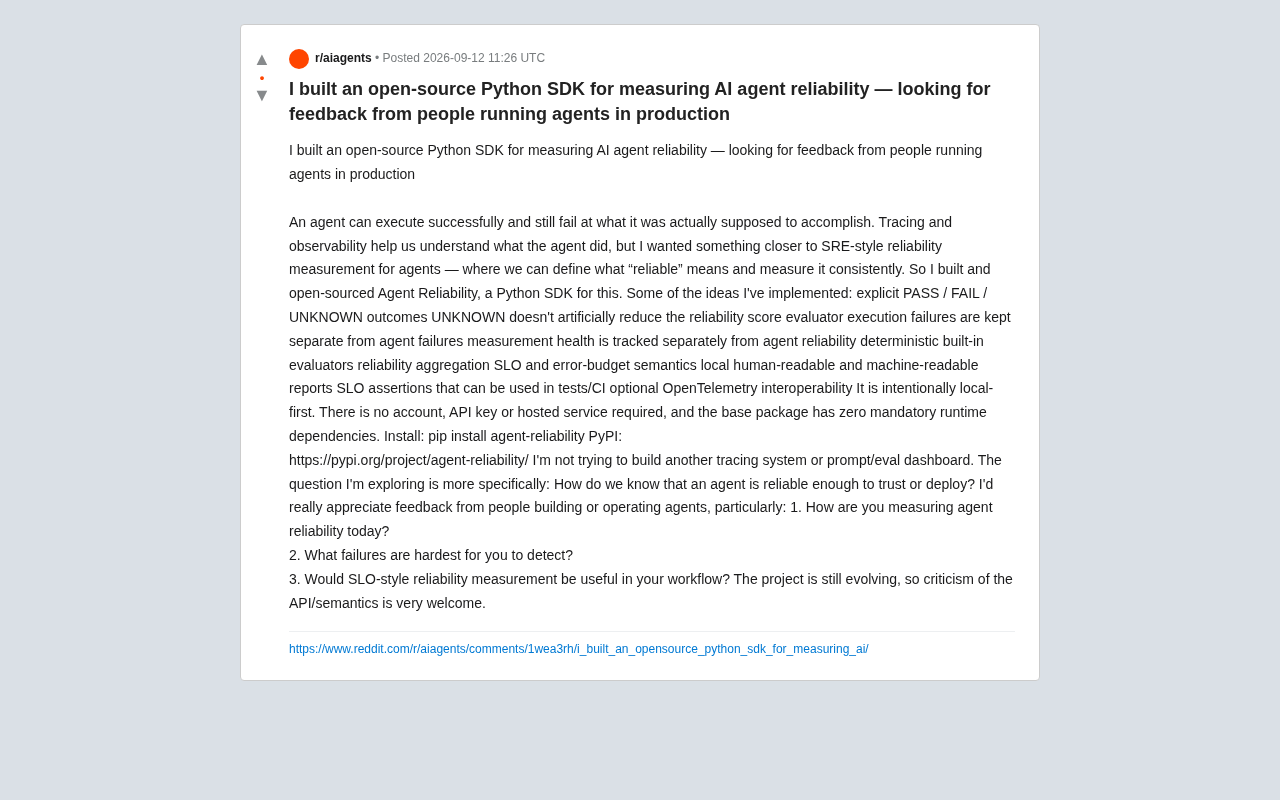
Open-Source Python SDK: Measuring AI Agent Reliability with SRE Principles
Agent Reliability is an open-source Python SDK that applies SRE's SLO and error budget concepts to AI Agent evaluation, with PASS/FAIL/UNKNOWN states, CI assertions, and zero forced dependencies.
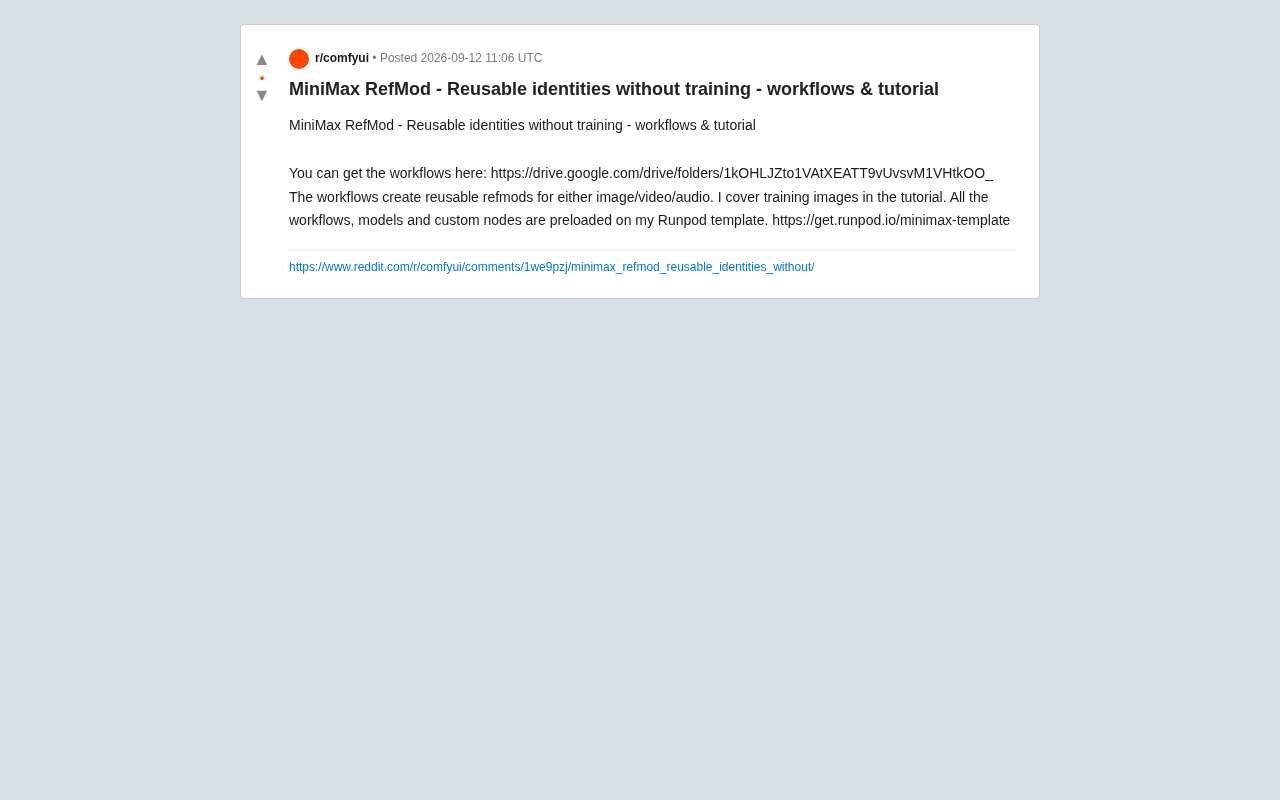
MiniMax RefMod: A Complete Guide to Training-Free Reusable Identity Workflows
MiniMax RefMod offers training-free reusable identity workflows for image, video, and audio generation. Includes Runpod template and tutorial for quick setup.

Invalid Source Material Notice
The source material provided lacks substantive information and is unrelated to AI/tech topics, making it impossible to produce a complete professional article.