IBM Simon: The Original Smartphone Born in 1994, 13 Years Before the iPhone

IBM Simon, the world's first smartphone from 1994, pioneered touchscreens and mobile email 13 years before the iPhone.
IBM Simon, launched in 1994 by IBM and BellSouth, was the world's first smartphone—featuring a touchscreen, handwriting input, email, and built-in apps 13 years before the iPhone. Despite its visionary design, it failed commercially due to its $899 price tag, bulky form factor, and one-hour battery life. Simon's story illustrates a recurring theme in tech history: groundbreaking ideas often arrive before the supporting infrastructure is ready.
The True Starting Point of the Smartphone
When we talk about the history of smartphones, most people's memories settle on 2007—the year the first-generation iPhone burst onto the scene and redefined mobile devices. However, if we rewind the timeline 13 years, we discover that the true prototype of the smartphone was born as early as 1994. Its name was IBM Simon, a device co-developed by IBM and BellSouth and manufactured by Mitsubishi.
In the early 1990s, IBM was in the midst of a critical corporate transformation, transitioning from a traditional hardware manufacturer to a solutions provider. BellSouth was the largest regional telephone operator in the southern United States at the time (one of the Bell Operating Companies created after the AT&T breakup, later reacquired by AT&T in 2006). The collaboration between these two companies represented an early attempt at cross-industry convergence between IT giants and telecom operators. Simon's prototype first appeared at the 1992 COMDEX trade show, drawing significant industry attention, and finally went on sale in August 1994, available only in 15 U.S. states through BellSouth's channels.
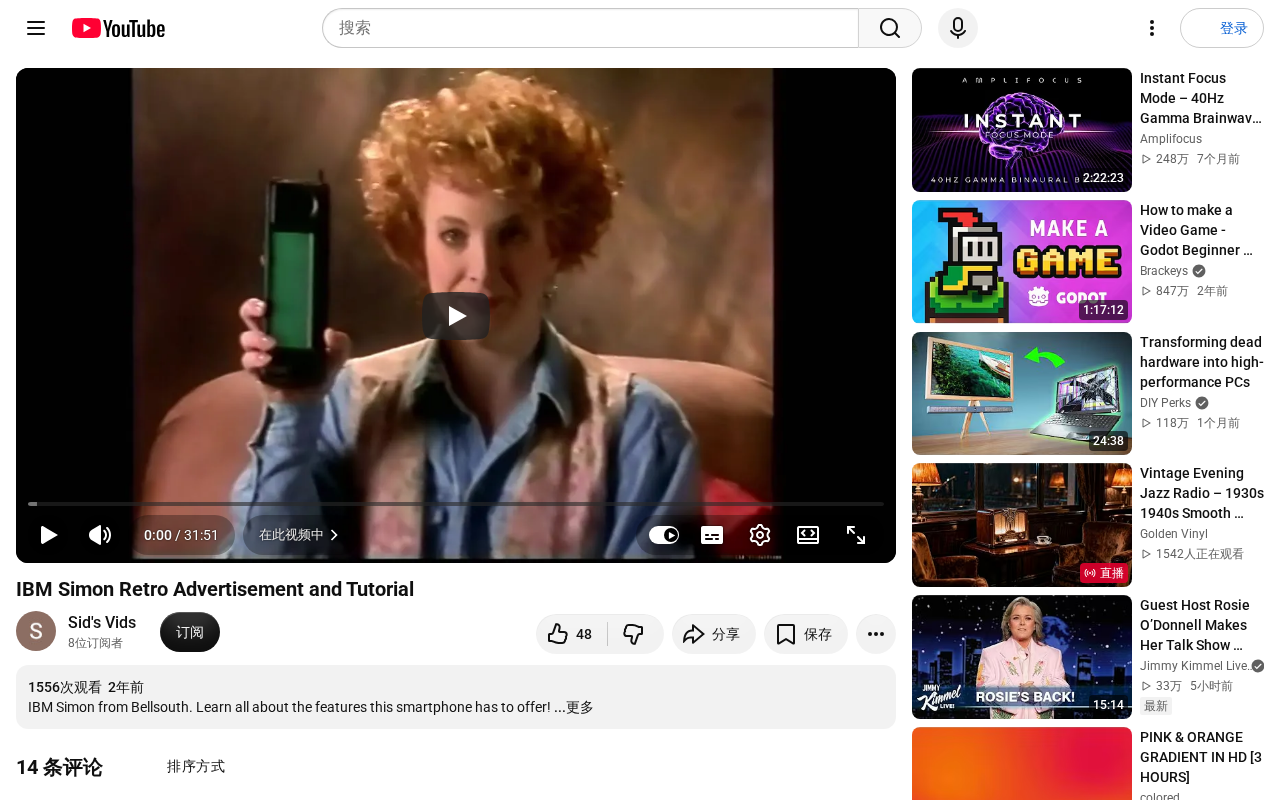
Recently, an original Simon advertisement from that era resurfaced on Hacker News and sparked discussion. The ad, with a distinctly 1990s flair, explained to consumers of that decade what a "smartphone" was—even though the word "smartphone" hadn't even been officially coined yet.
What Exactly Was IBM Simon: Hardware Specs of the First Smartphone
Looking back from today's perspective, IBM Simon's spec sheet was remarkably ahead of its time. It wasn't just a device that could make phone calls—it was an integrated "palmtop computer" combining multiple functions.
Touchscreen and Handwriting Input: An Interaction Method Ahead of Its Time
Simon's most striking feature was its monochrome touchscreen. Users could operate the screen with their fingers or an included stylus, and even input text via handwriting recognition—a remarkably bold design choice in 1994. At the time, the vast majority of mobile phones were still limited to physical buttons, capable only of making calls and sending text messages. Simon attempted to replace traditional buttons with touch interaction, a philosophy that would be directly echoed by the iPhone more than a decade later.
Simon used resistive touchscreen technology, which was fundamentally different from the capacitive touchscreen technology later adopted by the iPhone. Resistive touchscreens detect touch position through physical pressure between two conductive film layers, requiring a certain amount of pressing force, with lower response accuracy and no support for multi-touch. Capacitive touchscreens, on the other hand, detect the subtle electrical current changes from the human body to determine position, offering more responsive and natural operation. Simon's screen resolution was just 293×160 pixels with a black-and-white monochrome display. Nevertheless, in an era when keyboards and physical buttons held absolute dominance, touchscreen interaction was an extraordinarily bold product decision, marking the earliest seeds of a paradigm shift in human-computer interaction.
An Integrated App Ecosystem: The Prototype of Modern Smartphone Features
Beyond basic calling functionality, Simon came preloaded with an address book, calendar, notepad, email, calculator, world clock, and several other applications. It even supported sending and receiving faxes and emails through its built-in modem. This "all-in-one" product philosophy is the core characteristic of modern smartphones. Simon already possessed the complete functional prototype of a smartphone—it was simply constrained by the hardware and network conditions of its era, resulting in an experience far less smooth than what we enjoy today.
Simon's built-in modem operated over the analog cellular network (i.e., 1G), with extremely low data transfer rates. The 1G network was based on Frequency Division Multiple Access (FDMA) technology, primarily designed for voice calls, with very limited data transmission capability—typically around 2.4kbps. By comparison, today's 5G networks can theoretically achieve downlink speeds of up to 10Gbps, a difference of over a million-fold. The fax and email functions Simon delivered through this modem were painfully slow in practice, but their significance lay in being the first to integrate mobile communications with data services in a single consumer-grade handheld device. It's worth noting that while 2G GSM networks had already been commercially deployed in Europe by 1991, widespread adoption in the United States didn't occur until the mid-to-late 1990s—Simon missed that wave of digital network upgrades.
How the Ad Defined an Entirely New Category
What makes this rediscovered advertisement so fascinating is the unique historical mission it served: explaining the value of an entirely new product category to a market that had no concept of a "smartphone."
In 1994, consumers had an extremely limited understanding of "what a phone could do." The ad needed to tell people in the simplest possible language: this isn't just a phone—you can also use it to manage your schedule, send emails, and take notes. This "market education" marketing challenge was strikingly similar to the narrative Apple used when launching the iPhone—"reinventing the phone." Both were describing a lifestyle that didn't yet exist to the general public.
Why IBM Simon Failed Commercially
Despite its visionary concept, IBM Simon was not a commercial success. Priced at a steep $899 (with a contract), it was far too expensive for the average consumer. The device was also bulky and heavy, weighing nearly 500 grams, with battery life of only about one hour—far from meeting everyday usage needs.
Putting this price in the economic context of 1994 makes the barrier even clearer: the $899 contract price is equivalent to approximately $1,900 in 2024 dollars (adjusted by the U.S. Consumer Price Index), while the unsubsidized price was an even higher $1,099. The median U.S. household income in 1994 was approximately $32,264, meaning a single Simon cost roughly 2.8% to 3.4% of an average family's annual income. During the same period, an entry-level personal computer cost between $1,000 and $2,000, while regular mobile phones had already begun dropping to the $200–$300 range. Simon's pricing firmly locked it into the high-end business user segment, placing it well beyond the reach of ordinary consumers.
More critically, the era in which Simon was born lacked the infrastructure to support a smartphone. Mobile network bandwidth was extremely limited, there was no mature mobile internet ecosystem, and processors and display technology weren't powerful enough. Simon was, in essence, a product "born in the wrong era"—it had the right ideas but lacked the technological foundation to bring them to life. By all accounts, Simon sold only about 50,000 units before quietly disappearing from the market.
From IBM Simon to iPhone: The Historical Echo of Technological Innovation
Reexamining IBM Simon, its greatest value lies in reminding us that technological innovation rarely appears out of thin air—it's an iterative process built on the shoulders of predecessors. The iPhone's success was undeniably remarkable, but the concept of the "smartphone" had already germinated more than a decade before its launch.
Between the 1994 IBM Simon and the 2007 iPhone, smartphone evolution passed through several important milestones. In 1996, Nokia released the Nokia 9000 Communicator, featuring a clamshell design with a full QWERTY keyboard and running the GEOS operating system—widely regarded as the first "communicator" aimed at the business market. In 2000, Ericsson became the first company to officially use the word "smartphone" in marketing to describe its R380 model, establishing the name for the entire category. In 2002, BlackBerry's 5810 became the standard-issue mobile email terminal for business professionals, with its push email technology achieving tremendous success in the enterprise market. That same year, Microsoft released the Windows Mobile operating system, and Symbian OS began seeing widespread adoption in smartphones from Nokia, Sony Ericsson, and other brands. Around 2005, touchscreen-equipped smartphones began to appear, such as HTC's numerous Windows Mobile devices. These products continuously accumulated advances in software ecosystems, interaction paradigms, and hardware capabilities, laying the groundwork for the iPhone's revolutionary integration.
From Simon to iPhone, what lay in between was the maturation of a series of foundational technologies: battery technology, touchscreen manufacturing, mobile networks, and chip fabrication processes. In the chip domain, ARM architecture processors evolved from clock speeds of tens of MHz in the early 1990s to 412MHz (Samsung ARM1176) at the iPhone's launch in 2007, achieving quantum leaps in both power efficiency and performance. In battery technology, lithium-ion (Li-ion) battery energy density improved from roughly 80Wh/kg in the early 1990s to approximately 150–200Wh/kg by 2007, extending device battery life from Simon's roughly 1 hour to the iPhone's approximately 8 hours of talk time. In display technology, the maturation of TFT-LCD technology made full-color, high-resolution screens possible. In networking, the commercial deployment of 3G networks (WCDMA/CDMA2000) in the early 2000s provided mobile data bandwidth of 384kbps to several Mbps, making mobile web browsing a viable user experience. The synergistic maturation of all these technologies ultimately gave rise to the modern smartphone explosion.
Simon's failure wasn't a failure of vision—it was a matter of timing. This is a recurring pattern in technology history: a revolutionary idea often has to wait for the entire technology ecosystem to catch up before it can truly change the world.
When we hold a slim smartphone today that lasts all day and runs millions of apps, it's worth remembering that bulky yet courageous IBM Simon—it was where it all began.
Key Takeaways
Related articles

WorkBuddy Step-by-Step Tutorial: Get an Automated Workflow Running in Half an Hour
A step-by-step breakdown of the WorkBuddy automated workflow: why most people only use it as a chat app, how the 27-anchor course and 12 templates help beginners get up and running in half an hour, plus notes on usage boundaries.

The Truth About Free Claude Code: Three Legitimate Paths and One Scam
Is free Claude Code possible? We break down the real cost of Pro and Max (with exchange rates and taxes), how community free methods work and their privacy trade-offs, plus fake installers and phishing traps—and three legitimate free paths.
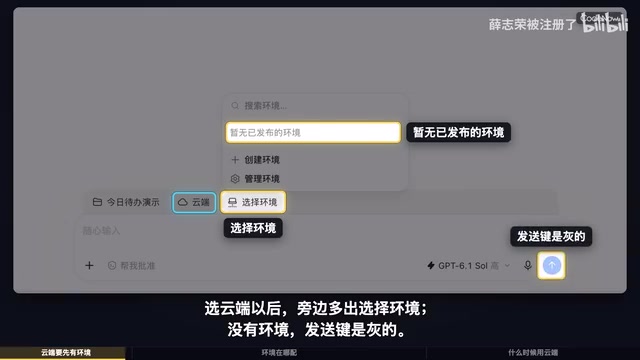
Codex Cloud Mode Explained: Environment Setup and Use Cases
This article explains how Codex cloud mode works, environment setup steps, and use cases, including how to create environments, connect GitHub repositories, set scheduled tasks, and compare cloud vs. local mode.