ICLR Submissions Approaching 50,000: Why Are Top AI Conferences Growing at an Explosive Rate?
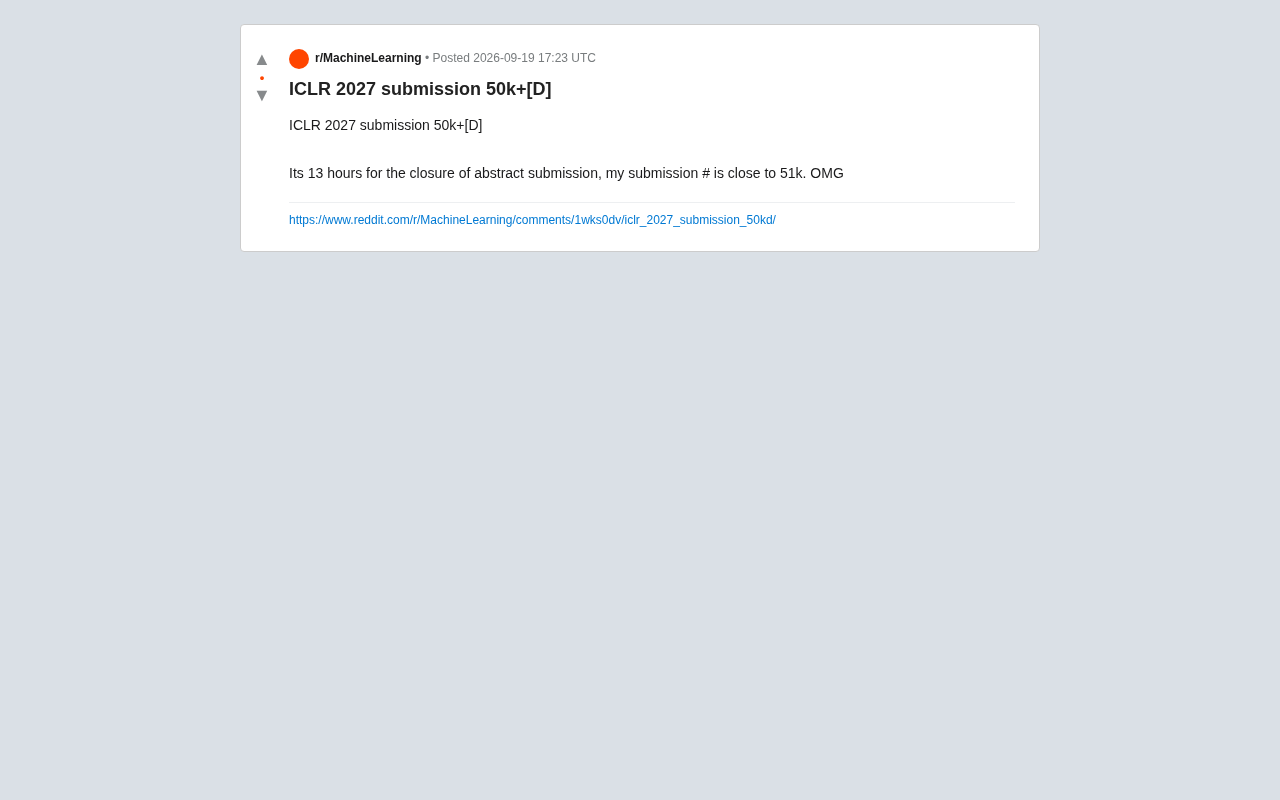
ICLR submission numbers near 50K, spotlighting the explosive growth and review strain at top AI conferences.
A Reddit post showing an ICLR abstract submission number approaching 51,000 has reignited discussion about conference scale. While the number doesn't equal valid submissions exactly, it far exceeds historical ICLR figures and reflects the rapid expansion of AI research driven by the LLM boom. The surge places enormous strain on peer review systems, worsening the "lottery" effect where paper outcomes increasingly depend on random reviewer assignment. The piece also questions whether knowledge creation is keeping pace with volume, and calls for sustainable alternatives like rolling review.
A Post That Sparked a Debate
Recently, a post on the Reddit machine learning community went viral. A researcher posted — 13 hours before the abstract submission deadline — that their submission number was approaching 51,000, writing "OMG."
While this is just one submitter's observation based on their own assigned number and hasn't been confirmed by official data, it reflects a trend the research community has long sensed: submission volumes at top AI conferences are growing at a staggering pace.
It's worth noting that submission numbers don't directly equal the actual number of valid submissions — they may include withdrawals, duplicate registrations, or placeholder submissions. But even with a discount applied, a figure in the 50,000 range far exceeds ICLR's typical scale from just a few years ago.
The Growth Trajectory of Top Conference Submissions
ICLR (International Conference on Learning Representations), one of the most influential conferences in deep learning, serves as a mirror for the industry through the changes in its submission volume.
Looking at publicly available data from major AI conferences (NeurIPS, ICML, CVPR, ICLR) in recent years, submission counts have universally followed an exponential growth curve. From a few thousand papers in earlier years to tens of thousands — and now approaching 50,000 — the growth slope has steepened noticeably. If the figure mentioned in the post is accurate, it would reset expectations of what conference scale even means.
Several forces are driving this growth: the large language model boom attracting a wave of new entrants, expanding industrial research teams, and a rapid increase in the global population of AI researchers. The "arms race" character of academic output has become increasingly pronounced.
To put this in concrete numbers: NeurIPS received around 4,856 submissions in 2018; by 2023, that number had surpassed 13,000. ICML 2024 received over 9,400 submissions; CVPR 2024 approached 12,000. ICLR had just over a hundred submissions when it was founded in 2013, reached approximately 4,900 in 2023, and jumped further to around 7,200 in 2024. If submission numbers for 2025 are indeed approaching 50,000, that would represent nearly a doubling within a single year — far exceeding the growth rate of any previous year. This growth exhibits classically super-linear statistical characteristics, closely correlated with the mainstream breakout of large language models after 2023.
The Real-World Pressure of Explosive Scale
The most immediate consequence of surging submissions is stress on the peer review system. The number of available reviewers has grown far more slowly than the number of submissions, increasing the burden on individual reviewers and widening the variance in review quality.
Many researchers have already publicly complained about the "lottery" nature of top conference reviews — the same paper can receive wildly different evaluations depending on which reviewers happen to be assigned to it. When the submission pool reaches tens of thousands, this randomness will only be amplified further.
Beyond that, the sheer volume of submissions also raises the bar for matching papers to area chairs (ACs), plagiarism detection, and identifying potentially LLM-generated content. Conference organizers are being pushed to deploy more automated tools just to keep basic processes running.
The "lottery" problem in conference peer review isn't new, but it becomes more pronounced as scale increases. In 2014, NeurIPS (then NIPS) conducted a famous experiment: 10% of submissions were sent to two independent groups of reviewers. The result? The two groups disagreed on accept/reject decisions roughly 57% of the time — meaning more than half of papers received opposite verdicts from the two review panels. This experiment revealed the inherent randomness in peer review. As submission volumes balloon from thousands to tens of thousands, conferences must dramatically expand their reviewer pools to maintain a comparable reviewer-to-paper ratio, often bringing in less experienced reviewers, which further destabilizes quality.
Industry Signals Behind the Numbers
On the positive side, exploding submission counts signal unprecedented levels of participation and activity in AI research. More people willing to engage with frontier research is, in itself, a mark of a thriving field.
But from another angle, it raises questions worth reflecting on: when tens of thousands of papers pour into a single conference every year, is genuine knowledge creation growing at the same rate? Or is a significant portion of this work "incremental" or even redundant?
Voices within the research community have already begun raising these concerns. Some argue that top conferences should explore more sustainable review mechanisms — such as rolling review, tiered filtering, or tighter integration with preprint platforms — to ease the annual submission surge.
"Rolling review" is one of the more frequently discussed alternatives. The core idea is to shift paper review from an annual concentrated process to one that accepts and processes submissions continuously throughout the year. Authors can submit at any time, receive review results, and then decide which specific conference venue to present at. ACL's ARR (ACL Rolling Review) is currently the largest working example of this model, covering multiple top venues in computational linguistics. Proponents argue it smooths reviewer workload and reduces the pre-deadline submission surge; critics worry it blurs the sense of distinct conference identity and may introduce new management complexity when papers are transferred across multiple rounds.
Closing Thoughts: A Signal Worth Viewing Rationally
The observation in a single social media post isn't enough to draw rigorous conclusions, and submission numbers leave room for multiple interpretations. But it does capture a real pulse of the industry — top AI conferences are under unprecedented pressure from scale.
For researchers, rather than anxious about rising competition, the better focus is on the originality and rigor of the work itself. For conference organizers, finding the right balance between scale and quality will be an unavoidable challenge in the years ahead.
Related articles
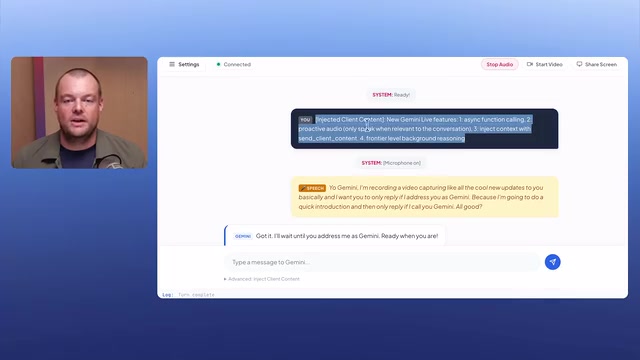
Gemini Live API Major Update: Frontier-Level Reasoning Comes to Native Audio for the First Time
Gemini Live API major update: Proactive Audio, context injection, async function calling, and frontier-level reasoning now available in native audio for voice AI.
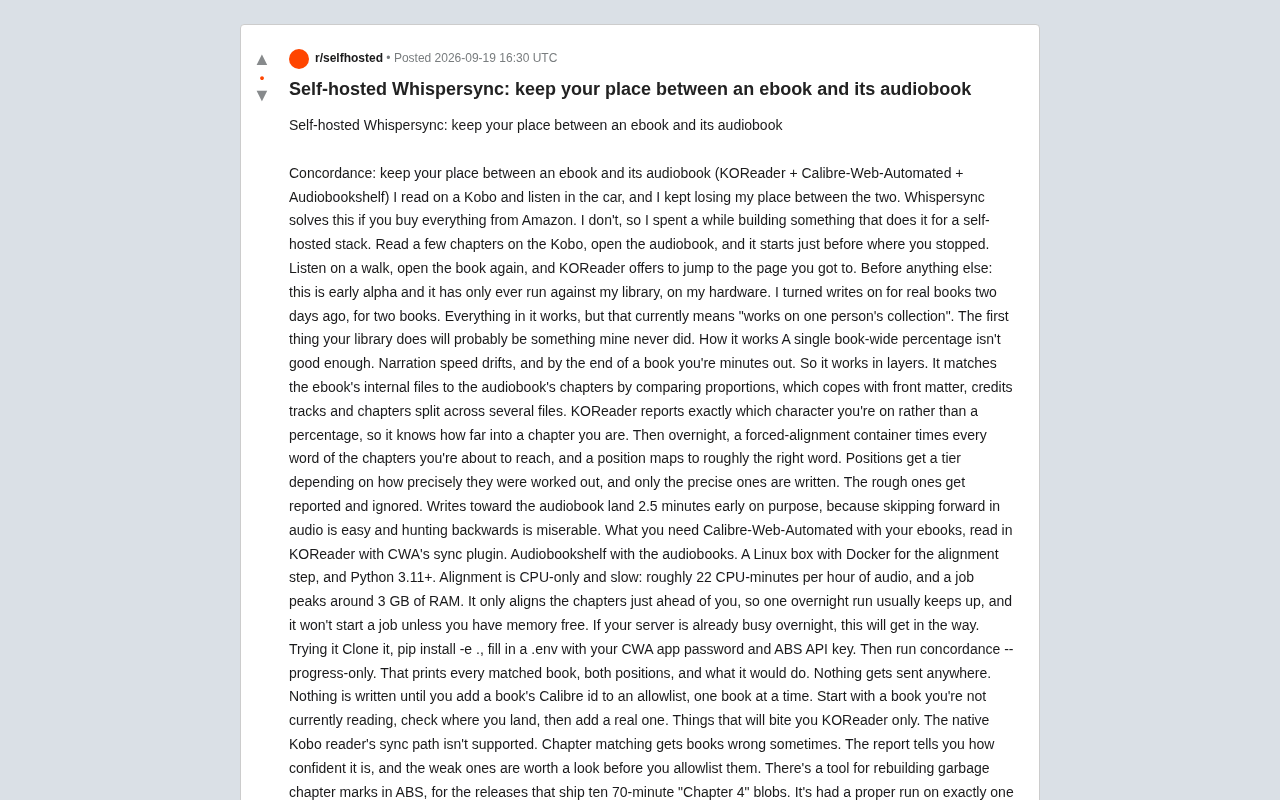
Self-Hosted Whispersync: Automatic Progress Sync Between E-Books and Audiobooks
Concordance is an open-source self-hosted Whispersync alternative that syncs e-book and audiobook progress using KOReader, Calibre-Web-Automated, and Audiobookshelf.
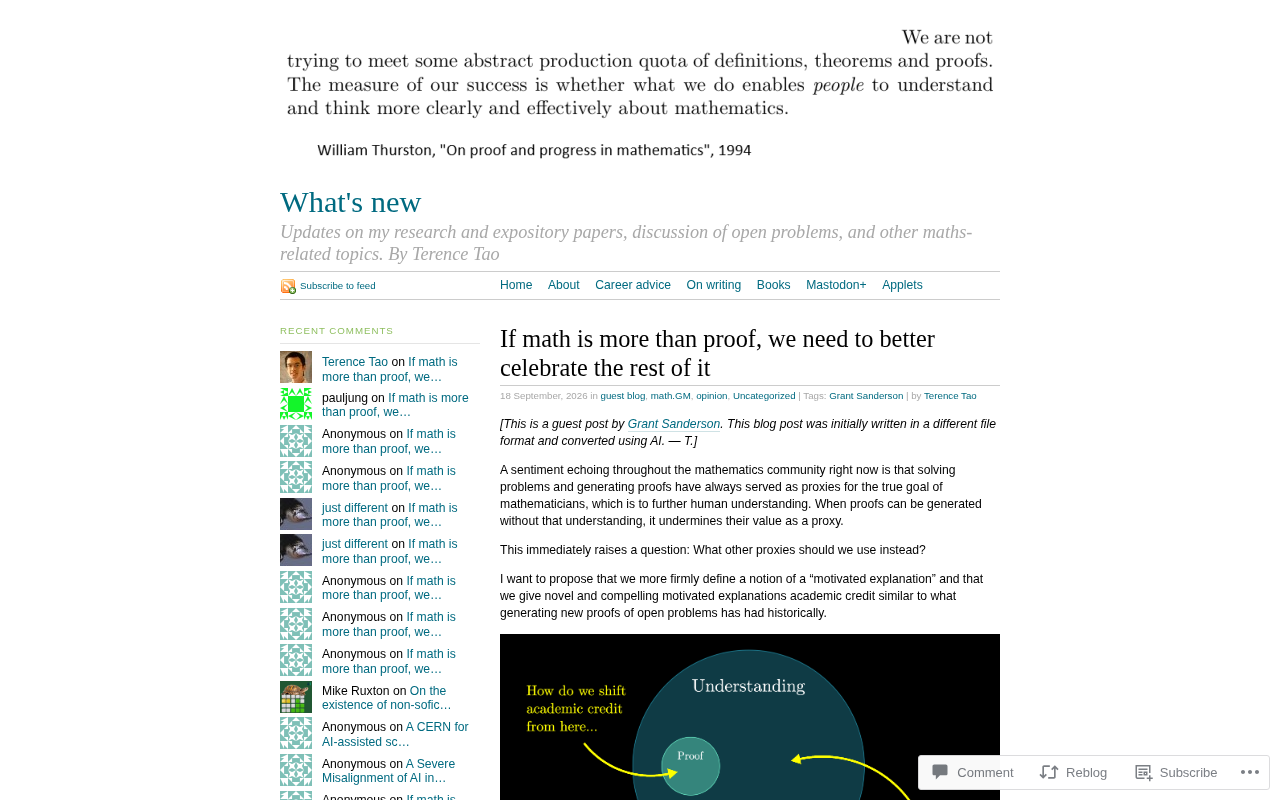
Terry Tao: Math Is More Than Proofs — How Should We Recognize Everything Else?
Fields Medal winner Terry Tao argues that math is far more than proofs — posing questions, building concepts, and conveying intuition matter too, especially as AI takes over routine verification.