iFixit Teardown of iPhone Duo: Uncovering Foldable Screen Crease and Hinge Flaws
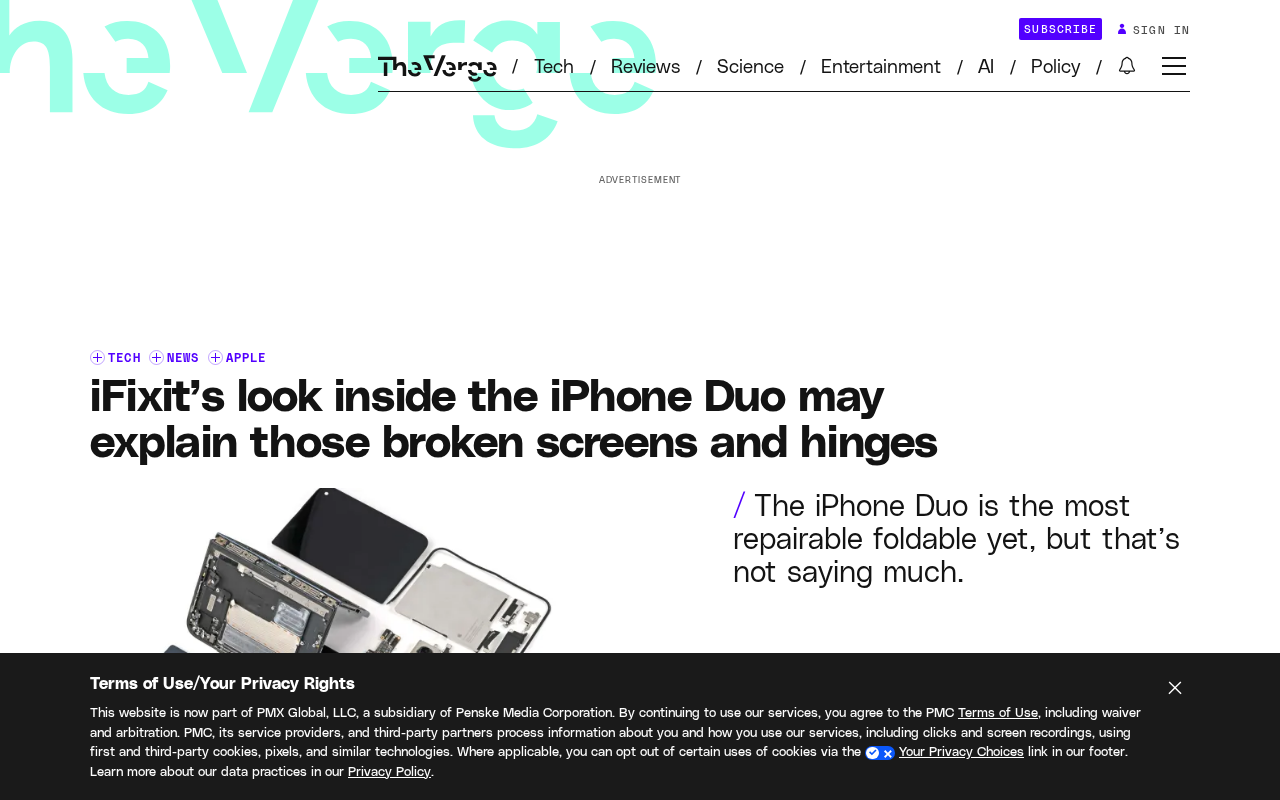
iFixit tears down the iPhone Duo, revealing the crease-hiding design and a 5/10 repairability score.
iFixit conducted a teardown of Apple's latest foldable phone, the iPhone Duo, analyzing its crease-hiding mechanism and hinge structure. The report notes the crease may be cleverly hidden via screen layering or hinge design, but the complex hinge and special bonding process also create durability and repair challenges. The device received a 5/10 repairability score—not high in absolute terms, but a relatively high rating from iFixit for an iPhone foldable, reflecting Apple's balance between thinness, water resistance, and repairability. The article also discusses the teardown's value for consumer purchasing decisions and industry foldable solutions, and reminds users of long-term durability risks.
iFixit, as usual, took apart Apple's latest iPhone Duo, laying the parts out on the table. This teardown reveals how Apple may have hidden the foldable screen's crease and gives a repairability score of 5/10. That score may not seem high, but it's already one of iFixit's highest ratings for an iPhone foldable device.
Teardown Findings: Crease Hiding and Hinge Design
iFixit's teardown report points out that the iPhone Duo's foldable screen crease is cleverly hidden, possibly through the screen's layered structure or hinge mechanism. Although the specific technical details are not fully disclosed, this design explains why users can barely notice the crease in daily use. However, the durability of the hinge and screen remains a concern; previously, users reported screen and hinge damage issues, and iFixit's teardown may provide clues.
According to iFixit's analysis, the iPhone Duo's hinge structure is complex, containing multiple precision components, which may be one of the causes of durability issues. The screen part uses a special bonding process, making repair more difficult.
A foldable screen's "crease" refers to the visible depression or bright line in the bending area after repeated folding. Its causes include plastic deformation of the flexible cover material, stress concentration between multi-layer structures, and an excessively small hinge bending radius. Common industry mitigation methods include: increasing the bending radius (waterdrop hinge), using ultra-thin flexible glass (UTG) instead of a plastic cover, adding an optical compensation layer between the display layer and touch layer, and "optically hiding" the crease through refractive index matching of multilayer films. Apple on the iPhone Duo very likely combined these solutions, which is why iFixit found it difficult to directly determine from appearance whether the crease was physically eliminated or visually weakened.
The foldable screen hinge is the core mechanical component determining durability. A typical structure includes a gear synchronization mechanism, multi-segment linkages, cam damping, and a floating middle plate, with the number of parts reaching dozens. The complex structure brings two problems: first, dust and particles easily enter the slide rails, causing wear or jamming; second, metal fatigue and damping attenuation can change the feel of opening and closing and even cause abnormal noise. iFixit points out that the iPhone Duo's hinge components are precision-made, which exactly explains the hinge damage phenomena reported by users. In addition, the hinge area often requires reserved clearance space, which naturally conflicts with waterproof and dustproof design, and is also a key reason why foldable screens are generally less reliable than bar phones.
Repairability Score: The Meaning of 5/10
iFixit gave the iPhone Duo a repairability score of 5/10. Although this score is not high by absolute standards, compared with other Apple products (such as iPhones, which usually score lower), it is progress. 5/10 means the device has some repairability, but there is still room for improvement; for example, battery replacement or screen repair may still require professional tools and steps.
This score also reflects Apple's delicate balance on repairability: it must ensure the device is thin, light, and waterproof while also considering repair convenience. iFixit notes that some of the iPhone Duo's modular design is commendable, but the use of adhesive and parts pairing restrictions still lower the score.
iFixit's repairability score uses a 0 to 10 scale, with 10 representing the easiest to repair. The scoring criteria include: whether disassembly requires special tools, whether the battery can be replaced independently, whether high-frequency damaged parts such as the screen are modular, whether large amounts of adhesive are used, whether repair manuals and genuine parts are open to the public, and whether parts pairing restrictions exist. Apple's recent bar-style iPhones have mostly scored below 4, so the iPhone Duo getting 5 is indeed relative progress, but adhesive and parts pairing remain the main deductions.
Impact on Users and the Industry
For potential buyers, iFixit's teardown is a reminder to pay attention to the long-term durability of foldable screens. Although the crease is hidden, the risk of hinge and screen failure cannot be ignored. For the industry, the iPhone Duo's design approach may influence other manufacturers' foldable screen solutions, especially in crease handling and repairability.
iFixit recommends users use protective cases cautiously and avoid extreme temperatures to extend device lifespan. Meanwhile, Apple has not yet commented on this teardown report.
Overall, the iPhone Duo shows innovation in hiding the crease, but repairability and durability remain common challenges facing foldable phones. iFixit's teardown provides consumers with valuable reference.
Parts pairing refers to the device using serial number verification to require that replaced components complete software binding with the motherboard; otherwise, functionality may be limited or system warnings may appear. This mechanism exists widely in Apple products, objectively limiting the feasibility of third-party repairs and user self-replacement of parts, and is a long-term focus of iFixit's criticism. For foldable screens, screen and hinge pairing calibration is more complex, because after replacing the screen, specialized equipment is often needed to recalibrate crease compensation and touch parameters, making the repair threshold very high even when parts are available.
One-line Summary
iFixit tears down the iPhone Duo, revealing the crease-hiding design and a 5/10 repairability score.
Paragraph Summary
iFixit conducted a teardown of Apple's latest foldable phone, the iPhone Duo, focusing on its crease-hiding mechanism and hinge structure. The report notes that the crease may be cleverly hidden through the screen's layered structure or hinge design, but the complex hinge and special bonding process also bring durability and repair challenges. The device received a 5/10 repairability score; although not high in absolute terms, it is a relatively high rating from iFixit for an iPhone foldable device, reflecting Apple's balance between thinness, water resistance, and repair convenience. The article also discusses the teardown's reference value for consumer purchasing decisions and industry foldable screen solutions, and reminds users to pay attention to long-term durability risks.
Related articles

OpenAI Dots vs Anthropic Claude Duet: The AI Assistant Rivalry Escalates
Anthropic's Claude Duet joins OpenAI Dots and Meta Muse in a new AI assistant rivalry. We analyze their positioning, cloud execution, and sensitive-action approval.

Claude Duet Launches: Proactive Agents Take Their First Step, with Approval Cards as the Key Constraint
Anthropic releases research preview Claude Duet, where Claude can proactively push briefings and assign tasks via voice, with approval cards controlling sending, payment, and deletion. This article analyzes its proactive interaction logic, security isolation design, and the trust challenges of proactive agents.
The LLM Price War: Why Did OpenAI and Anthropic Cut Prices by 80%?
OpenAI and Anthropic cut LLM prices by up to 80% in months. This article analyzes the competition, technology costs, business model shifts, and industry impact behind the price war.