The LLM Price War: Why Did OpenAI and Anthropic Cut Prices by 80%?
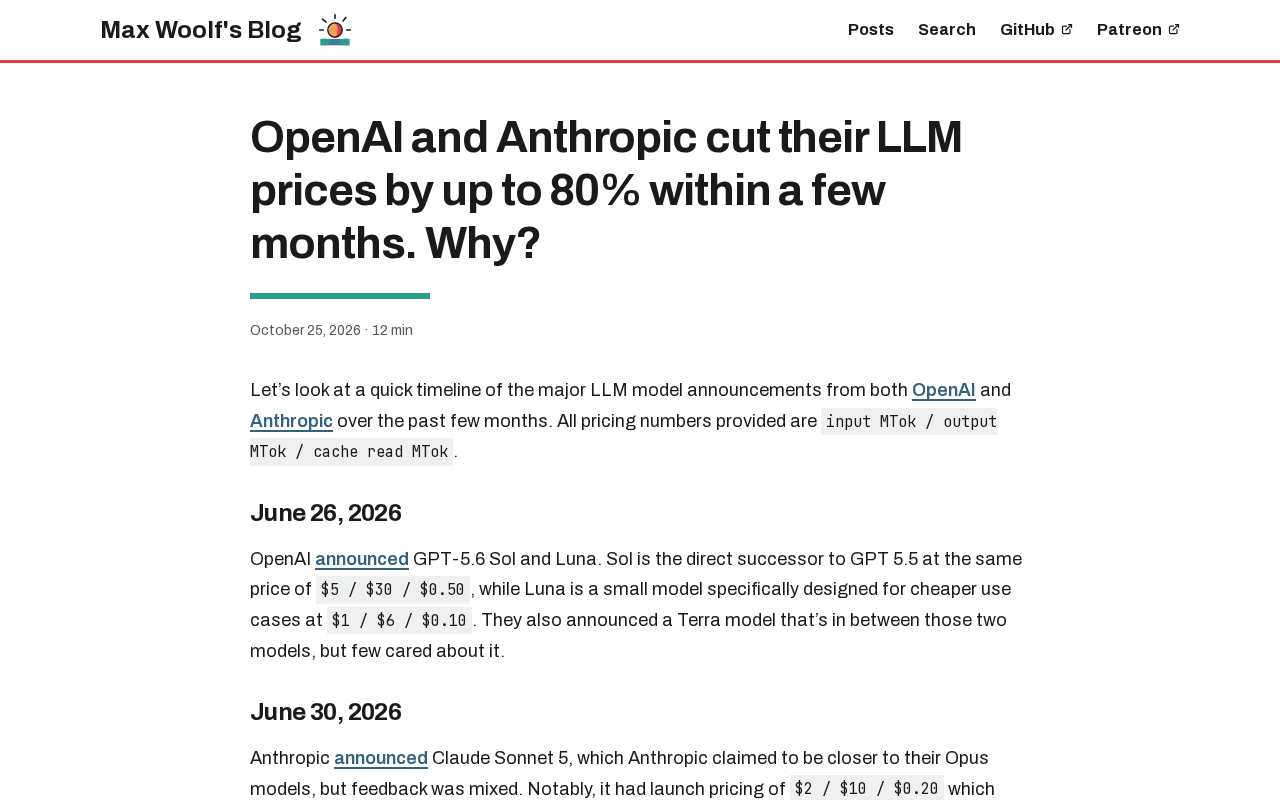
OpenAI and Anthropic's drastic price cuts are a market reshuffling driven by competition, costs, and ecosystem strategy.
The article examines why OpenAI and Anthropic slashed LLM prices by up to 80%, across competition, technology costs, business models, and industry impact. Open-source models like Llama and Mistral and direct rivalry force price cuts; quantization, distillation, MoE, and custom chips lower inference costs. The cuts are really a business model shift—low prices attract developers for ecosystem lock-in, monetized via enterprise editions and fine-tuning, while squeezing resellers. Users gain but face hidden limits; the industry reshuffles toward technology and ecosystem leaders, raising monopoly concerns.
The LLM Price War: Why Did OpenAI and Anthropic Cut Prices by 80%?
A recent discussion on Hacker News drew widespread attention: OpenAI and Anthropic slashed LLM prices by as much as 80% in just a few months. This is more than a simple promotion—it reflects a profound market shift. This article analyzes the drivers and consequences of this price war across four dimensions: the competitive landscape, technology costs, business models, and industry impact.
Intensifying Competition: New Players Shake Up the Market
The rise of open-source models is a major driver of the price war. Meta's Llama series, Mistral, and numerous community open-source models are continually closing the performance gap with proprietary models—at far lower cost. Enterprise customers are beginning to realize that many tasks don't require the most advanced models, and open-source options are more than sufficient. This forces OpenAI and Anthropic to cut prices to defend their market share.
At the same time, direct competition between the two companies is heating up. Anthropic's Claude series excels at long-context processing, while OpenAI's GPT series has advantages in ecosystem and plugins. To attract developers and enterprises, price cuts are the most direct weapon. Commenters on Hacker News noted that this competitive dynamic has played out before in cloud computing and databases, and ultimately users are the beneficiaries.
Falling Technology Costs: Improved Inference Efficiency
Lower model inference costs create room for price cuts. Through model quantization, distillation, Mixture-of-Experts (MoE) architecture optimization, and custom chips (such as OpenAI's Triton and Anthropic's collaboration with Google TPU), the computational cost per token has dropped significantly. In addition, mature caching mechanisms and batch processing techniques reduce redundant computation.
Interestingly, amortization of training costs is also a factor. As model iterations slow, earlier R&D investments are gradually amortized, giving companies more flexibility to adjust prices. However, this doesn't mean model training has become cheap—rather, the economics on the inference side have improved more noticeably.
Model quantization refers to representing model weights and activations with low-precision numerical values (such as 8-bit or 4-bit integers), substantially reducing memory footprint and computational overhead with almost no loss in performance; knowledge distillation lets a small "student model" learn the output distribution of a large "teacher model," reproducing similar capabilities with fewer parameters. Mixture-of-Experts (MoE) architecture splits a model into multiple expert subnetworks, activating only a few of them per inference, thereby reducing per-inference computation while maintaining total parameter scale. Together with custom inference chips and batch scheduling, these techniques drive down the marginal cost per token—the underlying support for substantial price cuts.
Business Model Shift: From API to Ecosystem Lock-in
Price cuts are not mere giveaways but a business model transformation. By lowering API prices, OpenAI and Anthropic can attract more developers to build applications, thereby creating ecosystem lock-in. Once a developer's application is built on a particular model's API, migration costs are high, creating opportunities for subsequent value-added services (such as enterprise editions, dedicated support, and fine-tuning services).
Moreover, low-price strategies help squeeze competitors' room to survive. When prices fall low enough, some companies relying on API resale or small-scale fine-tuning will struggle to be profitable, and market concentration may increase further. This "subsidize to capture the market" playbook is common in the internet industry.
Ecosystem lock-in (vendor lock-in) means that once users build applications on a vendor's API, they are bound to that platform long-term because migration involves high costs such as code rewriting, data migration, and rebuilding prompts and fine-tuning results. In the LLM context, lock-in also stems from model-specific behavioral differences—output styles, context windows, and tool-calling formats are not interchangeable across models, and switching often requires re-tuning. Vendors exploit this by using low prices to win developer scale, then monetizing through high-margin products such as enterprise editions, dedicated compute, fine-tuning, and compliance services—highly similar to the early cloud computing path of "low-price customer acquisition, value-added monetization."
Industry Impact: Accelerated Innovation and Reshuffling
For developers and enterprises, lower prices lower the barrier to AI applications, enabling more ideas to be realized. On the other hand, the price war may also lead to a divergence in service quality—low-price plans may come with rate limits or feature restrictions. Discussions on Hacker News remind users to read the terms of service carefully to avoid being lured by low prices while overlooking hidden costs.
From an industry perspective, the price war will accelerate reshuffling. Intermediaries lacking technical barriers and cost advantages may be eliminated, while companies with core technology and ecosystems will grow stronger. At the same time, this may prompt regulators to pay attention to market monopoly issues, especially in the AI infrastructure sector.
API resellers are small and medium-sized vendors that do not train models themselves but purchase LLM APIs in bulk and resell them to downstream customers at a markup or as bundles; their profit margin depends entirely on wholesale discounts from upstream. When official API prices drop by 80%, resellers' margins are quickly wiped out, and lacking model capabilities and ecosystem stickiness, they are the first to be squeezed out of the market. Similarly, companies that only do lightweight fine-tuning or prompt wrapping also face the risk of being "covered by upstream features"—each time a model vendor launches a native capability upgrade, it may swallow a layer of intermediary value. This is precisely the micro-mechanism by which the price war accelerates industry concentration.
Conclusion
OpenAI and Anthropic's price cuts are the result of competition, technology, and business models working together. In the short term, users enjoy lower costs; in the long term, how the market landscape will evolve remains to be seen. But one thing is certain: the LLM price war is far from over, and the real winners will be the companies that can continue to innovate and control costs.
One-line Summary
OpenAI and Anthropic's drastic price cuts are a market reshuffling driven by competition, costs, and ecosystem strategy.
Paragraph Summary
The article analyzes the drivers behind OpenAI and Anthropic cutting LLM prices by up to 80% across four dimensions: competitive landscape, technology costs, business models, and industry impact. The rise of open-source models (Llama, Mistral, etc.) and direct competition between the two companies force them to cut prices to defend share; model quantization, distillation, MoE optimization, and custom chips significantly reduce inference costs, creating room for price cuts. Price cuts are essentially a business model transformation: using low prices to attract developers and create ecosystem lock-in, monetizing through value-added services such as enterprise editions and fine-tuning, while squeezing out intermediaries like resellers. For users, the barrier to AI applications is lowered, but they should be wary of rate limits and hidden costs in low-price plans; the industry will accelerate reshuffling, with technology and ecosystem leaders growing stronger, potentially drawing monopoly regulatory scrutiny.
Related articles
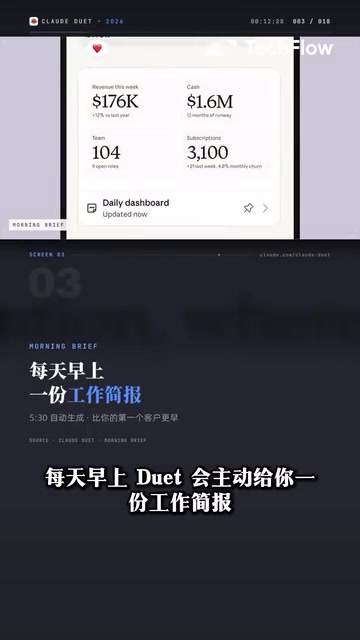
OpenAI Dots vs Anthropic Claude Duet: The AI Assistant Rivalry Escalates
Anthropic's Claude Duet joins OpenAI Dots and Meta Muse in a new AI assistant rivalry. We analyze their positioning, cloud execution, and sensitive-action approval.

Claude Duet Launches: Proactive Agents Take Their First Step, with Approval Cards as the Key Constraint
Anthropic releases research preview Claude Duet, where Claude can proactively push briefings and assign tasks via voice, with approval cards controlling sending, payment, and deletion. This article analyzes its proactive interaction logic, security isolation design, and the trust challenges of proactive agents.
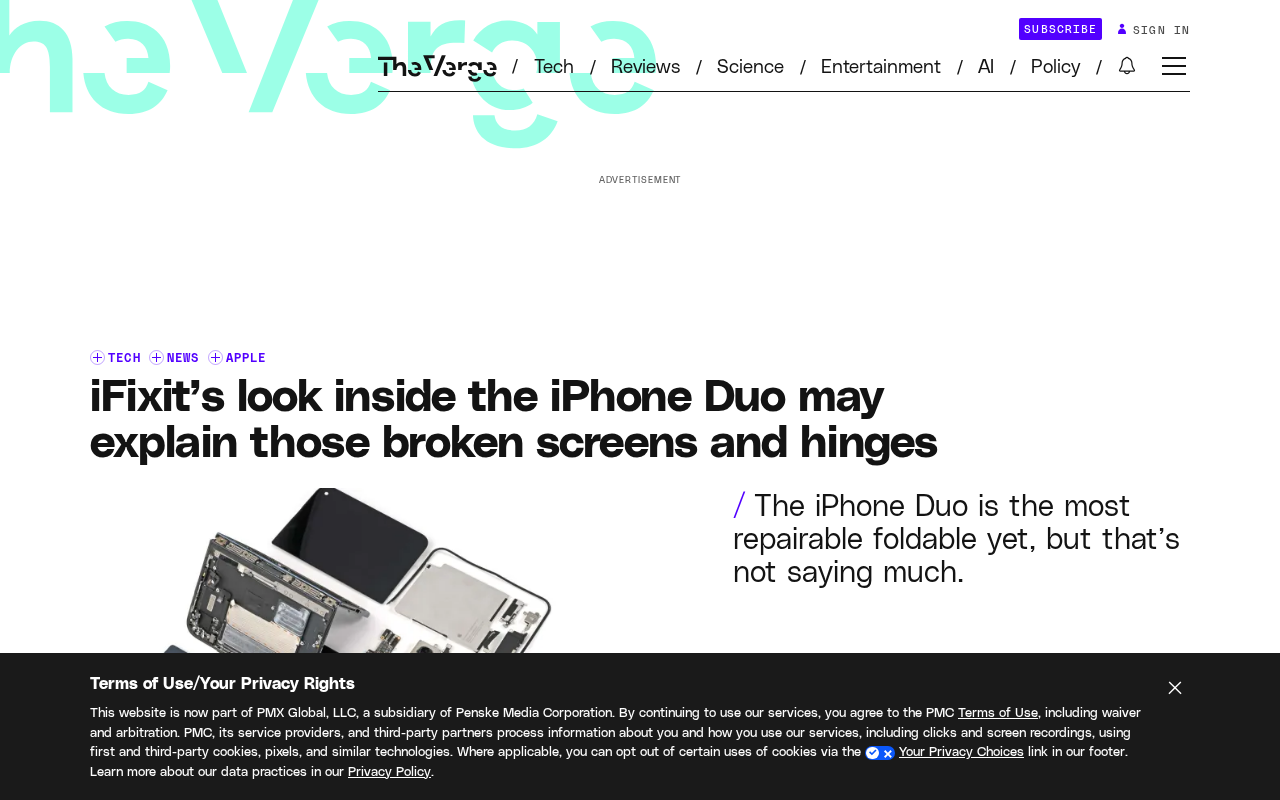
iFixit Teardown of iPhone Duo: Uncovering Foldable Screen Crease and Hinge Flaws
iFixit tears down the iPhone Duo, revealing crease-hiding technology and hinge design, giving a 5/10 repairability score, and analyzing screen and hinge damage causes and impacts on users.