iFLYTEK T30 Lite Learning Tablet In-Depth Review: Dual AI Engines + Multi-Child Accounts Tested

iFLYTEK T30 Lite combines Spark + DeepSeek AI engines with 5-child accounts for whole-family learning.
The iFLYTEK AI Learning Tablet T30 Lite pairs a 12.5-inch eye-care screen with dual AI engines — iFLYTEK's Spark Large Model and DeepSeek — covering both humanities and STEM subjects. It supports up to five independent child accounts with grade-matched content, and features AI essay grading that delivers teacher-level feedback down to punctuation and paragraph structure. An ideal all-in-one solution for multi-child families.
A Student Tablet Powered by Dual AI Engines
As large model technology makes its way into educational hardware, AI learning tablets are evolving from simple question-bank tools into intelligent tutoring systems. The iFLYTEK AI Learning Tablet T30 Lite features a 12.5-inch eye-care display, with its biggest highlight being the simultaneous integration of two AI engines: iFLYTEK's proprietary Spark Large Model and DeepSeekAd.
The Spark Large Model is a cognitive AI large model developed in-house by iFLYTEK, officially launched in May 2023, backed by over 20 years of accumulated expertise in speech recognition and natural language processing. It has been specifically optimized for Chinese semantic understanding and educational scenarios, giving it a natural advantage in humanities subjects like Chinese language and history. Previously deployed in language technology research related to China's college entrance exam (Gaokao), the Spark model is now being brought to consumer-grade learning devices, delivering stronger semantic comprehension and text generation capabilities for subject tutoring. DeepSeek, developed by DeepSeek AI, is an open-source large language model that has garnered widespread attention in the global AI community, distinguished by its highly competitive mathematical reasoning and logical analysis capabilities — complementing Spark's strengths in Chinese language understanding. In theory, DeepSeek excels at STEM logic and reasoning, while Spark is better suited for Chinese humanities comprehension, making the two-engine combination capable of covering a broader range of subject scenarios.
Unlike the rule-based matching of traditional question banks, large models can interpret open-ended inputs and generate personalized feedback — this is the generational leap that separates today's AI learning tablets from earlier read-along devices and electronic dictionaries. For parents, the value of an AI learning tablet is no longer just about "filling in gaps," but about delivering personalized guidance that approaches the quality of a real teacher. The dual-engine setup theoretically allows each model to shine in its respective subject domain, which is the core competitive advantage that sets this product apart from conventional learning tablets.
Multi-Account Management: One Device for the Whole Family
The practical utility of this learning tablet in a family setting deserves special attention. It supports up to five children's accounts, with one-tap switching between them. In our real-world test household, three children — in Grade 7, Grade 6, and Grade 3 respectively — each had their own independent account on the same device.

Multi-account support relies on a combination of user profiling and content distribution systems. Each account is linked to metadata including grade level, textbook edition, and learning progress, which the content recommendation engine uses to dynamically filter and match appropriate course resources. This account-level data isolation ensures that the Grade 3 child won't see the Grade 7 sibling's math content, and that each child's learning records and weakness analysis remain independent — establishing the necessary foundation for personalized tutoring. Once switched to a child's account, the system automatically loads subject content matched to their grade level. Parents set the grade and textbook version once during initial setup, and the content aligns precisely from that point on — no need for repeated manual adjustments.

This multi-account design is especially family-friendly for households with multiple children — a single device can meet the differentiated learning needs of children at different academic stages, offering clear practical advantages in both cost control and day-to-day management.
Course Content: In-School Sync and Beyond-School Enrichment
Course content is the metric parents care most about. Taking Chinese language arts as an example, the T30 Lite offers a fairly complete content system: the in-school component covers synchronized lessons, text explanations, dictation practice, and premium exam papers, addressing the key elements of classroom learning.

The beyond-school component extends into reading, critical thinking training, and targeted skill coaching. This content structure — "build the foundation in school, expand capabilities beyond" — allows the learning tablet to serve both daily review and advanced skill development. The breadth and depth of content coverage is an important dimension for evaluating the real-world value of an AI learning tablet.
AI Essay Grading: Smart Feedback Down to Punctuation
Among all its features, AI essay grading is the one that best showcases the power of large models. Using a Grade 6 elementary school essay as a real test case, the system's grading scope was impressively comprehensive:

AI essay grading involves multiple processing layers at a technical level: first, OCR (Optical Character Recognition) converts handwritten or typed text into structured data; next, a grammar-checking module identifies punctuation errors and typos; finally, the large model's semantic analysis layer evaluates higher-order dimensions such as paragraph logic, thematic expression, and sentence variety, generating targeted suggestions. Compared to rule-driven grammar checkers, large models can understand contextual meaning — distinguishing between "intentionally short sentences for emphasis" and "incomplete, fragmented sentences" — making the grading feedback far more actionable. As a result, the grading can extend from foundational issues like punctuation and typos all the way to detailed guidance on sentence expression and paragraph structure. This fine-grained feedback logically mirrors how a real teacher would grade — it doesn't just identify problems, it provides specific directions for improvement and explains the reasoning.
The device also includes a built-in "Golden Reading Camp" feature, where parents and children can jointly set reading plans and goals, helping to cultivate long-term reading habits. This type of proactive planning feature shifts learning from passively completing tasks to actively managing personal goals.
Conclusion: An Integrated Learning Solution for Multi-Child Families
Based on hands-on testing, the iFLYTEK T30 Lite demonstrates a mature product design philosophy across three dimensions: multi-account management, completeness of course content, and AI essay grading. The introduction of the Spark Large Model and DeepSeek dual AI engines represents a meaningful upgrade in tutoring capability for language-based subjects.
That said, it's important to maintain a realistic perspective on the role of AI learning tablets — their core value lies in assisting, not replacing. AI-generated essay grading suggestions still require parents and children to apply their own judgment based on the actual context. The 12.5-inch eye-care display hardware is also a reminder that while enjoying the benefits of intelligent tutoring, protecting eyesight remains equally important. For families with multiple children, products like this — supporting multiple accounts on a single device with grade-level content segmentation — offer an intelligent learning solution that is both cost-effective and easy to manage.
Key Takeaways
Related articles

WorkBuddy Step-by-Step Tutorial: Get an Automated Workflow Running in Half an Hour
A step-by-step breakdown of the WorkBuddy automated workflow: why most people only use it as a chat app, how the 27-anchor course and 12 templates help beginners get up and running in half an hour, plus notes on usage boundaries.

The Truth About Free Claude Code: Three Legitimate Paths and One Scam
Is free Claude Code possible? We break down the real cost of Pro and Max (with exchange rates and taxes), how community free methods work and their privacy trade-offs, plus fake installers and phishing traps—and three legitimate free paths.
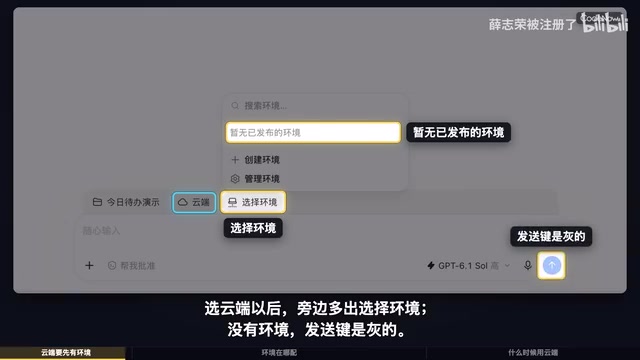
Codex Cloud Mode Explained: Environment Setup and Use Cases
This article explains how Codex cloud mode works, environment setup steps, and use cases, including how to create environments, connect GitHub repositories, set scheduled tasks, and compare cloud vs. local mode.