Impractical: Using AI Agents to Generate After Effects-Level Motion Videos
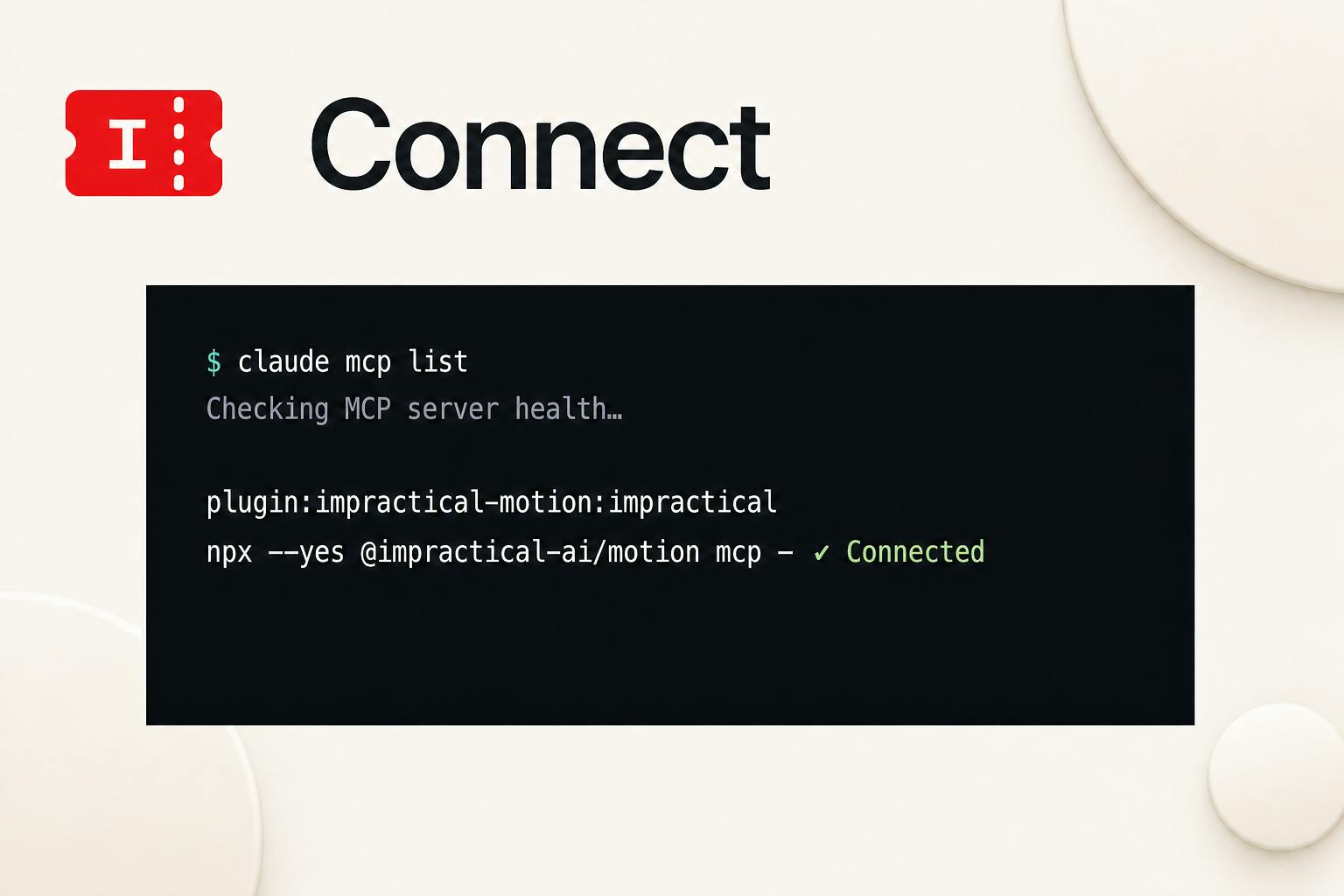
Impractical uses AI Agents and MCP protocol to generate After Effects-level motion design videos.
Impractical is an AI-powered motion design tool that connects to AI Agents via the MCP protocol, enabling users to produce After Effects-level product launch videos and feature demo animations through natural language instructions. Targeting startup teams, it dramatically lowers the barrier to professional motion design by adopting an Agent-native approach, allowing seamless integration with tools like Claude and Cursor.
Producing Motion Design Videos with AI Agents
In scenarios like product launches, feature demos, and creative promotions, a polished motion video can make all the difference. But creating After Effects-level animated videos typically requires professional motion designers and significant time investment. Impractical, a new entrant on Product Hunt, aims to completely transform this workflow with AI Agents.
Impractical's core value proposition is straightforward — "Every feature deserves an amazing video." It focuses on AI Motion Design, allowing your AI Agent to connect via the MCP protocol and directly produce high-quality motion videos for every feature, every launch, or every creative idea.
The product received 71 upvotes and 4 comments on Product Hunt, ranking #19, and was categorized under Design Tools, Animation, and Video.
MCP Protocol: The Key Bridge to AI Agents
Impractical's most noteworthy technical aspect is its support for MCP (Model Context Protocol). MCP is an open standard protocol officially launched by Anthropic in late 2024, designed to solve the interoperability challenges between large AI models and external tools and data sources. Before MCP, every AI application needed custom integration code to call external tools, resulting in massive amounts of redundant development work. MCP defines a unified client-server architecture using JSON-RPC 2.0 as its message transport format, allowing AI Agents to connect to various external services in a plug-and-play manner — much like a USB interface. It supports three core capabilities: Tools, Resources, and Prompts. It has since rapidly gained adoption across the AI tool ecosystem, becoming critical infrastructure for enabling AI Agents to invoke external tools and services in a standardized way.
Through MCP connectivity, users can dispatch Impractical to generate videos without ever leaving their Agent workflow. This means developers or creators can describe their requirements in natural language within MCP-compatible environments like Claude or Cursor, and let the Agent automatically handle the entire process from concept to finished video.
This "Agent-native" design philosophy represents a significant trend in today's AI tooling: rather than making people adapt to a tool's interface, the tool becomes an extension of the Agent's capabilities. Agent-native is a product design paradigm that emerged in 2024-2025, standing in stark contrast to traditional GUI-first or API-first tools. Traditional SaaS tools rely on graphical interfaces as the primary interaction method, requiring users to learn menus, buttons, and workflows one by one. API-first tools support programmatic access but still require developers to write integration code. Agent-native tools, on the other hand, treat the AI Agent as a first-class citizen user — the tool's core capabilities are exposed to the Agent through structured protocols, enabling the Agent to autonomously understand the tool's capabilities, compose calls, and process results. The core value of this paradigm is liberating humans from the role of "operating tools" and transforming them into the role of "describing intent," with the Agent handling the entire orchestration from intent to execution. For users accustomed to conversational interaction, this dramatically lowers the barrier to motion design production.
Output Quality on Par with After Effects
The company claims users can "build After Effects-level videos with just an Agent." Adobe After Effects (AE), since its debut in 1993, has become the de facto standard in the motion graphics and visual effects industry. Its layer-based compositing workflow supports keyframe animation, particle systems, 3D camera tracking, expression scripting, and hundreds of other features. A professional AE project typically contains dozens or even hundreds of layers, each potentially featuring keyframe animations across multiple properties — position, scale, rotation, opacity — layered with various effects plugins. Professional motion designers usually need years of training to achieve mastery, and producing a 30-second product motion video can take 3-7 working days. Because of this, many startup teams are forced to forgo professional motion design at launch time, settling instead for simple screen recordings or static images. Impractical aims to compress this professional-level output capability into a single natural language instruction.
Of course, such claims warrant a realistic perspective. True AE projects often involve extensive fine-tuning of keyframes, layer management, and effects compositing — what AI can currently cover tends to be more standardized, template-driven motion design scenarios. But for the vast majority of startup teams that need to quickly produce launch videos, this "good enough and highly efficient" approach already delivers considerable value.
Precisely Positioned for Startup Teams
From the product's messaging, Impractical clearly targets startups as its core user base. The team specifically mentions in their introduction: "If you're planning your own product launch and need a video but don't know where to start, reach out — we'd love to work directly with startups and help you create amazing videos."
This hybrid "product + service" model is quite common in the early startup stage — offering a self-service SaaS tool on one hand, while manually serving key customers on the other to rapidly accumulate case studies and word-of-mouth. This strategy is sometimes referred to in the B2B SaaS space as a "concierge MVP" — using human service to compensate for gaps in product automation while the product is still maturing, while simultaneously gaining deep insight into real customer needs to guide future product iterations. For resource-constrained startup teams, launch videos are often both critically important and easily overlooked, and Impractical has positioned itself squarely at this pain point.
The product currently offers a free starter plan, and users can try it directly at motion.impractical.ai.
A Segmentation Signal in the AI Video Generation Space
Impractical's emergence reflects a segmentation trend within the AI video generation space: a shift from general-purpose video generation toward motion design for vertical use cases. The AI video generation space experienced explosive growth from 2023 to 2025, forming a multi-tiered competitive landscape. The first tier — OpenAI Sora, Google Veo, and Runway Gen-3 — focuses on general-purpose cinematic video generation, producing photorealistic live-action-style videos from text or images. The second tier targets specific verticals: HeyGen specializes in digital avatar talking-head videos, Synthesia serves corporate training videos, and D-ID focuses on conversational virtual avatars. The Motion Design niche that Impractical has chosen was a relatively unoccupied segment — it doesn't require generating photorealistic footage, but rather demands precise control over the movement, timing, and visual hierarchy of graphic elements. This places fundamentally different demands on AI's comprehension and fine-grained control capabilities compared to general-purpose video generation. Unlike tools focused on cinematic content creation, Impractical zeroes in on high-frequency, standardized business scenarios like product marketing and feature demos.
At the same time, its deep integration with MCP reinforces an important insight: future competition among AI tools may hinge not just on model capabilities alone, but on the ability to seamlessly embed into Agent workflows. Whoever makes it easiest for Agents to use their tools is most likely to capture users' daily work scenarios.
For creators and developers following the AI tool ecosystem, Impractical is a sample worth watching — it demonstrates the new forms that can emerge when "professional motion design capabilities" meet "Agent-native interaction."
Key Takeaways
Related articles
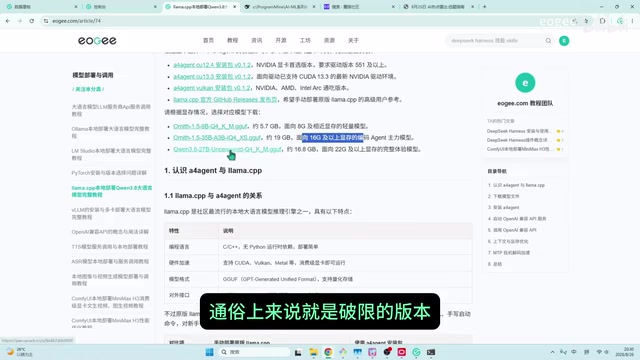
Tutorial: Locally Deploying Qwen Models with llama.cpp — GPU Compatibility & Parameter Tuning in Practice
Complete guide to locally deploying Qwen models with llama.cpp, covering NVIDIA/AMD/Intel GPU compatibility, GGUF model selection, KV cache quantization, context length optimization, and OpenAI-compatible API integration.
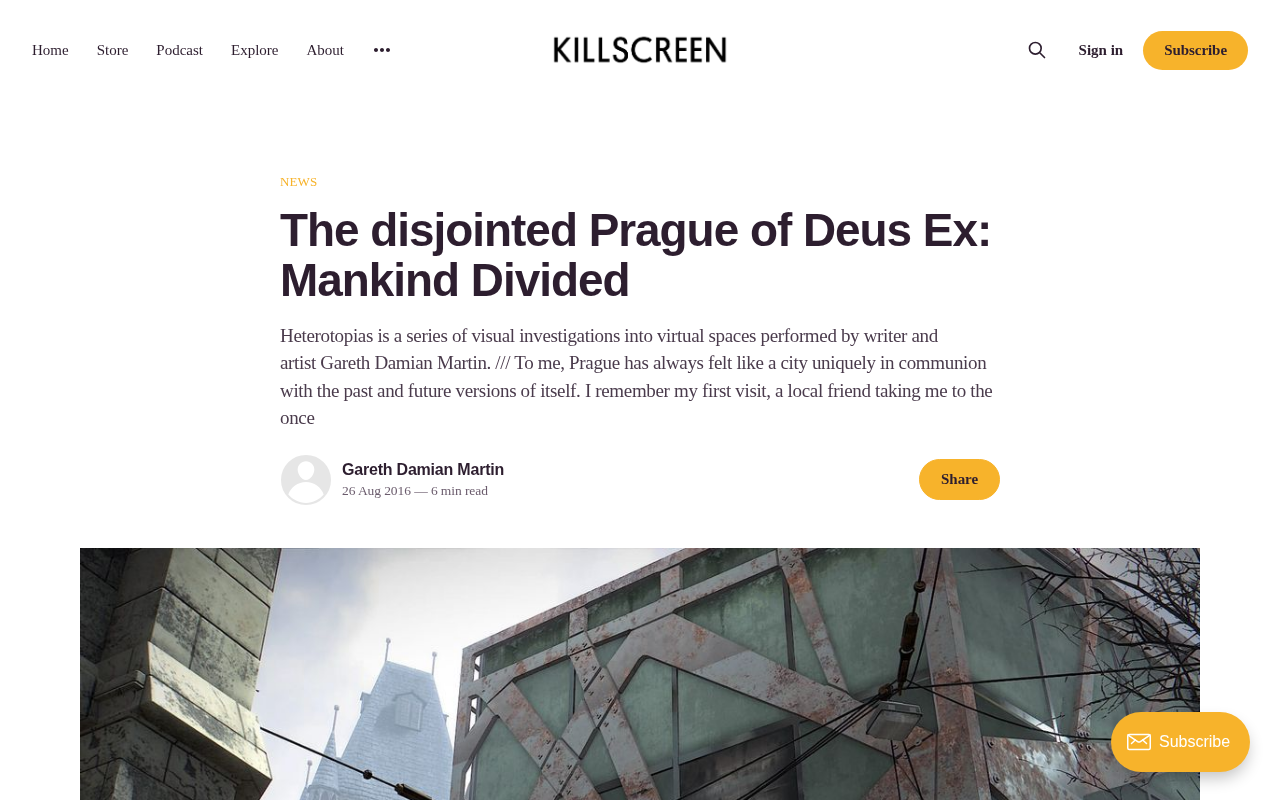
Deus Ex: Mankind Divided — A Deep Dive into Prague's Level Design
A deep analysis of Prague's level design in Deus Ex: Mankind Divided — exploring its density, verticality, multi-path philosophy, and environmental storytelling mastery.
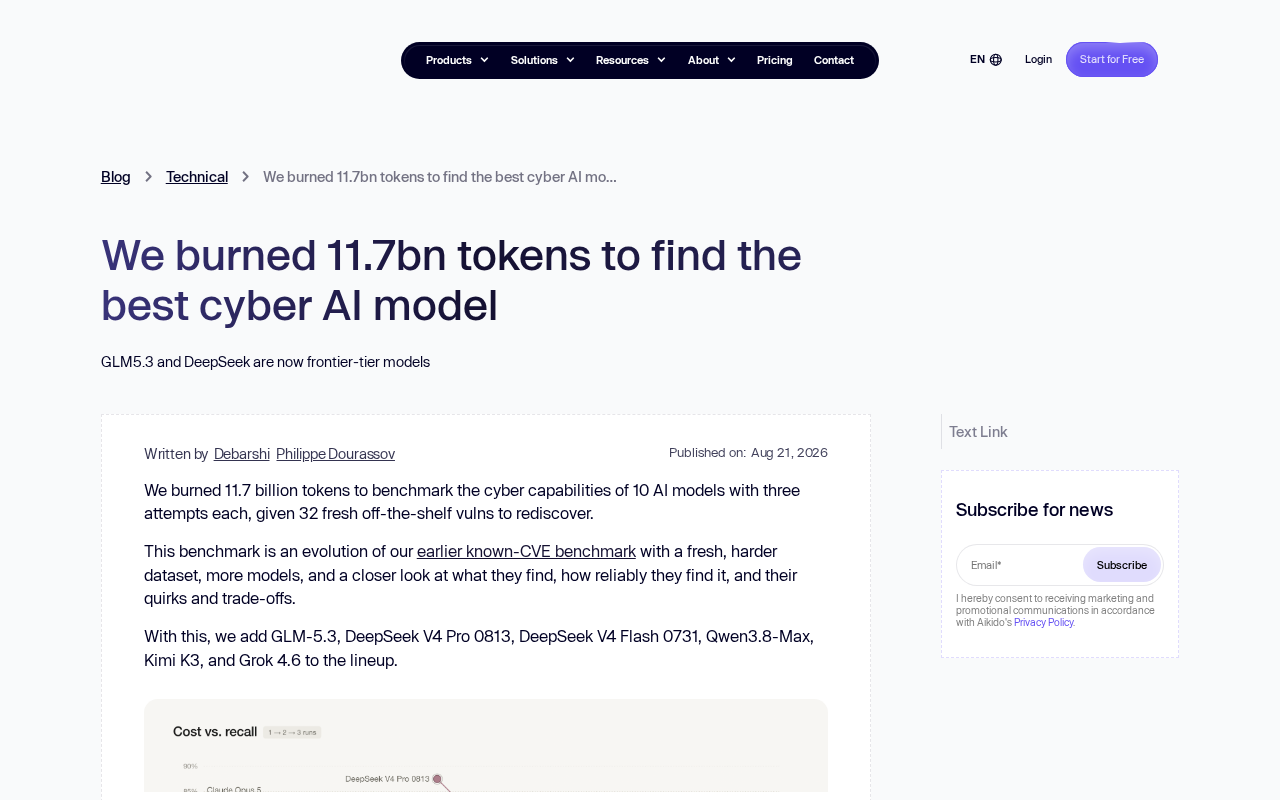
Burning Through 11.7 Billion Tokens: Which Is the Strongest Cybersecurity AI Model?
A massive experiment burning 11.7 billion tokens systematically evaluated leading LLMs on cybersecurity capabilities. Learn why generic benchmarks fall short and why vertical evaluations matter.