In Conversation with the ElevenLabs CEO: AI Voice Thinking Behind a $22 Billion Valuation

ElevenLabs' CEO discusses a $22B valuation and the ethics of AI voice transparency in customer service.
ElevenLabs is a leading AI voice synthesis company reportedly valued at $22 billion, with its technology widely deployed in enterprise customer service. In a recent interview, the CEO suggested companies "perhaps should" disclose when users are speaking with AI — but only until AI customer service becomes society's default expectation. The article argues this frames the right to be informed as a transitional courtesy rather than a permanent ethical principle, raising concerns as AI voice grows indistinguishable from human speech and regulatory pressure mounts globally.
ElevenLabs and the Rise of AI Voice
ElevenLabs has become an unavoidable name in the AI voice space. The smooth, natural voice you hear when you call a customer service line may very well be powered by this company's technology. ElevenLabs is reportedly valued at $22 billion — a number that alone speaks to the enormous commercial potential of AI voice synthesis in the enterprise market.
In a recent conversation, the ElevenLabs CEO shared his thoughts on the boundaries of AI voice technology, corporate transparency, and industry trends. Though the exchange was brief, it touched on a core question that is steadily surfacing: when a machine's voice is convincing enough to pass as human, are companies obligated to tell users they're speaking with AI?
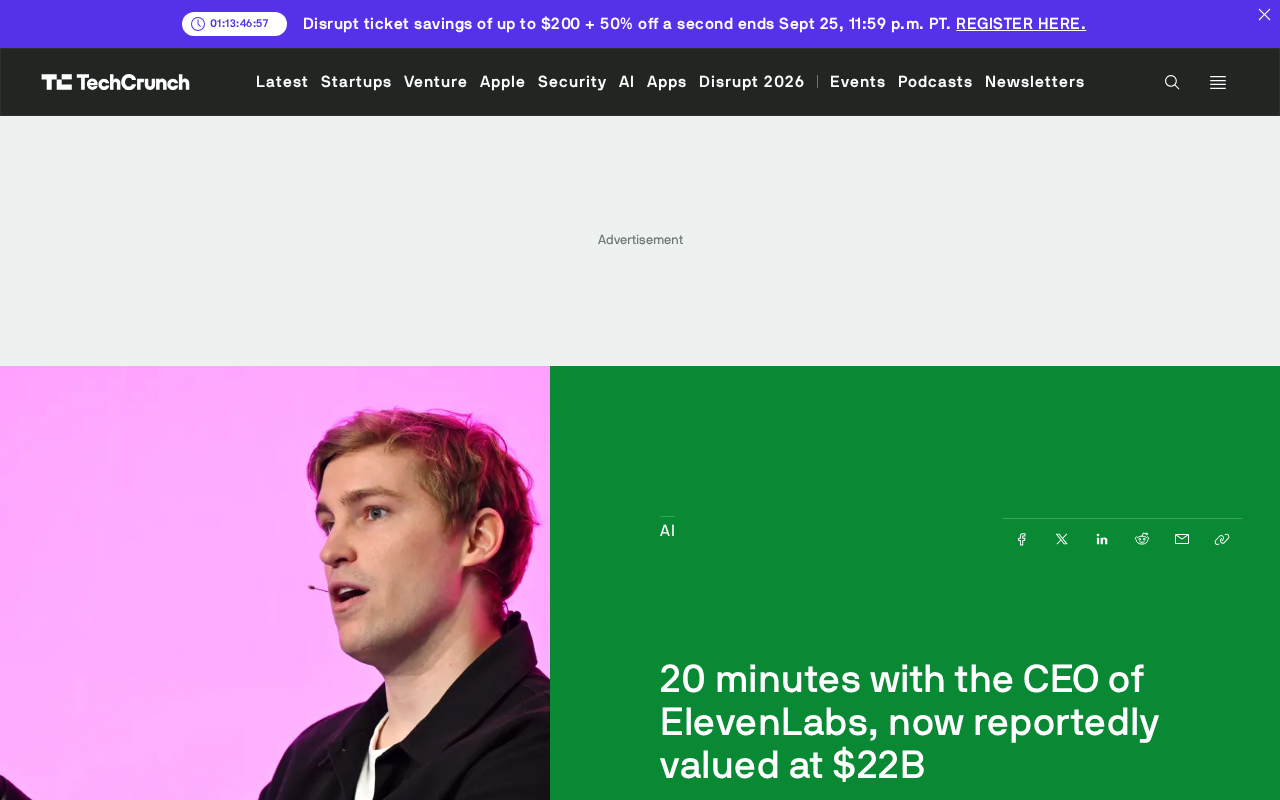
Transparency: Should Companies Tell Users They're Talking to AI?
This was the most contentious and thought-provoking part of the conversation. The ElevenLabs CEO said companies "perhaps should" inform users that the voice on the other end of the line is AI, not a human agent.
The phrasing here is telling. His position isn't "must disclose" — it's a conditional recommendation. He suggested this obligation would persist "at least until talking to a machine becomes everyone's default expectation." In other words, he frames transparency as a transitional courtesy rather than a permanent ethical baseline. Once society broadly accepts and expects AI-handled customer service, the need for proactive disclosure would, in his view, dissolve.
This logic is both pragmatic and unsettling. It's pragmatic in that it acknowledges the current awareness gap users have around AI voice, where proactive disclosure can help build trust. It's unsettling because it treats the right to be informed as a temporary arrangement that naturally fades as technology becomes widespread — rather than a fundamental right users should always be entitled to.
AI Voice Technology Has Moved to the Core of Customer Service
What's clear from this conversation is that ElevenLabs' technology is no longer a lab demo — it's deeply embedded in real enterprise customer service workflows. A large volume of customer service calls are now handled by AI voice, which helps explain how the company can sustain such a high valuation.
Customer service is an extremely demanding environment for AI voice: speech must sound natural, tone must feel human, and performance must remain stable with low latency in real-time conversations. ElevenLabs' strong position in this space signals that its voice synthesis quality has reached a point where ordinary users struggle to tell the difference — and that is precisely the technical precondition that makes the "should we disclose?" question so sharp.
If AI voice sounded obviously robotic and mechanical, users would detect it immediately, and the transparency question would barely arise. It's because the technology is convincingly realistic that "disclosure" has escalated from a technical matter to an ethical and trust issue.
Modern AI voice synthesis relies primarily on Neural Text-to-Speech (Neural TTS) technology. Unlike earlier TTS systems that stitched together recorded audio fragments, Neural TTS trains end-to-end deep learning models on large-scale voice data, producing speech that sounds highly natural in timbre, intonation, rhythm, and emotion. One of ElevenLabs' core strengths is ultra-low-latency streaming synthesis — the system doesn't wait for the full text to be generated before playing back audio. Instead, it generates and outputs simultaneously, compressing perceived latency to near real-call levels. In addition, voice cloning technology allows a specific person's vocal characteristics to be replicated from a small sample of audio, enabling companies to build bespoke brand "voice identities" — and it's a key technical enabler of AI voice that's indistinguishable from the real thing. This technical approach makes large-scale deployment possible: the same model can support tens of thousands of concurrent calls simultaneously, something human agents simply cannot do.
What a $22 Billion Valuation Signals
The $22 billion valuation reflects not just investor confidence in ElevenLabs as a single company, but strong conviction in the commercial prospects of the entire AI voice sector. Voice is one of the most natural and frequent interfaces in human-computer interaction. Once AI can handle customer service, outbound calls, and voice assistants at low cost and at scale, its impact on enterprise cost structures will be profound.
For businesses, AI voice means 24/7 uninterrupted service, near-zero marginal cost, and rapid cross-language expansion. These advantages are more than enough to drive large-scale procurement — and that underlying logic is exactly what justifies the high valuation from capital markets.
That said, high valuations come with high expectations. As AI voice becomes more widespread, debates around transparency, data privacy, and whether regulatory labeling is required will only intensify. As an industry leader, the ElevenLabs CEO's stance on transparency will, to some extent, set the tone for self-regulation across the entire sector.
Industry Trends Worth Watching
This brief conversation effectively raised a question the AI voice industry will eventually have to answer head-on: in an era when technology can fool the human ear, how should users' right to be informed be institutionally protected?
Leaving the "disclose or not" decision entirely to corporate discretion is clearly fraught with conflicts of interest — proactively disclosing AI may reduce user trust or conversion rates, so companies may lack sufficient incentive to do so. This suggests that transparency may ultimately need to be established through industry standards or even regulation, rather than relying solely on corporate goodwill.
For ordinary users, this means that in the foreseeable future, every call we have with "customer service" may be an exchange with a voice generated by an algorithm. The ElevenLabs story is just one snapshot of this broader transformation.
On the regulatory front, some jurisdictions are already establishing clear rules for the use of AI voice. The U.S. Federal Communications Commission (FCC) ruled in 2024 that using AI-generated voices in auto-dialed calls is subject to the Telephone Consumer Protection Act (TCPA). The EU's AI Act requires AI systems that interact with humans to disclose their non-human nature in reasonable circumstances. China's Cyberspace Administration has also issued dedicated regulations on deep synthesis technology, requiring prominent labeling of AI-generated content. These regulatory developments suggest that the "disclose or not" question is evolving from a matter of industry self-regulation to a legal obligation in several major markets — and the window for companies to rely on their own discretion may be closing faster than the ElevenLabs CEO anticipates.
Related articles
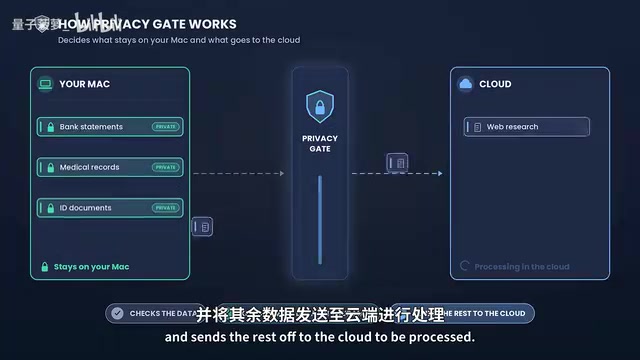
Perplexity Hybrid Compute Tested: Privacy Data Never Leaves the Mac
Perplexity Hybrid Compute tested: how PrivacyGate intercepts sensitive data, how local and cloud models divide work, model differences on 16GB vs 32GB Macs, and privacy protection in real scenarios like bank statements and medical records.
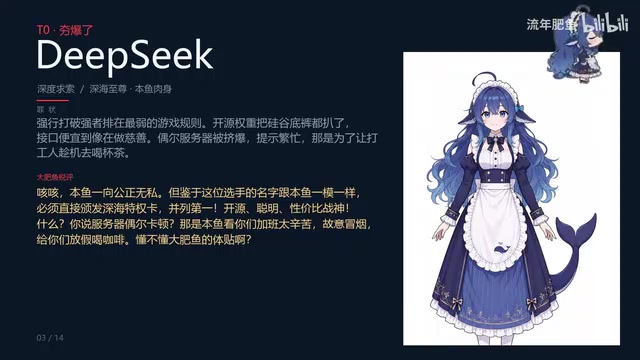
Big Fat Fish Roasts Mainstream LLMs at Home and Abroad: Doubao Takes the Crown, DeepSeek Tied for First
Bilibili creator Big Fat Fish roasts mainstream LLMs: Doubao tops for emotional value, DeepSeek ties first for open-source value, with ERNIE, Hailuo, Yuanbao, Kimi, Qwen, Kling, Claude, Gemini, and Grok each branded with a distinct persona.

How to Truly Test AI Agents Before Production? A Practical Testing and Monitoring Framework
BotGage founder Pramin Pradeep shares a three-step framework for testing AI Agents before production: Agent registration visibility, red teaming, and production observability — plus a real case cutting QA costs from $180K to $80K and an analysis of IT roles shifting to Agent supervisors.