In the AI Era, How Should Designers Redefine Their Value?

AI compresses execution time and drives down design prices, so creators must shift from executors to decision-makers to regain pricing power.
Starting from a graphic designer's confusion: AI compresses hours of design work into minutes, raising output while service prices keep falling. The author uses a rightward supply curve shift and declining marginal cost to explain this efficiency paradox, noting that writing, translation, and basic programming face similar shocks. The article argues that "going analog/handmade" can serve as a niche strategy but cannot support large-scale employment. The real pillars for human creators are judgment and taste, contextual understanding and relationships, and responsibility and attribution. The conclusion: creators need to move upstream from piece-rate executors to judgment-based decision-makers to regain pricing power.
When AI Compresses Hours of Work into Minutes
A graphic designer asked on Reddit: as AI keeps expanding, how do we create value today? She described her own experience—design work that used to take hours can now be completed in minutes. Productivity has gone up, but the price of design services keeps getting cheaper. This made her wonder: is pivoting to the "analog" realm the only way for human labor to stand out in the job market?
This question touches on a collective anxiety in the creative industry. The efficiency gains brought by AI are real, but they are also reshaping the logic of value distribution. When the cost of execution approaches zero, simply "being able to make images" is no longer much of a moat.
The Efficiency Paradox: More Output, Lower Unit Price
The designer's confusion can be understood through a simple economic framework. AI has lowered the barrier to creation and the marginal cost, shifting the supply curve to the right as a whole. With demand not expanding in tandem, prices naturally decline. That's why she feels "there's more content, but it's cheaper."
This is not a predicament unique to designers. Writing, translation, basic programming, customer service, and other relatively standardized knowledge work are all experiencing similar shocks. The problem isn't that AI does it poorly, but that it does it well enough that the market is no longer willing to pay a premium for "acceptable."
Marginal cost refers to the added cost of producing one more unit of a product or service. For digital creative work, AI makes the cost of copying, modifying, and generating new options approach zero, which directly pushes down the marginal cost of services. In a perfectly competitive market, prices tend to converge toward marginal cost, so when AI lowers the marginal cost of design from "hours of human labor" to "a few clicks," a downward unit price is almost a structural outcome rather than an individual client's price-cutting behavior. Understanding this helps reframe the designer's predicament from a personal capability issue to a market structure issue.
A rightward shift of the supply curve is a foundational model in microeconomics: when production costs fall or the number of producers increases, the supply curve shifts to the right as a whole, and—assuming demand is unchanged—the equilibrium price falls while the equilibrium quantity rises. AI simultaneously lowers the barrier to entry (more people can do design) and production costs (everyone can do it faster), so the rightward shift of the supply curve can be very large. This aligns perfectly with the experience described in the article: "there's more content, but it's cheaper." If demand doesn't expand in tandem—for example, clients aren't willing to buy more just because there are more images—a price decline is hard to avoid.
Is "Going Analog" the Cure?
The "analog" direction she proposes deserves serious consideration, but it may not be the only way out. Handmade, physical, and face-to-face experiences do possess a texture that AI finds hard to replicate—the warmth of materials, the randomness of the live setting, and real interaction between people. In recent years, the return of handicrafts, independent publishing, and offline workshops partly reflects this compensatory psychology.
But treating "analog" as an overall strategy is dangerous. It is more of a niche market than a reservoir of employment. The real question isn't "digital or analog," but "which part of your work is irreplaceable."
Analog in this context refers to handmade, physical, and face-to-face forms as opposed to digital generation—for example, hand drawing, printmaking, ceramics, independent printing, and offline workshops. Its value proposition lies not in being "more efficient" but in scarcity, visible process, and a sense of physical presence—attributes that are hard for AI to replicate at scale. However, the economic scale of the analog realm is limited, and it too faces price pressure as supply increases. It is therefore better suited as a differentiation positioning or part of a combined strategy rather than a substitute for an overall career transition.
Three Pillars of Human Capability
Starting from this designer's question, we can identify the value pillars that remain solid for human creators in the AI era:
Judgment and taste. AI can generate a hundred options, but which one to choose, why to choose it, and how to adjust direction still depend on human aesthetic judgment and strategic thinking. What clients buy is often not the image itself but the process of "being understood" and "being recommended."
Contextual understanding and relationships. Design has never been just visual output; it is embedded in specific business goals, organizational politics, and interpersonal trust. The ability to read the real problem behind a request and to drive decisions at the meeting table—these capabilities AI cannot currently replace.
Responsibility and attribution. When a work goes wrong, someone needs to bear the consequences. A traceable responsible party and a creator identity you can talk to are themselves a form of value.
Repricing: From Executor to Decision-Maker
The designer's anxiety is essentially a question of pricing power. When AI takes over execution, creators need to move upstream—from "billing by piece" to "billing by judgment," from delivering artifacts to delivering outcomes.
This means changing how you work: getting involved earlier in clients' strategy discussions, more proactively defining the problem instead of waiting for a brief, and being more willing to say "no" to a direction. These actions won't happen automatically, but they determine whether AI replaces you or amplifies you.
Conclusion
Back to the original question: how do we create value? The answer may not be to escape the digital world, but to reoccupy the positions within it that require judgment, relationships, and responsibility. AI has turned minute-level work into second-level work, but "deciding what to do" and "why to do it" still require people. For this designer, the real transformation is not putting down the drawing tablet and picking up a carving knife, but moving from "the person who makes the image" to "the person who defines what the image should be."
Related articles
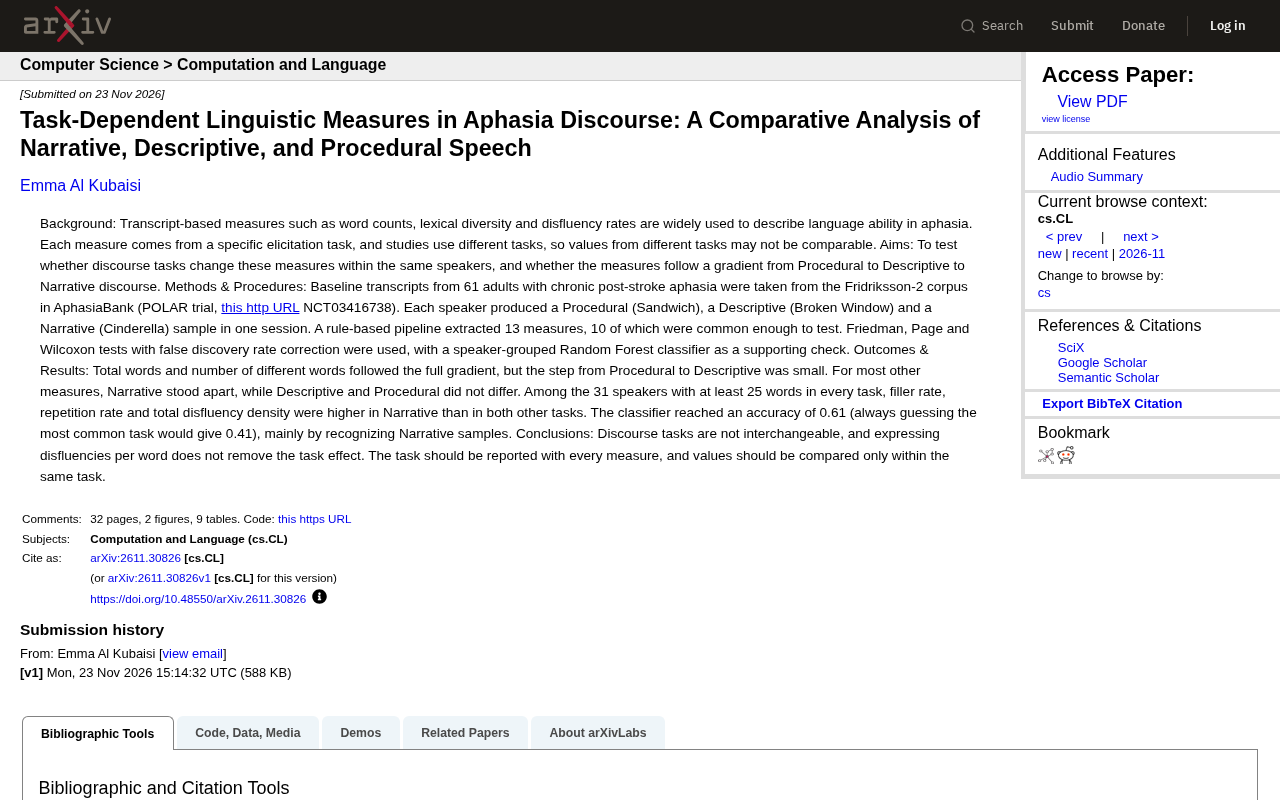
Aphasia Discourse Analysis: Language Metric Differences Across Tasks
A study of 61 adults with aphasia found that narrative, descriptive, and procedural discourse tasks yield non-interchangeable language metrics. Total words and lexical diversity show a gradient; disfluency is higher in narrative tasks. Each metric must be labeled by task type and compared only within the same task.
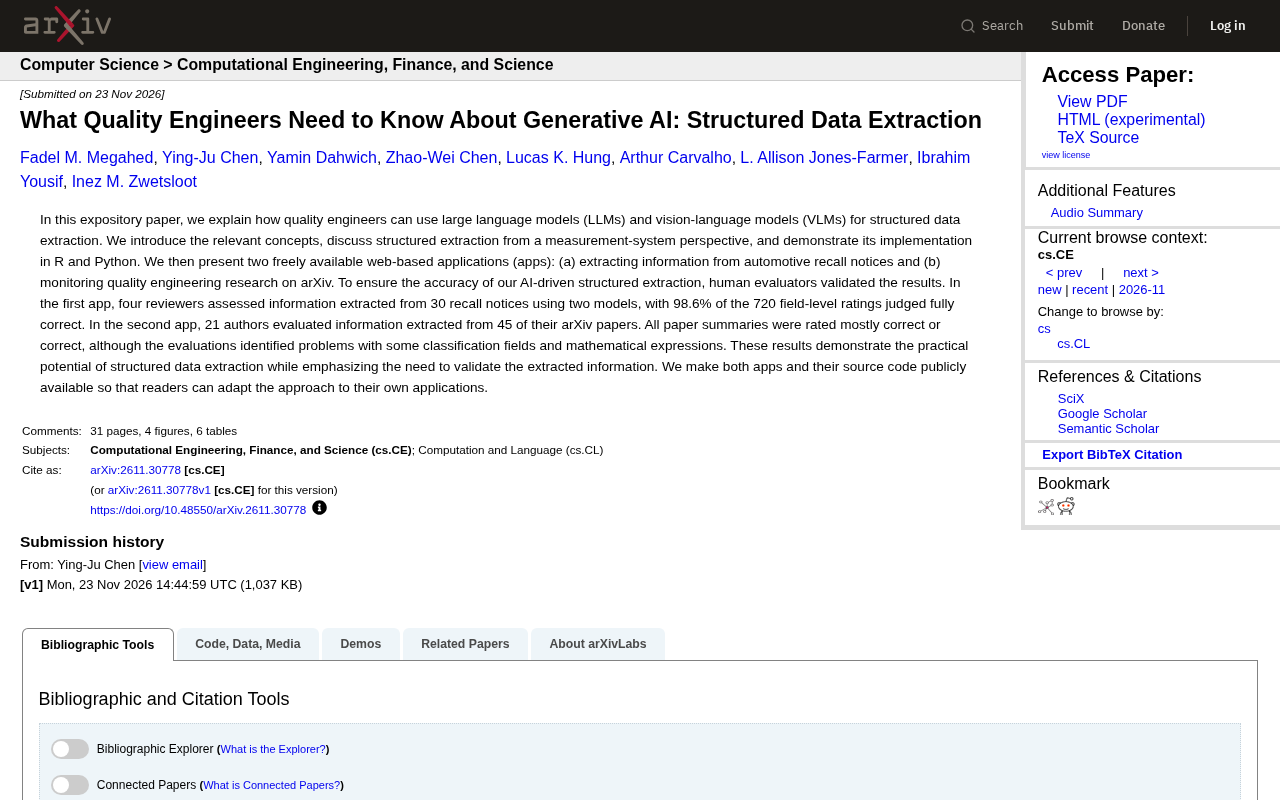
Must-Read for Quality Engineers: A Practical Guide to Structured Data Extraction with Generative AI
A paper shows how quality engineers use LLMs and VLMs for structured data extraction, validated through two web apps, with R and Python implementations.

CocoonBench: Can Multilingual Search Agents Break Out of the Language Information Cocoon?
CocoonBench evaluates whether multilingual search agents can escape the language information cocoon. Tests show 10 advanced models range from 33.8% to 69.7% accuracy, with the strongest system still below 70%, revealing key challenges in connecting cross-lingual evidence.