Inside the Roundtable Discussions at TechCrunch Founder Summit 2026
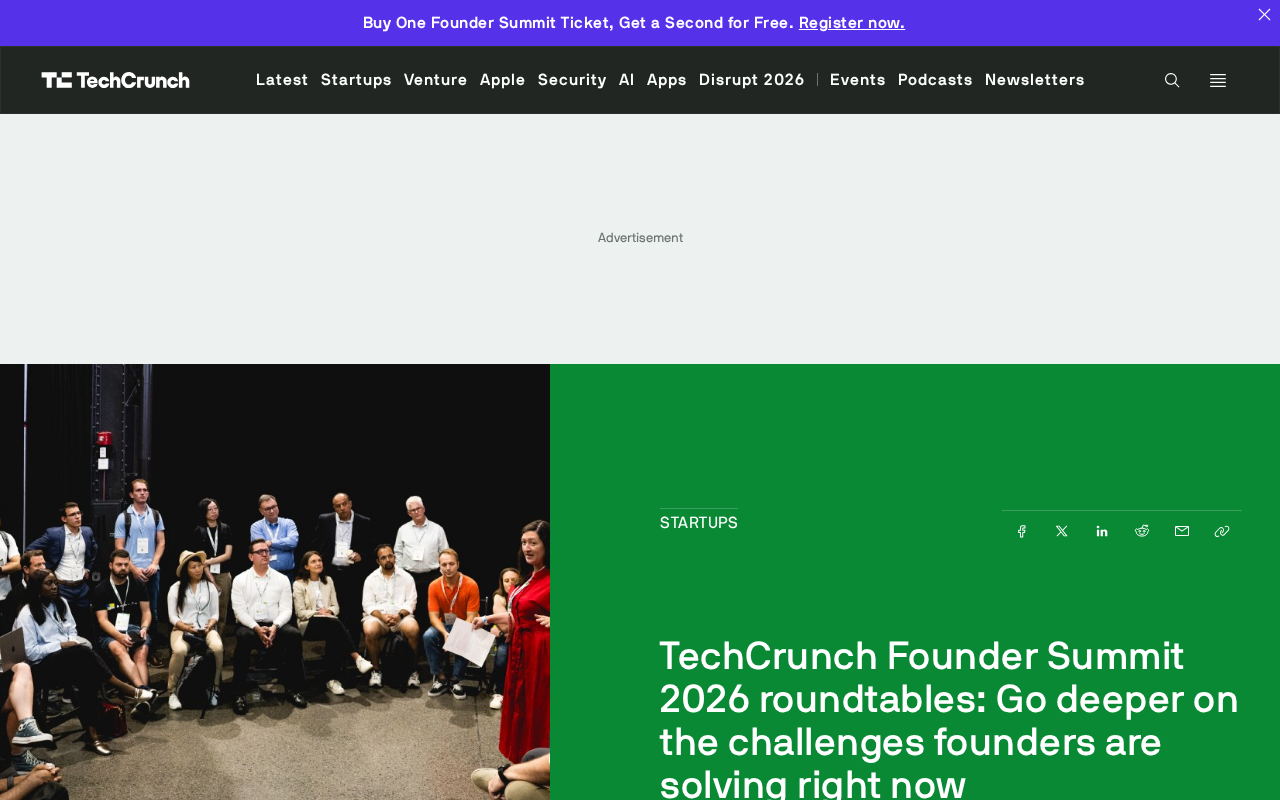
TechCrunch Founder Summit 2026 takes place November 4 in Boston, featuring small roundtables for in-depth exchange.
TechCrunch has announced that Founder Summit 2026 will be held on November 4 at SoWa Power Station in Boston. The one-day event targets founders, investors, and operators, with five components: candid conversations, hands-on workshops, live pitch sessions, networking events, and small roundtable meetings. Unlike large keynotes, roundtables have limited capacity, emphasizing that every participant can speak and ask questions, focusing on the real challenges founders are currently solving. The Boston location, backed by the local hard tech and life sciences ecosystem, suggests topics may lean toward practical issues in technology-driven entrepreneurship. Specific roundtable themes and guest lists have not yet been announced; attendees are advised to prepare their 1-2 most pressing questions in advance.
TechCrunch has announced that Founder Summit 2026 will take place on November 4 at SoWa Power Station in Boston. This one-day event brings together founders, investors, and operators, offering attendees opportunities for deeper connection through candid conversations, hands-on workshops, live pitch sessions, networking events, and smaller-scale roundtable discussions.
Why Roundtables Are the Core Highlight
Unlike large keynote presentations, roundtable discussions keep participant numbers small, giving everyone a chance to speak and ask questions. TechCrunch emphasizes in its event description that these roundtables are "designed for deeper discussion." This means founders can bring the real challenges they're currently working through and engage in targeted conversations with peers and investors, rather than passively listening to speakers on stage.
From the event's positioning, Founder Summit is not simply a conference but a "community-style" gathering for entrepreneurs. Boston is a major hub for biotech, healthcare, and academic research, and the industrial-conversion venue SoWa Power Station also suggests the event aims to create a pragmatic, informal atmosphere.
What Attendees Can Expect
According to official information, the full-day agenda includes several core components:
- Candid conversations: Open discussions between founders and investors, likely covering real challenges such as the fundraising environment and team building.
- Hands-on workshops: Focused on actionable operations and growth methods rather than theoretical frameworks.
- Live pitch sessions: A stage for entrepreneurs to showcase projects and receive immediate feedback.
- Networking events: Connecting peers, potential investors, and partners.
- Small roundtables: In-depth discussions centered on the challenges founders are currently solving.
The intent behind this combination is clear: breadth (networking and pitches) alongside depth (roundtables and hands-on workshops). For founders from early stage to growth stage, the value of roundtable discussions lies in gaining multiple perspectives on specific problems.
Significance for the Startup Ecosystem
TechCrunch's Founder Summit reflects the trend of tech media extending into offline community operations. Amid fluctuating fundraising environments and rapidly shifting startup sectors, founders need more than news—they need offline settings where they can have direct conversations and build trust. Boston's startup ecosystem is known for hard tech and life sciences, differing from Silicon Valley-style pure software startups. This may mean the event's topics lean toward practical issues in technology-driven entrepreneurship.
Official roundtable themes and guest lists have not yet been announced, but based on the phrase "challenges founders are solving," topics will likely revolve around high-frequency pain points such as fundraising strategy, product-market fit, team scaling, and regulatory compliance.
Product-Market Fit (PMF) is the most critical validation goal for startups in the 0-to-1 stage—it means the product precisely meets a sufficiently large market need that is willing to pay. Silicon Valley investor Marc Andreessen defined it in 2007 as "being in a good market with a product that can satisfy that market." Measuring PMF typically involves retention rates, organic growth, and word-of-mouth rather than revenue alone. For early-stage founders, blindly scaling the team or spending on growth before finding PMF is often a waste of resources; in roundtable discussions, this topic frequently appears alongside user interview methods and minimum viable product (MVP) iteration cadence.
The startup logic of hard tech and life sciences differs structurally from pure software entrepreneurship. Hard tech companies typically involve prototyping, supply chains, long R&D cycles, and high capital expenditure, while life sciences require preclinical research, clinical trials, and regulatory approval (such as FDA), with timelines often measured in years. These companies rely more on government research grants, industrial capital, and university technology transfer rather than the traditional VC fast-return model. Boston, leveraging MIT, Harvard, and surrounding labs, has formed an ecosystem of "academic成果—incubator—industry collaboration," so related roundtable topics are more likely to focus on technology validation, compliance pathways, and long-cycle fundraising.
Details Worth Noting
The venue, SoWa Power Station, is a well-known event space in Boston with an open layout suitable for multiple small discussions running simultaneously. The November 4 timing also avoids the dense schedule of major tech conferences, making it easier for East Coast founders to attend.
For founders planning to attend, it's advisable to identify the 1-2 most pressing issues they're currently facing in advance, so they can make efficient use of networking time during roundtables. TechCrunch typically publishes the agenda and registration information before the event; following its official website is the best way to get the latest updates.
One-line Summary
TechCrunch Founder Summit 2026 takes place November 4 in Boston, featuring small roundtables for in-depth exchange.
Paragraph Summary
TechCrunch has announced that Founder Summit 2026 will be held on November 4 at SoWa Power Station in Boston. The one-day event targets founders, investors, and operators, with five components: candid conversations, hands-on workshops, live pitch sessions, networking events, and small roundtable meetings. Unlike large keynotes, roundtables have limited capacity, emphasizing that every participant can speak and ask questions, focusing on the real challenges founders are currently solving. The Boston location, backed by the local hard tech and life sciences ecosystem, suggests topics may lean toward practical issues in technology-driven entrepreneurship. Specific roundtable themes and guest lists have not yet been announced; attendees are advised to prepare their 1-2 most pressing questions in advance.
Related articles

WorkBuddy Agent in Action: From AI Q&A to Automated Office Work
WorkBuddy is Tencent's AI agent desktop workbench that reads local files, operates office software, executes multi-step tasks, and runs on schedules. This article explains its core features, key differences from traditional AI tools, and use cases.

Anthropic Research: LLMs Make Formal Software Verification at Scale Possible
Anthropic Frontier Red Team research shows LLMs can generate formal proofs at the RISC-V assembly level for over 100 real open-source libraries, covering 123 OSS-Fuzz libraries and 239 entry points, totaling about 180 million lines of Rocq proofs and finding hundreds of bugs. The article analyzes specification generation, the proof pipeline, trust boundaries, and cost reduction paths.

Prompt Engineering for Beginners: From Writing Prompts to Building AI Collaboration Skills
From the four functions of prompts to the six-step prompt engineering process, this article systematically covers core concepts, business value, and three layers of limitations to help beginners build a complete cognitive framework for prompt engineering.