Insight Partners' Devin Parekh: Why He's Betting on Diversification Instead of OpenAI
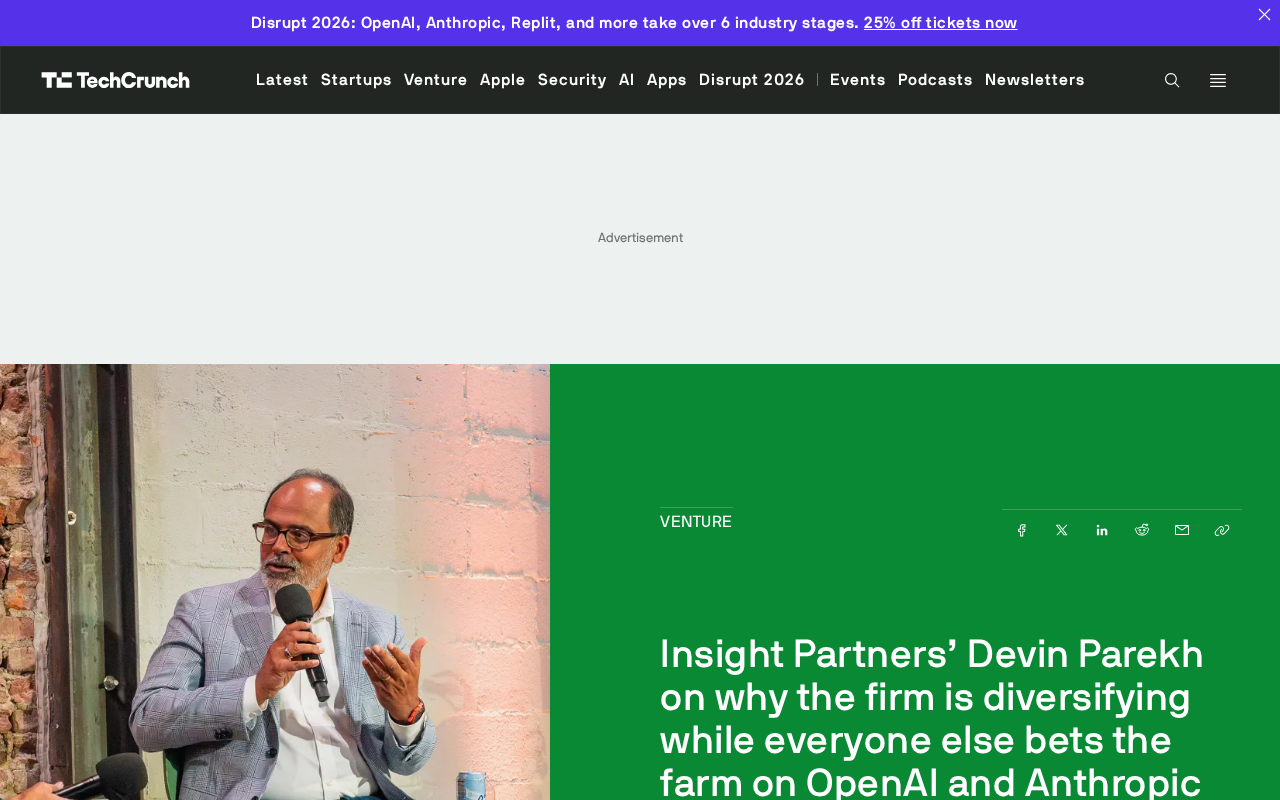
Insight Partners' Devin Parekh makes the case for AI portfolio diversification over concentrated bets on OpenAI and Anthropic.
Insight Partners, managing roughly $90 billion in assets, is deliberately avoiding a concentrated bet on OpenAI or Anthropic in favor of a diversified AI investment strategy. Partner Devin Parekh openly discussed losing the Legora deal to General Catalyst, and said he's comfortable holding stakes in competing AI labs as a hedge against technical uncertainty. In his view, AI value creation extends well beyond the foundation model layer into applications and vertical markets. For a fund of this size, stable and controlled risk exposure matters more than chasing a single breakout name — a measured, contrarian perspective worth heeding in today's overheated AI investment climate.
A Contrarian Investment Thesis
While the venture capital world races to pour money into OpenAI and Anthropic, Insight Partners — which manages roughly $90 billion in assets — has chosen a different path. Partner Devin Parekh recently went on record to explain the firm's deliberate strategy of staying diversified amid the AI wave, even as peers pile into the leading foundation model companies.
At a time when many firms are going all-in on top-tier model providers, Insight Partners has remained notably measured. Parekh acknowledged that this approach may mean missing out on certain high-profile deals in the short term — but from a long-term risk management perspective, he argued that a diversified allocation is the more prudent choice.
Owning the Loss: A Candid Take on Missing Legora
Rarely do investors speak openly about deals that got away. Parekh was candid about losing the Legora deal to rival General Catalyst. In today's fiercely competitive AI investment landscape, the most sought-after companies often attract multiple top-tier firms simultaneously — and winning a marquee deal depends not just on capital, but on speed of conviction and the strength of a firm's ecosystem.
On the loss, Parekh was refreshingly pragmatic: investing is a game of probabilities, and no firm wins every deal. That kind of candor is uncommon in a VC culture that typically leads with its wins.
Holding Stakes in Competing AI Labs — and Being Fine With It
Another noteworthy stance from Parekh: he has no problem holding equity in AI labs that directly compete with one another. Under traditional investment logic, backing rivals within the same portfolio is often seen as a conflict of interest to be avoided. But in the fast-moving AI space, this "both sides of the bet" approach reflects a hedge against the deep uncertainty of which technical path will ultimately prevail.
No one can predict with certainty which AI lab will come out on top. Rather than making a single concentrated call, Parekh prefers to back multiple credible players. The underlying thinking treats the foundation model layer as a long race with an unclear finish line — and spreading positions across competitors reduces the damage if any single bet goes wrong.
Discipline at $90 Billion Scale
As a firm managing $90 billion in assets, Insight Partners' every move carries market weight. That sheer scale creates a fundamentally different risk appetite compared to smaller funds that can afford to swing for the fences on a single concentrated bet.
For large funds, consistent returns and manageable risk exposure tend to matter more than chasing any one unicorn. Parekh's emphasis on diversification is, in many ways, simply the natural expression of responsible capital management at scale. When market sentiment is euphoric and valuations keep climbing, maintaining independent judgment and investment discipline becomes especially valuable.
What This Means for the Industry
Insight Partners' position offers a useful counterpoint to an AI investment market running hot. The leading foundation model companies undeniably command powerful technological moats and enormous market attention — but whether their valuations have already priced in future growth remains an open question.
Parekh's strategy is a reminder that value creation in AI isn't confined to the foundation model layer. The application layer, tooling layer, and vertical-specific markets all hold meaningful opportunity. In an environment where everyone is chasing the same handful of names, a differentiated allocation strategy may be exactly what it takes to navigate through a full market cycle. That calm, contrarian thinking is worth serious consideration for anyone investing in AI today.
Related articles
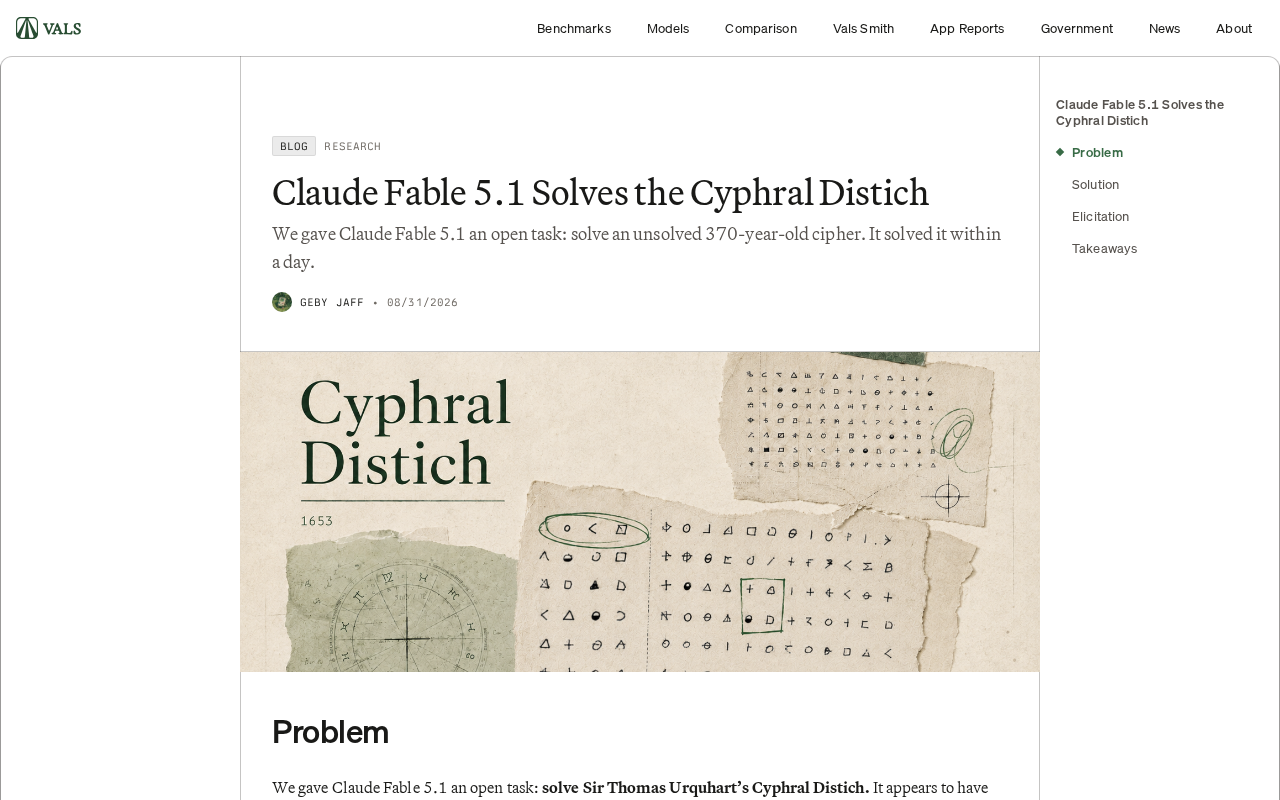
Did AI Crack a 370-Year-Old Cipher? The Controversial Claude Fable 5.1 Claim
Hacker News buzz: AI model Claude Fable 5.1 allegedly cracked the 370-year-old Cyphral Distich cipher. We break down the claim, AI's real cryptanalysis potential, and why skepticism is warranted.
GPT-6 Astra Plays Anno 117 Autonomously: A 1,000-Resident City Built in 6 Hours with Zero Instructions
GPT-6 Astra autonomously played Anno 117: Pax Romana for 6 hours using only screenshots and mouse control, building a 1,000+ resident city across 4 islands with no plugins or guides.
Is AI Destroying the World? A Look at …
Is AI Destroying the World? A Look at the Backlash Against Tech Hype
A Hacker News post titled "AI is destroying the world" sparks debate. We unpack the real concerns: content pollution, job disruption, and AI's massive energy costs.