IPO Priced at $83 Per Share, Company to List on Nasdaq Tomorrow
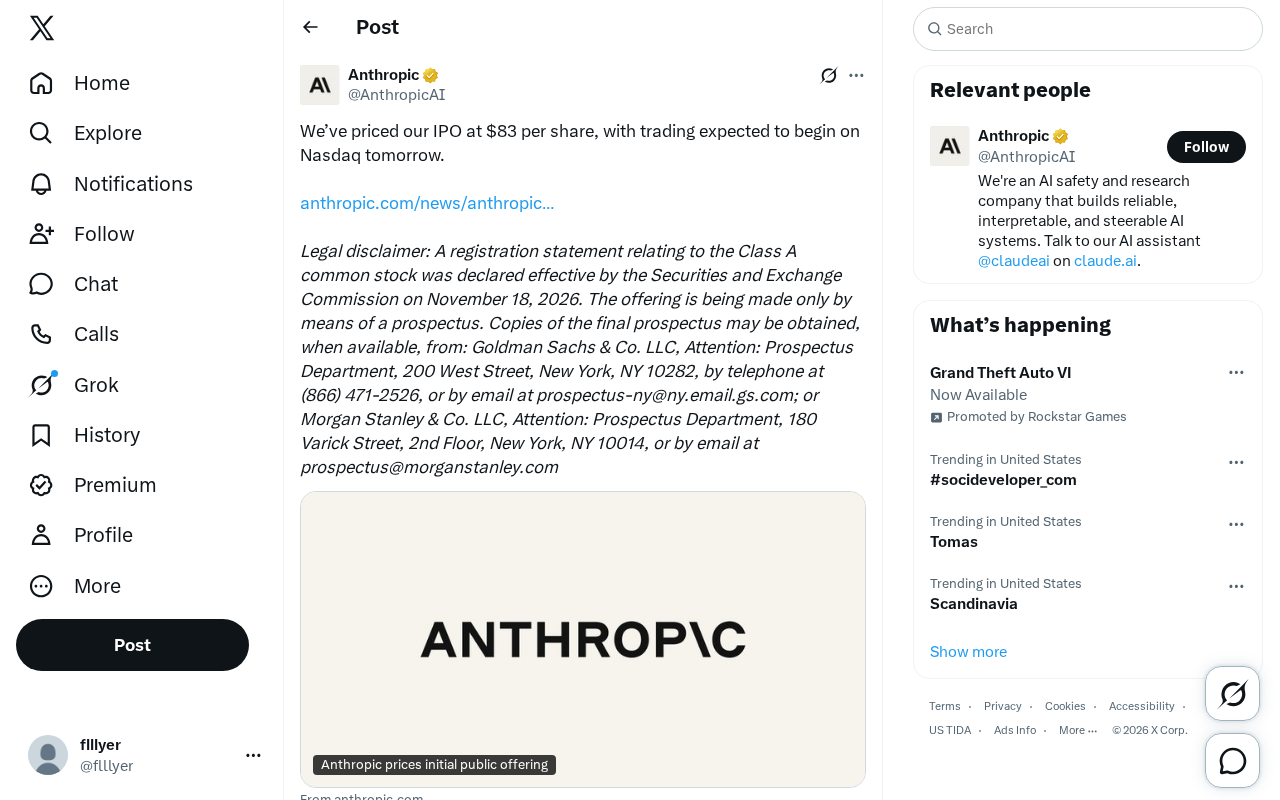
A company priced its IPO at $83 per share, listing on Nasdaq tomorrow, underwritten by Goldman Sachs and Morgan Stanley.
A company announced its initial public offering was priced at $83 per share, with Class A common stock expected to begin trading on Nasdaq tomorrow. The registration statement was declared effective by the SEC on November 18, 2026. The offering is underwritten by Goldman Sachs and Morgan Stanley and conducted strictly by prospectus, with the final version available through the underwriters' prospectus departments. The article highlights three observation windows: the deviation of the first-day opening price from the offering price, trading volume and price stability in subsequent days, and selling by original shareholders after the lock-up period ends. It also emphasizes that the original information did not disclose the company's business model, financial data, use of proceeds, or valuation, and investment decisions should be based on the SEC-filed prospectus.
IPO Pricing Finalized: $83 Per Share
A company announced via its official social media that its initial public offering (IPO) has been priced at $83 per share, with shares expected to begin trading on Nasdaq tomorrow. The news marks the final stage of the company's months-long listing process and adds a noteworthy deal to a recently quiet US IPO market.
According to disclosed information, the offering consists of Class A common stock, and the related registration statement was declared effective by the US Securities and Exchange Commission (SEC) on November 18, 2026. This means the issuer has completed the key regulatory compliance procedures and can proceed with the share sale and listing as planned.
Class A common stock is a share class commonly found in US companies with dual-class or multi-class share structures. Under such structures, companies typically divide stock into Class A and Class B (and sometimes Class C), with different classes carrying different voting rights: Class A shares offered to public investors often carry only one vote per share, while Class B shares held by founders or insiders may carry ten votes per share or even higher super-voting rights. The purpose of this design is to allow the founding team to retain control of the company after completing public fundraising and having their equity diluted. For investors, buying Class A common stock means economic rights are aligned with public shareholders, but influence over major matters is relatively limited—a governance feature that should be noted when reading the prospectus.
Underwriting Syndicate and Offering Mechanism
The IPO is underwritten by Goldman Sachs & Co. LLC and Morgan Stanley & Co. LLC. The names of both investment banks appear in the channels for obtaining the final prospectus. As is customary, the lead underwriters handle book-building, demand assessment, and final pricing, and their brand endorsement also reflects, to some extent, the scale of the offering and institutional interest.
The offering is conducted strictly by means of a prospectus. The final prospectus, when available, may be obtained from the Goldman Sachs Prospectus Department (200 West Street, New York, telephone 866-471-2526, email prospectus-ny@ny.email.gs.com) or the Morgan Stanley Prospectus Department (180 Varick Street, 2nd Floor, New York, email prospectus@morganstanley.com). This standardized arrangement is routine for US IPOs and also reminds investors that any investment decision should be based on reading the prospectus.
Book-building is the core mechanism for determining the offering price in a US IPO. During the roadshow, the lead underwriters solicit indications of interest from institutional investors, recording the prices and quantities they are willing to subscribe to, forming an "order book" that reflects the distribution of demand. The underwriters then assess oversubscription multiples at different price levels and negotiate with the issuer to determine the final offering price and allocation plan. This process allows pricing to reflect institutional demand to some extent, but there is also an incentive problem: underwriters may underprice to maintain client relationships, thereby creating first-day gains. The greenshoe option allows underwriters to sell up to an additional 15% of the original offering size when demand is strong, used to stabilize the share price after listing—a common arrangement in IPO transactions.
Timeline and Market Implications
From the effective date of the registration statement to pricing and then listing the next day, the entire process moves quickly. The $83 per share pricing is the final price determined by the issuer and underwriters based on roadshow feedback, typically reflecting the demand range indicated by institutional investors during the inquiry period.
For those watching US new listings, there are three observation windows worth noting: first, the deviation between the opening price on the first day of trading and the offering price, often seen as an immediate thermometer of market sentiment; second, trading volume and price stability in the following few trading days, used to judge whether there is a typical "IPO first-day effect"; third, the selling behavior of original shareholders after the lock-up period ends, which may create periodic pressure on the share price.
The lock-up period refers to a restriction arrangement, typically about 180 days in the US, during which the company's original shareholders, management, and early investors may not sell their shares after the IPO is completed, as agreed in the underwriting agreement. Its purpose is to avoid a concentrated sell-off of a large number of shares hitting the share price in the early stages of listing. Around the expiration of the lock-up period, the market often anticipates potential supply pressure in advance, and the share price may fluctuate; if the unlock scale is large and original shareholders have substantial paper gains, their willingness to sell is stronger, and the risk of a periodic pullback increases accordingly. Some transactions also arrange for underwriters to release some shares early or allow eligible shareholders to sell early; the specific terms should be based on the prospectus disclosure.
Information Disclosure and Investor Reminder
It should be noted that the original information on which this article is based consists only of the pricing and listing arrangements announced by the issuer, and does not include key details such as the company's business model, financial data, use of proceeds, or valuation level. These contents must be based on the prospectus filed with the SEC.
The disclaimer accompanying the original text also emphasizes that the offering is conducted only by means of a prospectus and that the relevant registration statement became effective on November 18, 2026. For investors interested in participating, directly consulting the final prospectus and understanding the risk factors section is a more prudent approach than chasing first-day listing excitement.
The SEC registration statement becoming effective means that the S-1 (or F-1) registration document submitted by the issuer has passed review by the US Securities and Exchange Commission, meets statutory information disclosure requirements, and the securities may be legally offered to the public. The effectiveness of the registration statement does not mean that the SEC has approved or endorsed the company's investment value; its review focuses on the completeness and accuracy of disclosure. After effectiveness, the issuer must provide investors with a final prospectus containing updated financial data, risk factors, use of proceeds, and management discussion. Investors should focus on the risk factors section, related-party transactions, equity structure, and the specific allocation of proceeds—information that is often key to judging whether the offering price is reasonable.
Conclusion
The $83 per share pricing and the Nasdaq listing arrangement constitute the latest chapter in this company's listing story. The underwriting syndicate and compliance procedures are in place; the remaining suspense will be answered by the market after tomorrow's opening.
Related articles
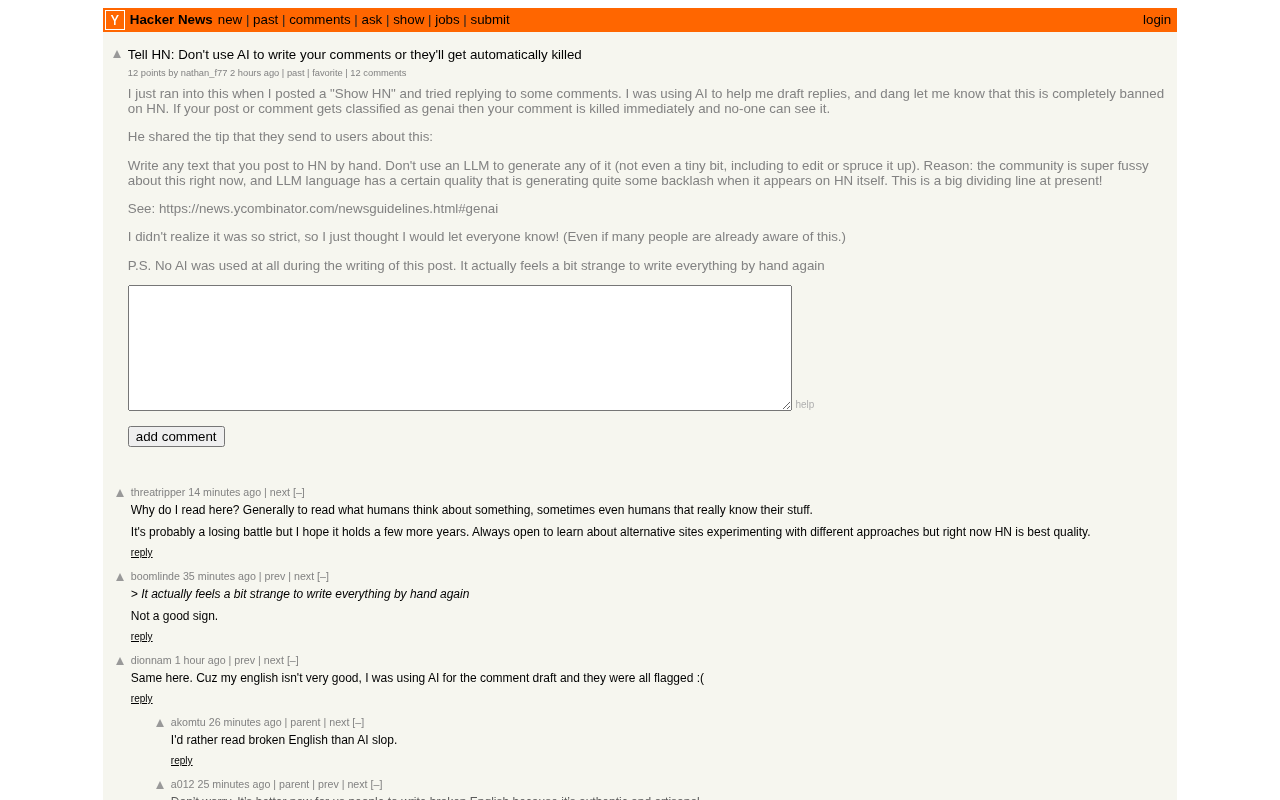
HN Warning: Don't Use AI to Write Comments, or They'll Be Auto-Deleted
Hacker News warns that AI-written comments will be automatically deleted. This article analyzes HN's automated enforcement mechanism, the community's attitude toward AI-generated content, and what it means for creators using AI tools responsibly.

AI Product Manager Systematic Course for Beginners: Three Modules Explained with Pitfall Avoidance Guide
Breakdown of Bilibili's 100-episode AI product manager course: Foundation builds large model and Prompt cognition, Advanced tackles Agent workflows and RAG knowledge bases, Practice completes projects like personal knowledge bases and intelligent customer service. Includes learning roadmap and pitfall avoidance tips.
YOLO Object Detection for Absolute Beginners: Environment Setup and Core Concepts
Learn YOLO object detection from scratch: Python basics, VS Code, Miniconda environment setup. A Bilibili tutorial guides you step by step, with a desktop icon recognition project as your hands-on goal.