IRS Mandates ID.me Login, Sparking Privacy Debate: A Trade-off Between Privacy and Convenience

IRS mandates ID.me for taxpayer identity verification, sparking privacy, terms, and accessibility controversies.
The IRS outsourced identity verification for online tax services to commercial company ID.me, requiring taxpayers to register and complete facial recognition to access records and payments. consumerrights.wiki reviewed its terms and found opaque biometric data retention, third-party sharing authorization, and mandatory arbitration/liability waiver clauses. In Hacker News discussions, the community worried about irreversible data breaches, lack of alternatives, and digital barriers for disabled and elderly users. The article argues this reflects governance challenges in government digital identity infrastructure, requiring improvements in terms transparency, genuine alternatives, and independent privacy assessments.
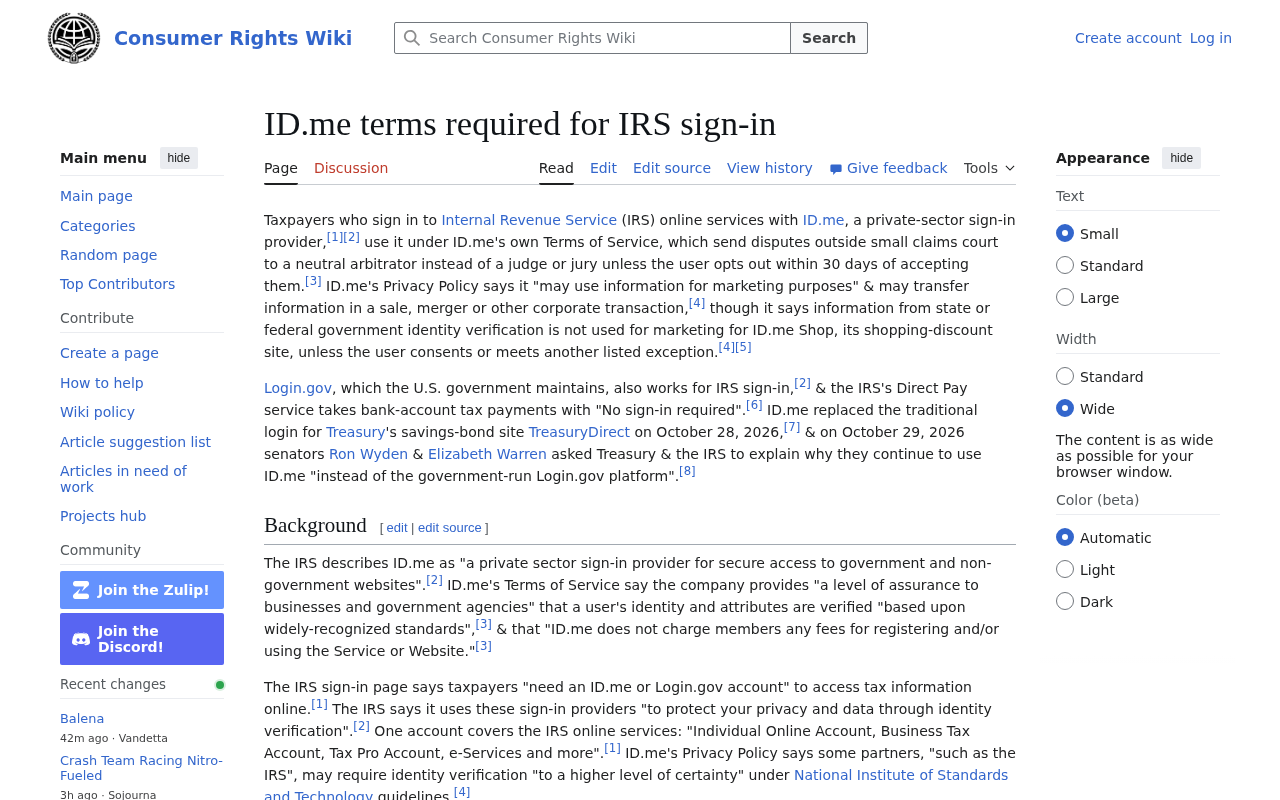
The U.S. Internal Revenue Service (IRS) requires taxpayers to use an ID.me account to log in to its online services, a policy that has sparked heated discussion on the tech community Hacker News (original link at consumerrights.wiki; the HN post received 316 points and 138 comments). On the surface, this is just a change in login method; but a closer look at ID.me's terms of service and biometric data practices reveals that the controversy goes far beyond "one extra verification step."
Policy Background: From Username-Password to Third-Party Identity Verification
The IRS is phasing out legacy login methods and outsourcing identity verification to ID.me. To access tax records, make payments, or view historical filings, taxpayers must register an ID.me account and complete identity verification. ID.me is a commercial identity verification company whose core services include document upload, facial recognition, and real-time selfie matching.
Supporters argue that centralized identity verification can reduce fraud and identity theft, especially in highly sensitive scenarios like taxes. Opponents point out that handing the gateway to public services over to a private company inherently entails a transfer of power and the risk of a single point of failure.
Biometric Data refers to information extracted from human physiological or behavioral characteristics through technical means for identity recognition, including facial geometry, fingerprints, iris patterns, voiceprints, etc. Unlike passwords, biometric characteristics cannot be changed—once leaked, users cannot "reset" their face like they would a password. The Illinois Biometric Information Privacy Act (BIPA) is one of the strictest biometric privacy laws globally, requiring companies to obtain written consent before collection and to disclose retention periods, with violators facing potentially high damages. ID.me's facial recognition involves comparing a user's selfie with their ID photo; the facial template generated in this process is a typical example of biometric data, and its storage location, encryption method, and deletion mechanism are central to privacy assessments.
Key Controversies: "Permanent Authorization" and Data Sharing in the Terms
The consumerrights.wiki entry focuses on ID.me's terms of service. According to the page, by agreeing to the terms, users may allow ID.me to collect and share more information than is necessary for tax verification itself. Specific controversies include:
- Retention of biometric data: Facial recognition data is sensitive personal information, and the terms are insufficiently transparent about its storage duration and secondary use;
- Third-party sharing: The terms permit sharing data with partners or law enforcement agencies under certain circumstances, making it difficult for users to track data flows;
- Mandatory arbitration and liability waiver: Users give up certain legal remedies, increasing the cost of dispute resolution.
These terms are not directly drafted by the IRS, yet they are imposed on taxpayers through a "must accept to use the service" mechanism. In Hacker News comments, many users expressed dissatisfaction with "no real alternative"—without registering for ID.me, one cannot complete tax-related operations online.
Mandatory Arbitration Clause is a common dispute resolution mechanism in service contracts that requires users to waive their right to sue in court and instead resolve disputes through private arbitration. Such clauses are often accompanied by a Class Action Waiver, meaning users cannot join with other affected individuals to file a class action lawsuit. For consumers, arbitration proceedings tend to be more costly and less transparent, and arbitration outcomes are usually not public, making it difficult to establish precedents that constrain corporate behavior. In the United States, the enforceability of such clauses has long been disputed; some state courts have rejected them on grounds of "unconscionability," but the federal level generally tends to uphold them. In ID.me's case, mandatory arbitration means that users harmed by data breaches or abusive terms have significantly narrowed avenues for seeking redress.
Feedback from the Tech Community: Privacy, Accessibility, and Alternatives
In the HN discussion, both supportive and opposing voices were present. Some comments argued that outsourcing identity verification is difficult to avoid in reality, and the key lies in regulation and transparency; others worried that biometric data, once leaked, cannot be revoked, and that ID.me's business model gives it an incentive to expand data uses.
Accessibility issues were also raised: facial recognition is less friendly to some people with disabilities, the elderly, or users with limited device conditions, potentially creating new digital barriers. Additionally, some comments suggested exploring government-led decentralized identity solutions, or at least providing non-biometric alternative verification paths.
Broader Implications: The Governance Challenge of Digital Identity Infrastructure
The IRS-ID.me case is not an isolated one. In the digitalization of government services, private identity verification vendors are playing an increasingly important role. This brings a set of structural tensions: efficiency versus privacy, security versus accessibility, outsourcing costs versus public accountability.
From a governance perspective, improvements are needed in at least three areas: making terms transparent (explaining data uses in plain language), providing genuinely usable alternatives (rather than nominal options), and conducting independent privacy impact assessments. For ordinary taxpayers, understanding the terms and paying attention to data practices are among the few proactive protective measures available under the current framework.
The value of this discussion lies in reminding us: when the login button connects to commercial terms and biometric databases, the cost of "convenience" needs to be carefully calculated.
Decentralized Identity (DID) is a technical architecture that allows users to control their own identity credentials, as opposed to the current centralized model where accounts are issued and managed by platforms. Its core is that users hold Verifiable Credentials and use cryptography to prove necessary information to service providers without handing over complete identity data to a single intermediary. For example, a user could prove only the fact that they have "passed tax identity verification" without exposing facial images to the IRS or ID.me. This direction is seen as a potential path to mitigate "single point of failure" and "excessive data collection," but it faces implementation obstacles such as interoperability standards, key management user experience, and regulatory recognition, and is currently still in the pilot stage.
One-line Summary
IRS mandates taxpayers to verify identity via ID.me, sparking controversies over privacy, terms, and accessibility.
Paragraph Summary
The U.S. Internal Revenue Service outsourced identity verification for online tax services to commercial company ID.me, requiring taxpayers to register and complete facial recognition and other checks to access records and make payments. A consumerrights.wiki review of its terms of service found opaque retention periods for biometric data, authorization for third-party sharing, and clauses on mandatory arbitration and liability waiver. In Hacker News discussions, the community worried about irreversible data breaches, the lack of alternatives, and digital barriers for disabled and elderly users. The article argues that this reflects the governance challenges of government digital identity infrastructure, requiring improvements in terms transparency, genuine alternative options, and independent privacy assessments.
Related articles

GLM-5.4 Loop Transformer: 75B Parameters Deliver Trillion-Scale Reasoning
GLM-5.4 turns a 750B pretrained model into a Loop Transformer—28 layers looped twice, zero new parameters, AIME 25 up 11.3, outputs 14% shorter, reasoning moves into implicit depth.

Landlord's Comeback: Terminal Liver Cancer Survivor Relies on Tenant Wish System to Stay Alive
A Bilibili short drama follows Wu Youfu, who after transmigrating is diagnosed with terminal liver cancer and binds a Wish System, fulfilling three female tenants' wishes to earn lifespan rewards and unlock mind-reading, invisibility, and other skills as his condition improves from terminal to mid-stage.

Viral Griddle-Cake Stand Sparks Rent Doubling: Who Really Owns the Traffic?
In a viral Bilibili video, griddle-cake vendor Lao Bai makes a whole street famous, then the landlord doubles rent to 200,000. This article examines the dispute over offline traffic ownership: where is the boundary between property rights and individual creativity?