Is AI Becoming a Climate Disaster? A Deep Dive into the Carbon Cost of Compute Expansion
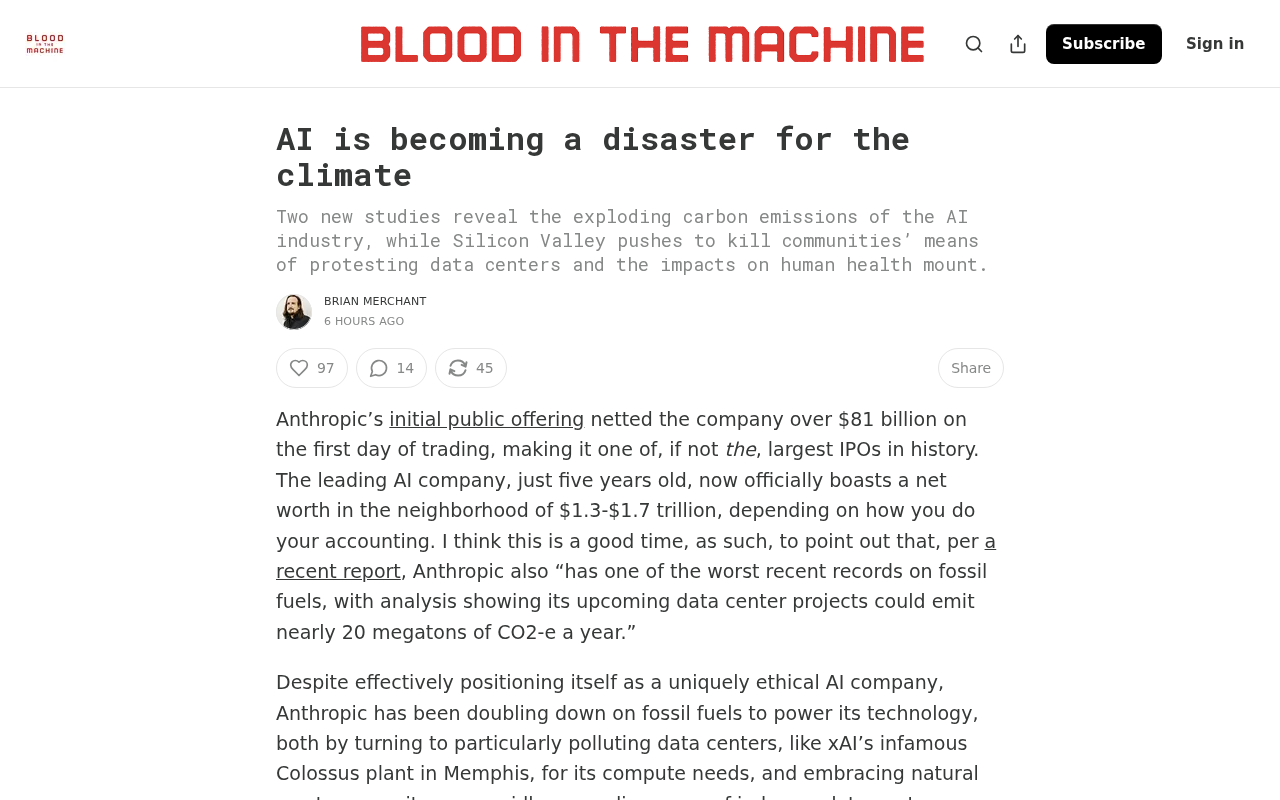
AI compute expansion brings dual energy consumption from training and inference, and the climate cost cannot be ignored.
Starting from a Hacker News discussion, the article examines the climate cost behind the AI boom. AI's carbon footprint stems from both the high-power peak load of training and the persistent baseline load of inference, the latter accumulating rapidly as applications spread. High-density GPU clusters bring dual pressure from power and cooling, while concentrated data center siting creates regional grid bottlenecks and water competition. The article explores efficiency optimization and institutional arrangements as possible paths to more sustainable AI growth.
Introduction: When the AI Boom Meets the Climate Crisis
A discussion on Hacker News titled "AI is becoming a disaster for the climate" drew attention. Although the post itself contained limited information, the topic touches on one of the sharpest contradictions in the current AI industry: as we keep expanding compute in pursuit of more powerful models, are we doing so at the expense of the climate?
This is not a question that can be easily avoided. From training hundred-billion-parameter large models to supporting billions of inference requests every day, AI's energy consumption is shifting from a fringe topic to a reality that data center operators and grid planners must confront head-on.

The Energy Bill Behind Compute Expansion
The Dual Pressure of Training and Inference
Training large models requires thousands or even tens of thousands of GPUs running continuously for weeks, consuming electricity equivalent to that of a small town. What is more insidious is the ongoing energy consumption during inference—once a model is deployed, every user request means one forward pass. As AI applications permeate everyday scenarios such as search, office work, and coding, total energy consumption on the inference side is accumulating rapidly.
This "train once, infer billions of times" pattern means AI's carbon footprint is no longer a one-time event but a persistent infrastructure burden.
Forward pass refers to the unidirectional computation process in which input data passes through each layer of a neural network in sequence to produce an output, without involving backpropagation or parameter updates. A single inference request typically executes only one forward pass (autoregressive generative models execute one per token), so the per-request overhead is far smaller than training. However, because requests number in the billions, the cumulative energy consumption cannot be ignored. Understanding this distinction helps grasp the energy structure of "train once, infer billions of times": training is a centralized, high-power-density peak load of limited duration, while inference is a distributed, long-term baseline load that grows linearly with user scale—the two have fundamentally different patterns of impact on the grid and carbon footprint.
The Cooling Dilemma of Data Centers
High-density GPU clusters bring not only electricity consumption but also enormous cooling demands. Traditional air-cooling solutions are already struggling as per-rack power density continues to climb. Although liquid cooling can improve energy efficiency, it is expensive to deploy and requires long retrofitting cycles. Data center operators are forced to weigh expansion speed against energy efficiency optimization.
Per-rack power density refers to the total power consumption of all equipment in a single rack (GPU servers, switches, etc.), usually measured in kilowatts (kW), and is a key metric for assessing data center cooling difficulty. Traditional CPU racks typically have densities in the 5–10 kW range, which air cooling can handle; AI racks equipped with high-power GPUs can reach tens or even over 100 kW, greatly increasing heat generated per unit volume. The specific heat capacity and flow rate of air are no longer sufficient to effectively remove the heat. This is precisely why liquid cooling (cold plate or immersion) has become an inevitable choice: liquids have far higher thermal conductivity and heat-carrying capacity than air, but piping retrofits, coolant maintenance, and initial investment significantly raise total cost of ownership—and also mean that energy efficiency upgrades in existing data centers often lag behind compute expansion.
Overlooked Hidden Costs
Grid Pressure and Regional Impacts
AI data centers tend to be located in areas with lower electricity prices and superior network conditions, but the grid's spare capacity in these regions may not match the sudden surge in load. In some areas, new data centers already have to queue for grid interconnection, and this bottleneck may in turn drive up electricity costs for local residents and businesses.
Interconnection queue refers to the approval and engineering process that new or expanded electricity-consuming facilities must go through before connecting to the grid, including transmission capacity assessment, interconnection impact studies, and necessary infrastructure upgrades. In markets such as the United States, this queue has become severely backlogged in recent years due to a surge in renewable energy projects and data center applications, with wait times that can last for years. For AI data centers, this means that even if siting, funding, and equipment are in place, launch may be delayed because sufficient power cannot be obtained in time. This bottleneck not only constrains the pace of expansion but also affects regional electricity prices through capacity competition, creating an implicit tug-of-war between data center load and residential and industrial electricity use.
The Invisible Consumption of Water Resources
Beyond electricity, the water consumption of data center cooling systems also deserves attention. In arid regions, large-scale data centers' water use may compete with local agricultural and domestic water needs—an environmental impact dimension that is often underestimated in discussions of AI energy consumption.
Evaporative cooling is a commonly used low-cost cooling method in data centers that lowers equipment room temperatures through the heat absorption of water evaporation. It offers high energy efficiency but continuously consumes water resources, and water treatment and discharge add further environmental burdens. Its water consumption is usually measured by WUE (water usage effectiveness, liters/kWh), and evaporatively cooled data centers have significantly higher WUE than closed-loop liquid cooling or air cooling solutions. In arid or semi-arid regions, large-scale water withdrawal may directly compete with agricultural irrigation and domestic water use, exacerbating local water stress. As a result, water footprint is gradually becoming as important as carbon footprint in evaluating the environmental externalities of AI infrastructure, yet it is still overlooked in most energy consumption discussions.
The Industry's Dilemma: Can Growth and Sustainability Coexist?
Tech companies are not unaware of this problem. Several leading firms have pledged to use renewable energy and match clean power for their data centers, but the real challenge is that there is a natural mismatch between the intermittency of renewable energy and the continuity of AI loads, while energy storage and green power trading mechanisms are not yet mature.
Another contradiction lies in competitive pressure. In the race for model capability, no company is willing to slow its iteration speed due to energy efficiency constraints, which means "green AI" often takes a back seat to performance metrics in terms of business priority.
Possible Paths Forward
From a technical perspective, efficiency optimization methods such as model distillation, quantization, and sparsification can reduce inference costs without significantly sacrificing performance; specialized chips and better scheduling strategies can also increase effective compute per unit of energy. From an institutional perspective, energy efficiency disclosure, the establishment of carbon footprint accounting standards, and coordinated planning between the grid and data centers are all necessary conditions for making AI growth more sustainable.
Conclusion
The climate impact of AI is not a black-and-white judgment but a balancing act that requires continuous calibration. Although this discussion on Hacker News was brief, it points to a long-term issue the industry cannot avoid: when compute becomes a new factor of production, its environmental externalities must be incorporated into cost accounting rather than obscured by growth narratives.
One-line Summary
AI compute expansion brings dual energy consumption from training and inference, and the climate cost cannot be ignored.
Paragraph Summary
Starting from a discussion on Hacker News, the article examines the climate cost behind the AI boom. The core argument is that AI's carbon footprint is not a one-time event but consists of both the high-power peak load of training and the persistent baseline load of inference, with the latter accumulating rapidly as applications proliferate. High-density GPU clusters bring dual pressure from electricity and cooling; technologies such as liquid cooling can improve energy efficiency but are costly. The concentration of data center siting also creates regional grid interconnection bottlenecks and water resource competition—hidden costs that are often underestimated. The industry faces a dilemma between growth and sustainability: the intermittency of renewable energy mismatches AI's continuous load, while competitive pressure causes energy efficiency constraints to give way to performance metrics. The article concludes that efficiency optimization methods such as model distillation and quantization, together with institutional arrangements such as energy efficiency disclosure and carbon accounting standards, are potential paths toward more sustainable AI growth.
Related articles
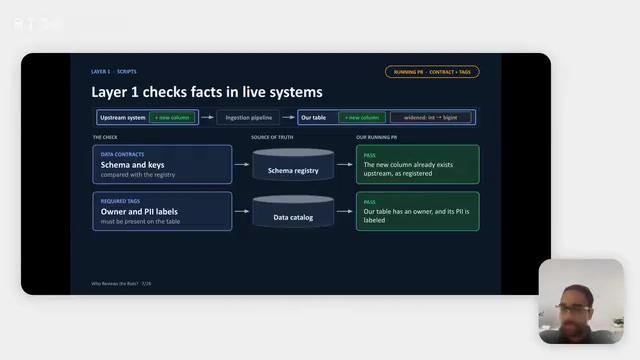
Robinhood's Hybrid AI Reviewer: 60% of Data PRs Auto-Merge
Robinhood's data platform team shares a hybrid AI PR reviewer: deterministic scripts verify facts, AI Agents judge contextual risk, and humans keep key decisions. About 60% of data pipeline PRs merge without human review, cutting review workload ~75%, saving ~132 engineering hours monthly, and reducing related incidents ~30%.

Making Marketing Videos with Claude Code Is More Efficient Than AI Video Generation
Generate marketing videos programmatically with Claude Code—more flexible and cheaper than AI video generators. Reference a style, generate a storyboard, output content as code, and make edits instantly.

Open-Weight Models Are Falling Behind: Three Structural Reasons
A veteran developer uses his platform's usage data and public benchmark experiments to argue why open-weight models are falling behind closed-source frontier models.