Is AI Dependency Eroding Programmers' Core Skills? A Deep Dive into the Risk of Skill Atrophy
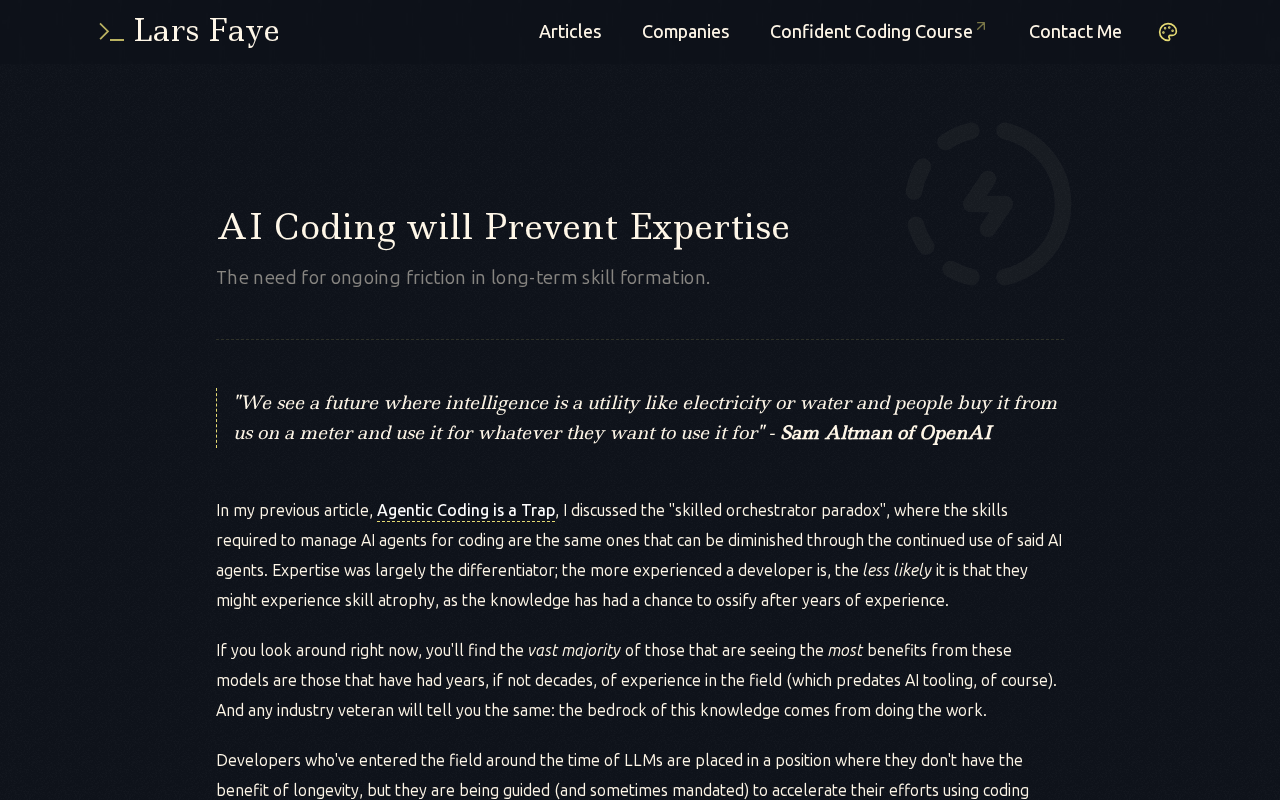
Examining how AI coding tool dependency may erode programmers' core skills and what the industry can do.
A viral Hacker News post asks whether reliance on AI coding tools like GitHub Copilot, Cursor, and Claude Code is degrading programmers' problem-solving, debugging, and foundational skills. This deep dive explores the cognitive science behind skill atrophy, the unique risks facing junior developers, historical parallels with past abstraction layers, and the challenges AI dependency poses for hiring practices and computer science education.
A Take That Sparked Heated Debate
Recently, a post titled Coding expertise is going to collapse from AI reliance ignited a fierce discussion on Hacker News, racking up 447 upvotes and over 452 comments. The topic struck such a wide chord because it hit the software development industry's most sensitive nerve: As AI coding assistants grow increasingly powerful, will human programmers' core skills atrophy as a result?
This isn't alarmism. With the proliferation of AI coding tools like GitHub Copilot, Cursor, and Claude Code, more and more developers have settled into a workflow of "describe the requirement → let AI generate code → copy and paste." GitHub Copilot, co-developed by GitHub and OpenAI and powered by the OpenAI Codex model, provides real-time code suggestions based on code context and comments. Since its commercial launch in 2022, it has amassed over a million paying users. Cursor is an emerging editor that deeply integrates large language models into the IDE, supporting cross-file code comprehension and refactoring — representing the evolution of AI coding tools from "completing snippets" to "understanding entire codebases." Claude Code is a command-line AI coding assistant from Anthropic that can read project files, execute commands, and perform multi-step code modifications directly in the terminal. Together, these three represent the major paradigms of AI-assisted programming today: embedded completion, AI-native IDE, and command-line agent.
On the surface, productivity has improved. But a deeper question has surfaced: if developers are no longer writing and debugging code themselves, can the deep understanding that comes only from repeated practice be preserved?
The Real Mechanisms Behind Coding Skill Atrophy
Why "Use It or Lose It" Applies to Programming
Programming ability is fundamentally a skill that strengthens with practice and deteriorates without it — no different from athletic training or learning a foreign language. "Use it or lose it" has rigorous backing in cognitive science. According to ACT-R cognitive architecture theory, procedural knowledge requires repeated execution to reinforce neural pathways, and skills left unused undergo memory decay. When programmers rely on AI to complete their code over extended periods, they gradually lose training in several critical areas:
- Problem decomposition: Breaking complex problems into executable steps is the core of programming thinking. When AI delivers a complete solution directly, this thought process gets skipped entirely.
- Debugging and troubleshooting: Real growth often happens in the struggle against bugs. If AI handles error fixing, developers lose the opportunity to understand how systems fail.
- Understanding of underlying mechanisms: Mastery of low-level concepts like memory management, algorithmic complexity, and concurrency control requires hands-on, repeated validation in practice — not just "reading" AI-generated code.
Some in the discussion drew a parallel to the effect of GPS navigation on human spatial memory. A 2017 study published in Nature Communications found that London taxi drivers who relied heavily on GPS navigation had significantly lower grey matter density in the posterior hippocampus compared to those who navigated from memory. This phenomenon of "cognitive offloading" has been documented across multiple domains — calculators and mental arithmetic, spell-checkers and spelling ability. Programming skills may face a similar cognitive offloading risk: when AI takes over the execution of writing, debugging, and optimizing code, the procedural knowledge networks in a developer's brain responsible for those tasks may gradually weaken from lack of activation.
The Unique Predicament Facing Junior Developers
The most contentious point centers on newcomers to programming. Senior developers have already built solid mental models, and AI serves primarily as an efficiency tool for them. But for those who have relied on AI from day one, they may never develop the foundational intuition that comes from "building from scratch."
A mental model, an important concept in cognitive psychology, refers to the internal representation people build in their minds of how a system works. In programming, experienced developers possess rich mental models — they can mentally simulate code execution, anticipate performance bottlenecks, and intuitively recognize design anti-patterns. Building these mental models typically requires thousands of hours of deliberate practice: writing code repeatedly, encountering and solving all manner of bugs, and transferring experience across different technology stacks. Cognitive scientist Ericsson's research shows that the core difference between experts and novices lies not in intelligence, but in the richness and organizational structure of domain-specific knowledge built through sustained practice.
One commenter put it bluntly: AI can enable junior developers to produce professional-looking code, but it cannot give them the ability to judge code quality or spot latent defects. This "illusion of competence" is exposed the moment something goes wrong — when AI itself can't solve the problem, a developer lacking fundamentals will be completely stuck.
The Counterargument: Abstraction Is Historically Inevitable
The discussion also featured plenty of measured pushback, arguing that this concern is really just the latest replay of technology's long history of abstraction.
We Stopped Writing Machine Code a Long Time Ago
From assembly to high-level languages, from manual memory management to garbage collection, from bare-metal deployment to container orchestration — the history of software development is a history of continuously raising the level of abstraction. This history spans over 70 years: in the 1950s, programmers wrote machine code or assembly, requiring precise knowledge of CPU registers and instruction sets. The birth of Fortran in 1957 ushered in the high-level language era — and many assembly programmers at the time worried it would produce "programmers who don't understand computers." In the 1990s, Java introduced automatic garbage collection (GC), eliminating the burden of manual malloc/free from C/C++. In the 2000s, web frameworks like Ruby on Rails abstracted database operations into ORMs. In the 2010s, Docker containers and Kubernetes orchestration systems abstracted infrastructure into declarative configuration files.
Back then, people voiced the same concerns: would programmers using high-level languages lose their understanding of hardware? Would developers using frameworks stop understanding underlying principles? As it turned out, raising the abstraction layer did make certain low-level skills "rare," but it also freed developers to focus on higher-level problems — business logic, system architecture, user experience. Each new layer of abstraction brought worries about skill atrophy, yet also unlocked enormous productivity gains and enabled more people to participate in software development. From this perspective, AI may simply be the latest layer of abstraction.
It All Comes Down to How You Use AI Coding Tools
The more nuanced take holds that whether AI acts as an accelerator or a corrosive agent depends on how it's used. Active learners treat AI as a mentor: they ask why it wrote something a certain way, explore alternatives, and verify the correctness of its suggestions. Passive dependents simply copy and paste without seeking deeper understanding. The tool itself is neutral — what truly determines the outcome is the user's learning attitude and self-discipline.
Deeper Challenges for Industry and Education
Hiring and Assessment Systems Are Breaking Down
This discussion also exposed a practical problem: when AI can help anyone pass a standardized coding interview, how should companies truly evaluate a candidate's ability? Traditional LeetCode-style assessments are losing their differentiating power. LeetCode is the world's largest coding interview question platform, with over 3,000 problems covering algorithms and data structures. Since the mid-2010s, major tech companies like Google and Meta have made algorithm interviews a core hiring filter, spawning a massive "grinding culture." Candidates are typically expected to solve one or two problems involving dynamic programming, graph theory, or tree structures within 45 minutes. However, this evaluation method has long faced criticism for testing "how much someone has practiced problem-solving" rather than "engineering ability." In the AI era, this issue is amplified further — large language models already pass standard LeetCode problems at rates exceeding most human candidates, meaning that if a candidate secretly uses AI assistance during an interview, traditional algorithm interviews can barely distinguish real ability.
The industry needs to rethink how to measure "real engineering capability" — things like system design, architectural decision-making, and cross-team collaboration, which are harder for AI to replace. Some companies have already begun shifting toward system design interviews, pair programming sessions, and real project-based evaluations.
Computer Science Education Needs a Redesign
For computer science education, the question becomes even more pointed. If students can use AI to complete every assignment, how do we ensure they've truly mastered the fundamentals? One possible direction is for education to focus more on developing judgment and critical thinking — teaching students how to evaluate, verify, and improve AI output, rather than pure syntax memorization and code writing. This means course design needs to shift from "write code that runs" to "understand why this code is good or bad," and from "complete programming assignments independently" to "make sound technical decisions with AI assistance and explain the reasoning behind them."
Closing Thoughts: The Real Question Behind the Anxiety
This discussion, which generated hundreds of comments, isn't so much a prophecy of "the collapse of coding expertise" as it is a reminder to the entire industry: every major leap in tooling reshapes our definition of "professional competence."
AI won't make programming skills vanish into thin air, but it is redistributing the value of different skills. The parts that are easy to automate — memorizing syntax, writing boilerplate code — are declining in value, while the parts that are hard to automate — systems thinking, problem definition, quality judgment, architectural design — are rising.
The real risk isn't AI itself. It's whether we'll sacrifice long-term investment in deep capability for the short-term temptation of efficiency. For individual developers, the answer may be straightforward: treat AI as a lever that amplifies your abilities, not a crutch that replaces your thinking.
Related articles
AI Agent Cost Optimization in Practice: Engineering Wisdom That Saved $1 Million in One Hour
Databricks eliminated $1M/year in wasted AI Agent spend in just one hour. Learn the root causes of Agent cost overruns and key strategies like model tiering, context pruning, and caching.
How the FDA Is Building an AI-Ready Data Foundation on Databricks
Explore how the FDA leverages Databricks for Government to build a unified Lakehouse architecture and AI-ready data foundation while meeting federal security and compliance standards.
The Power of Security Collaboration: Why Vulnerability Discovery Cannot Do Without Human Intelligence
Explore how security collaboration outperforms tool dependency, the value of vulnerability stories, cross-team knowledge sharing practices, and building stronger defenses by investing in people and collaboration.