Is jQuery Still a Frontend Cornerstone? The Vitality Behind Nearly 60K GitHub Stars
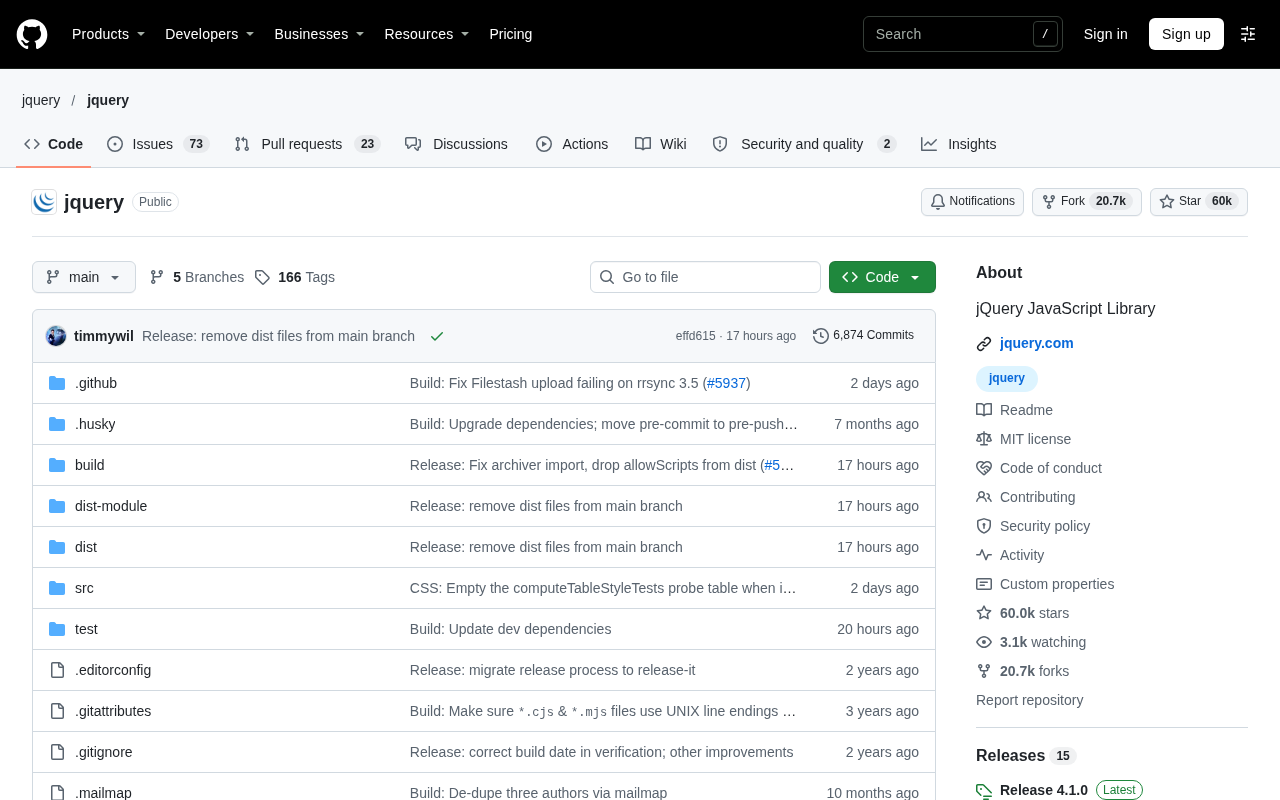
jQuery has nearly 60K stars and gained 268 in a single day, driven by legacy projects and low barriers rather than a technical revival.
Using jQuery's GitHub data—nearly 60K stars, over 20K forks, and a recent single-day gain of 268 stars—the article discusses why this "veteran" library has not retired. The author points to the huge inertia created by the high migration costs of legacy enterprise systems and jQuery's backward-compatibility strategy, as well as its extremely low barrier to entry—a single script tag and a concise chained API—which keeps it attractive for teaching, prototyping, and non-specialist frontend scenarios. A one-day star gain should not be interpreted as a technical revival; a more reasonable understanding is that jQuery, as frontend infrastructure, has a large and stable audience. The article concludes with pragmatic advice: whether a new project should adopt jQuery depends on legacy plugin dependencies and the team's tech stack, while maintainers should keep tracking version updates and security advisories.
The Sustained Popularity of a "Veteran" Library
On GitHub, the jQuery repository has accumulated nearly 60,000 stars and over 20,000 forks, and recently still shows a single-day gain of 268 stars. For a JavaScript library that has existed for a long time and is surrounded by the narrative of being "replaced by modern frameworks," such data is itself worth pondering.
This is not short-term buzz brought by a version release, but the result of long-term accumulation. It shows that jQuery is still being consulted, referenced, and maintained by a large number of developers. Starting from this data, we can re-examine the position of this library in the current frontend ecosystem.
Why jQuery Has Not "Retired"
The Massive Inertia of Legacy Projects
A large number of enterprise systems, admin dashboards, and traditional websites are still built on jQuery. The lifecycle of these projects is often measured in years, migration costs are high, and the benefits are unclear, so maintainers prefer to continue iterating on the original tech stack. jQuery's stability and backward-compatibility strategy precisely meet the need for "no fuss" in such scenarios.
According to the GitHub repository information, the project uses JavaScript as its primary language and has long maintained active issue and PR flows. This sustained maintenance rhythm is the precondition for legacy projects to confidently continue depending on it.
Backward compatibility here refers to the behavioral convention that new versions try not to break existing APIs from older versions. jQuery has long followed this strategy—for example, the 1.x and 2.x branches once targeted legacy IE and modern browsers respectively, and although 3.x removed some deprecated interfaces, the overall API shape remains stable. For maintainers, this means upgrading the jQuery version usually does not require large-scale rewriting of business code; the risk is mainly concentrated in calls to deprecated methods. Backward compatibility reduces the upgrade friction of legacy projects and also explains why many enterprise systems are willing to stay on a certain jQuery version for a long time without rushing to migrate.
Extremely Low Barrier to Entry
Unlike modern frameworks that require a build toolchain, jQuery can be included with a single script tag, and its concise chained API handles DOM manipulation, event binding, and AJAX requests. For teaching scenarios, rapid prototyping, and developers who are not frontend specialists, this "out-of-the-box" experience remains attractive.
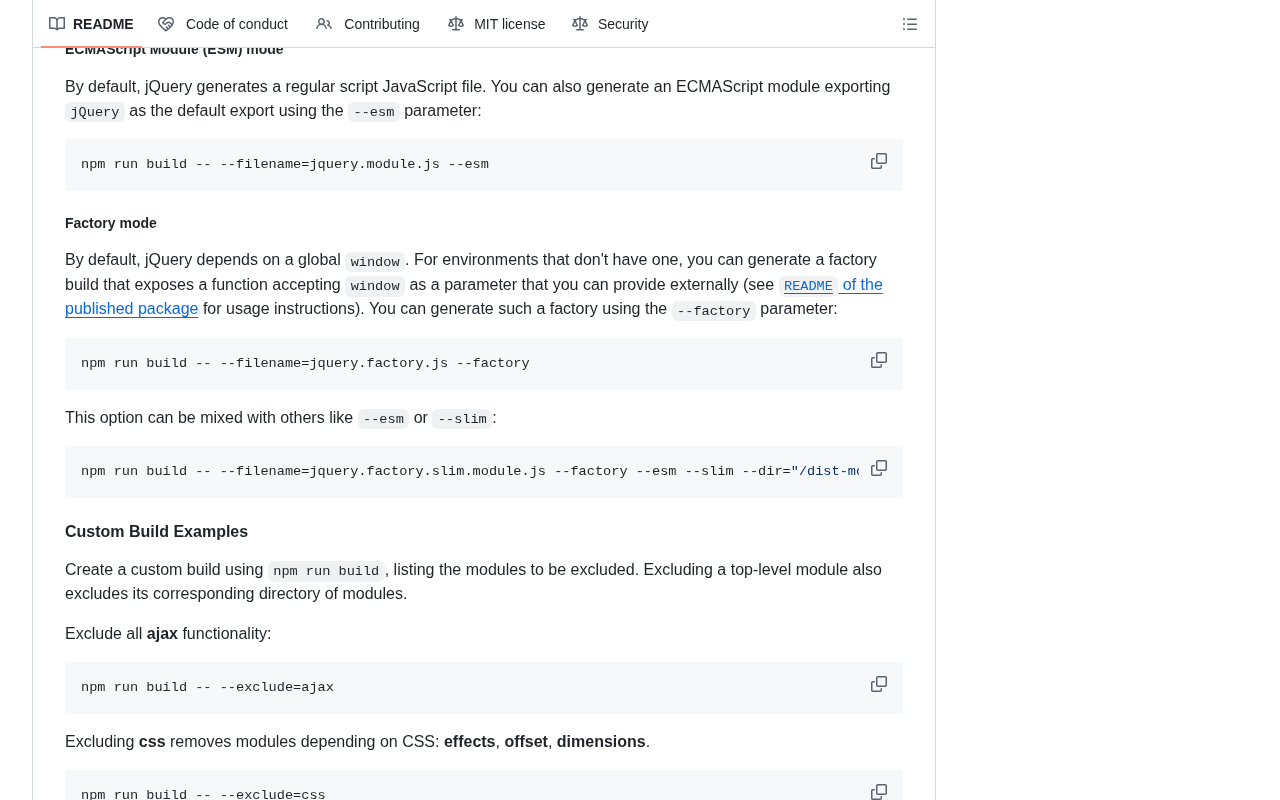
Chained API is jQuery's most recognizable design: most methods return the same jQuery object after completing an operation, so they can be called consecutively, for example $('#box').addClass('active').fadeIn().on('click', fn). This style reduces the declaration of intermediate variables and makes the code visually closer to a series of consecutive instructions on the same element. Its implementation relies on the jQuery object as a wrapper that internally holds the matched set of DOM elements; each method iterates over the set and returns this. Chaining is not unique to jQuery, but in jQuery it was systematically applied across the DOM, event, animation, and AJAX modules, becoming an API style borrowed by many subsequent libraries.
The Real Signal Behind the Data
268 stars in a single day cannot be directly equated with a "technical revival." A more reasonable interpretation is that jQuery, as frontend infrastructure, still has a large and stable audience. With nearly 60,000 stars and 20,000 forks, its reference network in the open-source ecosystem is extremely broad, and any maintenance action may affect a large number of downstream projects.
From a creator's perspective, the value of this repository lies not only in the code itself but also in the fact that it is a living sample of frontend history—it records how a generation of developers organized DOM operations and handled browser compatibility, and also records how the community maintains collaborative order on a mature project.
Fork count and star count reflect signals in different dimensions. Stars are closer to "bookmark/follow," indicating that developers consider the project valuable or wish to keep tracking it; forking means copying the repository to one's own account, usually implying an intention to modify it, submit PRs, or keep a copy. Nearly 20,000 forks indicate that jQuery has a large number of potential contributors and redistribution channels, and its code is embedded in numerous downstream projects and build artifacts. Therefore, looking only at star growth can easily overestimate popularity; only by combining fork volume with issue/PR flows can one more accurately judge the actual penetration of an open-source project in the ecosystem.
Practical Advice for Developers
For new projects, whether to introduce jQuery should be judged based on specific scenarios: if the project depends on a large number of legacy plugins, or the team's tech stack is mainly server-side rendering, jQuery is still a pragmatic choice; if it is a modern single-page application started from scratch, native APIs and component-based frameworks are usually more suitable.
For maintainers, paying attention to jQuery version updates and security advisories remains necessary. For a widely referenced library, any change will have amplified effects through the dependency chain. Understanding its maintenance rhythm is also part of understanding the risks of your own project.
Conclusion
The story of jQuery shows that "outdated" and "useless" are not the same thing in technology. The data of nearly 60,000 stars reminds us that the value of an open-source project is often defined by real usage scenarios, not by topic hype.
Related articles
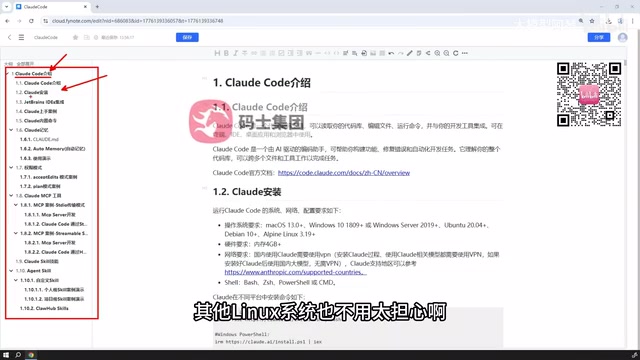
Claude Code Hands-On Tutorial: Installation in China and AI Coding Productivity Guide
Bilibili Claude Code tutorial breakdown: installation in China, PyCharm and other IDE integration, hands-on examples, memory mechanisms, three permission modes, MCP tools and skill configuration — helping developers understand the usage path and token cost constraints of AI coding productivity tools.

AI Wrote 90% of the Code—How Do You Prove It Runs? The Claude Code Team Publishes a 39-Item Incident Checklist
The Claude Code team reveals how to verify AI-written code: 39-item incident checklist, end-to-end, property-based, and differential testing, plus a three-tier commit gate.
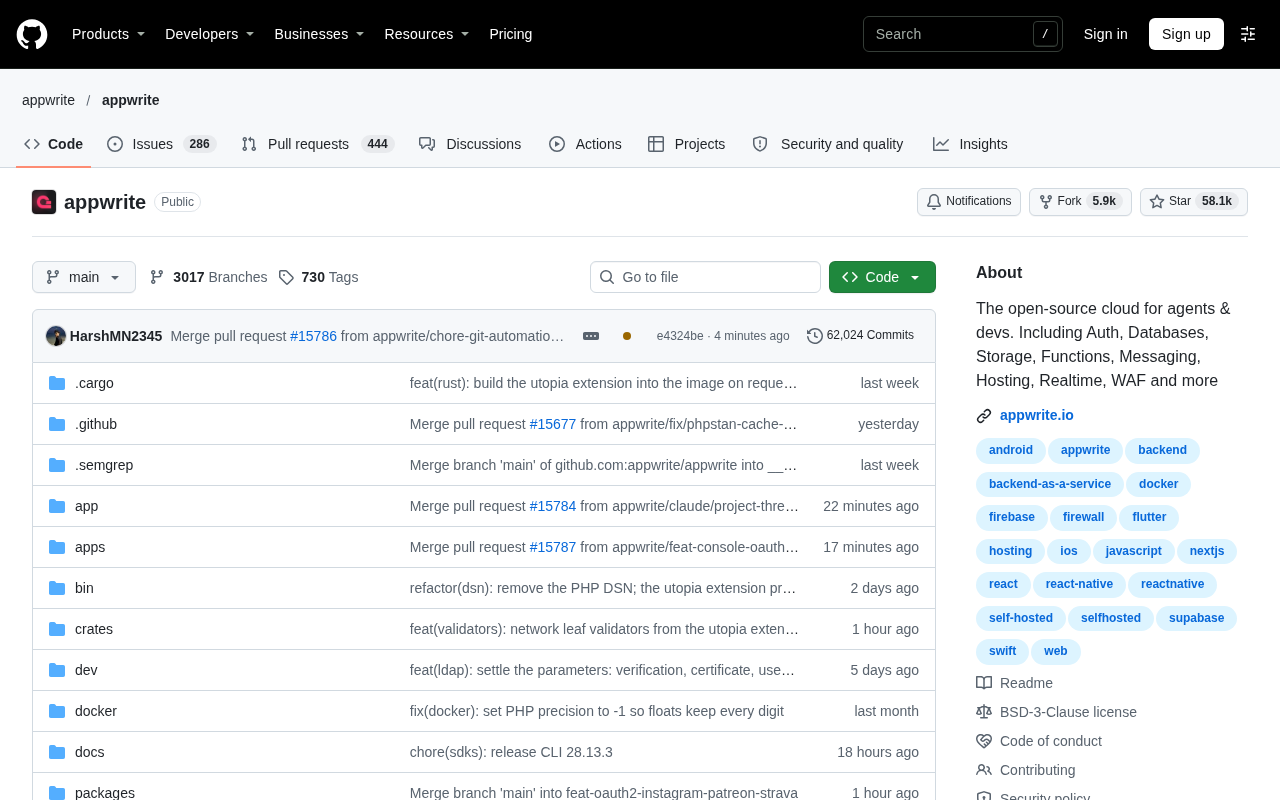
Appwrite: The Open-Source Cloud Built for AI Agents
Appwrite is an open-source cloud platform offering Auth, databases, storage, functions, messaging, hosting, realtime, and WAF for AI agents and developers. With 58K+ GitHub stars, it supports self-hosting.