Appwrite: The Open-Source Cloud Built for AI Agents
Appwrite shifts from open-source BaaS to AI agent cloud, integrating eight modules to cut agent backend costs.
Appwrite has recently surged on GitHub, adding 239 stars in a day to surpass 58K total, with its positioning shifting from an open-source Firebase alternative to an open-source cloud platform for agents and developers. The article reviews Appwrite's eight core modules—Auth, Databases, Storage, Functions, Messaging, Hosting, Realtime, and WAF—and explains how they map to agent needs like identity isolation, long-term memory, tool invocation, state sync, and security. It argues Appwrite targets the middle ground between vendor hosting and self-built orchestration, using open source and self-hosting for data sovereignty and compliance, while TypeScript lowers the extension barrier. However, deep agent optimizations remain unverified, and competitors like Supabase and Nhost are following suit.
From BaaS to AI Agent Cloud: Appwrite's Positioning Shift
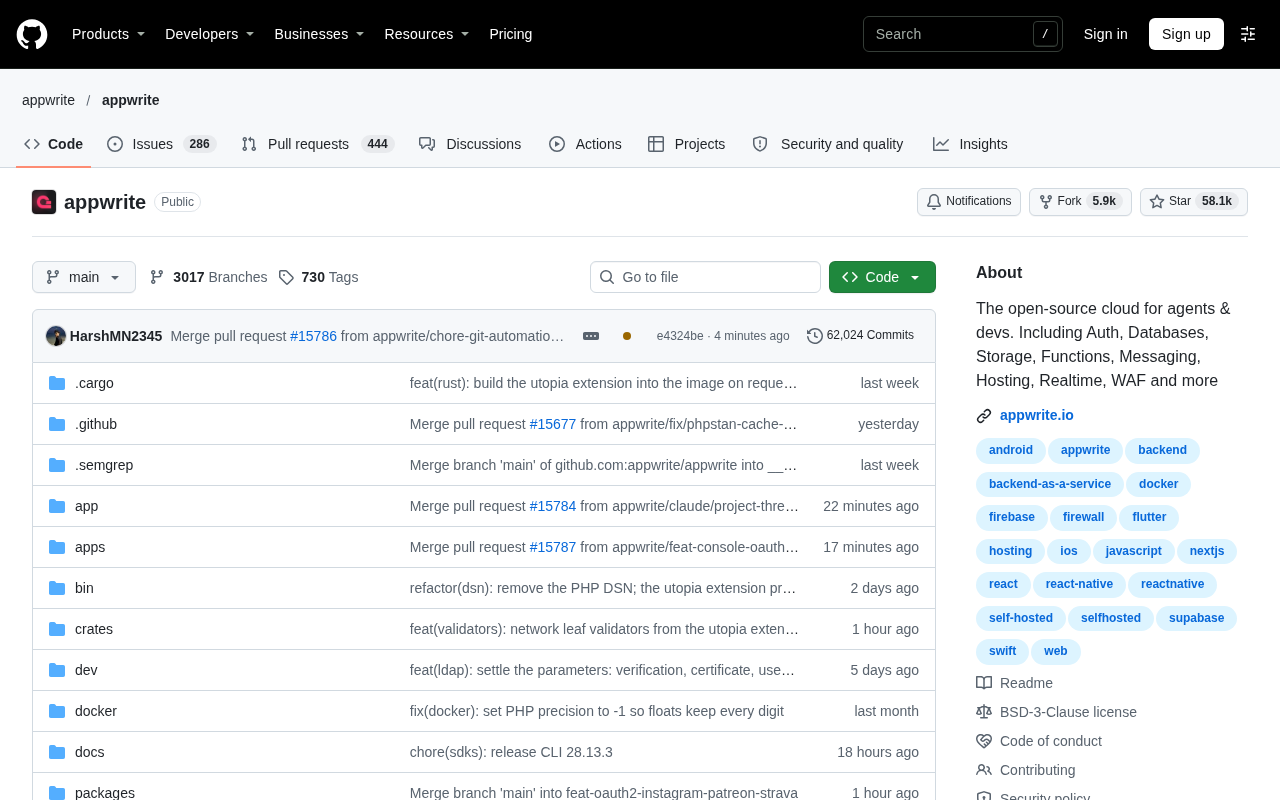
Appwrite has been gaining traction on GitHub recently, adding 239 stars in a single day to reach a total of 58,114 stars and 5,874 forks. The project was initially known as an "open-source Firebase alternative," offering backend-as-a-service (BaaS) capabilities such as Auth, databases, storage, and functions. But its latest tagline has become "The open-source cloud for agents & devs," explicitly bringing AI agents into its core scope of service.
This positioning shift is worth noting. Over the past year, a large number of AI agent frameworks have emerged, but the infrastructure needed to run agents—identity authentication, persistent memory, file storage, real-time communication, and security protection—often has to be pieced together by developers themselves. Appwrite aims to package these capabilities into an out-of-the-box cloud layer, letting agents and traditional developers share the same backend.
BaaS (Backend as a Service) is a cloud service model that encapsulates backend capabilities such as databases, identity authentication, file storage, and push notifications into APIs and SDKs, allowing developers to quickly build application backends without setting up their own servers. Firebase is the most representative commercial BaaS, offering an integrated suite of real-time database, Auth, and cloud functions, but as a closed-source platform, its data migration and self-hosting capabilities are limited. Appwrite's early positioning was precisely as an open-source alternative to Firebase, providing a self-hostable BaaS suite. With the rise of AI agents, the abstraction level of traditional BaaS is no longer sufficient—agents need new primitives such as identity isolation, persistent memory, tool execution, and state synchronization, which is driving BaaS projects like Appwrite to evolve toward a more specialized agent infrastructure layer.
Feature Overview: More Than Just Backend Services
According to the repository description, Appwrite covers eight core modules: Auth (identity authentication), Databases, Storage (object storage), Functions (serverless functions), Messaging (push notifications), Hosting (static hosting), Realtime (real-time subscriptions), and WAF (Web Application Firewall).
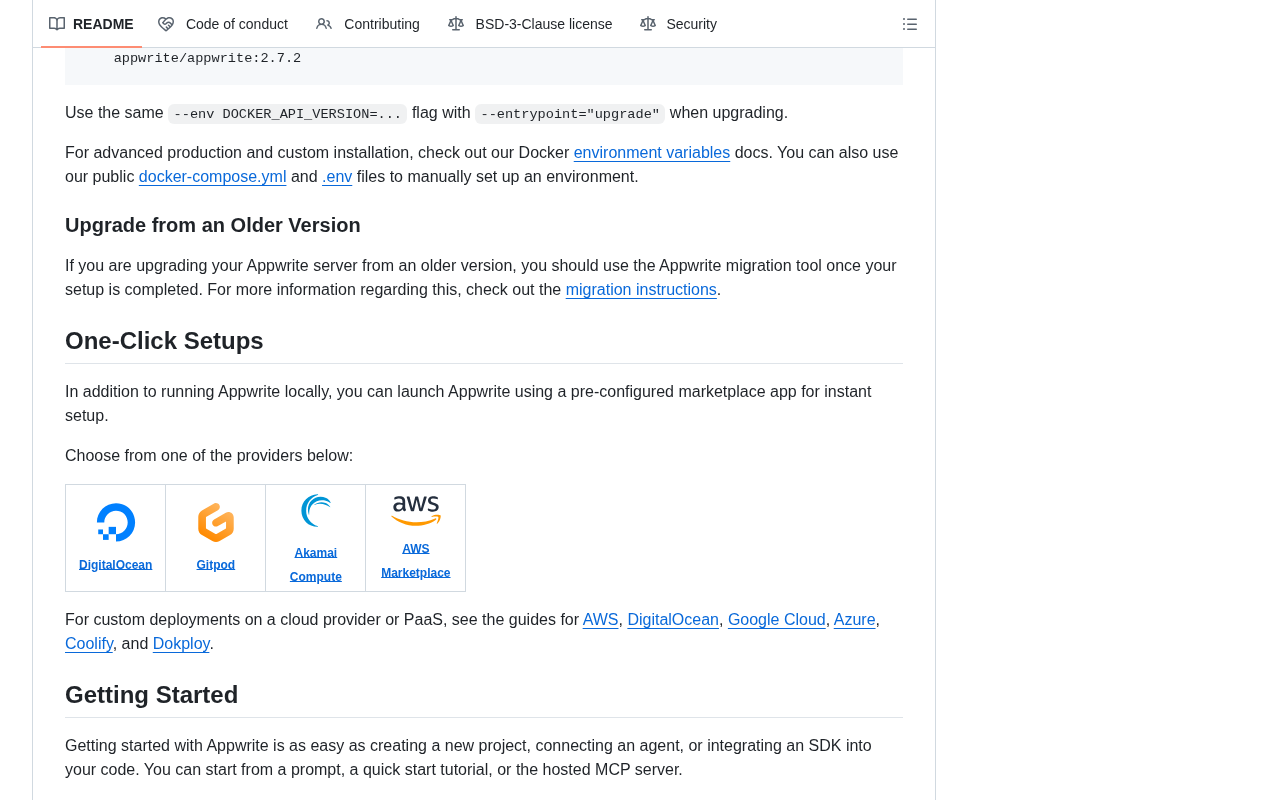
The way these modules combine has special significance for agent scenarios. For example, Auth can assign each agent an independent identity, Databases serves as long-term memory storage, Functions is used to execute tool calls, and Realtime lets multiple agents synchronize state. The addition of WAF hints at Appwrite's consideration of security—when agents expose APIs externally, a protection layer is indispensable.
In terms of tech stack, Appwrite is written in TypeScript, which means frontend developers can extend and customize it with a relatively low barrier to entry. Compared with projects built on pure backend languages, the TypeScript ecosystem has broader coverage in AI application development.
WAF (Web Application Firewall) sits between the application and external traffic, filtering malicious requests through rule sets to defend against common attacks such as SQL injection, cross-site scripting (XSS), and DDoS. For AI agents, the role of WAF is especially critical: agents typically receive calls or execute tools through externally exposed API endpoints, and once hijacked by maliciously crafted input, this can lead to unauthorized operations or data leakage. WAF can perform rate limiting, IP reputation checks, and payload pattern matching on requests, providing a front-line defense for an agent's external interfaces. However, WAF mainly defends against traditional web attacks and has limited coverage of AI-specific threats such as prompt injection, so input validation and permission control still need to be coordinated at the agent logic layer.
Why Agents Need a Dedicated Cloud Layer
Current AI agent deployment approaches fall roughly into two categories: fully hosted on model vendors' platforms, or self-built orchestration layers connected to various third-party APIs. The former offers low flexibility, while the latter incurs high operational costs. Appwrite targets the middle ground—providing standardized backend primitives while keeping open-source and self-hosting options.
Judging from community feedback, this direction hits a pain point. A growth rate of 239 stars in a day is uncommon among mature projects, indicating that "agent infrastructure" is becoming a focus of developer attention. However, whether Appwrite has truly made deep optimizations for agents or merely adjusted its wording at the marketing level remains to be seen in the level of support in its documentation and SDKs.
Agent orchestration layer is the control logic between large models and external tools, responsible for planning tasks, calling tools, managing memory, and coordinating multi-step execution. Common open-source frameworks include LangChain, LlamaIndex, AutoGen, and others. Building your own orchestration layer means developers need to integrate vector databases, message queues, authentication services, and file storage themselves, and handle cross-cutting concerns such as retries, rate limiting, and observability, resulting in high operational costs. In contrast, agents hosted on model vendors' platforms are ready to use out of the box but are usually tied to a specific model ecosystem, limiting flexibility. The middle ground Appwrite targets is essentially standardizing the general infrastructure beneath the orchestration layer, letting developers focus on the agent logic itself without having to repeatedly build the backend foundation.
Open-Source Strategy and Ecosystem Niche
Appwrite adopts an open-source model, differentiating it from closed-source BaaS offerings like Firebase. For teams that need data sovereignty or compliance control, self-hosting capability is a must-have. At the same time, open source also means the community can contribute connectors and extensions, accelerating adaptation to various agent frameworks.
You may not have noticed that Appwrite is not the only project to see this opportunity. Supabase is likewise expanding its AI-related capabilities, and open-source BaaS projects such as Nhost are following suit. Appwrite's advantage lies in its high degree of feature integration—the eight modules cover the complete chain from user management to security protection, reducing the cost of developers switching between multiple services.
What It Means for Developers
If you are building AI agent applications, Appwrite is worth adding to your technology selection list. Its value lies not in how strong any single feature is, but in converging the infrastructure needed to run agents onto a single platform. For small teams, this means maintaining fewer systems; for enterprises, the self-hosting option provides a compliance fallback.
Of course, whether to adopt it still requires evaluating your specific needs. If your agent logic is highly dependent on a specific model vendor's ecosystem, Appwrite's generality may not be the optimal solution. But if you want to stay model-agnostic while needing a reliable backend foundation, the project's current popularity shows the community's recognition of it.
One-line Summary
Appwrite shifts from open-source BaaS to an AI agent cloud, integrating eight modules to lower the cost of building agent backends.
Paragraph Summary
Appwrite has recently gained traction on GitHub, adding 239 stars in a single day to surpass 58,000 total stars. Its positioning has shifted from an "open-source Firebase alternative" to an "open-source cloud platform for agents and developers." The article reviews Appwrite's eight core modules—Auth, Databases, Storage, Functions, Messaging, Hosting, Realtime, and WAF—and explains how these capabilities map to agent scenario needs such as identity isolation, long-term memory, tool invocation, state synchronization, and security protection. The article argues that Appwrite targets the middle ground between model vendor hosting and self-built orchestration layers, using open source and self-hosting to meet data sovereignty and compliance requirements, while lowering the extension barrier for frontend developers through TypeScript. However, whether it has made deep optimizations for agents remains to be verified through documentation and SDKs, and competitors such as Supabase and Nhost are also following suit.
Related articles

Claude Code Hands-On Tutorial: Installation in China and AI Coding Productivity Guide
Bilibili Claude Code tutorial breakdown: installation in China, PyCharm and other IDE integration, hands-on examples, memory mechanisms, three permission modes, MCP tools and skill configuration — helping developers understand the usage path and token cost constraints of AI coding productivity tools.

AI Wrote 90% of the Code—How Do You Prove It Runs? The Claude Code Team Publishes a 39-Item Incident Checklist
The Claude Code team reveals how to verify AI-written code: 39-item incident checklist, end-to-end, property-based, and differential testing, plus a three-tier commit gate.
Is jQuery Still a Frontend Cornerstone? The Vitality Behind Nearly 60K GitHub Stars
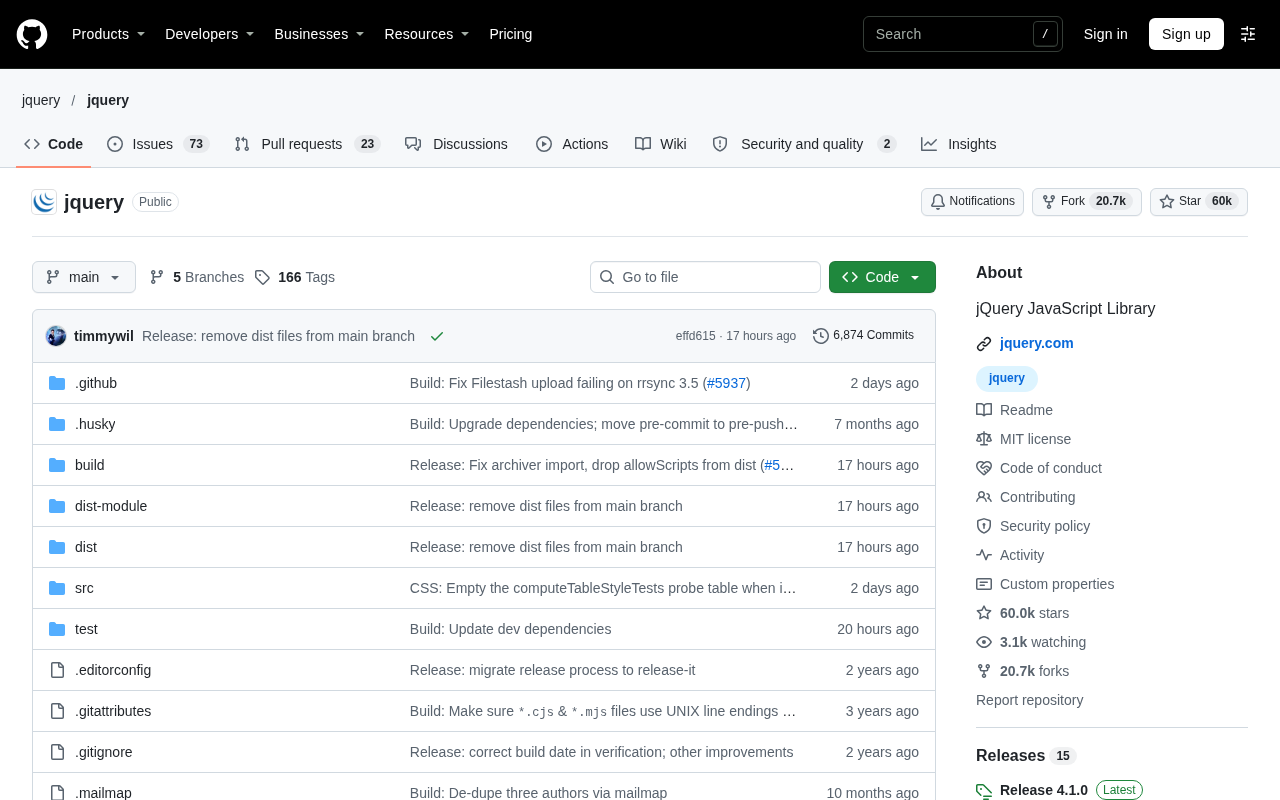
jQuery has nearly 60K GitHub stars and over 20K forks, still gaining 268 stars in a single day. This article analyzes why this veteran JavaScript library remains vital through legacy project inertia, a low barrier to entry, and its ecosystem reference network, with practical advice on selection and maintenance.