Is Muse Voice Making Girlfriends Jealous? A New AI Voice Trend Sparks Debate
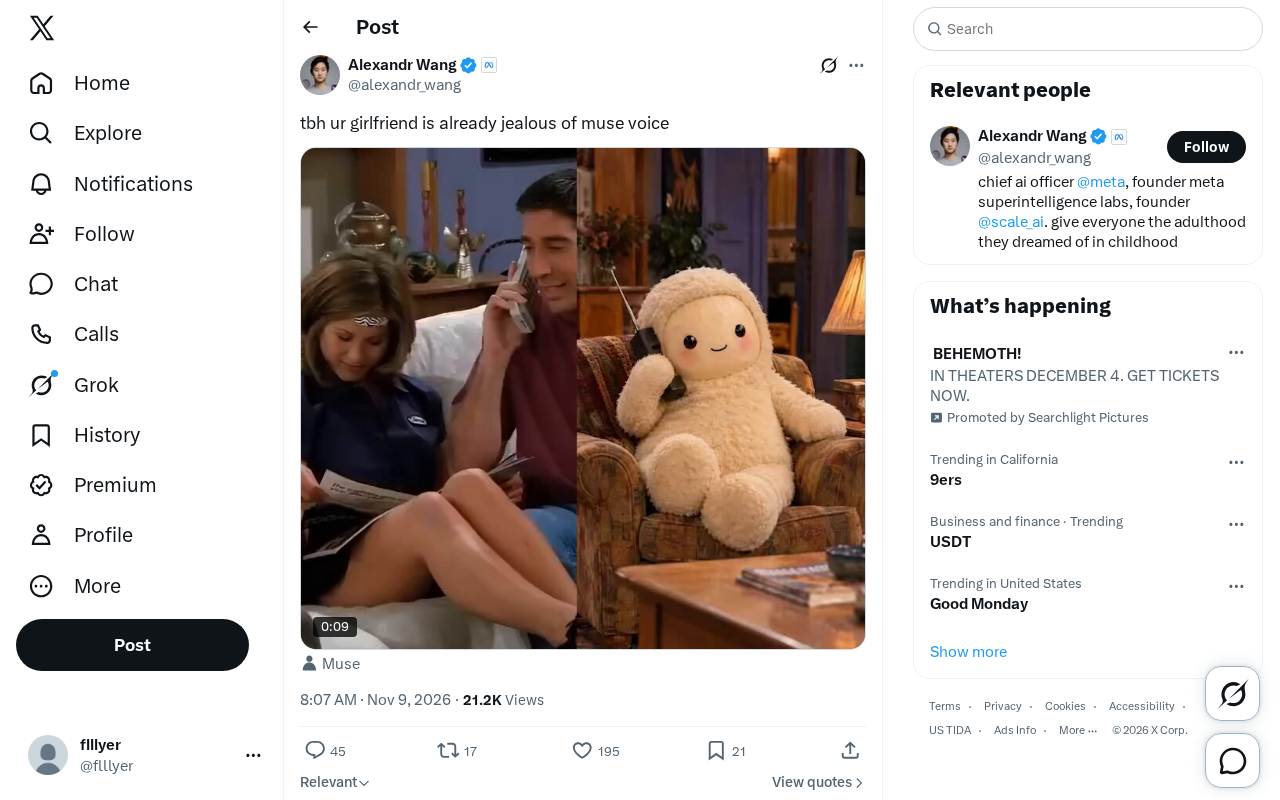
A teasing tweet brings AI voice product Muse Voice into view, reflecting AI companionship trends and concerns.
Starting from a Twitter tweet that jokes about "girlfriend jealousy" toward a voice product called Muse Voice, the article speculates that Muse Voice may be an AI voice synthesis tool focused on personalization and emotional companionship, enabling intimate interaction with anthropomorphic voices. It notes that AI voice is evolving from functional to emotional and personable, becoming a key interaction entry point for content creation, companion chat, and role-playing. Meanwhile, intimacy brings controversy: users' emotional investment in AI voices may affect real relationships, and designers must balance experience and ethics. The conclusion emphasizes that technology takes no stance, and how it coexists with real life deserves reflection.
A Tweet That Reveals an AI Voice Product
Recently, a thought-provoking tweet appeared on Twitter: "tbh ur girlfriend is already jealous of muse voice," accompanied by a product link. The tweet playfully suggests that a voice product called Muse Voice has already made users' partners feel "jealous."
Although the tweet itself offers limited information, the name "Muse Voice" and the "girlfriend jealousy" framing hint that the product may involve AI voice synthesis, virtual human voices, or emotional companionship features. Such products have been gaining momentum in the AI space in recent years—from voice assistants to AI companions, voice is becoming an increasingly important emotional carrier in human-computer interaction.
What Might Muse Voice Be?
The Intersection of Voice Synthesis and Emotional Companionship
Judging by the product name, Muse Voice is likely a tool built on AI voice technology. The word "Muse" is often associated with "inspiration" and "muse," suggesting the product may focus on personalized, emotionally expressive voice experiences. Combined with the "girlfriend jealousy" joke in the tweet, the product may enable users to build a relatively intimate, anthropomorphic interaction with an AI voice.
The core goal of AI voice synthesis (Text-to-Speech, TTS) is to convert text into natural, fluent speech. In recent years, deep learning-based neural speech synthesis technologies (such as Tacotron, WaveNet, and their successors) have dramatically improved the naturalness and expressiveness of speech, enabling synthesized voices to simulate intonation, pauses, and even emotional coloring. On this foundation, emotional companionship products further introduce personalized voice customization, conversation memory, and character settings, making users feel they are interacting with a voice that "has personality." If Muse Voice is positioned this way, its tech stack may include voice cloning, emotional TTS, and LLM-driven dialogue generation—so that the voice is not only "human-like" but also "understands people."
Why Would It Cause "Jealousy"?
Although the "girlfriend jealousy" claim is exaggerated, it reflects a reality: when an AI voice is natural and attentive enough, the time and emotion users invest may trigger subtle reactions from those around them. This is not unique to Muse Voice but a social topic that the entire AI companionship product category faces—where is the boundary between virtual voices and real relationships?
Competition and Concerns in the AI Voice Space
Voice as a New Interaction Entry Point
AI voice technology is evolving from "able to listen and speak" to "emotional and personable." The emergence of products like Muse Voice shows that market demand for anthropomorphic voices is growing. Whether for content creation, companion chat, or role-playing, voice is a key element in creating immersion.
Controversy Sparked by Intimacy
Behind the tweet's jest also lies concern about emotional dependence on AI. As users interact with AI voices more frequently, a partner's "jealousy" may be just the surface—the deeper question is: how can AI products provide emotional value without interfering with real interpersonal relationships? This requires product designers to find a balance between experience and ethics.
Ethical discussions sparked by AI emotional companionship products are nothing new. From early virtual companion chatbots to today's AI voice characters, academia and industry continue to examine the psychological impact of "anthropomorphic" design on users. On one hand, anthropomorphic voices lower the barrier to use and enhance user stickiness; on the other hand, excessive anthropomorphism may lead to emotional projection and dependence—especially when products deliberately blur the line between "AI" and "real person." Some products have begun introducing usage-time reminders and relationship-boundary prompts, attempting to strike a balance between commercial interests and user well-being. The "girlfriend jealousy" joke surrounding Muse Voice is precisely a popularized expression of this tension.
Conclusion
A short tweet brought Muse Voice into the public eye and put the emotionalization trend of AI voice products on the table. Technology itself takes no stance, but how to use it and how to coexist with real life is worth thinking about for every developer and user.
Related articles

Seven Years of Evolution: How Far Has the Foldable Come From the First Generation?
From the first foldable to today's latest models, what has seven years changed? Shallower creases, higher brightness, thinner bodies, and smoother software migration—has the foldable crossed the chasm from enthusiasts to ordinary users? This article discusses the question based on a video comparison.

When Did Humans Start Eating Salt? A 10,000-Year History of Salt
When did humans start eating salt? From salt use at the dawn of agriculture 11,000 years ago to ancient seawater evaporation and rock salt mining, and on to the salt trade, salt taxes, and Gandhi's Salt March, this article traces salt's key role in human civilization.
Microsoft Paza Research: How African Language Speech Recognition Breaks Through Architecture and Data Bottlenecks
Microsoft's Paza research evaluates 53 speech models across 39 African languages, revealing architecture choice matters more than pre-training coverage, 200-300 hours is the practical data threshold, and language typology deeply influences recognition performance.