Microsoft Paza Research: How African Language Speech Recognition Breaks Through Architecture and Data Bottlenecks
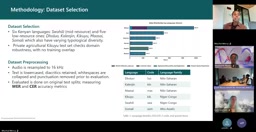
Microsoft Paza evaluates 53 models across 39 African languages: architecture beats pre-training coverage; 200-300 hours is the practical data threshold.
Microsoft Research Africa's Paza project systematically evaluated 53 speech models across 39 African languages and ran controlled fine-tuning experiments on six Kenyan languages. It found that model architecture matters more than initial pre-training coverage, 200-300 hours is a practical data threshold (not a universal ceiling), monolingual fine-tuning often beats multilingual training, and Nilo-Saharan and Afro-Asiatic languages consistently lag due to tone, vowel harmony, and agglutinative morphology.
Title
Microsoft Paza Research: How African Language Speech Recognition Breaks Through Architecture and Data Bottlenecks
Meta Description
Microsoft's Paza research systematically evaluates 53 speech models across 39 African languages, revealing that architecture choice matters more than pre-training coverage, 200-300 hours is the practical data threshold, and language typology deeply influences recognition performance.
Article Content
African language speech recognition has long lagged behind high-resource languages. The interplay of scarce data, model architecture choices, and linguistic typological differences makes building robust ASR systems exceptionally difficult. Moushai Rissi, a research engineer at Microsoft Research Africa (MSR Africa Nairobi), recently shared the latest findings from the Paza project—an architecture-aware evaluation covering 53 speech models across 39 African languages, plus controlled fine-tuning experiments on six Kenyan languages. This work not only reveals how architecture, language typology, and adaptation strategies shape recognition performance, but also offers practical guidance for real-world deployment.
Research Background: The Speech Recognition Predicament for Low-Resource Languages
Paza is a Swahili word meaning "raise your voice." The project is part of Microsoft's Project Kinko, which aims to build large-scale benchmarks for low-resource African languages, train better speech models, and co-create technology with communities in a human-centered way. The research traces back to early decomposition analyses of Swahili word error rates, then extended to agricultural scenarios—collaborating with Digital Green to help farmers in Kenya and India access agricultural knowledge through multimodal reasoning (an MMCT agent composed of speech, machine translation, vision models, and LLMs).
A core judgment is that data scarcity cannot be solved by scaling data volume alone. If the goal were simply data scale, low-resource languages might never reach the numbers of high-resource languages. The research team therefore focuses on model architecture choices, data augmentation, and refined design of adaptation strategies.
Experimental Design: Three Architectures, Six Languages, Four Questions
The controlled study focuses on six Kenyan languages (Swahili, Kikuyu, Kalenjin, etc.), with training data from Mozilla Common Voice, AkroFynX Voices, and approximately 200 hours of private agricultural domain data. The team selected one model from each of three distinct architectures, all with parameter counts near one billion: the LLM-based Phi model, the encoder-decoder Whisper-Large-V3-Turbo, and the encoder-only MMS-1BL. Interestingly, Phi initially supported only eight languages and did not include the target languages; Whisper supported Swahili but not the other five; and MMS covered over a thousand languages but lacked Kalenjin and Maasai.
The experiments centered on four research questions: Which architecture offers the best adaptation opportunities? How much labeled data yields effective performance, and when does it saturate? Is multilingual or monolingual fine-tuning more effective? How much domain data is needed for domain adaptation?
Architecture Sets the Ceiling: Pre-training Coverage Is Not Decisive
With the same 200 hours of training data, model architecture had a greater impact than initial pre-training coverage. Phi achieved the best character error rate on four of the six languages, despite initially not supporting any of them at all. MMS performed competitively, ranking second, which relates to its broad coverage of over a thousand languages. Whisper performed worst; the team suspects this is linked to undocumented hallucinations on non-speech audio, with results resembling repetitive text-loop patterns.
The Paza Bench benchmark evaluated 53 state-of-the-art models across 39 African languages, and the conclusions align with the training experiments: multi-task LLMs rank best in accuracy, encoder-only models follow closely, and encoder-decoder models have the weakest accuracy. But the efficiency dimension flips the picture—encoder-only models show the best inference speed (inverse real-time factor), encoder-decoder models come next, and LLM-based models lag noticeably. This means real deployment must trade off between accuracy and latency.
Character Error Rate (CER) is a commonly used evaluation metric in speech recognition, computed as the character-level edit distance (insertions, deletions, substitutions) between predicted and ground-truth text divided by the total number of characters in the ground truth. Compared with Word Error Rate (WER), CER is more suitable for African languages with rich agglutinative morphology and unclear word boundaries, because it does not depend on predefined word boundaries. For example, in Bantu languages such as Swahili, a single verb may contain multiple morphemes—subject, tense, object—and word-level segmentation easily becomes ambiguous, whereas character-level evaluation more stably reflects recognition quality. However, CER has limitations: when recognition outputs contain repetitive loops or hallucinated text, CER may be diluted or inflated, requiring manual inspection. In this article, Phi achieving the best CER on languages it was not pre-trained on is partly due to its subword tokenizer's greater tolerance for character-level errors.
Data Saturation: 200 to 300 Hours Is the Practical Threshold
The data sufficiency experiment gradually increased training duration from 5 hours to 450 hours. MMS saturated at around 150 to 200 hours, with only about 0.7 points of improvement from 150 to 450 hours. Phi continued improving up to 300 hours on five languages, then began to degrade. The data curve for Maasai fluctuated sharply, showing significant variance across languages, especially within the Nilo-Saharan family.
The team regards 200 to 300 hours as a practical threshold for data collection in low-resource African languages, but explicitly notes this is not a definitive saturation point—Kikuyu still achieved higher performance with 900 hours of data. Moreover, character error rates remain around 40%, meaning roughly 60% accuracy, still some distance from deployment requirements. Because Whisper's locked-language feature causes high CPU overhead, that model was excluded from the data-scaling experiments.
Adaptation Strategies: Related-Language Initialization Beats Starting from Scratch
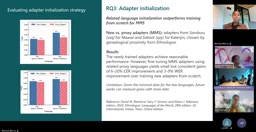
The MMS model has a separate adapter for each language, already numbering over a thousand. For Kalenjin and Maasai, which the model does not support, the team selected proxy adapters based on Ethnologue language proximity (Samburu for Maasai, Sabaut for Kalenjin) and compared them with adapters initialized from scratch. Results showed that related-language initialization slightly outperformed training from scratch; although the gain was limited, it offers a viable path for extending existing models to unsupported African languages.
The comparison between multilingual and monolingual fine-tuning overturns intuition: multilingual training does not guarantee positive transfer, even for languages in the same family. Monolingual fine-tuning performed better in 10 of the 12 language-model combinations across the two models. However, training on a unified dataset has computational efficiency advantages—one model can serve multiple languages rather than deploying separately for each.
Adapters are a lightweight parameter-efficient fine-tuning technique, typically inserting small feed-forward networks into each layer of a pre-trained model, updating only adapter parameters while freezing the backbone during training. For multilingual speech models like MMS, the adapter mechanism allows maintaining independent parameter modules for each language, thereby extending to new languages without degrading existing language capabilities. In this article, MMS already has over a thousand language adapters; when facing uncovered languages such as Kalenjin and Maasai, the team used Ethnologue language-family proximity to select the proxy language adapter closest in phonology and vocabulary as initialization. The essence of this "related-language initialization" strategy is transfer learning: the proxy language's adapter has already learned to handle similar phonological and morphological features, so it converges faster than random initialization and is more stable under small-data conditions. The limited gain indicates that adapter capacity and proxy-language match quality remain bottlenecks.
Domain Adaptation: Architecture Sensitivity Is a Deployment Risk
In the agricultural scenario, the team trained on a mix of 200 hours of domain data and general data, and validated out-of-sample using a completely different private dataset. Phi and Whisper performed well both in-domain and out-of-sample, but MMS ranked high in in-domain tests yet performed poorly out-of-sample. This shows that different architectures vary significantly in sensitivity to domain adaptation, constituting a real deployment risk.
A key lesson: for low-resource languages, train on cross-domain data first, then perform domain-specific training. In field tests in Nyeri County, the team initially trained a Kikuyu model on domain data only, with poor performance; after the AkroFynX dataset was released, they retrained and evaluated, and model performance improved markedly.
Language Typology: Nilo-Saharan Languages Consistently Lag
The six languages belong to different language families, with clear performance differences. Swahili and Kikuyu of the Bantu family consistently performed best, while Maasai and Kalenjin of the Nilo-Saharan family performed worst. The team speculates this relates to linguistic complexity—vowel harmony, tonal contrasts, and agglutinative morphology. Paza Bench's benchmark across 39 languages reached consistent conclusions: Nilo-Saharan and Afro-Asiatic languages consistently lag, and the conclusion still holds after the second version expanded to 61 languages. This poses a direct challenge to tokenization strategies for morphologically rich languages.
Vowel harmony refers to the linguistic phenomenon where all vowels within a word must agree on a certain feature (such as tongue height frontness/backness, roundedness, or tongue root position), commonly found in Nilo-Saharan and Altaic language families. For example, in Maasai, affix vowels assimilate according to root vowels, causing the same morpheme to appear in different phonetic forms across words. This poses a challenge for speech recognition: acoustic models need to capture long-distance vowel feature dependencies, while subword-based tokenizers may segment different variants of the same morpheme into different tokens, increasing data sparsity. Tonal contrasts refer to pitch variation distinguishing word meaning, widely present in Nilo-Saharan and Bantu families. Tones undergo sandhi under intonation in continuous speech, and annotation is costly, making it difficult for acoustic models to model stably. Agglutinative morphology means a word is tightly concatenated from multiple morphemes, exploding vocabulary size and further exacerbating data scarcity under low-resource conditions. These typological features together explain why Nilo-Saharan languages consistently lag in benchmarks.
Real-World Evaluation and Future Directions
The Paza project emphasizes a human-centered approach, treating communities as co-creators of AI rather than mere users. The team conducted field model testing in Nyeri County and built a community evaluation platform for language speakers to test models and report failure modes. Derived from this, the "Build with Paza" program has incubated several applications, such as an NGO project providing speech-to-speech translation for Somali learners via Teams, and an agent workflow that operates feature phones using one- or two-word voice commands.
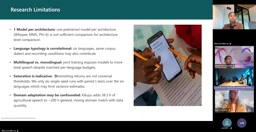
Limitations of the current research include: architecture comparisons are based on training experiments with a single architecture and need more validation; language samples are limited and five languages come from the same corpus, so recording conditions and dialect choices may affect conclusions; multilingual vs. monolingual comparisons are not strictly equivalent due to different data budgets. Ongoing directions include data augmentation to counter data leakage in benchmarks, building lightweight models far smaller than one billion parameters paired with new tokenizers, lightweight LLM correction to fix spelling, and the impact of quantization on edge device deployment. Unresolved challenges include multi-speaker long-form speech, code-switching, the role of synthetic data, and speaker recognition.

All experimental findings from Paza have been compiled into the Paza Speech Handbook, including data collection guidelines, model selection and fine-tuning techniques, and adaptation and evaluation strategies. Related papers, benchmarks, and models have been released on open platforms. For developers working on speech AI for low-resource languages, this research provides a clear starting point: architecture choice takes priority over pre-training coverage, 200 to 300 hours is a pragmatic starting data volume, and domain adaptation must match architectural characteristics—these lessons may help more languages be heard in the AI era.
Inverse Real-Time Factor (inverse RTF) is a metric for measuring the inference efficiency of speech recognition systems, defined as audio duration divided by processing time. An inverse RTF greater than 1 means the system processes faster than real time; for example, an inverse RTF of 10 means 1 second of audio can be processed in 0.1 seconds; an inverse RTF less than 1 means slower than real time. In real deployment, inverse RTF directly determines user experience and hardware costs: mobile or edge devices typically require inverse RTF significantly greater than 1 to leave headroom, while cloud batch processing can accept lower values. In this article, encoder-only models have the highest inverse RTF because of their simple structure and no autoregressive decoding; LLM-based models have the lowest inverse RTF because they generate token by token. This efficiency difference is inverse to the accuracy ranking, indicating that deployment must trade off accuracy and latency according to the scenario—for example, offline agricultural consultation scenarios can tolerate higher latency in exchange for accuracy, while real-time voice interaction prioritizes encoder-only models.
One-line Summary
Microsoft's Paza project evaluates 53 models across 39 African languages, finding that architecture choice matters more than pre-training coverage and 200-300 hours is the practical data threshold.
Paragraph Summary
Microsoft Research Africa's Paza project systematically evaluated 53 speech models across 39 African languages and conducted controlled fine-tuning experiments on six Kenyan languages. Findings: model architecture's impact exceeds initial pre-training coverage; the LLM-based Phi achieved the best character error rate despite not being pre-trained on the target languages, while Whisper performed worst due to hallucinations; 200 to 300 hours is a practical threshold for data collection in low-resource African languages but not a universal ceiling; monolingual fine-tuning outperformed multilingual training in most combinations, and multilingual does not guarantee positive transfer; MMS led on in-domain data but performed poorly out-of-sample, exposing architecture sensitivity to domain adaptation. Nilo-Saharan and Afro-Asiatic languages consistently lag due to tone, vowel harmony, and agglutinative morphology. The project also emphasizes human-centered community evaluation and "Build with Paza" application incubation.
Related articles

Seven Years of Evolution: How Far Has the Foldable Come From the First Generation?
From the first foldable to today's latest models, what has seven years changed? Shallower creases, higher brightness, thinner bodies, and smoother software migration—has the foldable crossed the chasm from enthusiasts to ordinary users? This article discusses the question based on a video comparison.

When Did Humans Start Eating Salt? A 10,000-Year History of Salt
When did humans start eating salt? From salt use at the dawn of agriculture 11,000 years ago to ancient seawater evaporation and rock salt mining, and on to the salt trade, salt taxes, and Gandhi's Salt March, this article traces salt's key role in human civilization.

Timeline of Nvidia CEO Jensen Huang's Alleged Affair with a Purported Chinese Spy
Reports claim Nvidia CEO Jensen Huang had an affair with an alleged Chinese spy; a timeline notes possible national security concerns amid the U.S.-China AI race, though details remain unverified.