Is Now the Best Time to Study Math in the AI Era? A Deep Dive into the Value Reconstruction of Mathematical Research

3Blue1Brown's author argues the mathematics community's value system is being restructured, making now the best time to enter the field.
3Blue1Brown author Grant Sanderson, addressing AI anxiety in mathematics, proposes that now is the best time to enter the field — not because AI brings new opportunities, but because the mathematics community is at a turning point of value reconstruction. He breaks down the mathematician's value chain, pointing out that theory building is the true source of applied value and proof is being downgraded from purpose to raw data. Teaching is the largest funding source and one of the safest careers in the AI era. Even if AI surpasses humans in proving, questioning, and theory building, problem-solving cultivation and aesthetic pleasure still require personal human participation. His advice: embrace passion, practice public speaking, and reflect on why you love math.
When the Entire Mathematics Community Is Anxious
AI is conquering the field of mathematics at a pace exceeding most people's expectations. From competition-level geometry problems a few years ago to now being able to give insightful answers to serious research questions, the progress of reasoning models has plunged the mathematics community into a collective existential anxiety.
Grant Sanderson, the author of the well-known YouTube math channel 3Blue1Brown, offered a surprising judgment in a recent video addressing this anxiety: now is the best time to enter the field of mathematics. This conclusion is not because he believes AI will "unlock" new opportunities in mathematics, but rather based on a deeper observation — the mathematics community is at a turning point of value system reconstruction.
His video responded to the confusion of many math PhD students. One student's comment was particularly representative: "I'm a math PhD, please just tell me what to do tomorrow." Sanderson decided to answer this question seriously.
The Mathematician's Value Chain: From Proof to Theory Building
To understand AI's impact on mathematics, we first need to break down what mathematicians actually do and where the value of mathematics truly comes from.
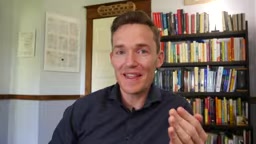
Sanderson proposed an analytical framework. A mathematician's work goes far beyond proving theorems, although the saying "a mathematician is a machine for turning coffee into theorems" is well known. In reality, there are more key items on the list: judging which problems are worth pursuing (taste judgment), building theoretical frameworks (theory building), and applying abstract results to science and engineering.
One saying brilliantly captures this hierarchy: "A good mathematician proves theorems, a great mathematician proposes conjectures, and the greatest mathematician writes definitions." The significance of Galois introducing the seeds of group theory was not in solving the unsolvability of the quintic equation, but in providing an entirely new way of conceptualizing — one that spawned a large number of useful branches of mathematics over the following centuries. Grothendieck used the metaphor of "the rising sea" to describe theory building — not climbing mountain peaks one by one, but letting the sea level rise so you can sail directly from one summit to another.
The value of mathematics is manifested at three levels: applied value (often taking decades or even centuries to materialize, such as the central role of imaginary numbers in quantum mechanics), transferability of problem-solving ability (a large number of mathematically trained people flow into computer science, machine learning, finance, cryptography, and other fields), and aesthetic pleasure (the unique satisfaction that comes from doing mathematics itself).
Galois and Group Theory: Évariste Galois (1811-1832) was a French mathematician who, before the age of 20, completely resolved the question of solvability by radicals of polynomial equations. His core contribution was not the specific conclusion that "the quintic equation has no solution by radicals," but rather the introduction of the concept of the group — using symmetry structures to characterize the relationships between roots of equations. The value of this way of conceptualizing far exceeded the original problem itself: group theory later became the fundamental language for describing symmetries in the physical world, from crystal structures to the Standard Model of particle physics, all built upon group theory. This is precisely the quintessential example of what Sanderson means when he says "writing definitions" has more far-reaching significance than "proving theorems."
Grothendieck's "Rising Sea": Alexander Grothendieck (1928-2014) was one of the most influential mathematicians of the 20th century, who reshaped the foundations of algebraic geometry. He used the metaphor of "the rising sea" to describe his research method: rather than attacking difficult problems one by one (climbing mountain peaks), build a theoretical framework powerful enough that the sea level rises overall, making previously unreachable summits naturally accessible. This methodology profoundly influenced the direction of modern mathematics — he believed that constructing the right definitions and theoretical frameworks advances mathematics more than solving specific problems.
Where the Funding Comes From: Teaching Is the Lifeblood of Math Departments
After understanding the sources of value, we need to ask: who is paying for mathematics?
The answer may be unexpected. In mathematics, teaching is the largest source of funding, which differs from other scientific disciplines. Mathematical research itself is relatively cheap, and math departments serve an extremely broad range of enrolled students, giving them disproportionate influence in the credit and tuition system. Public funding (such as NSF grants), private foundations (such as the Simons Foundation), and industry funding make up the rest.
This structure reveals a key logic: problem-solving ability and aesthetic pleasure are essentially personal-level benefits, and public funding will not be invested solely to support the aesthetic hobbies of insiders. What truly keeps the funding chain running is teaching — students from around the world enter math departments mostly to develop transferable technical problem-solving skills. Most of them will ultimately not become mathematicians, but flow into other useful areas of the economy. The social spillover effects of this "problem-solver training institution" itself provide considerable ROI for public investment.
NSF and Simons Foundation: The National Science Foundation (NSF) is the primary federal agency funding basic scientific research in the United States, with its Division of Mathematical Sciences investing hundreds of millions of dollars annually in mathematical research, education, and infrastructure. The Simons Foundation, founded by hedge fund legend Jim Simons (himself an outstanding mathematician), is one of the largest private funders in mathematics, particularly supporting frontier and high-risk research that struggles to obtain traditional federal funding. Although these funding sources are considerable in scale, they are typically still secondary compared to the tuition and credit revenue that math departments obtain through teaching. This also explains why math departments are highly sensitive to teaching demands in curriculum design and enrollment scale.
Assuming Machines Comprehensively Surpass Humans in Proving Theorems
Sanderson uses a "thought experiment" approach, assuming layer by layer that AI surpasses humans at each stage of the mathematical research stack, then observing the impact of each stage on the value chain and funding chain.
After theorem-proving is conquered by AI: The impact on the value stack is almost zero, but the impact on the academic credit allocation system and culture is enormous. Applied value almost always comes from the theory-building side — it's not the proof of the unsolvability of the quintic that matters, but the creation of group theory that made the hypothesis of quarks possible. Downstream to the funding level, public and private funding still exists, and mathematicians actually gain greater leverage because of increased efficiency in theory building. The cultivation of problem-solving ability is essentially unaffected — just as gym equipment can lift more weight than you, but that doesn't reduce the value of you lifting weights yourself.
At the level of aesthetic pleasure, there is a divergence. Online discussions are filled with negative emotions: when problems you're working on are "solved" in bulk by model companies, it feels terrible. But in offline settings, Sanderson interviewed Constantine Kogler at the Institute for Advanced Study in Princeton, who described the excitement of using models to solve major open problems in the field: "I first felt incredible excitement, about mathematics, about truth, about the power of ideas. Then I thought about mathematics itself, and that kept me awake at night. Then I thought about that excitement, because I had obtained the insight I had long desired."
This dichotomy of online negative and offline positive is not unique to AI, but a general characteristic of contemporary discourse space.
When AI Excels at Asking Questions, Proving, and Theory Building Simultaneously
As the hypothesis advances to deeper levels — machines not only excel at proving but can also propose good conjectures, build theories, and even discover applications — Sanderson admits he has entered more "science fiction" territory.
After theory building is also surpassed by AI: Applied value still requires humans to understand the theory to interface with surrounding fields — are these theories relevant to conquering cancer, achieving nuclear fusion, or high-temperature superconductivity? This is where "the rubber truly meets the road." The cultivation of problem-solving ability remains unchanged: if human problem-solving ability is still useful anywhere else, practice is needed.
Aesthetic pleasure needs to be split into two different levels: the "aha" moment that anyone experiences when doing mathematics (this part is basically unaffected by AI, because it is essentially social and requires personal participation), and the researcher's pleasure in advancing the frontier of human understanding (this part will be impacted, because the tight coupling between frontier advancement and downstream applications is being decoupled).
One of Sanderson's key insights is: proof is being downgraded from a proxy indicator of understanding to raw data. For a long time, the mathematics community used "proof" as a proxy for "understanding" — proving something meant understanding it. But in a future where AI can rapidly generate proofs, this proxy relationship fails. He advocates treating proofs as something akin to numerical computation: useful raw material for theory building, but far from the end goal itself.
"I don't care about a proof that the Navier-Stokes problem is forced to blow up," he said. "I care that someone understood the answer behind this problem, and what kinds of beautiful and coherent theoretical flowers those ideas can bloom into. If someone does this work, give them the Millennium Prize."
The Navier-Stokes Problem and the Millennium Prize: The Navier-Stokes equations are the fundamental partial differential equations describing fluid motion, relied upon from weather forecasting to aircraft design. The Millennium Prize Problems are seven mathematical problems established by the Clay Mathematics Institute in 2000, each with a $1 million prize, and the existence and smoothness of solutions to the Navier-Stokes equations is one of them. When Sanderson says "I don't care about a proof that the Navier-Stokes problem is forced to blow up," he means that if someone merely proves that the equations produce singularities in finite time (i.e., solutions "blow up"), that is only a technical proof; what he truly values is someone who can understand the deep mathematical structure behind this phenomenon and develop a coherent theory. This once again echoes the core argument that "proof is raw data, theory building is the goal."
Lecturers May Be the Safest Profession in the AI Era
Under the extreme assumption that "anything you can do, I can do better," Sanderson believes the most interesting implication appears in the field of teaching.
Even if AI far surpasses humans in clarity of explanation, education is not limited by clarity of explanation, but by motivation. Do people actually want to learn? What motivates people to learn? Sometimes it's pure intellectual curiosity, but as social animals, a large part of motivation comes from seeing another person who deeply loves the subject — especially someone you respect or care about.
"Teaching is one of the safest positions for me from an AI job replacement perspective," Sanderson said, "because it relies so heavily on interpersonal relationships, on human-to-human interaction. No amount of screen-generated clarity can replace that."
Specific Advice for Math PhD Students
Returning to the student who asked "tell me what to do tomorrow," Sanderson gave his answer.
If he were a PhD student in 2026, he would do 3Blue1Brown — that is, what he does now. Ten years ago, if he had walked into a math department and said "I have an idea for explaining mathematics in a visual-first way, can I make this an academically recognized doctoral dissertation," he would have been thrown out of virtually every department. But now, the mathematics community is more open than ever.
The core advice is not to have everyone do math popularization, but rather: embrace the part of you that loves mathematics. Love theory building? Go become the next Galois or Grothendieck — you have increasingly powerful proof-generating machines at your disposal, and you can produce doctoral dissertations that predecessors could never have imagined. Don't like models? That's fine too — the mathematics community will inevitably develop a tributary of "human mathematics, for humans," and you can plant your flag and define what such a doctoral dissertation should look like.
Another practical piece of advice: give more talks, become really good at giving talks. If machines are stronger in some subset of research, then the most effective way to measure human understanding and potential for advancing the field will increasingly shift toward oral expression.
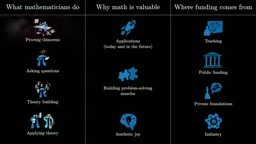
The most specific piece of "what to do tomorrow" advice is: go for a walk. Find a friend, perhaps a classmate in the same program, reflect together on why you love mathematics and why you entered this field in the first place, then brainstorm together how to contribute to different links in this value chain over the coming years.
Sanderson concluded: "I still love mathematics. I will always love mathematics. I hope you can find a way to embrace your passion. This community has never been more open, and they will listen to what you have to say."
Reunderstanding "the Best Time"
When Sanderson says "the best time," he doesn't mean how many new opportunities AI will bring, but rather that the mathematics community is at a rare moment of self-reflection — the community as a whole knows it needs to change, and a large number of people are looking for direction. As a newcomer, you actually have the opportunity to exert influence at one of the most pivotal moments in the history of mathematics.
The deep logic behind this judgment is: when proof is downgraded from purpose to data, when theory building becomes the true core, when teaching gains new importance because of its interpersonal nature — the value chain of mathematics is not weakened, but rearranged. And those who can see this reorganization process clearly and actively adapt to it will find more space than ever before in the new order.
One-line Summary
3Blue1Brown's author believes the mathematics community's value system is being restructured, and now is actually the best time to enter the field of mathematics.
Paragraph Summary
3Blue1Brown author Grant Sanderson, addressing AI anxiety in the mathematics community, proposes that now is the best time to enter the field of mathematics — not because AI brings new opportunities, but because the mathematics community is at a turning point of value system reconstruction. He breaks down the mathematician's value chain, pointing out that theory building is the true source of applied value, and that proof is being downgraded from the purpose of understanding to raw data. Teaching is the largest source of funding in mathematics and one of the safest professions in the AI era. Even if AI comprehensively surpasses humans in proving, asking questions, and theory building, the cultivation of problem-solving ability and aesthetic pleasure still require personal human participation. His advice to math PhD students is to embrace passion, practice oral presentations, and reflect on why you love mathematics.
Related articles

Multi-Agent Collaboration in Practice: A Master Agent Orchestrating Codex and Claude Code
Bilibili creator Xiaoshan's episode 11 shows a master agent orchestrating Codex and Claude Code: Codex handles deep images and research, Claude Code handles coding and UI, dispatching via adapters and SDKs with dual-channel callbacks.
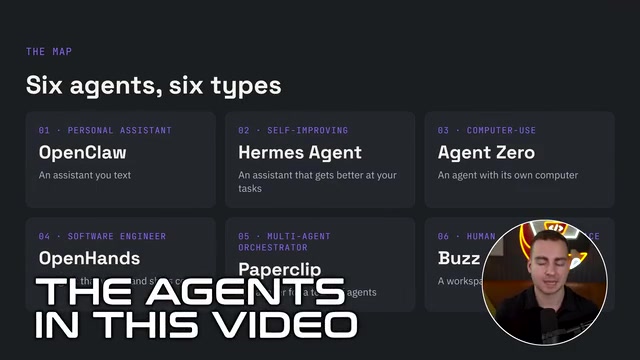
Six Types of AI Agents Explained: A Guide to Deploying and Choosing Open-Source Agents
A systematic breakdown of six open-source AI agents—OpenClaw, Hermes, Agent Zero, OpenHands, Paperclip, and Buzz—covering their underlying architectures, pros and cons, plus VPS deployment and selection advice.

Getting Started with DeepSeek Harness: A Full Breakdown of Agents, Skills, MCP, and Plugins
What's the difference between Agent, Skill, MCP, and plugins in DeepSeek Harness? A hands-on comparison and assistant analogy explain their roles, context overhead, and how to choose.