Is Now the Time to Buy a Laptop Amid Rising Memory Prices? The Limited Opportunity of Black Friday Deals

Rising memory prices are pushing up laptop prices, and Black Friday deals offer only limited hedging.
The article examines how sustained memory price increases (dubbed "RAMageddon") are affecting the laptop market. Memory costs pass through the supply chain to retail prices of complete machines, with manufacturers either raising prices directly or "cutting specs to hold prices" on entry-level models—resulting in new machines costing more than old ones while having leaner configurations. For users with immediate needs, waiting may not bring price drops and may mean fewer low-priced, well-configured models. Black Friday discounts are real but limited, offering only "a tiny bit of help." The article suggests treating Black Friday as a time to reduce losses rather than score bargains, and offers three tips: target previous-generation mid-to-high clearance models, prioritize memory capacity, and set price anchors in advance to identify fake discounts.
When "RAMageddon" Meets the Need to Upgrade
Over the past year, the hottest topic in the laptop market hasn't been performance breakthroughs, but rather the sustained rise in memory (RAM) prices. This phenomenon has been jokingly dubbed "RAMageddon" in the industry. Its direct consequence: current-generation models are getting more expensive, and newly released models are often priced higher than their predecessors—in some cases with lower specs. For ordinary consumers, now is certainly not an easy time to buy a computer.
However, the arrival of Black Friday has cracked open a window in this somewhat gloomy market. While the discounts may not fully offset the price increases accumulated over the year, they at least offer a possibility of "limited hedging."

Why Have Prices Become So Expensive?
Cost Pass-Through Driven by Supply
Memory price increases are not an isolated event. They are transmitted layer by layer through the supply chain, ultimately reflected in retail prices of complete machines. To maintain profits, manufacturers either raise prices directly or "cut specs to hold prices" on entry-level models—for example, using less memory capacity or slower specifications to balance costs. This explains the strange phenomenon of "new machines costing more than old ones while having leaner configurations."
The cyclical nature of DRAM is key context for understanding this round of price increases. Memory chips are a classic strongly cyclical commodity: when supply exceeds demand, prices plummet and manufacturers cut capital expenditure; a year or two later, capacity contraction combined with recovering demand causes prices to rebound quickly. DRAM prices experienced a deep downturn in 2022–2023, after which major manufacturers such as Samsung, SK Hynix, and Micron proactively cut production to stabilize prices. The supply-side contraction gradually passed through to spot and contract price increases after 2024.
In addition, the diversion of HBM (High Bandwidth Memory) capacity has also intensified the tightness of ordinary DRAM—booming demand for HBM from AI servers has led manufacturers to shift more wafer capacity to higher-margin product lines, relatively tightening the supply of consumer-grade memory. This is precisely why "RAMageddon" is structural rather than incidental.
So-called "spec cuts to hold prices" typically take several specific forms in laptops: first, reducing memory from 16GB back to 8GB, or switching from dual-channel to single-channel; second, using on-board soldered RAM instead of SO-DIMM slots, which both cuts costs and prevents users from upgrading later; third, lowering memory frequency or loosening timings; fourth, shrinking SSD capacity from 512GB to 256GB. When shopping, paying attention to these hidden changes is more important than just looking at the "new generation" label.
The Consumer's Dilemma
For users with immediate needs (students, remote workers, those replacing outdated equipment), waiting may not bring price drops—it may instead mean worsening inventory structure, with fewer and fewer low-priced, well-configured models available. Black Friday thus becomes a window worth watching, but the premise is reasonable expectations: it's not about returning to pre-increase prices, but about offering some discount off current high levels.
How Much Can Black Friday Deals Actually Help?
According to the original report, Black Friday "can offer a tiny bit of help." The wording itself speaks volumes: the discounts are real, but limited in magnitude. A more pragmatic strategy is to focus on specific categories and specific channels—such as previous-generation models still on sale, inventory-clearing models, and promotional bundles with software or extended warranties—rather than expecting across-the-board price collapses.
If you're holding cash and waiting to buy, it's advisable to view Black Friday as a time to "reduce losses" rather than "score a big bargain."
Understanding where Black Friday discounts come from helps judge their credibility. Retailers' deals typically come from three sources: first, rebates (MDF/rebate) offered by manufacturers for inventory-clearing models, which often correspond to previous-generation products; second, channel-funded discounts to drive traffic, which are limited in scope and often conditional on membership or payment method; third, bundling, packaging software subscriptions, extended warranties, or accessories so that it superficially "gives a lot" while the actual hardware price reduction is modest. Identifying which category a discount falls into lets you judge whether it's worth pulling the trigger.
Three Pragmatic Tips for Buyers
- Target previous-generation mid-to-high configurations: Against a backdrop of rising prices and shrinking specs on new products, previous-generation mid-to-high configurations are often value sweet spots, and clearance prices are more likely during Black Friday.
- Balance memory and storage: Given high memory costs, prioritize ensuring sufficient memory; storage can be expanded later or supplemented with cloud services.
- Set a price anchor before buying: Record the target model's recent price trends in advance, and only pull the trigger on Black Friday for quotes clearly below your anchor to avoid being fooled by "fake discounts."
Conclusion
"RAMageddon" has made laptop buying tricky all year, and while Black Friday discounts can't reverse the trend, they do provide a limited window worth seriously evaluating. Rational expectations, focusing on previous-generation models, and watching real price gaps are the keys to making regret-free decisions in this special period.
Related articles
GLM-5.4 Loop Transformer Deep Dive: Architecture and Cost-Effectiveness
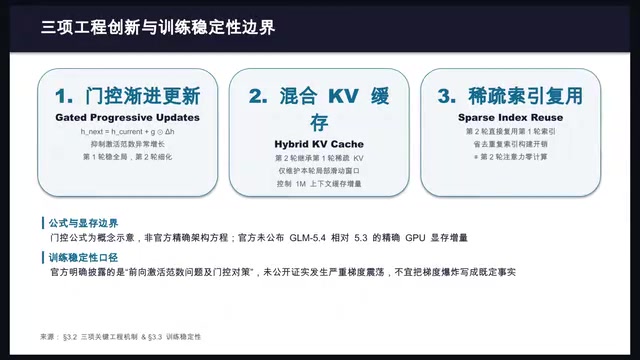
An in-depth analysis of GLM-5.4's Loop Transformer architecture: shared-weight looping, 30B ablation data, multi-model API cost simulations, strong-weak collaboration strategies, and the challenges of scaling computational depth.

Zhipu GLM-5.4 Debuts Loop Transformer, Upgrading Coding and Vision
Zhipu releases GLM-5.4, debuting the Loop Transformer architecture, adding vision capabilities and stronger coding, with existing users' quota raised to 1.5x. Also covers MiniMax H3's low-VRAM runtime, the information compression perspective, and subscription ecosystem developments.
Zhipu GLM-5.4 Released: 750B Model Achieves 2-3 Trillion Parameter-Level Intelligence
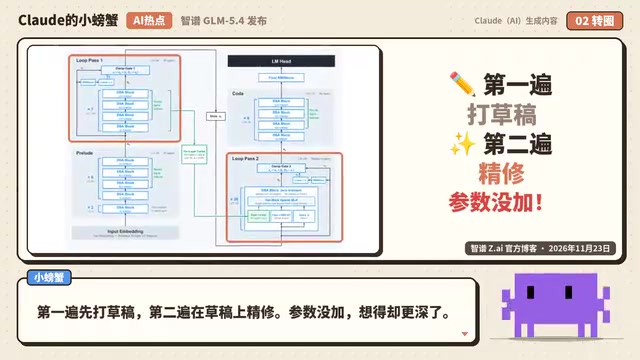
Zhipu releases GLM-5.4, a 750B model achieving 2-3 trillion parameter-level intelligence via repeated layers, with a 30B experiment showing major math reasoning gains plus new vision capabilities and generalized programming applications.