Is Open-Source AI Under Siege? Three Tech Leaders' Near-Simultaneous Statements Spark 'Intelligence Gatekeeper' Fears
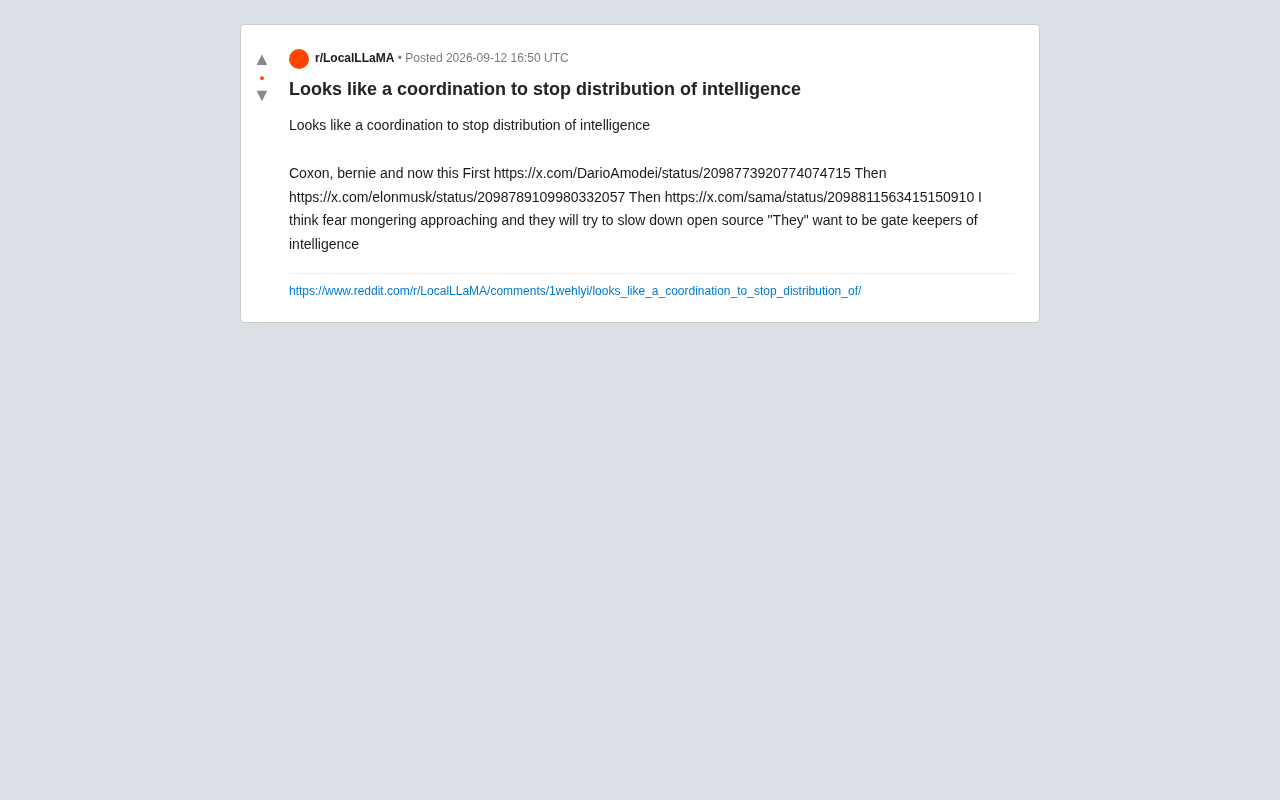
Reddit post accuses AI leaders of coordinating to gatekeep open-source, reflecting deep tensions between openness and safety.
A Reddit post juxtaposed near-simultaneous tweets from Dario Amodei, Elon Musk, and Sam Altman, accusing them of coordinating as "intelligence gatekeepers" to manufacture public support for restricting open-source model distribution. The article examines why such speculation resonates: closed-source vendors' commercial interests overlap with safety narratives, regulatory power skews toward big players, and timeline coincidences invite conspiracy readings. However, the post is ultimately speculation lacking substantive evidence, and lumping Musk and Altman — who hold opposing views on open-source — into the same camp reveals its logical tensions. What truly matters are concrete policy proposals and model release decisions, not tweet timestamps.
A Seemingly Coordinated Statement
A Reddit post has recently sparked heated debate in the community. The author observed that Anthropic CEO Dario Amodei, Elon Musk, and OpenAI CEO Sam Altman all posted on X (formerly Twitter) within a very short window of time. The poster laid out the timeline of all three tweets side by side, suggesting it looked like a "coordinated effort" to suppress the free distribution of intelligent technology.
The post's title was blunt: "Looks like a coordination to stop distribution of intelligence." The author also mentioned names like Coxon and Bernie, hinting that there may be a broader narrative operation behind this wave of statements.
The Core Accusation: Who Wants to Be the Gatekeeper?
The poster's central argument can be summed up in one line: "They" want to become the gatekeepers of intelligence.
In this user's view, the near-simultaneous statements from several industry leaders were no coincidence — rather, they represented the early signs of "fear mongering." By emphasizing AI's potential risks, these leaders are laying the public groundwork to restrict and slow the spread of open-source models. The logical chain goes: amplify risk narratives → push for regulation or industry self-governance → ultimately let a handful of closed-source companies control the distribution of advanced models.
This kind of concern is nothing new in the open-source community. As large model capabilities continue to advance, the tension between "AI safety" and "open access" persists. One camp argues that the more powerful the capability, the more carefully it should be released; the other worries that the "safety" narrative is being used as a pretext for commercial moats.
Why This Kind of Speculation Gains Traction
The open-source community's wariness of "closed-source giants joining forces to block progress" stems from several long-standing anxieties:
The Overlap Between Commercial Interests and Safety Narratives
Closed-source model vendors are the direct beneficiaries of advanced model distribution, even as they emphasize safety. When the same people calling for "cautious releases" are also the ones holding the most powerful models, the community can't help but suspect that competitive motivations are mixed into their reasoning.
Regulation Is Often Shaped by the Biggest Players
In most tech sectors, rule-making authority tends to gravitate toward the most well-resourced companies. Open-source developers worry that once a regulatory framework takes shape, compliance costs will push smaller teams and open-source projects out of the race.
Timeline "Coincidences" Are Easy to Misread
When several key figures speak up within hours of each other — even if their messages differ — it's easy for observers to stitch together a narrative of "coordination." This interpretation may well be a stretch, but it reflects a deep-seated distrust of power concentration within the community.
A Case for Caution
It must be noted that this post is, at its core, speculation based on timeline coincidence. It provides no substantive evidence of what the three leaders actually said, nor any proof that genuine "coordination" occurred. Readers also have no way to verify the original context of the tweets cited in the post.
Grouping figures with very different positions — such as Musk, who has consistently pushed for open-source, and Altman, who represents closed-source development — into the same "gatekeeper" camp is also logically strained, given that their stances on open-source are often anything but aligned. This reads more like an expression of community sentiment than a verified factual accusation.
Closing Thoughts: The Enduring Struggle Between Openness and Safety
The reason this Reddit post resonated isn't because it proved anything — it's because it touched on a real and unresolved question of the AI era: Who has the right to decide how advanced intelligence is distributed?
Whether or not the leaders' statements were truly coordinated, the long-term battle between the open-source community and closed-source vendors over "capability access" will continue. For those watching AI's development, rather than rushing to pick a side, it's more worthwhile to track concrete policy proposals and model release decisions — because what actually shapes the landscape has never been the timestamp on a tweet, but the rules that get put into practice.
Related articles
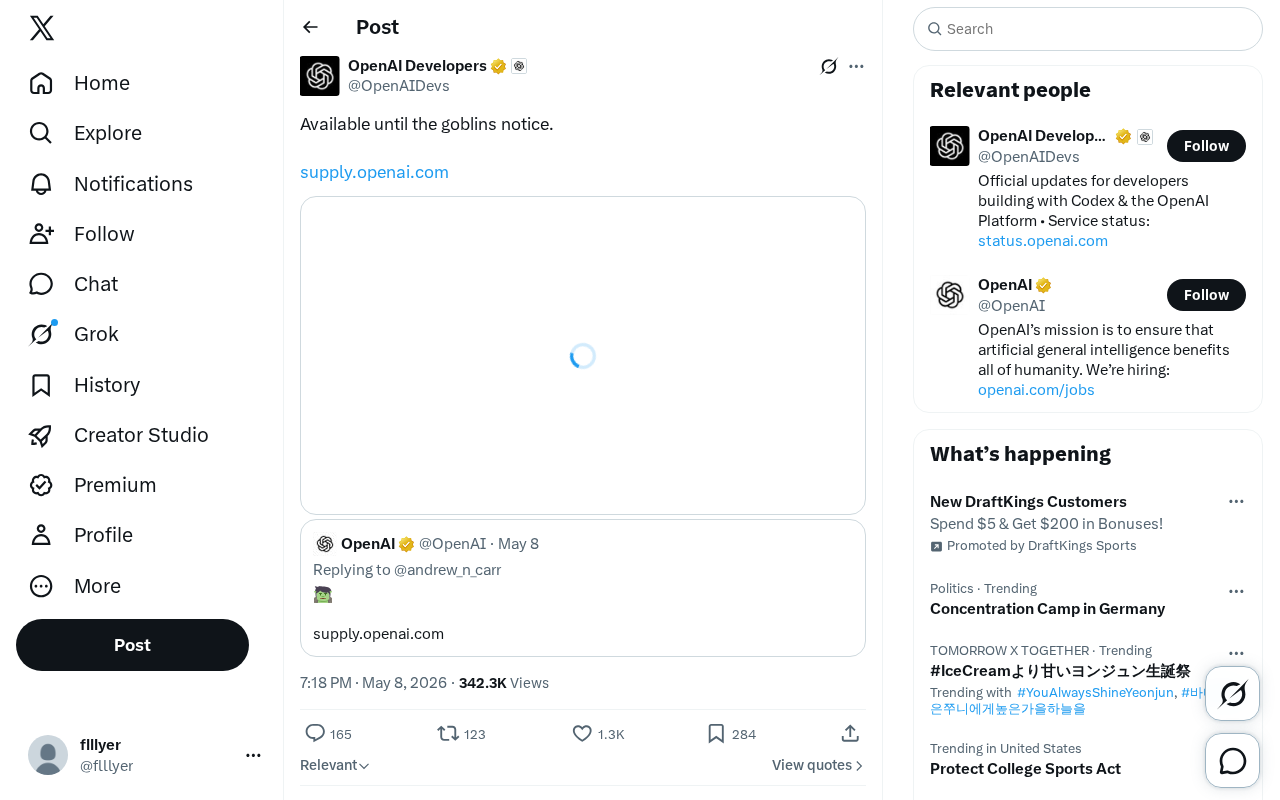
Insufficient Source Material: A Tweet With No Substantive Content
A single tweet reading 'Available until the goblins notice.' with two unexpanded links provides no substantive content to write an article from.
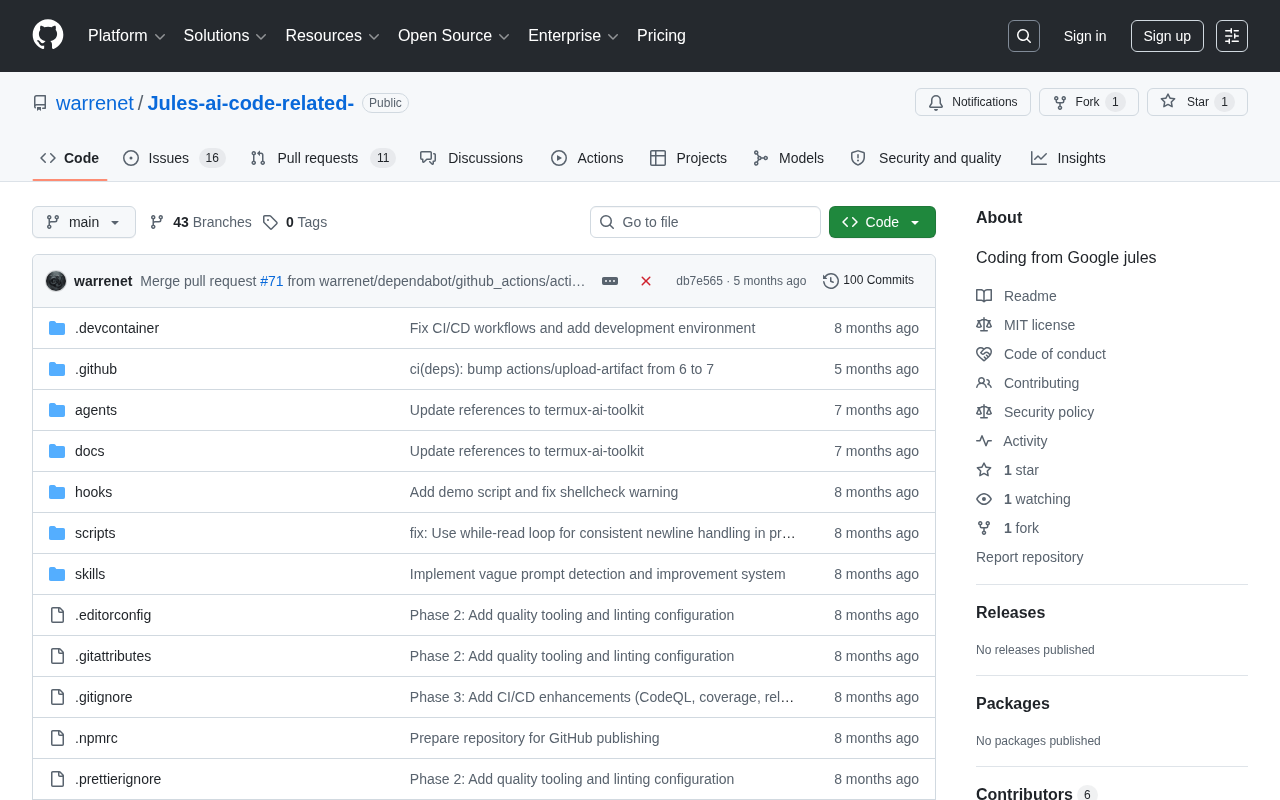
Google Jules AI Coding Assistant: A Quick Look at an Open-Source Practice Repo
A look at a small GitHub repo centered on Google Jules, an autonomous AI coding agent. Explores what Jules does, the repo's practical value, and how to evaluate early-stage AI tool projects.
GitHub Project Overview: prateek0221/jules — Critically Lacking Information
The GitHub repo prateek0221/jules has only 1 star, no code, and no README. We review available info and provide background on Google's Jules AI coding agent.