Is the Game Engine Dead? Google's Genie 4 World Model: Generating Playable Worlds in Real Time

Google's Genie 4 turns static images into interactive worlds—the real race is in robot training, not games.
Google's Genie 4 world model has three core capabilities: transforming static images into explorable environments with ambient sound, real-time world evolution driven by continuous prompts, and full character control for interaction. Its positioning has drifted from "playable video" toward embodied AI infrastructure, with official demos explicitly used for robot virtual task training. The article notes that "game engines are dead" is only half right: traditional engines solve determinism problems, while world models solve emergence problems, disrupting prototyping and UGC in the short term rather than commercial blockbusters. Long-term consistency, real-time latency, and fine-grained controllability remain key unverified issues; the real stakes are interactive duration, physical plausibility, and downstream effectiveness as a training environment.
From a Single Image to a World: What Genie 4 Does
Google has released the Genie 4 world model, officially described as "the most realistic and interactive world model to date." Its core capabilities can be broken down into several layers.
First, image-to-world. Genie 4 can transform a static image into a dynamic, explorable environment, complete with ambient sound. This is not simple image-to-video—users enter a space that can be continuously operated.

Second, real-time control and modification. Users can create scenes, move the camera, choreograph details item by item, use continuous prompts to push the world "onward," and observe in real time how the world changes. The official video states: "Keep prompting, and Genie 4 will work out what happens next"—that is, the world's evolutionary logic is inferred by the model itself under prompt guidance.
Third, character-level interaction. Describe an interactive experience, and seconds later you're inside it, with full control over your character.
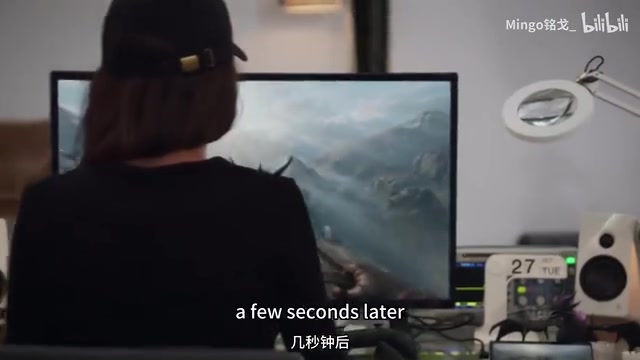
These three layers combine to form a product form completely different from traditional game engines: no need for pre-modeling, light baking, or writing physics rules—the world is generated at runtime.
World Model is the key background for understanding Genie 4's positioning. The concept originates from reinforcement learning and cognitive science, referring to a system's internal representation of the laws of environmental state transitions: given a current state and action, it can predict the next state. Unlike traditional generative models that only generate "content," world models generate "environments" that agents can continuously interact with. In recent years, this concept has been introduced into the generative AI field, with representative work including DeepMind's Genie series and world simulator-type projects. Its core goal is to enable models to learn physical and causal common sense, so they can infer reasonable evolution even in unseen scenarios.
Robot Training Ground: The Underestimated Track
There is a segment in the official demo that is easy to overlook but carries significant weight: Genie 4 can simulate scenarios to help robots practice tasks in virtual environments, preparing them for future work in the physical world.

The significance lies in the drift of the world model's positioning. If it could only make "playable video," it would be a content consumption product; but its explicit use for robot simulation training means it has entered the infrastructure track of embodied intelligence. Robot training has long been constrained by the cost and speed of real data collection. Being able to run tasks at low cost and large scale in generative environments is the solution the industry has been seeking.
In other words, Genie 4's true commercial imagination may lie not in games, but in robots.
Embodied AI refers to agents that learn and perform tasks by interacting with the physical environment through a body, as opposed to purely software-based AI. Representative directions include robotic manipulation, navigation, and autonomous driving. Its training bottleneck lies in the high cost, slow speed, and limited scenario coverage of real-world data collection. Simulation training has therefore become the mainstream path, while traditional simulation relies on manually building scenarios and physical parameters. The value of generative world models is their ability to "generate" diverse training environments on demand, theoretically greatly reducing data costs and improving scenario generalization—which explains why Genie 4's robot demo is seen as a strategic signal.
The Claim "Game Engines Are Dead" Is Half Right
When spreading on Bilibili, the hook "game engines are dead" was used, but this judgment needs to be unpacked.
Traditional engines solve determinism problems: every run produces consistent physics results, reliable collision detection, and synchronized multiplayer. These are engineering promises, not generation probabilities. World models like Genie 4 solve emergence problems: you didn't write the rules, but the world appears to run reasonably.
The value of the former lies in predictability; the value of the latter lies in creatability. In the short term, Genie 4 is more likely to disrupt scenarios like prototyping, proof of concept, and UGC interactive content—"quickly turning ideas into something experiential"—rather than commercial blockbusters that require strict consistency.
But the direction is clear: when the cost of generating worlds approaches zero, the barrier to content production will be redefined. The official line "turns your ideas into worlds you can hear, see, and shape" describes pushing creation from skill-intensive to intent-intensive.

Several Points That Require Calm Consideration
How long can consistency last? The official demo is a short-duration, highly interactive experience. The recognized difficulty in the world model field is long-timescale consistency: walk far away and come back—is the scene still there? This is a question that has not yet been publicly proven.
Interaction latency. "Real time" is the lifeline of such products. If a generative world has noticeable latency, immersion collapses immediately. The official description uses "real time" but provides no verifiable metrics.
The boundaries of controllability. "Direct every detail" is the ideal state. In actual use, what granularity prompts can control, and how large the gap is from the demo video, can only be judged after real users get hands-on.
Long-timescale consistency is a recognized challenge in the world model field. When generative models infer frame by frame or segment by segment, errors accumulate over time, leading to drift in scene details, disappearance of objects, or spatial structure disorder. Evaluating this capability typically requires examining whether the model can maintain spatial memory and causal coherence after long interactions. Currently, most public demos cover only short experiences ranging from tens of seconds to a few minutes, and there is a lack of verifiable long-duration data—this is where the most caution is needed when judging Genie 4's actual maturity.
The Real Stakes in the World Model Race
The signal Genie 4 sends is not "some game is gone," but that world models are shifting from "can generate good-looking images" to "can carry interaction and training tasks." On this path, the metrics will shift from visual quality to three harder things: interactive duration, physical plausibility, and downstream effectiveness as a training environment.
For content creators and developers, what's worth watching is when and in what form it will open up. If it's only a closed demo, the discussion value is limited; if it becomes a callable tool, that's the node that truly changes workflows.
Story, simulation, interactive experience—officially placing these three words side by side at the end actually shows that it doesn't intend to box itself into any single category.
Background Supplement
Game engines (such as Unity, Unreal) are software frameworks for building and running interactive 3D content, with core modules including rendering pipelines, physics engines, animation systems, and network synchronization. Their engineering value is built on determinism: identical inputs produce identical results, which is the prerequisite for multiplayer, competitive fairness, and reproducible debugging. World models take another route, replacing explicit rules with probabilistic generation, trading predictability for flexibility and creative freedom. In the short term, the two are more likely to be complementary rather than substitutive.
Related articles

Prompt Engineering for Beginners: From Writing Prompts to Engineering Thinking
Starting from the essence and four functions of prompts, this article systematically explains the six-step process, four success criteria, learning value, and practical limitations of prompt engineering to help you build a complete understanding.

Anthropic Launches Nasdaq IPO: AI Giant's Listing and Risk Disclosures
Anthropic officially launches its Nasdaq IPO under ticker ANT, with market valuation expected to potentially exceed SpaceX's record. The prospectus devotes nearly 100 pages to AI risks, while first-half revenue grew over 14x but net losses widened sharply, reigniting the AI bubble debate.

Rust cURL Clone Uses 4,832 unsafe Blocks—Is the Memory Safety Myth Broken?
A Rust cURL clone uses 4,832 unsafe keywords, challenging Rust's memory safety narrative. We analyze what unsafe really means, compare Fil-C, and examine rewrite motives.