Is the Privacy Battle Already Lost? Flock Surveillance Cameras Ignite a National Debate

The Flock camera debate exposes a core American tension: is mass surveillance now a fait accompli, or is it never too late to draw a privacy line?
This article examines a debate over Flock license plate recognition cameras, capturing two opposing views: one holds that red-light cameras, facial recognition, and the Patriot Act have already eroded privacy beyond recovery; the other insists it is never too late to resist unconstitutional surveillance. The interviewee frames Flock as a prime example of concentrated power, invokes America's tradition of distrust toward corporations and government, and cites documented abuses — like stalking ex-partners — to show that surveillance infrastructure, once built, is nearly impossible to constrain. The piece ultimately argues that technological fait accompli does not confer moral legitimacy, and the real question is whether society still has the will to draw a line.
Has the Privacy "Ship" Already Sailed?
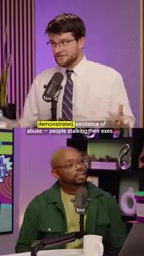
In a widely discussed interview, a host posed a pointed question: given the rise of mass surveillance technologies like Flock cameras, is it already too late to push back against privacy erosion?
Playing devil's advocate, he rattled off a list of present realities: red-light cameras are everywhere, dense urban areas are blanketed with CCTV, airports and Madison Square Garden use facial recognition, and the Patriot Act grants sweeping surveillance powers. His implicit argument was that the privacy "ship" had long since left the harbor — we've already waded too deep into a surveillance society.
This view reflects a kind of resignation shared by many Americans: if surveillance is already ubiquitous, does it really matter whether we push back against one more camera?

"It's Never Too Late": A Sharply Different Stance
Facing this fatalistic framing, the interviewee's response was unequivocal: it is never too late to fight back against unconstitutional privacy violations.
He had previously described Flock cameras as "the most un-American thing" and made clear that whatever public safety benefits they offer cannot justify the privacy costs. That position resonates across the country — the host himself admitted he personally leans the same way.
The interviewee invoked Thomas Jefferson, suggesting that if Jefferson could see the surveillance landscape today, he would be "rolling in his grave." The slightly dramatic flourish pointed toward a deeper argument: defending privacy is itself part of America's political tradition.

A Deep-Seated Suspicion of Concentrated Power
The real value of this conversation lies in how it elevates the surveillance debate to a critique of the concentration of power.
The interviewee noted that a vital thread runs through America's national character — a profound distrust of power concentrated at the top, whether in large corporations or government. Flock's privately operated, nationwide network of license plate readers and surveillance cameras is a concrete embodiment of exactly that kind of concentrated power.
The problem with the technology isn't just theoretical abuse — it's abuse that has already been documented. He cited specific cases: people using these systems to stalk their ex-partners. These absurd yet real use cases expose how, once a mass surveillance infrastructure is built, constraining its boundaries becomes extraordinarily difficult.
Flock Safety was founded in 2017 and is headquartered in Atlanta. It is now one of the largest commercial License Plate Recognition (LPR) network operators in the United States. Its camera systems don't just record plate numbers — they also capture vehicle color, make, model, and stickers, uploading that data to the cloud for real-time search by subscribing law enforcement agencies and private communities. As of 2023, Flock devices were deployed across more than 2,500 cities and communities nationwide, forming a privately owned data network that crosses jurisdictional boundaries. Unlike CCTV systems run directly by municipal governments, Flock's data retention policies, access logs, and cross-agency sharing rules are set by the company itself, with no unified public oversight mechanism — which is precisely why critics cite it as a textbook case of "concentrated power."
"Don't Tread on Me, and Don't Spy on Me"
The conversation closed with a line adapted from an iconic American Revolutionary-era slogan:
"Don't tread on me and don't spy on me."
This phrase distills the entire discussion to its emotional core. It isn't a technical argument about privacy policy — it's a declaration of values, framing resistance to surveillance as a fundamental civic stance against unchecked power.
What this conversation reveals is that the debate over Flock cameras is, at its heart, a collision between two worldviews: one that treats surveillance as a fait accompli and resistance as futile, and another that insists citizens retain both the right and the responsibility to say "no" — no matter how far the technology has advanced.
Dimensions Worth Considering
Setting aside the competing positions, this discussion touches on several genuine tensions in today's technological society:
- Existing facts don't equal legitimacy. The existence of red-light cameras and airport facial recognition doesn't automatically make new surveillance acceptable. Each expansion deserves independent scrutiny.
- The unique risks of private surveillance networks. Compared to government surveillance, large-scale commercial surveillance networks tend to be far less transparent in terms of accountability, data retention, and access controls.
- Abuse is a systemic issue, not an anomaly. Where technical capability exists, abuse is nearly inevitable — stalking an ex is just the tip of the iceberg.
This debate over whether it's "too late" for privacy ultimately isn't about whether the technology can be stopped. It's about whether a society is still willing to draw a line.
On the legal front, U.S. federal courts remain divided on privacy protections for LPR data. Some courts apply the "Third-Party Doctrine" and hold that vehicles traveling on public roads carry no reasonable expectation of privacy, meaning LPR data collection requires no warrant. Others draw on the spirit of the Supreme Court's 2018 ruling in Carpenter v. United States, finding that the aggregation of long-term, systematic location data may constitute a Fourth Amendment violation. This legal uncertainty has allowed commercial surveillance networks to expand rapidly in a regulatory gray zone — while also leaving meaningful room for civil litigation and legislative advocacy. That is part of the real-world basis for the interviewee's insistence that it is "never too late."
Background Context
The USA PATRIOT Act was rushed through Congress just six weeks after the September 11 attacks, authorizing intelligence agencies to collect phone records, internet communications, and financial data on a mass scale in the name of counterterrorism, while significantly lowering the bar for obtaining court-authorized wiretaps. Its most controversial provisions included Section 215 — the so-called "library records" clause, allowing the FBI to obtain business records without notifying the subjects — and provisions permitting surveillance of "lone wolf" terror suspects. Edward Snowden's 2013 disclosures of the PRISM program revealed that the Act had been used in practice for indiscriminate collection of communications from millions of ordinary citizens, far beyond its original legislative intent. This historical backdrop explains why the interviewee frames the expansion of Flock cameras within the broader narrative of a "surveillance state."
Related articles

"Black October": Did AI Uncover 3% of All Critical Vulnerabilities Ever?
A Reddit post claims 3% of all critical software vulnerabilities ever were found in the past month, dubbed 'Black October.' We break down the statistical issues, how AI-assisted code auditing accelerates discovery, and how developers should respond.

Microsoft Project Gecko: Using AI to Bridge Language Gaps for African Farmers
Microsoft's Project Gecko launches PharmaChat, letting African farmers ask questions in their native language and get precise video clips and farming book chapters via AI. The project also releases three interactive manuals to advance inclusive AI.

Musk's Space Dominance: How Starlink Throttling Undermines Ukraine's Defense
SpaceX's Starshield throttling disabled Ukraine's high-speed interceptor drones, exposing how Musk's private control over low Earth orbit communications affects battlefield dynamics and national security, and highlighting the risks of commercial space militarization and space governance dilemmas.