Isaac Lab vs. PyBullet for Your Thesis: A Selection Guide for Multi-Drone MARL Projects
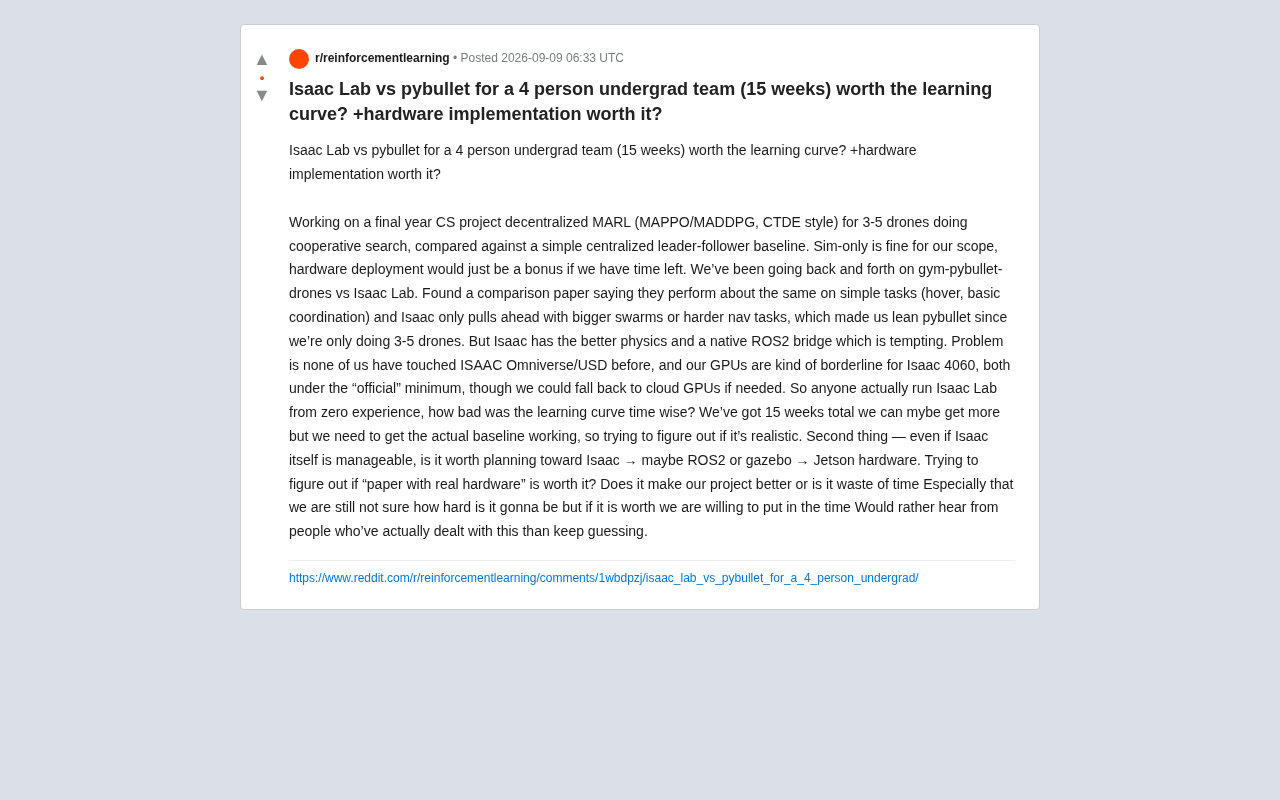
A pragmatic guide helping undergrad teams choose between PyBullet and Isaac Lab for multi-drone MARL thesis projects.
For a 15-week undergraduate thesis using MARL to control 3–5 cooperative drones, this guide compares Isaac Lab and PyBullet across learning curve, hardware requirements, and simulation fidelity. It recommends starting with PyBullet for faster algorithm development, treating Isaac Lab migration as a stretch goal, and deprioritizing hardware deployment — because project completeness always trumps technical depth.
Project Background and the Tech Selection Dilemma
A four-person undergraduate CS team is planning their capstone project: using distributed Multi-Agent Reinforcement Learning (MARL) algorithms to control 3–5 drones for cooperative search tasks. The project spans 15 weeks, with core algorithms including MAPPO and MADDPG under the CTDE (Centralized Training with Decentralized Execution) architecture, benchmarked against a simple centralized leader-follower strategy.
Multi-Agent Reinforcement Learning (MARL) extends reinforcement learning to scenarios with multiple decision-making agents. Unlike single-agent RL, MARL faces the problem of environment non-stationarity — each agent's policy update changes the observation distribution for other agents, leading to training instability. The CTDE architecture was proposed to address exactly this issue: during training, agents are allowed access to global state information to stabilize the learning process, while at execution time each agent relies solely on local observations for decision-making, satisfying the communication constraints of real-world deployment. MAPPO is the multi-agent extension of PPO (Proximal Policy Optimization), employing shared policy networks and a centralized value function. It has demonstrated strong performance and training stability in benchmarks like StarCraft. MADDPG, on the other hand, is based on the Actor-Critic framework where each agent has its own independent policy network but shares global information to train the Critic, making it better suited for heterogeneous agent scenarios with continuous action spaces.
The core question facing the team is: how to choose between gym-pybullet-drones and Isaac Lab? Beneath this question lies a trade-off between simulator usability and capability, as well as the balance between "completeness" and "technical depth" in an academic project.
Technical Comparison: Isaac Lab vs. PyBullet
PyBullet's Core Advantages
According to comparison papers the team reviewed, PyBullet and Isaac Lab perform comparably on simple tasks like hovering and basic coordination. PyBullet's main advantages include:
- Gentle learning curve: A clean Python-based API with no need to learn USD or the Omniverse ecosystem
- Low hardware requirements: Not GPU-demanding — the team's existing RTX 4060 can run it smoothly
- Mature community: The gym-pybullet-drones project comes with complete drone control examples
gym-pybullet-drones is an open-source drone simulation environment built on the PyBullet physics engine, developed and maintained by a team at the University of Toronto. It is fully compatible with the OpenAI Gymnasium interface standard and provides preset task templates including hovering, trajectory tracking, and multi-drone coordination. PyBullet itself is a Python wrapper around the Bullet physics engine, using a CPU-side rigid body dynamics solver. While its physics accuracy doesn't match GPU-accelerated PhysX 5, its lightweight nature means developers can complete the full train-test loop on a laptop. The project has a large body of MARL research reproduction code on GitHub, allowing newcomers to quickly bootstrap their projects by referencing existing implementations.
For a project involving 3–5 drones, PyBullet is more than sufficient to meet basic simulation needs.
Isaac Lab's Appeal and Barriers to Entry
Despite PyBullet being easier to get started with, Isaac Lab still holds considerable appeal:
- Physics engine accuracy: The PhysX 5 engine provides more realistic collision detection and aerodynamic simulation
- Native ROS2 integration: If hardware deployment is on the table, the ROS2 bridge can significantly simplify the sim-to-real pipeline
- Scalability advantages: Paper data shows significantly better performance than PyBullet for large-scale swarms or complex navigation tasks
The catch, however, is that the team has zero experience with Omniverse or USD, and their current GPU (RTX 4060) falls below the officially recommended specs, potentially requiring cloud GPU resources.
Isaac Lab (formerly Isaac Orbit) is NVIDIA's robot learning framework built on top of the Omniverse platform. Omniverse is NVIDIA's real-time 3D collaboration and simulation platform, using USD (Universal Scene Description, a scene description format developed by Pixar) as its data exchange standard. Isaac Lab's core advantage comes from its underlying PhysX 5 engine, which can compute thousands of simulation environments in parallel on the GPU — enabling so-called "massively parallel simulation" that provides enormous speedups for sample-hungry RL training. However, this also means developers need to understand additional concept stacks like USD scene construction and Omniverse extension development. The RTX 4060 has 8GB of VRAM, while Isaac Lab typically recommends 12GB or more (e.g., RTX 4070 Ti or higher) when running multi-environment parallel simulations — which explains the team's concerns about potentially needing cloud GPU resources.
The Reality of Time Costs Over 15 Weeks
The 15-week project timeline needs to be broken down into several key milestones:
- Environment setup and familiarization (2–3 weeks)
- Baseline algorithm implementation (3–4 weeks)
- MARL algorithm development and debugging (5–6 weeks)
- Experiments and paper writing (3–4 weeks)
- Hardware deployment buffer (2 weeks, if there's bandwidth)
If the team chooses Isaac Lab, the environment setup phase could extend to 4–5 weeks, severely compressing the time available for algorithm development. For an undergraduate thesis, the core value lies in the MARL algorithm implementation and comparative experiments, not the technical depth of the simulation platform. From this perspective, PyBullet allows the team to enter the algorithm development phase much faster.
A viable compromise is to complete core algorithm validation in PyBullet first, and if time permits, attempt migration to Isaac Lab for comparative experiments. This approach ensures project completeness while leaving room for technical exploration.
The Value Trade-off of Hardware Deployment: Is Sim-to-Real Worth It?
Regarding the "Sim-to-Real" deployment question, it needs to be analyzed from both academic value and workload perspectives.
Sim-to-Real (simulation-to-reality transfer) is one of the core challenges in robot learning. Its essence is overcoming the "reality gap" — the inevitable differences between simulated environments and the physical world. These differences come from many sources: inaccurate sensor noise models, aerodynamic simplifications (such as ignoring ground effects and vortex interference), actuator response delays, and wireless communication uncertainty. Common coping strategies include Domain Randomization (randomly perturbing physical parameters during training to enhance policy robustness) and System Identification (precisely measuring real system parameters and feeding them back into the simulation). For multi-drone systems, deploying to edge computing platforms like Jetson also faces model inference latency constraints — the policy network must output control commands within milliseconds, which often requires engineering optimizations such as TensorRT quantization or pruning of the neural network.
The Academic Value of Physical Hardware Deployment
For an undergraduate thesis:
- A bonus but not a requirement: Simulation experiments are sufficient to validate algorithm effectiveness
- Significantly increased engineering difficulty: Going from simulation to Jetson deployment involves model compression, sensor calibration, communication latency, and other engineering challenges
- Low time-to-value ratio: Could consume 4–6 weeks with limited contribution to algorithmic innovation
Unless the team has a clear hardware competition or engineering objective, "a paper with real hardware" won't dramatically improve project evaluation. Reviewers care more about the soundness of algorithm design, the completeness of experimental design, and the depth of result analysis.
A Pragmatic, Incremental Approach
The recommended strategy is incremental goal-setting:
- Baseline goal: Complete MARL algorithm implementation and comparative experiments in the PyBullet simulation environment
- Ideal goal: If time allows, conduct migration experiments in Isaac Lab to validate algorithm robustness in a higher-fidelity environment
- Stretch goal: Hardware deployment as a bonus, but not a core deliverable
This strategy ensures the project remains manageable under time pressure while leaving flexible room for technical exploration.
Concrete Action Plan for the Undergraduate Team
Based on the 15-week timeline and a four-person team, here are the specific recommendations:
Phase 1 (Week 1–2): Rapid Prototype Validation
- Set up the base environment using gym-pybullet-drones
- Implement a simple leader-follower baseline algorithm
- Validate team collaboration workflows and coding standards
Phase 2 (Week 3–10): Core MARL Algorithm Development
- Develop MAPPO and MADDPG implementations in parallel
- Design multiple comparative experiments (varying agent counts, task complexity)
- Continuously run ablation studies and hyperparameter tuning
Ablation studies are a standard methodology in deep learning research for verifying the contribution of individual components: by systematically removing or replacing a component of the algorithm and observing performance changes, you can quantify that component's impact. In a MARL project, typical ablation dimensions include: whether parameter sharing is used, the presence or absence of attention mechanisms, and the effect of different reward function term weights. Hyperparameter tuning focuses on key configurations such as learning rate, discount factor γ, GAE parameter λ, and clipping ratio ε (specific to PPO). For an undergraduate thesis, grid search combined with some manual tuning is sufficient — there's no need to use automated tuning frameworks like Optuna. The key is to record the complete configuration and results of each experiment to ensure reproducibility.
Phase 3 (Week 11–13): Paper Writing and Supplementary Experiments
- Complete core figures and algorithm analysis
- Reserve time to address reviewer feedback (if submitting to a conference)
Flex Phase (Week 14–15): Technical Exploration
- If progress is on track, attempt Isaac Lab migration or a simple hardware demo
- Otherwise, use this time to polish the paper and prepare for the defense
One final point to emphasize: completeness always takes priority over technical depth. A MARL project that is fully implemented with thorough experiments in PyBullet is far more valuable than one where the algorithm implementation is rushed because the team got bogged down by Isaac Lab's learning curve. Technology selection should serve the project goals — not become the goal itself.
Key Takeaways
Related articles
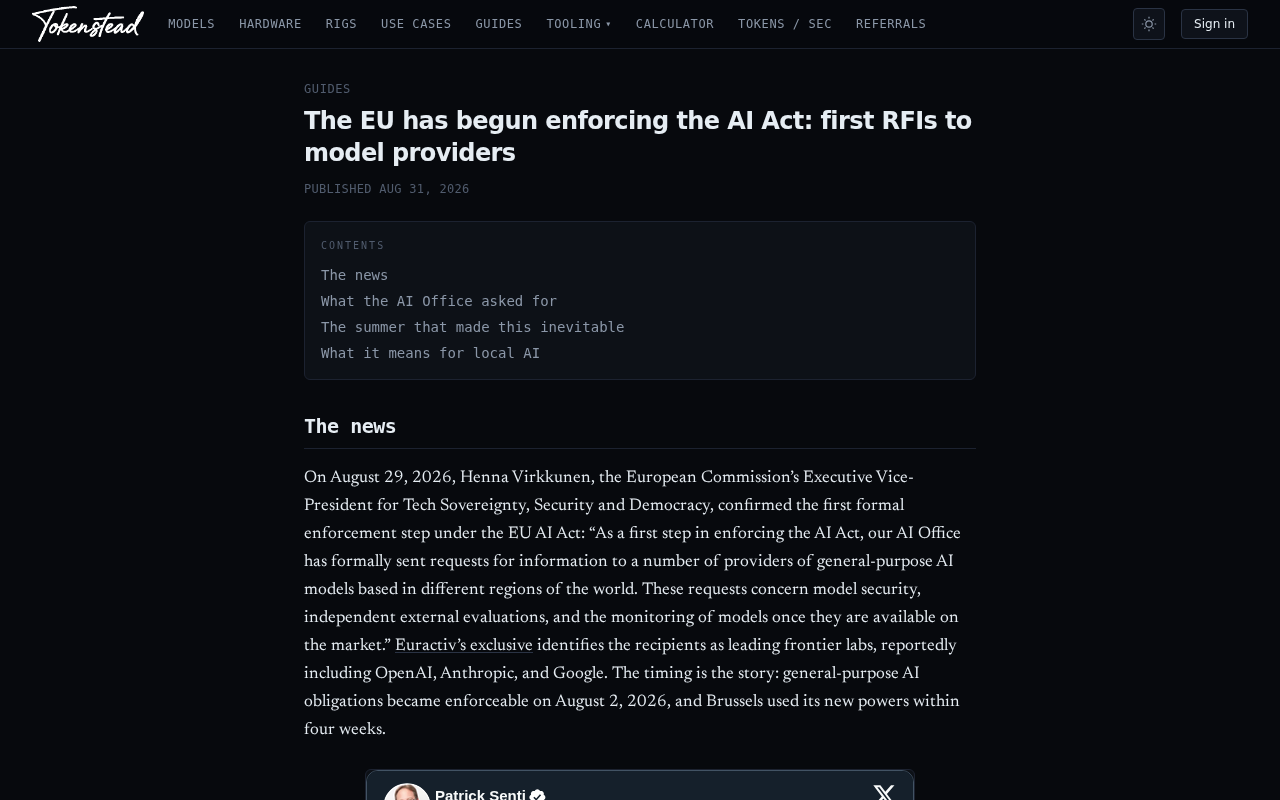
EU AI Act's First RFIs Issued: What Compliance Challenges Do Model Providers Face?
The EU AI Act enters enforcement with its first RFIs targeting GPAI providers. Explore the compliance challenges around transparency, risk assessment, and the global impact on AI governance.
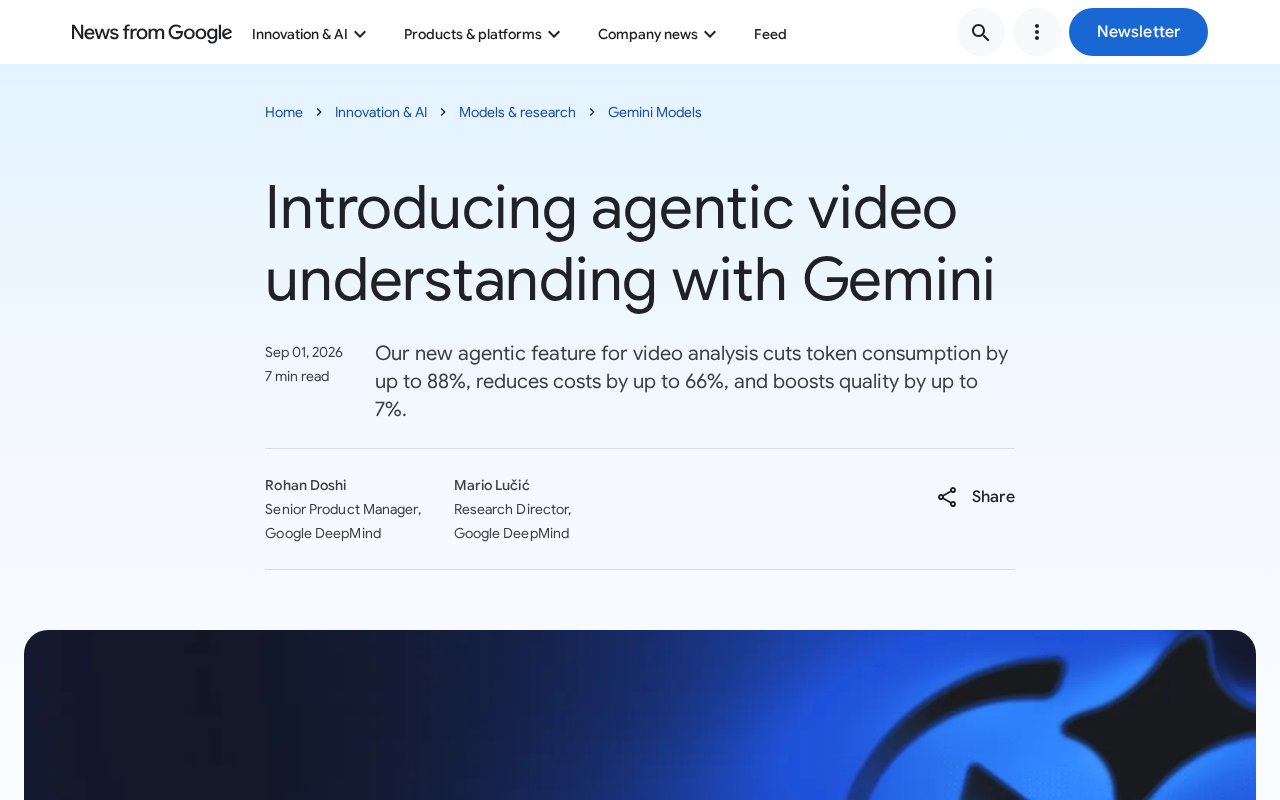
Gemini Agentic Video Understanding: 88% Token Reduction, 66% Cost Savings — A Complete Breakdown
Google DeepMind's Gemini Agentic Video Understanding cuts Token usage by 88%, reduces costs by 66%, and improves quality by 7% through intelligent agentic loops.
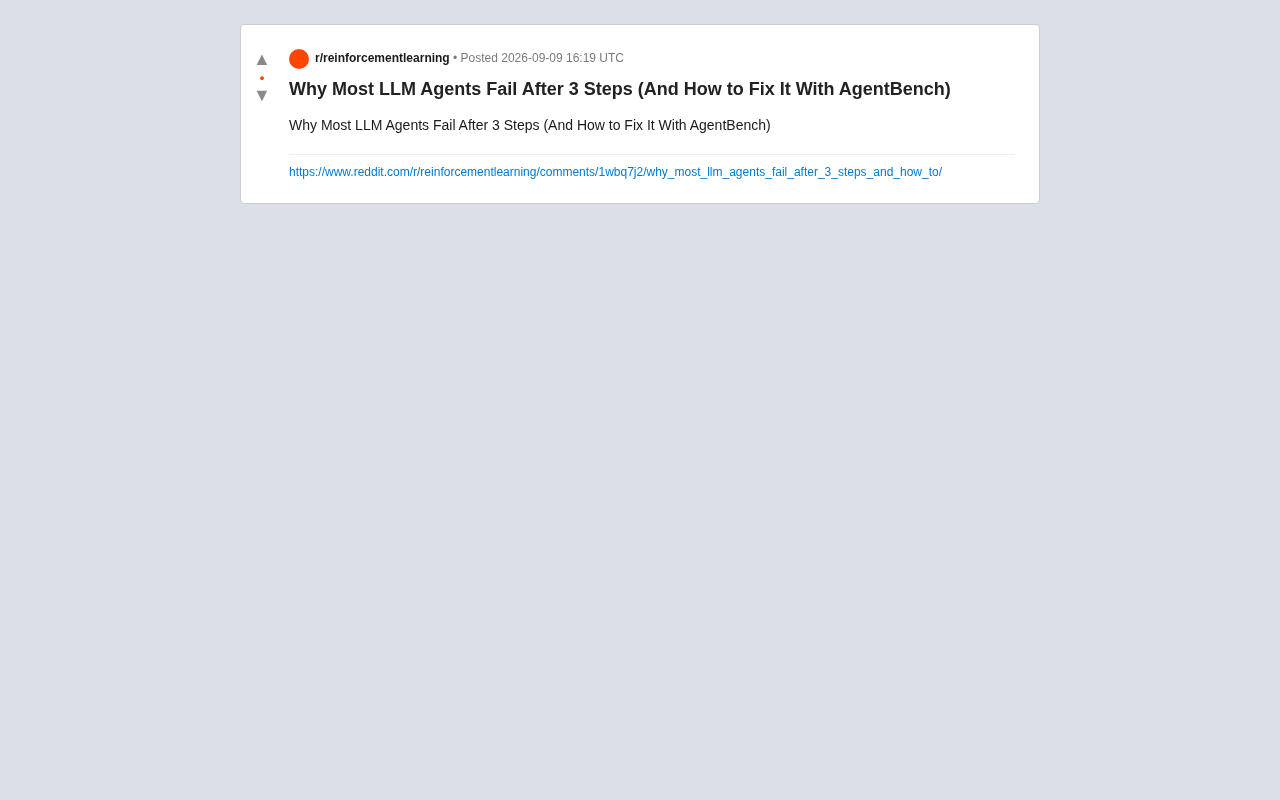
Why Do LLM Agents Go Off the Rails After Three Steps? Causes and Solutions
Deep analysis of why LLM Agents fail in multi-step tasks: context accumulation, missing state management, and tool noise. Practical strategies using AgentBench to diagnose and fix agent stability.