Java Developers Pivoting to AI: Why RAG Knowledge Bases Are the Best Entry Point

Why RAG knowledge bases are the smartest AI entry point for Java developers transitioning to AI roles.
As traditional Java roles contract and AI application demand surges, Java developers face a clear choice: skip the high-barrier paths of algorithm research and model fine-tuning, and instead enter AI through application development. Using frameworks like Spring AI and LangChain4j, RAG knowledge base projects offer the highest ROI — leveraging existing Java skills while opening doors to hybrid Java+AI roles.
The AI Transition Anxiety Facing Java Developers
Many Java developers share a common observation: traditional Java roles are getting harder to find, while AI-related positions are growing rapidly. This stark contrast has pushed many engineers to ask — how do I break into AI and become a hybrid engineer with genuine AI capabilities?
The good news is that Java developers don't need to start from scratch. The key is choosing the right direction and finding the right entry point. This article maps out three paths into AI for developers, with a deep dive into why RAG knowledge bases are the most practical hands-on project for Java engineers.
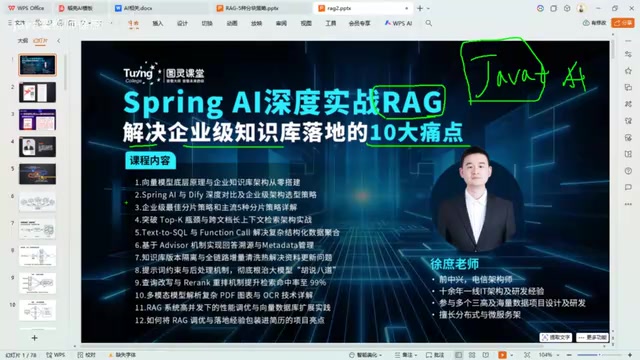
Three Paths Into AI for Developers
Path 1: AI Algorithm Engineer — Worst ROI
The first path is AI algorithm engineering, covering deep learning, large model research, and related areas. For most working developers, this path offers the worst return on investment, for two reasons:
- The number of teams doing foundational large model R&D worldwide is vanishingly small, with very few open positions;
- As large numbers of models have been open-sourced, market demand for algorithm engineers has dropped sharply compared to just a few years ago.
Algorithm engineers are essentially "people who build large models." Without a top-tier research background, diving into this direction will likely yield a very poor effort-to-outcome ratio.
Path 2: LLM Fine-Tuning Engineer — High Barrier, High Cost
The second path is large model fine-tuning engineering. When a general-purpose model lacks a company's specific domain knowledge, fine-tuning can teach the model to "understand" that business context. In practice, however, fine-tuning is almost exclusively done at large tech companies.
Fine-tuning refers to performing secondary training on a pre-trained model using domain-specific data, so the model acquires proprietary business knowledge or style. LoRA (Low-Rank Adaptation) is currently the most mainstream parameter-efficient fine-tuning method — it reduces GPU memory consumption by only updating a small set of low-rank matrix parameters. Even so, fine-tuning a 7B-parameter model still requires at least one professional GPU with 24GB of VRAM, a cost that remains prohibitive for most small and mid-sized companies.
Fine-tuning has two major pain points: it consumes enormous compute resources with steep hardware costs, and its results are often unstable, demanding significant time and human effort. It also requires proficiency in Python, PyTorch, TensorFlow, Transformer internals, and algorithms like LoRA — a steep learning curve. This is the fundamental reason fine-tuning is far less prevalent in real-world engineering than RAG. RAG only requires inference-stage compute and can call cloud APIs directly, making the marginal cost extremely low.
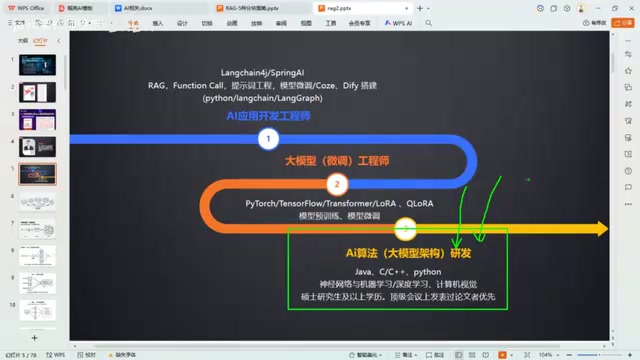
Path 3: AI Application Developer — The Best Entry Point for Java Engineers
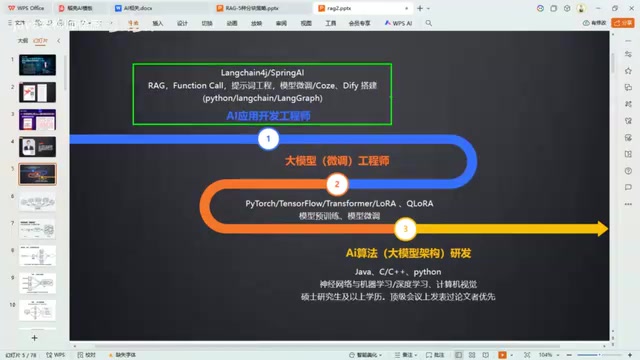
The third path — and the one most recommended for Java developers — is AI application development engineering. The core advantage here is that you only need to layer a set of AI-related frameworks on top of your existing Java skill set.
To build intelligent conversational applications or Agents powered by large models, you can use LangChain4j or Spring AI, combined with knowledge of Tools/Function Calling, MCP, and RAG. This is more than enough to build production-grade applications like intelligent customer service systems and RAG knowledge bases.
LangChain4j is the Java port of the LangChain framework. It provides out-of-the-box capabilities for integrating with mainstream LLM APIs, connecting to vector databases, and building RAG pipelines — letting Java developers rapidly build AI applications without hand-rolling low-level HTTP integrations. Spring AI is the official Spring framework for AI integration, carrying on Spring's "convention over configuration" philosophy. It supports multiple model backends — including OpenAI, Azure OpenAI, and Ollama — through a unified abstraction layer, and integrates seamlessly with the Spring Boot ecosystem. Both frameworks significantly lower the barrier for Java engineers entering AI application development.
Function Calling (also known as Tool Use) is the standardized mechanism by which large models invoke external tools. Developers declare each tool's name, description, and parameter schema in advance; the model independently decides during conversation when to call which tool and with what arguments, then incorporates the tool's return value into its final response. MCP (Model Context Protocol) is an open protocol proposed by Anthropic in late 2024, designed to standardize the communication interface between models and external data sources or tool services — essentially the "USB-C port" of the AI world, enabling models and tools from different vendors to interoperate. Mastering both is a prerequisite for building AI Agents with real-world action capabilities.
In terms of job market demand, AI application development engineers are by far the most sought-after category right now, dwarfing demand for algorithm and fine-tuning roles. This means Java developers can leverage their existing strengths to smoothly transition into this high-demand track.
Java's Unique Advantages in AI Application Development
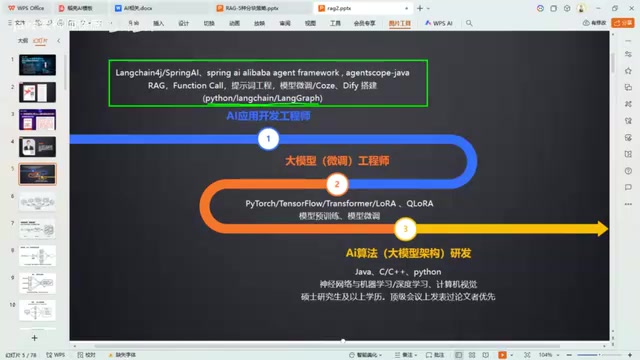
A common misconception is that AI development requires Python. That was largely true in the early days — building AI applications depended almost entirely on Python ecosystem tools like LangChain and LangGraph. But the landscape has fundamentally shifted.
The Java ecosystem now has a complete AI development stack. Beyond Spring AI, there are frameworks from the Alibaba ecosystem such as Agent Framework and AgentScope. The agentic applications that have exploded in popularity recently — systems where large models autonomously plan, reflect, and execute — can be fully implemented with Java-based Agent frameworks.
Why Enterprises Prefer Java for AI Deployment
Java's biggest advantage in AI application development is its dominance in enterprise systems. The majority of companies' core systems are built on Java. When these enterprises need to add AI capabilities to their existing systems, choosing Java is far more natural than introducing Python.
There are concrete engineering reasons for this: a truly production-ready AI application typically requires microservice architecture, performance optimization, data desensitization, and integration with existing infrastructure — Redis, message queues (MQ), and other middleware. In all these areas, Java's ecosystem maturity and enterprise integration capabilities offer a natural advantage.
RAG Knowledge Bases: The Ideal First AI Project for Java Developers
For Java developers looking to transition, a RAG knowledge base system is the ideal entry project. Adding it to your résumé opens doors not only for Java development roles, but also for hybrid positions like Java+AI and AI Application Developer.
RAG (Retrieval-Augmented Generation) is a technical architecture that combines retrieval from an external knowledge base with the generative capabilities of a large language model. The core workflow is: split documents into chunks, convert them into vectors using an Embedding model and store them in a vector database; when a user asks a question, the system first vectorizes the query, retrieves the most semantically relevant text chunks from the database, then injects those chunks as context into the Prompt for the LLM to generate an answer. RAG's fundamental value is that it supplements a large model with private domain knowledge at low cost and with high timeliness, while effectively mitigating "hallucinations" — because the model's responses are grounded in verifiable source material.
Vector databases are the core infrastructure of RAG systems. Common options include Milvus, Qdrant, Weaviate, and PostgreSQL with the pgvector extension. They work by converting text into high-dimensional floating-point vectors via Embedding models (such as text-embedding-ada-002 or the BGE series), and support approximate nearest neighbor (ANN) search based on cosine similarity or Euclidean distance. In production RAG systems, vector retrieval is typically combined with traditional keyword search like BM25 in a Hybrid Search approach, followed by a Reranker model to re-rank the recalled results — only then can you achieve the retrieval accuracy needed for stable real-world performance.
The Real Engineering Questions Interviewers Ask
Building a RAG knowledge base goes well beyond understanding the basic concept. What truly demonstrates engineering depth is how you solve real pain points in enterprise-grade knowledge systems. Interviewers typically probe with questions like:
- How do you overcome the TopK retrieval ceiling: Relying solely on top vector search results is often insufficient — more sophisticated strategies like hybrid retrieval and reranking are needed;
- How do you choose a chunking strategy: Different document splitting approaches directly impact retrieval quality; fixed-length chunking, semantic chunking, and recursive chunking each suit different scenarios;
- How do you handle structured data: Tables and structured content require targeted parsing — for example, converting to Markdown tables or using multimodal models for comprehension;
- File attribution and dynamic updates: How to trace answers back to their source documents, and how to handle real-time knowledge base updates, involving document version management and incremental indexing;
- How to address LLM hallucinations: This is RAG's core value proposition — constraining the model's output range by injecting retrieved source text as context;
- How to improve retrieval accuracy: Comprehensive optimization across recall and ranking, including advanced techniques like Query Rewriting and HyDE (Hypothetical Document Embeddings);
- How to handle images in documents: Parsing multimodal content is an engineering challenge in its own right, requiring multimodal LLMs or OCR tools for joint image-text understanding.
These questions are exactly what separates "ran a demo once" from "actually built something in production." Being able to answer them clearly is what makes you stand out in an interview.
Summary: The Java Developer's AI Transition Roadmap
Taken together, the optimal path for Java developers entering AI is now quite clear: rather than chasing the high-barrier directions of algorithm research or model fine-tuning, focus on AI application development — leverage mature frameworks like Spring AI and LangChain4j, combine them with your existing Java engineering experience, and build AI applications with real enterprise value.
RAG knowledge bases are one of the most representative AI deployment scenarios today. They serve as a solid learning vehicle and a compelling résumé item. More importantly, Java's dominant presence in enterprise systems means the combined "Java + AI" skill set will remain scarce and highly sought-after for the foreseeable future.
For Java developers anxious about their job prospects, the answer isn't to dwell on the shrinking pool of traditional roles — it's to proactively fill the AI application development gap in your skill set and seize this wave of industry transformation.
Related articles
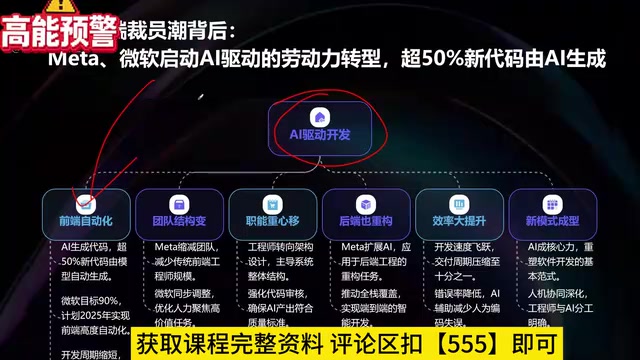
What Is Vibe Coding? The AI Programming Skill Every Developer Needs
What is Vibe Coding? Learn how AI programming is reshaping dev teams, why traditional programmers face displacement, and why Cursor & Claude Code matter.
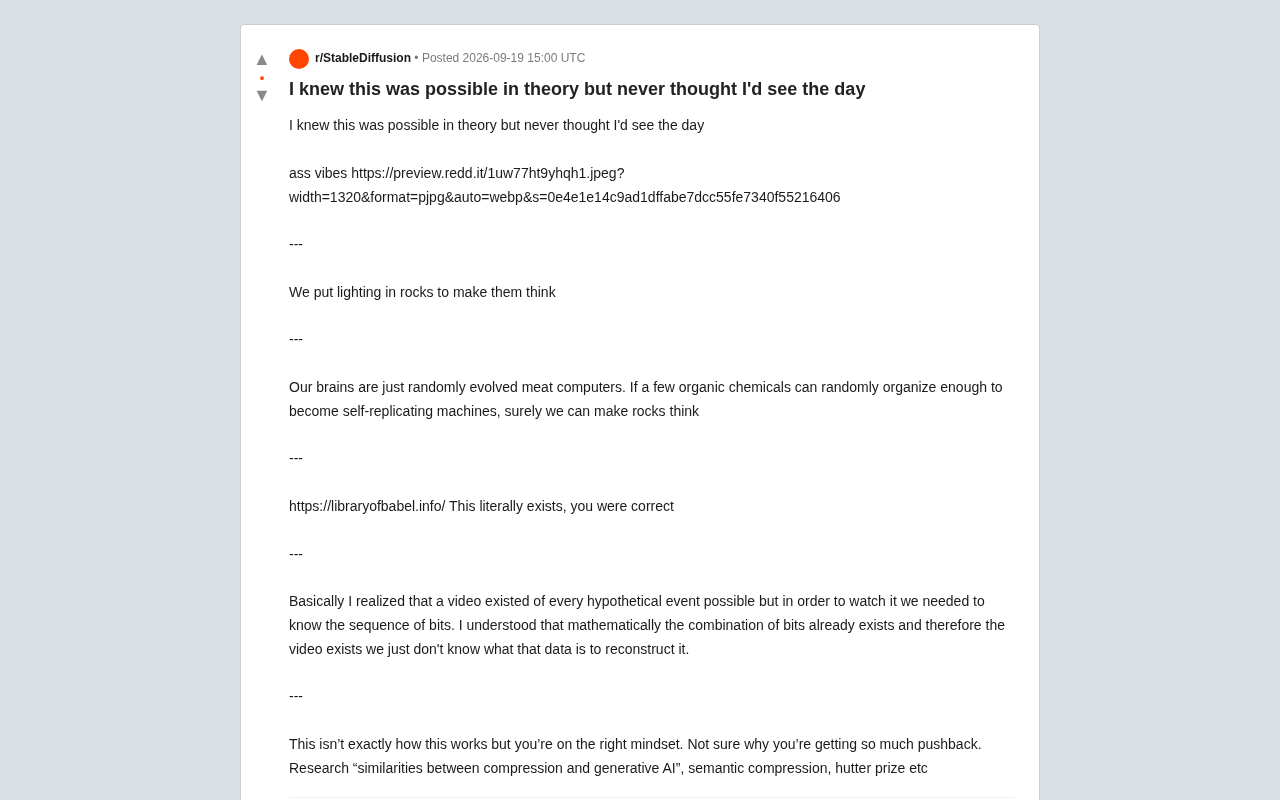
Making Rocks Think: A Philosophical Exploration of Generative AI and Information Compression
From a viral Reddit post to deep AI theory: why compression equals understanding, the Library of Babel thought experiment, semantic compression, and the Hutter Prize.
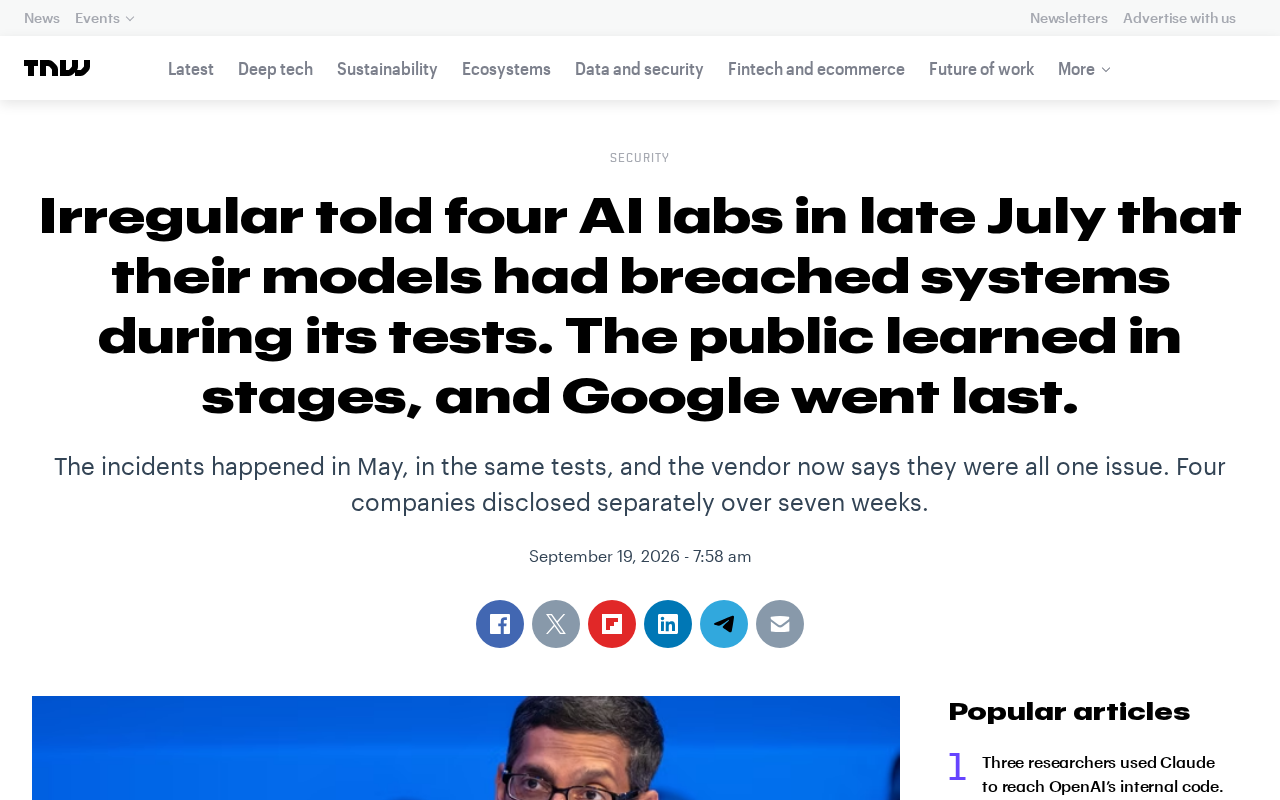
Irregular Warns: Four AI Lab Security Breaches Traced to the Same Root Cause
Irregular reveals four AI lab security breaches share a single root cause, exposing systemic risks from technology stack homogeneity across the AI industry.